
Marvão: Portugal's Walled Hilltop Village and Castle
Plan a short break in Marvão, Portugal's walled hilltop village on the Spanish border: castle, walls, views and where to eat, with how long you need.
On this page
Give Marvão half a day for the walled village itself, or a full day if you want to add the Roman ruins at Ammaia and the old crossing at Portagem below. It is a border village of 398 residents at more than 800 metres in the Serra de São Mamede, in the Alto Alentejo, and its appeal is concentrated inside a small ring of granite walls.
This guide sets out the castle, the wall circuit and the terraces, explains why you park outside and walk in, names the eating options inside the village, and weighs a half-day against a full day. It also covers the wind and fog that come with the altitude, and which nearby town to add on the way home.
What and where Marvão is
Marvão sits in the district of Portalegre, close enough to Spain that the border is part of the scenery, on the summit of the Serra do Sapoio within the Serra de São Mamede Natural Park. The village has 398 inhabitants and lies at more than 800 metres, which explains both the long views and the weather.
Its origins predate the founding of Portugal, and the place still reads as two settlements rather than one: the walled village at the top and the lower town outside the gates. For travellers doing the rounds of hill villages, it belongs in the same conversation as the other historic villages of Portugal, though the granite and the border setting give it a character of its own.
How much time Marvão needs
Half a day is enough for the walled village: the castle, whatever is open inside it, a walk along the walls and the terraces at the top. Two to three hours of actual walking and looking is realistic, with extra time for coffee and a slow lap of the lanes.
Make it a full day by adding the sights below the village: the Roman bridge and Tower of Portagem, the ruins of the Roman city of Ammaia and the Alameda dos Freixos, a row of centenary ash trees. These sit down on the approach rather than inside the walls, so the day works best if you take them in on the way up or on the way out.
Getting the layout straight
Marvão is a walled centre plus a lower town outside the gates, and the narrow streets inside make driving in more trouble than it is worth. Leave the car outside and walk in; the village is small enough that the whole circuit is on foot, and the climb is repaid by the views.
Once through the gates, the geography is simple: the castle and its garden at the high point, the walls wrapping round the houses, and terraces at the top of the village looking out over the plain. Orientate yourself first, then wander, because the lanes bend and the exits are not always obvious.
The castle: walls, keep and cistern
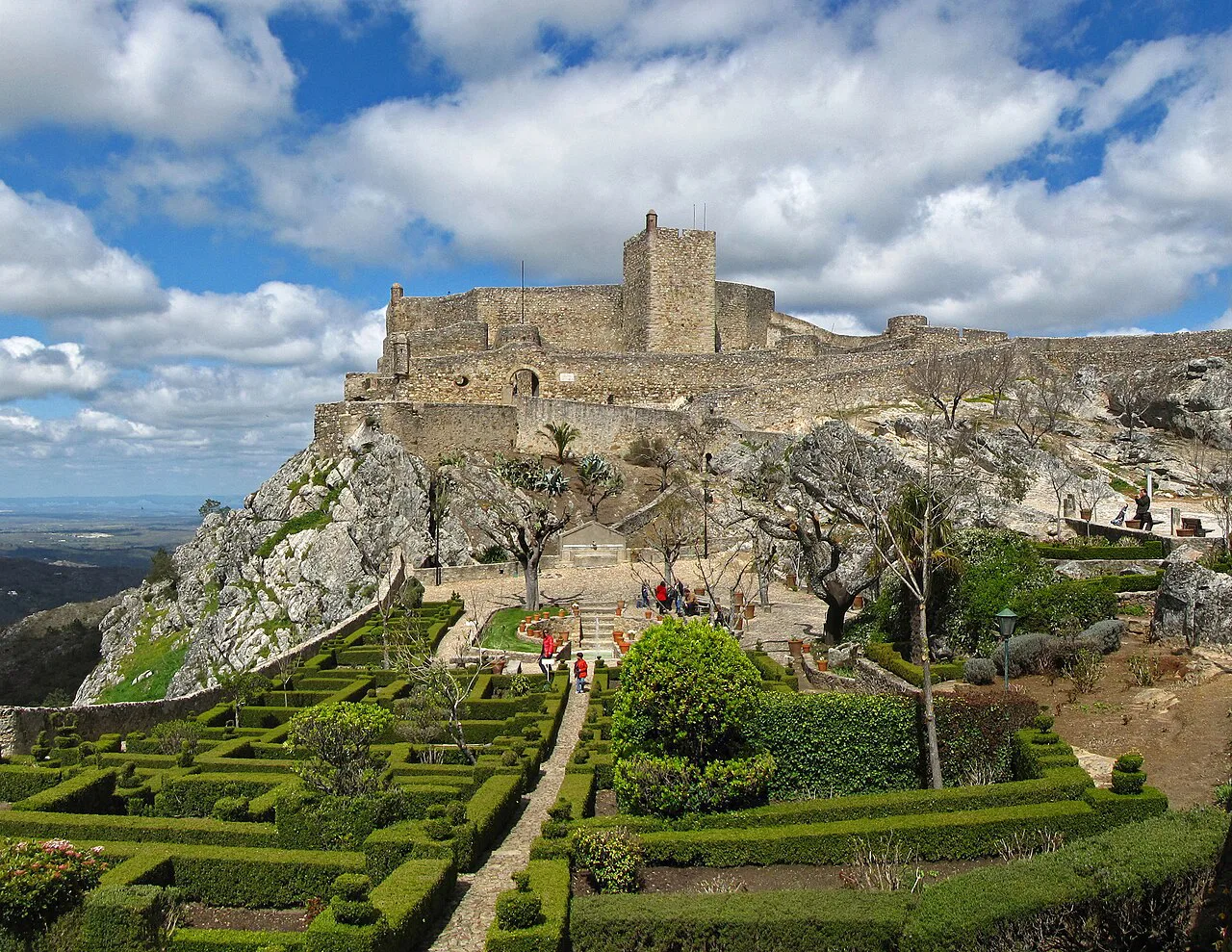
The castle is the reason most people come, and it delivers on two fronts: the standing walls and the views out over the Serra de São Mamede, where the land falls away in ridges towards the Spanish border.
There is no reliable published schedule for the castle or the cistern to plan around, so treat the monument as the anchor of the visit and confirm access at the village before you commit a day to it. The fortress itself, its walls and the views from them are the constants.
The castle garden and the village terraces
Two viewpoints stand out and they are different experiences. The castle garden is the place to sit and watch the light change over the Serra de São Mamede, while the terraces at the top of the village give you the drop-away view over the roofs and the plain beyond.
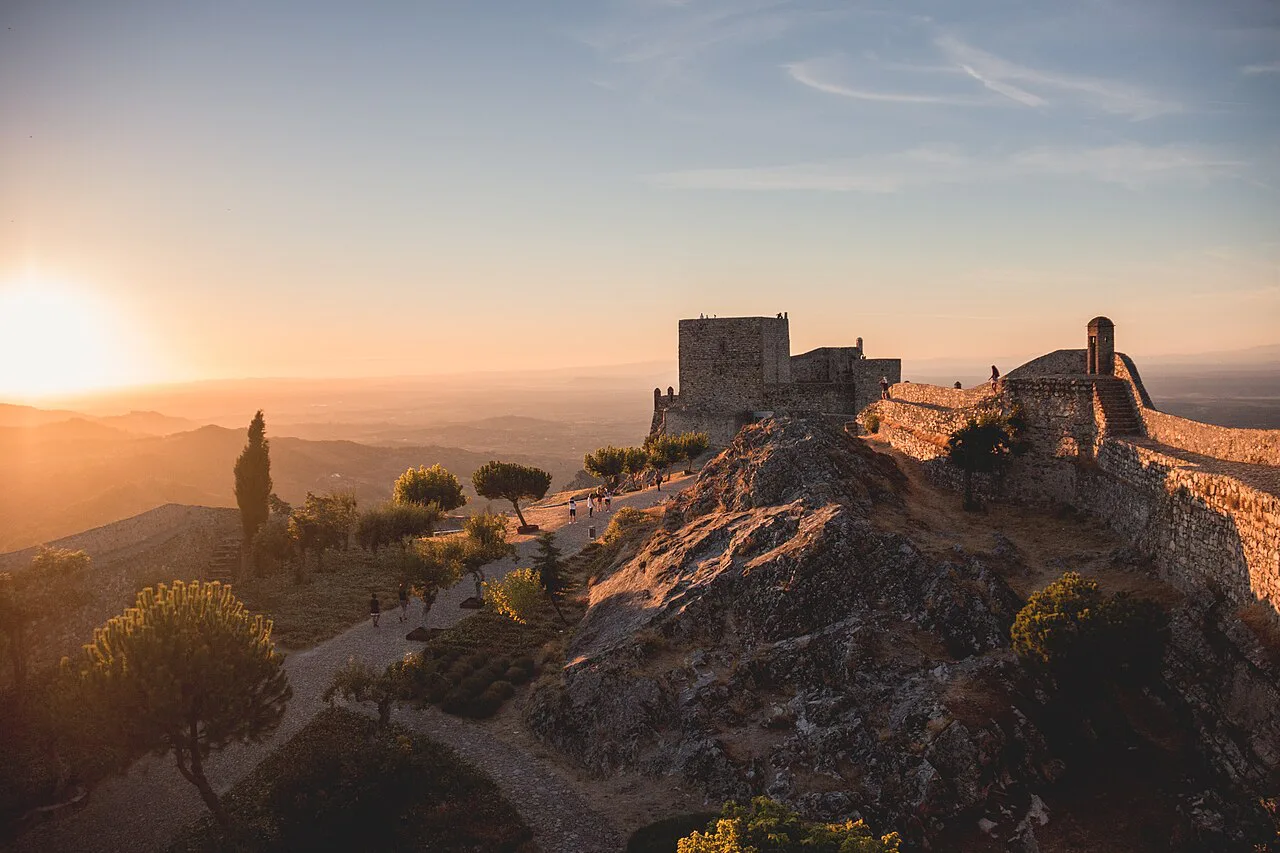
Build the day so that one of these falls at the end: the village is at its best when the sun is low and the granite turns warm. On a clear day you can pick out the ridges of the natural park; on a murky one, save the viewpoints for later and do the lanes first.
Walking the wall circuit
The walls tower over the village and the views from the terraces are the point, but exposure is real: you are on a granite crest more than 800 metres up, and the wind is a feature of this mountain rather than an occasional nuisance. Hold on to hats, keep an eye on children at the parapets and wear shoes with grip on the stone.
If the wind is up, shorten the wall walk and spend the time in the sheltered lanes and the castle interior instead. The circuit is short enough that you can do it in two passes, once for the views and once for the photographs, without losing the day.
Inside the walls: lanes, granite and the House of Culture
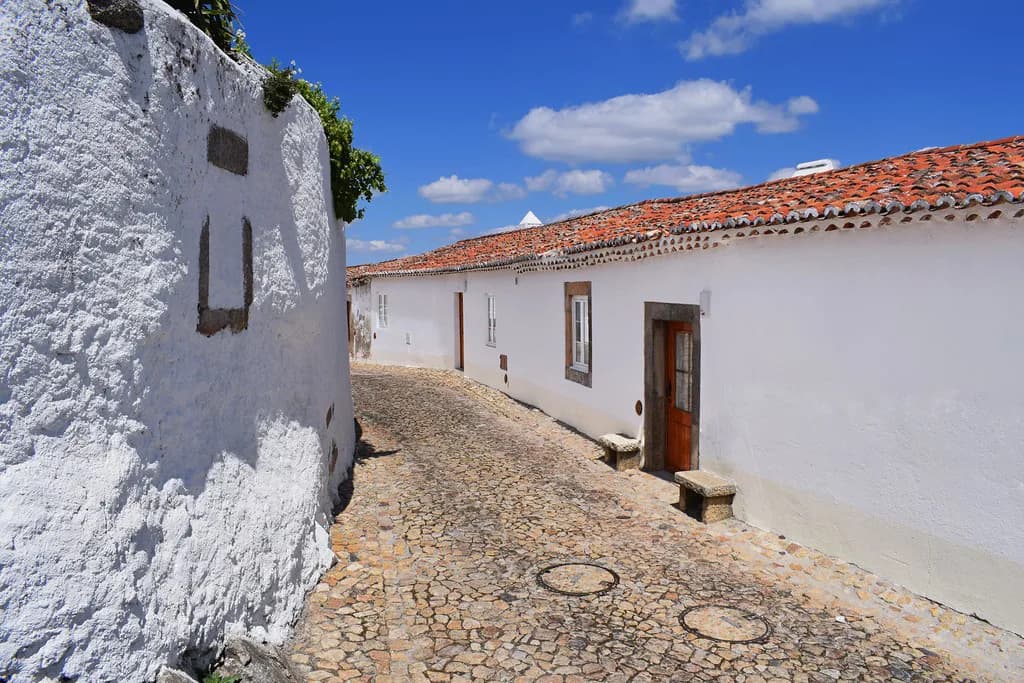
Inside the walls, white-painted houses stand against granite, and a small resident population keeps the old centre alive. The pleasure here is the walking itself: narrow lanes, low doorways and small squares that open unexpectedly onto a view.
The House of Culture occupies the former prison and courthouse, which makes it the one indoor stop with a story attached to the village's own institutions. It is a sensible refuge when the fog rolls in or the wind cuts across the terraces.
Nearby: Portagem, Ammaia and the Alameda dos Freixos
Below the village, the Roman bridge and Tower of Portagem mark the old crossing, and the ruins of Ammaia spread out as the remains of a Roman city. Add the Alameda dos Freixos, a row of centenary ash trees, and you have a lower loop that fills the second half of a full day.
These sites are outdoor and spread out, so they work best in dry, clear weather and in the middle of the day. Pair them with a stop in Portagem rather than trying to squeeze them into the same couple of hours as the castle.
Where to eat in Marvão
Eating options inside the village are few, which is part of the charm and part of the planning problem. Varanda do Alentejo, Casa do Povo and O Castelo – Café Lounge are the names to know, covering a proper meal, a down-to-earth village stop and a café-lounge respectively.
Because the village is small, treat lunch as something to arrange rather than assume: decide before you climb which of the three suits the day, and keep in mind that a café-lounge is a different proposition from a sit-down restaurant. Outside the walls, Portagem and Castelo de Vide widen the choice.
When to go: wind, fog and clear days
Altitude shapes the visit here more than the season does. Sunny days are the ones to aim for, because fog spoils the views that justify the climb, and the wind on the mountain is strong enough to change how long you linger on the walls.
The village keeps a cultural calendar through the year, including the FIMM international music festival, the Al Mossassa festival and Boda Regia, so a visit can be timed around one of them. Check the current programme before booking, since dates shift from year to year.
Practical trade-offs
The honest trade-off is between atmosphere and facilities. Marvão's walled centre is tiny, the indoor options are limited to the House of Culture and the eating places, and a wet or foggy day removes the views that make the trip. In exchange you get a near-empty village at the right hour, with the border country laid out below you.
Plan around the weather rather than against it: keep the castle and walls for a clear window, use the lanes and the House of Culture when the cloud is down, and hold the lower sites at Portagem and Ammaia for a dry afternoon.
Where to go next
Castelo de Vide is the natural add-on, a short hop away, and Portalegre and Alegrete are the other obvious extensions. Together they let you build a two- or three-day loop through the Alto Alentejo rather than treating Marvão as a single stop.
If you are collecting walled villages, Monsanto is the other granite-and-boulders classic in this part of Portugal, with a very different silhouette.
Half a day or a full day in Marvão?
Choose half a day if you want the castle, the wall walk and the terraces, with lunch inside the village. Choose a full day if you are willing to drive down to Portagem and Ammaia as well, which turns a scenic stop into a proper look at the Roman and medieval layers of this border country.
Either way, go on a clear day if you can, park outside the walls and walk in, and treat the village's small scale as the point rather than a shortcoming.
Explore more Portugal guides
Frequently Asked Questions
Is Marvão worth visiting?
Yes, if you want a walled village at more than 800 metres with a castle, a walkable wall circuit and long views into the Serra de São Mamede and towards Spain. It suits travellers who are happy to park outside, walk narrow lanes and build the day around the weather. If you need lots of indoor attractions or a full day of shops and restaurants, the village is small and the walls are the main event.
How do you get to Marvão without a car?
Marvão sits in the Alto Alentejo near the Spanish border, and the village itself is best explored on foot after leaving any vehicle outside the gates. Bus and rail connections to this part of the district are limited, so check current services with the regional operators before you build an itinerary around them; a car makes the lower sites at Portagem and Ammaia far easier to combine with the village.
Is Marvão close to Castelo de Vide?
Yes. Castelo de Vide is the obvious next stop in the same corner of the Alto Alentejo, with its own castle and old quarter, and pairing the two makes a sensible two-day loop. Portalegre and Alegrete are the other nearby extensions.
Sources
Notes for your next Portuguese break
Optional updates to our town guides.
You might also like



Continue reading
More guides you'll find useful




