
Piódão: Portugal's Schist Village in the Serra do Açor
Piódão is a schist village on the slopes of the Serra do Açor, best seen on foot. Here is what to see, how long it takes and how to get there by road.
On this page
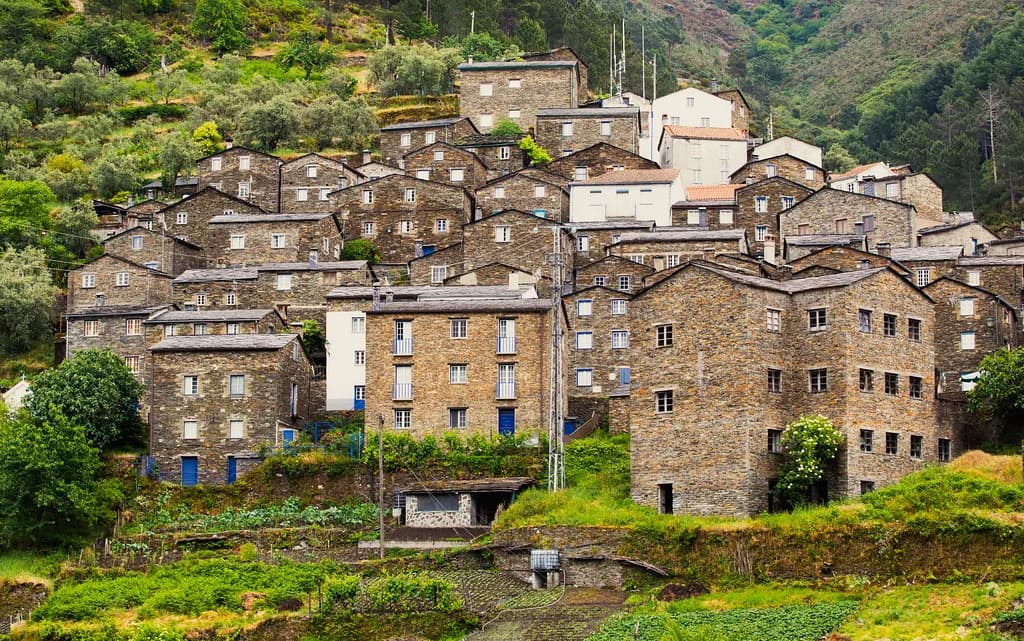
Piódão is worth visiting as a short stop of two to four hours rather than a day in itself. Its draw is the setting: dark schist houses with slate roofs stacked in an amphitheatre on the Serra do Açor, connected by stairs and steep lanes, with a white church standing out among them. Come for the architecture and the mountain landscape, and plan the visit around a walk rather than around a list of ticketed sights.
This guide covers the village's layout, its churches, chapels, museum and viewpoints, the local souvenirs worth carrying home, and how the road access through the mountains shapes the trip. Opening arrangements shift, so confirm the church and museum before setting out; every other decision here follows from the ground under your feet.
What Piódão is and where it sits on the Serra do Açor
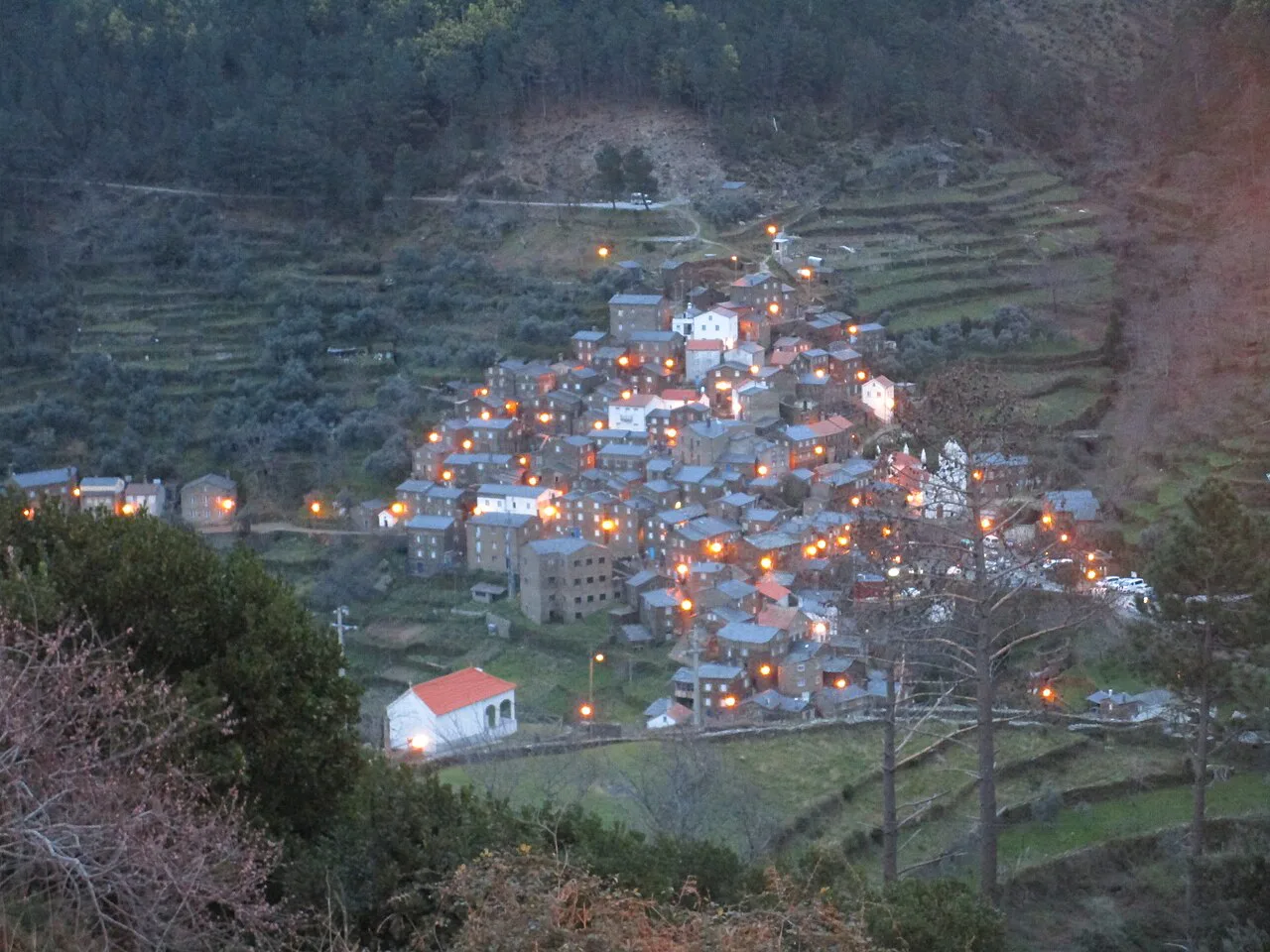
Piódão belongs to the Arganil municipality in the Coimbra district and sits on a steep escarpment of the Serra do Açor, inside the protected landscape of Açor Mountain. The village is one of the historic villages of Portugal, a network of fortified and mountain settlements that also includes Belmonte, Monsanto, Sortelha and Marialva. It has been classified as a Place of Public Interest since 1978, which is why the schist masonry, slate roofs and irregular paving have kept their unity.
The settlement history is older than the look of the place suggests. A medieval village called Casal de Piodam stood in a nearby valley before moving to its current site, possibly in the 13th century, with the establishment of a Cistercian monastery cited as a likely cause; no trace of that monastery survives. A 1527 census recorded the place as part of Avô with just two residents, and it became an independent parish in 1676 before joining Arganil in 1855.
How long to allow: a quick look or half a day
Give Piódão two to four hours. The village is compact, but every route between the entrance, the church and the viewpoints involves climbing, so a hurried 45-minute circuit leaves you breathless rather than informed. Walk the lanes once to orient yourself, then go round again with the monuments in mind.
Half a day suits travellers who want to sit down, take photographs from the Eira and look into the chapels. A quick stop of an hour fits an itinerary moving between several historic villages in the same mountains. The difference is mostly stamina: the slope is relentless, and the stairs between terraces punish anyone rushing.
The amphitheatre layout and how to walk the steep lanes
The village is built in an amphitheatre shape on the mountainside, called a schist nativity scene, with houses of schist masonry and roofs of the same stone slabs. Windows are small, doors and frames carry strong painted colours, and the lanes wind narrow and irregular beneath an aqueduct channel that trickles water here and there. Expect stairs and slopes rather than a flat grid, and wear shoes with grip.
Start at the main square by the church and work uphill through the lanes, using the stairways to cross between terraces, then descend on the far side to the fountain. The village was long isolated by difficult access routes, which is exactly why the medieval street pattern survives intact; treat the climb as the sight rather than an obstacle to it.
The Igreja Matriz: neo-Baroque façade and Coimbra tiles
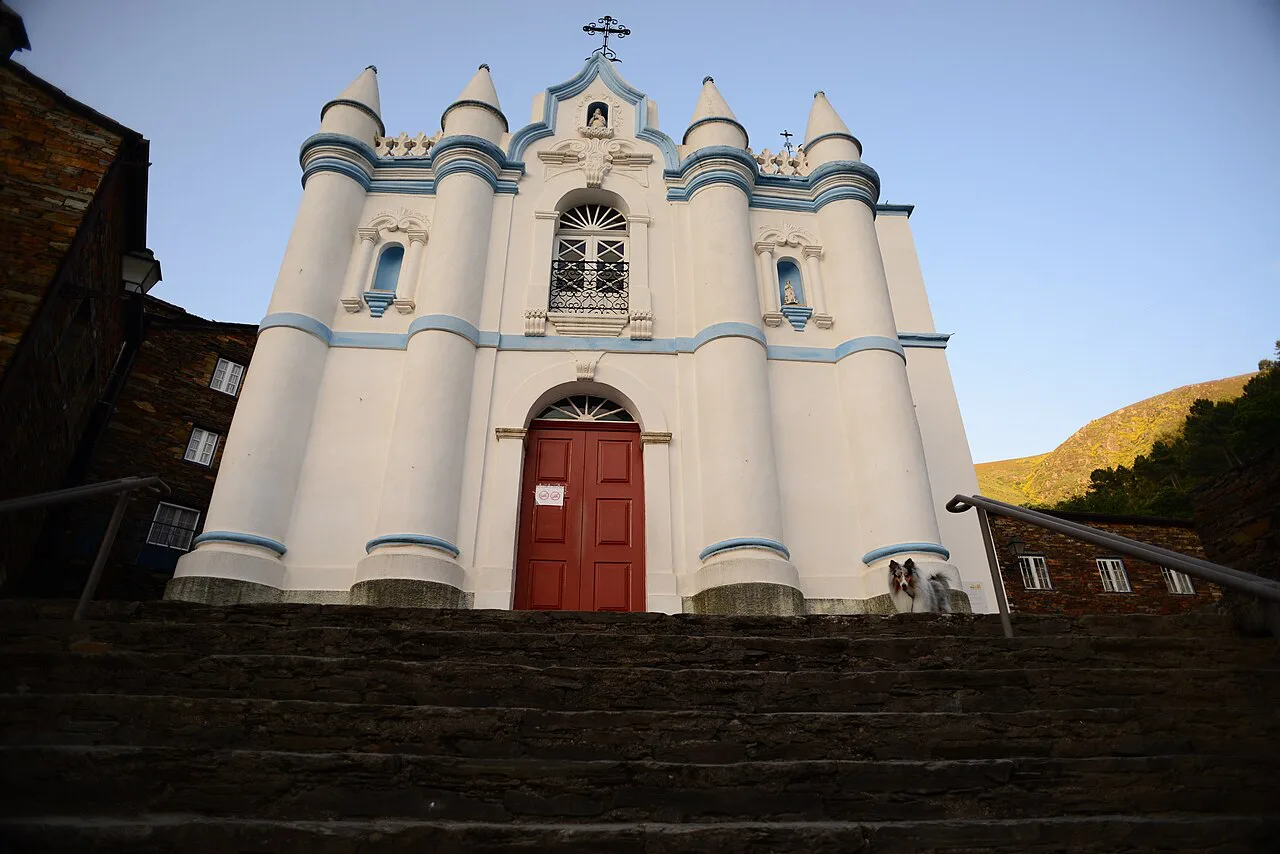
The parish church, the Igreja Matriz, is the white building that interrupts the schist frontages and the easiest landmark to steer by. It was enlarged in the 18th century and remodelled in the 19th to a design by Canon Manuel Fernandes Nogueira, with a neo-Baroque pediment, four slender cylindrical buttresses and conical spires. Inside, look for the 15th-century limestone image of Our Lady of the Immaculate Conception and altars decorated with tiles made in Coimbra.
Nogueira arrived in Piódão in 1885, founded a school here in 1886 that prepared boys for the seminary, and died in 1944; a bust in the village commemorates him. That school closed in 1906 when the square was improved, but its former pupils went on to higher education and around 30 became priests. Reading the church with that history in mind turns a decorative façade into the village's clearest statement of ambition.
The Capela de São Pedro and its 16th-century image
The Capela de São Pedro is a small chapel of simple lines standing within the built-up lanes rather than on the edge of the village. Inside is a 16th-century sculpture of St Peter, its patron. It takes only minutes to look in, so pair it with the lanes around it instead of making a separate trip.
The Capela das Almas (Chapel of Souls)
The Capela das Almas was founded in the 18th century and heavily remodelled in the 20th. Its wooden altarpiece carries a plain painted representation of the Souls in Purgatory, and the building served as a mortuary chapel for Piódão and the neighbouring villages. It is the quietest of the village's religious stops and the one that says most about everyday life here.
The museum, the Eira viewpoint and the Bread Oven
The Piódão museum is listed among the village's principal sights, so allow time for it on a half-day visit. Plan it as part of the circuit rather than a separate outing, and confirm its opening arrangements in the village or through the local tourist office before you rely on it.
The Eira is a threshing floor that now gives one of the best panoramic views over the amphitheatre of roofs and the mountain behind. The Bread Oven stands nearby as part of the same working heritage, and farming and herding still form part of village life. These are the two spots to slow down at, preferably when the light falls across the slate.
The Algares Fountain and the aqueduct channel
A narrow water channel, the aqueduct, runs here and there through the lanes in an irregular groove, and the simple Algares Fountain is its most visible point. It is a modest piece of engineering rather than a monument, but it explains how a village on a dry escarpment managed water. Look for it low in the lanes on your descent, where the paving levels out.
What to buy: chestnut liqueur, honey spirits and schist miniatures
Piódão's typical souvenirs are chestnut liqueur, honey spirits and miniature schist houses. These are small, sturdy and tied to the place, which makes them better than generic ceramics; a schist miniature also survives the journey home in a rucksack. Buy them in the village rather than saving the errand for a larger town.
Getting here by road through the Serra do Açor
Access is by road, winding through the Serra do Açor, and the drive is part of the visit: the village stays hidden until the last approach, then appears suddenly below the road. The historic villages organisation publishes its own getting-here directions, which are the version to follow rather than a mapping shortcut that may not match the signed route.
The isolation that difficult access routes imposed for centuries produced the medieval street pattern visitors come for, so do not expect a fast road or a large car park at the end of it. Driving yourself gives the most flexibility for combining Piódão with other villages in the same range, and the same mountain roads are what make a public-transport-only plan impractical.
Honest trade-offs: steep ground and thin facilities
The steep ground is the main constraint. The lanes, stairs and terraces demand sure footing, and anyone with knee, hip or heart trouble will find the village harder than photographs suggest. Go slowly, use the flatter square by the church as a base, and accept that you will not see every corner.
Facilities are thin, so the village works best as a stop rather than a base for a whole break. The official listings name rural tourism and hotel accommodation nearby but no restaurant or café with usable detail, so plan meals around the wider route, such as Belmonte or Sortelha, and treat Piódão as the scenic pause between them.
Is Piódão worth the mountain detour?
Yes, if you accept it as a two-to-four-hour walking stop on a route through the Serra do Açor rather than a destination in its own right. The church, the two chapels, the museum, the Eira viewpoint and the fountain fill a morning comfortably, and the schist lanes are the real attraction.
Skip it only if steep ground is a problem or your itinerary is already crowded with similar schist villages; Monsanto and Sortelha cover comparable ground with different payoffs. Travellers building a wider circuit can start from the historic villages of Portugal overview and slot Piódão in where the road allows.
Explore more Portugal guides
Frequently Asked Questions
Is Piódão worth visiting?
Yes, as a short walking stop of two to four hours. The appeal is the amphitheatre of schist houses on the Serra do Açor, the Igreja Matriz with its neo-Baroque façade and Coimbra tiles, two small chapels, the museum and the Eira viewpoint. It is not a place of major ticketed monuments, so come for the architecture and the mountain setting.
How do you get to Piódão without a car?
The sources describe access as a road approach through the Serra do Açor and give no bus or rail service. Driving yourself is the practical option, and the historic villages organisation publishes its own getting-here directions to follow rather than relying on a shortcut from a mapping app.
What is Piódão famous for?
Piódão is known for its schist houses with slate roofs, built in an amphitheatre on the mountainside and connected by steep lanes, stairs and a water channel. It has been classified as a Place of Public Interest since 1978 and is one of the historic villages of Portugal, alongside Monsanto, Sortelha and Belmonte.
Sources
Notes for your next Portuguese break
Optional updates to our town guides.
You might also like



Continue reading
More guides you'll find useful




