
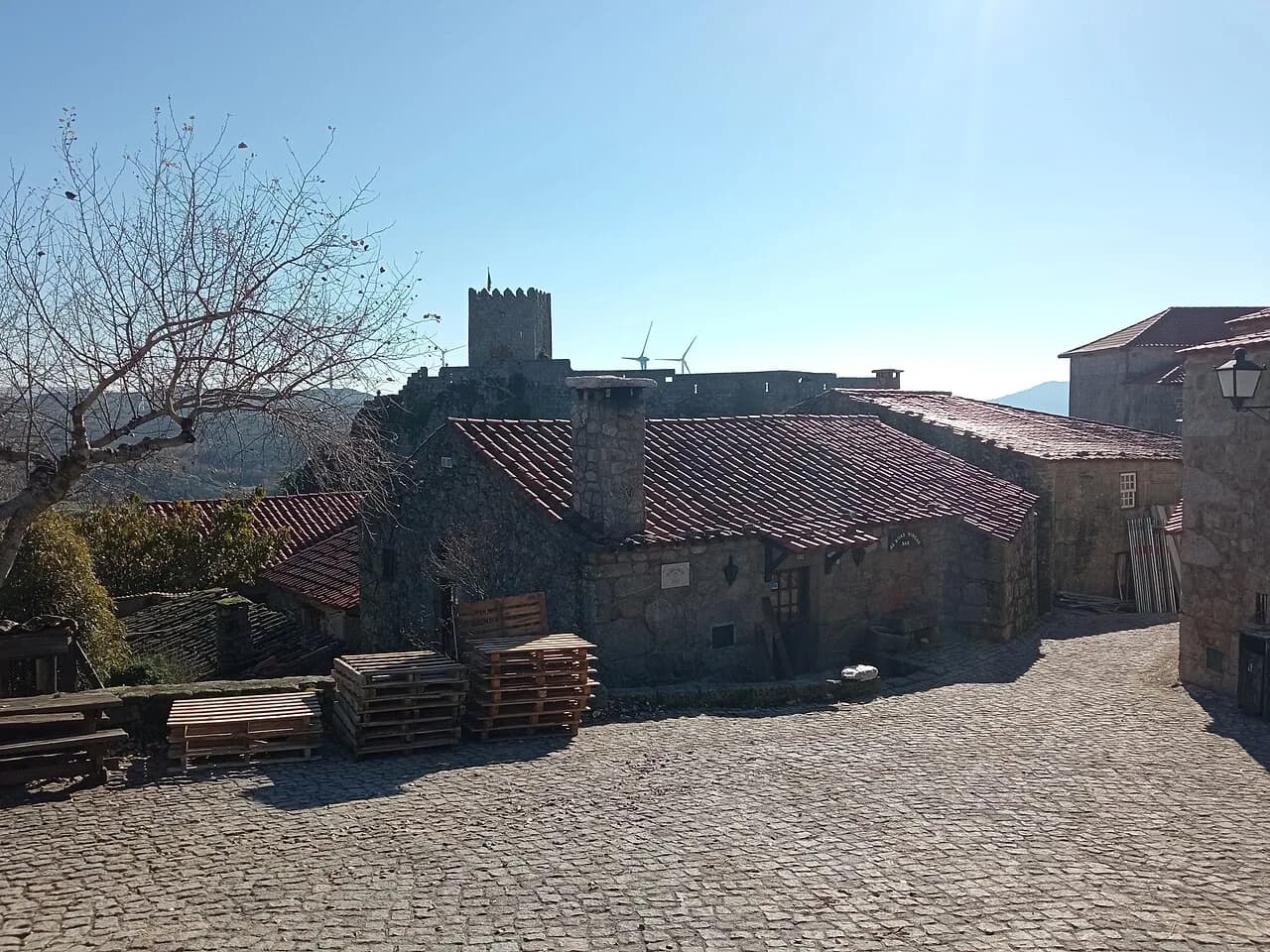
Sortelha: Portugal's Walled Medieval Village and Castle
Sortelha is a walled medieval village in the Beiras, built around a 13th-century rock castle. Here is what to see inside the walls and how the layout works.
On this page
Sortelha is worth half a day, and a full day if you pair it with Sabugal 10 kilometres to the east. It is a small medieval village wrapped in a ring of walls on a rocky spur in the Beiras, the old central-Portugal region, with a castle that grows straight out of the rock and lanes of granite houses inside the gates. This guide covers how the village is laid out, what to look for on foot, how long to allow and how to slot it into a Beiras driving route.
Where Sortelha sits in the Beiras
Sortelha lies on a rocky promontory about 40 kilometres south of Guarda and 33 kilometres north-east of Covilhã, according to the Portugal Travel Guide, which makes it a realistic stop between the two cities rather than a destination requiring its own long detour. The source calls it the oldest of a string of strongholds guarding Portugal's vulnerable eastern frontier, so read it as the senior site in a border-defence chain, not as the oldest settlement in the country. Its position above the upper Zêzere valley is the reason the village exists: the castle commands the ground below.
Expect a village, not a town with services. The historic core is a compact cluster of granite dwellings inside the walls, and the wider parish around it is countryside. Knowing this shapes your day: bring what you need, treat Sortelha as a place to walk and look rather than to shop or linger over a long lunch, and plan your meals around the larger towns on your route.
How the village is laid out
You enter the old village through old Gothic gates, and inside them the streets tilt and narrow between granite houses, some alleyways so tight there is barely room for a donkey and cart. The castle sits on its rocky spur above the houses, so the natural route is to walk in through the gate, wander the lanes, then climb to the castle last for the view. Cobblestones are sloping and uneven in places, which matters most when it has been wet.
The castle: a fortress built into the rock
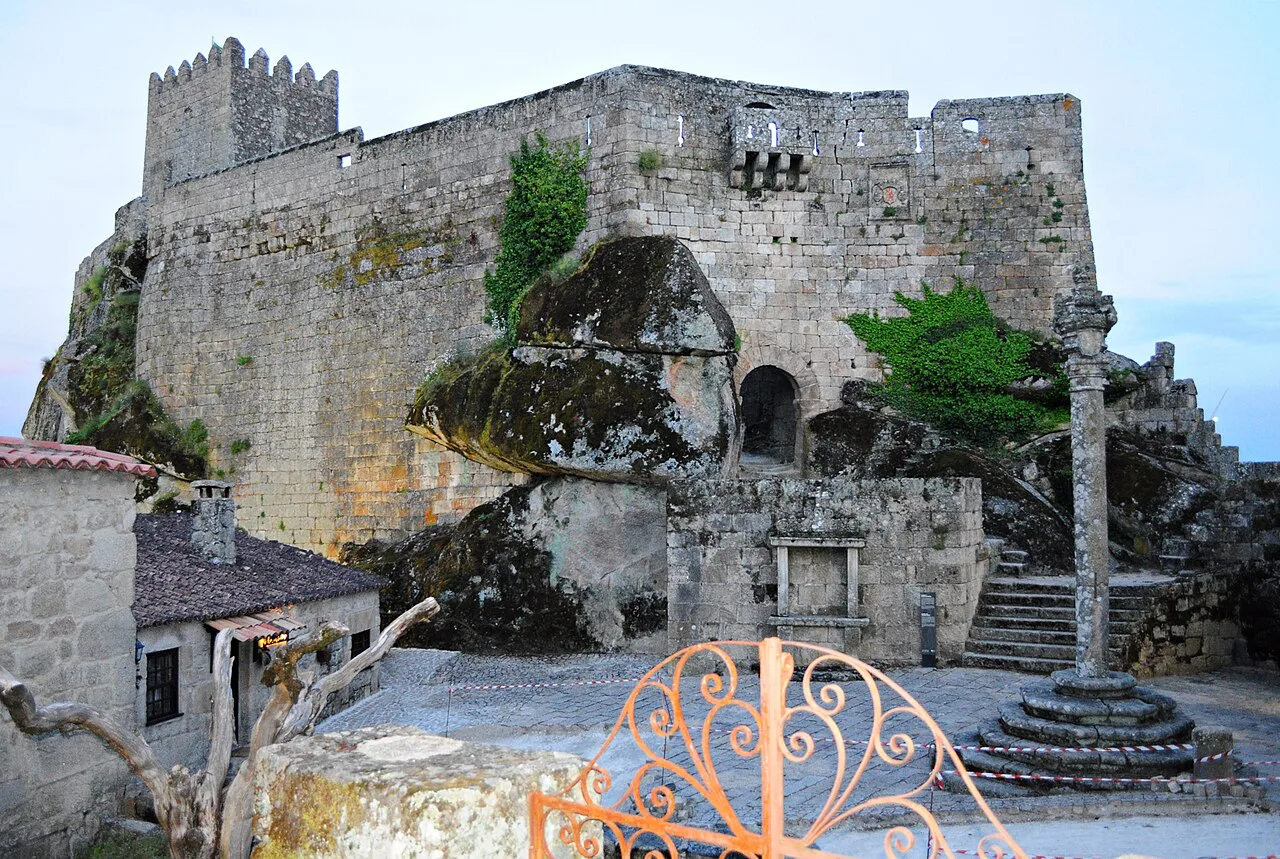
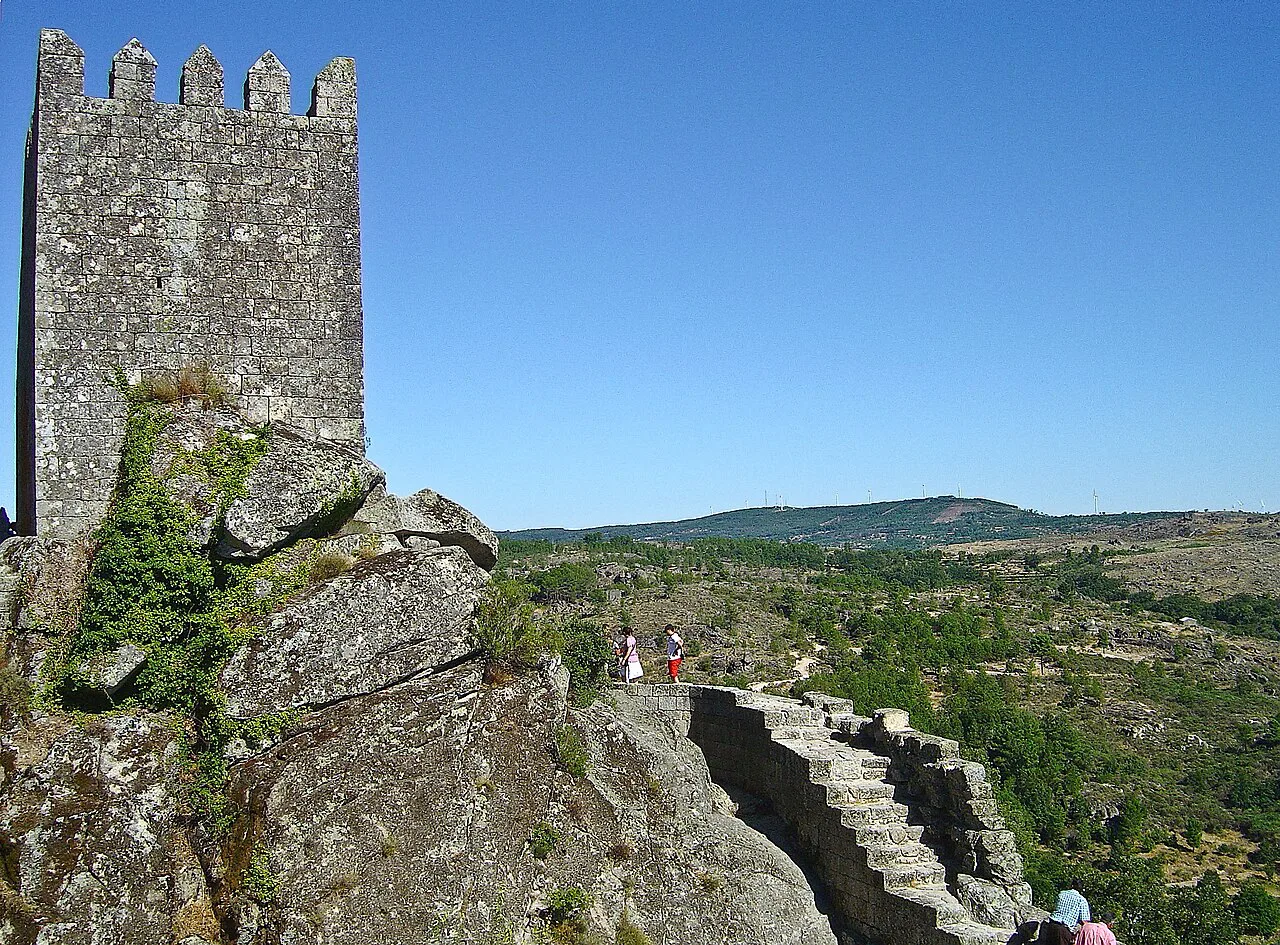
Sortelha's castle is a Castelo roqueiro, a rock fortress, and by the guide's account it was the first of its kind built south of the River Côa. King Sancho I chose the site in the 13th century when relations with neighbouring Spain were tense, and the builders used the existing rock formation as part of the defensive walls. That is why the castle reads as part of the spur rather than a structure sitting on top of it, which is the detail worth noticing as you approach.
From the castle, the Portugal Travel Guide describes panoramic views across the plains as far as the Estrela mountains. Treat the climb as the climax of a visit rather than a quick photo stop: the walls, the rock and the valley view are the reason the village is here, and they reward a slower look.
The church, the pillory and the details to hunt for
In front of the arched castle entrance stands a 16th-century pillory topped by an armillary sphere, and close by is Sortelha's old parish church, which the Portugal Travel Guide singles out for an intricate mudéjar ceiling executed by medieval Moors. Look up inside the church for the ceiling and look up outside for the sphere: both are easy to walk past.
On some of the house walls, the same source notes, stones marked with Arabic patterns and script are still visible, a reminder of the village's Hispano-Arabic origins before the Moors were driven out in the 12th century. The pleasure of Sortelha is in this kind of close looking rather than in major museums, so give yourself time to walk the lanes slowly and scan the masonry.
Walking the walls and lanes
The circuit inside the walls is short, but sloping cobblestones and tight alleys slow you down, and that is the point. Wear shoes with grip, keep the castle for the end so the view is your reward, and allow time to double back when a lane dead-ends. There is no need for a fixed route: the village is small enough to cover on foot in every direction, and getting slightly lost among the granite houses is part of the experience.
If you enjoy this kind of granite-and-castle village, the wider set of historic villages of Portugal gives you a route to plan around. Monsanto is the other obvious draw in this corner of the Beiras, a village of boulders and narrow lanes that pairs naturally with Sortelha on a driving day.
How long Sortelha needs
Allow half a day inside the walls: the gate, the lanes, the church, the pillory and the castle climb fit comfortably into a morning or an afternoon without rushing. Add Sabugal, 10 kilometres east, and you have a full day, since that village has its own well-preserved medieval castle. The trade-off is depth: pushing both into one day means less time in Sortelha's lanes, which is where much of its character lies.
Sabugal and its castle make the natural pairing for a second stop on the same day. Keep the driving short and the pace slow rather than trying to add a third village.
Getting there: drive from Guarda, Covilhã or Belmonte
Sortelha is best reached by car, with Guarda 40 kilometres to the north, Covilhã 33 kilometres to the north-east and Belmonte 17 kilometres to the west, all distances as given by the Portugal Travel Guide. Base yourself in one of these and drive in for the day. Guarda, at an altitude of 1,075 metres, is described as the highest place in the country and has a 14th-century Gothic cathedral worth an hour before or after.
Belmonte, 17 kilometres west, is the birthplace of Pedro Álvares Cabral, who reached Brazil in 1500, and works as a base for a Sortelha day; our guide to Belmonte, Portugal covers what to see there. Covilhã is noted for locally made woollen garments, so it is a practical supply stop as well as a base.
Sortelha has no station and no useful bus connection described by the sources, so treat the car as essential. Check driving times on a current map on the day: mountain roads here are slower than the map distances suggest.
Where Sortelha fits in a Beiras itinerary
Sortelha works as a stop between Guarda and Covilhã, or as a day out from Belmonte, with Sabugal 10 kilometres east as the obvious partner. Beyond that, the Serra da Estrela Natural Park, which the guide describes as roughly 1,000 square kilometres and the largest natural conservation area in Portugal, spreads out around Covilhã and Celorico da Beira and can absorb the rest of a day.
Keep the distances honest in your planning: Guarda to Sortelha at 40 kilometres is a comfortable morning, while adding Belmonte at 17 kilometres west of Sortelha and Sabugal at 10 kilometres east means three short hops rather than one long drive. That combination is realistic for a single day only if you keep each stop brief.
The Serra da Estrela rises to Torre at 1,993 metres, the highest point in mainland Portugal after Pico in the Azores, and the Portugal Travel Guide places Sortelha within reach of the park. The Reserva Natural da Serra da Malcata, a protected forest south-east of the village, is also within the region, though the guide's mention of Iberian lynx, wolves and wild boar is a conservation note rather than a wildlife-spotting promise.
For a longer tour of Portugal's walled and granite villages, the Historic Villages of Portugal circuit gives you the wider map of which Sortelha is one stop. Piódão: What to See in Portugal's Schist Village in the Serra do Açor is the other end of that tradition, a schist village that contrasts usefully with Sortelha's granite.
Food and drink in a village this small
The sources describe Sortelha as a small walled village rather than a place with a range of cafés, so plan your meals around Guarda, Covilhã or Belmonte rather than assuming you will eat inside the walls. Carry water and something to eat for the walk. The nearest towns on your route are where to look for Serra cheese and other local produce the Beiras is known for.
Leave the detailed timings aside and let the castle set the pace: it commands the upper Zêzere valley, with views across the plains as far as the Estrela mountains. Start early so you have daylight on the lanes and the castle climb, and confirm any opening arrangements with the local municipality or the Aldeias Históricas de Portugal network before you set out.
Is Sortelha worth the detour?
Yes, if you are already driving the Beiras and want one compact, atmospheric stop between Guarda and Covilhã. The castle, the Gothic gate, the pillory's armillary sphere and the church's mudéjar ceiling give you a concentrated dose of medieval frontier Portugal in a few hours. Skip it if your trip is a Lisbon or Porto city break: the distances do not work as a day trip.
Explore more Portugal guides
Frequently Asked Questions
Is Sortelha the oldest town in Portugal?
No. The Portugal Travel Guide describes Sortelha as the oldest of a string of strongholds guarding Portugal's eastern frontier, which is a claim about a defensive chain rather than about the country's oldest settlement. Read it as a medieval fortress village with Hispano-Arabic origins and a 13th-century castle.
How do you get to Sortelha?
By car. Sortelha sits about 40 kilometres south of Guarda and 33 kilometres north-east of Covilhã, so base yourself in Guarda, Covilhã or Belmonte and drive in for a morning or afternoon. Check driving times on a current map on the day, as mountain roads here are slower than the distances suggest.
What is a Castelo roqueiro?
A Castelo roqueiro is a rock fortress. At Sortelha the 13th-century fortification selected by King Sancho I was built using the existing rock formation as part of its walls, which is why the castle reads as part of the spur rather than a structure sitting on top of it. The Portugal Travel Guide notes it was the first rock fortress built south of the River Côa.
How much time should you spend in Sortelha?
Half a day covers the gate, the lanes, the old parish church, the pillory and the castle climb without rushing. Add Sabugal 10 kilometres east and its own medieval castle for a full day, though that means less time in Sortelha's narrow lanes.
What should you look for on foot in Sortelha?
Four things: the Gothic gates you enter through, the 16th-century pillory with its armillary sphere at the arched castle entrance, the mudéjar ceiling in the old parish church, and stones marked with Arabic patterns and script on some house walls. The castle view across the upper Zêzere valley towards the Estrela mountains is the finale.
Sources
Notes for your next Portuguese break
Optional updates to our town guides.
You might also like



Continue reading
More guides you'll find useful





