Lisbon to Nazaré: Train, Bus or Car for a Short Break
How to get from Lisbon to Nazaré by bus, car or train, where each option drops you, and which suits a one- or two-day stay in the town.
On this page
Nazaré sits about 117 km north of Lisbon, and the straightforward options are a direct coach or a car; there is no direct train into the town. This guide compares those two, explains where each one leaves you in relation to the seafront at Praia da Nazaré and the clifftop quarter of Sítio, and sets out what to see once you arrive.
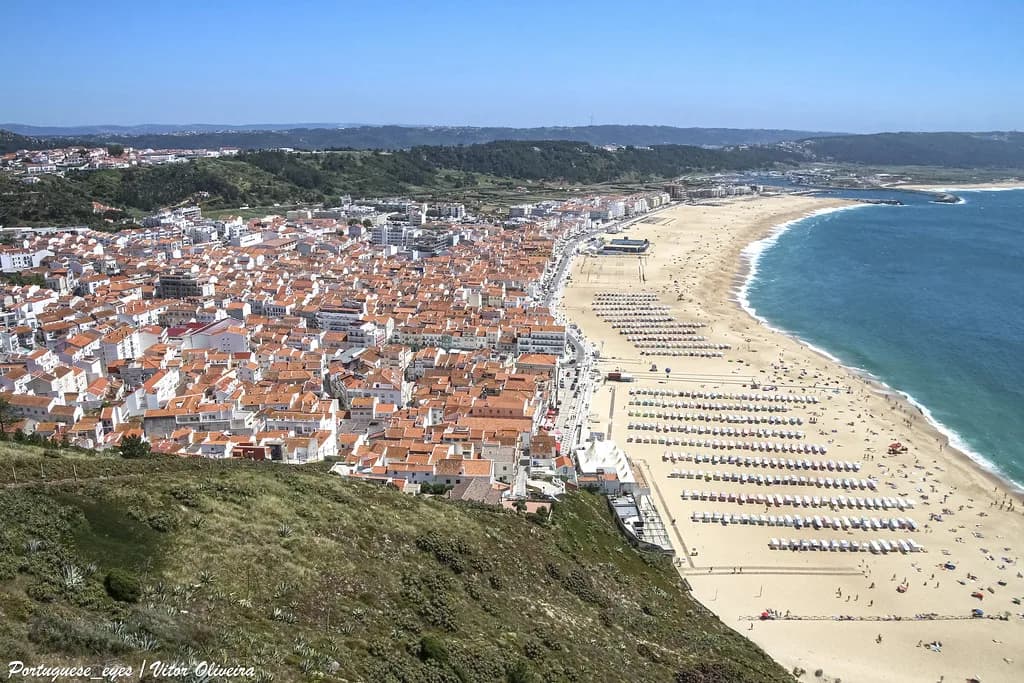
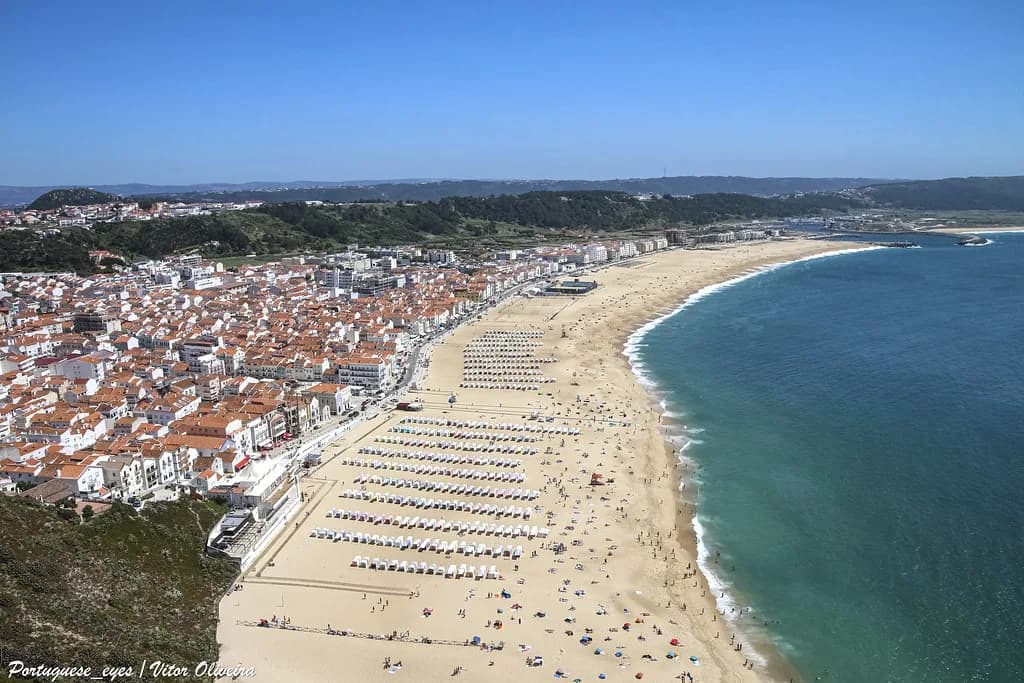
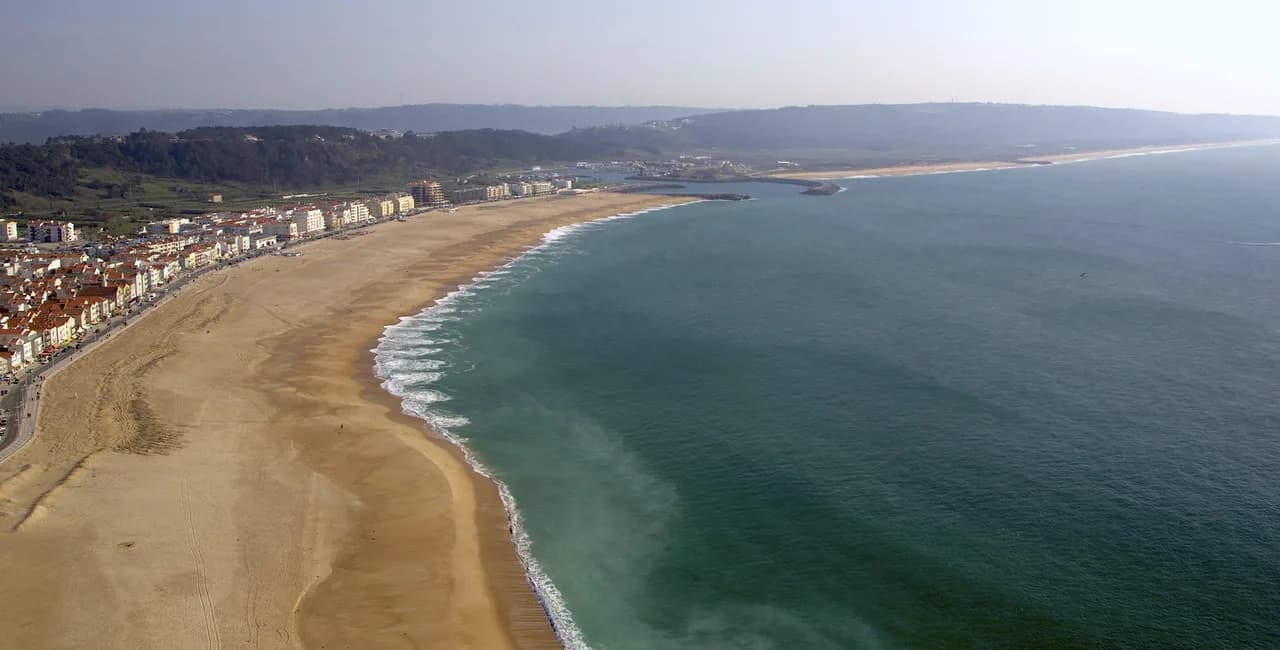
The town has two distinct halves that change your transport plan. The Praia is the low-lying seafront with the beach, market and fishing quarter, while Sítio da Nazaré sits on the promontory above it and is reached by funicular or by road. Where you are dropped, and whether you have a car, decides how easily you move between them.
How to get from Lisbon to Nazaré: the short answer
Take the coach if you want a simple, car-free break and plan to stay in the Praia or use the funicular to reach Sítio. Take the car if you want to combine Nazaré with Alcobaça or Óbidos, reach Praia do Norte under your own steam, or carry luggage and surf gear without a transfer. Neither option is complicated; the choice comes down to how much you want to move around once there.
Journey times and fares change with the operator and season, so compare departures on the day you plan to travel rather than relying on any fixed figure. The distance is the one reliable anchor: Center of Portugal puts Lisbon at 117 km from Nazaré, which sets the scale for a drive or coach ride.
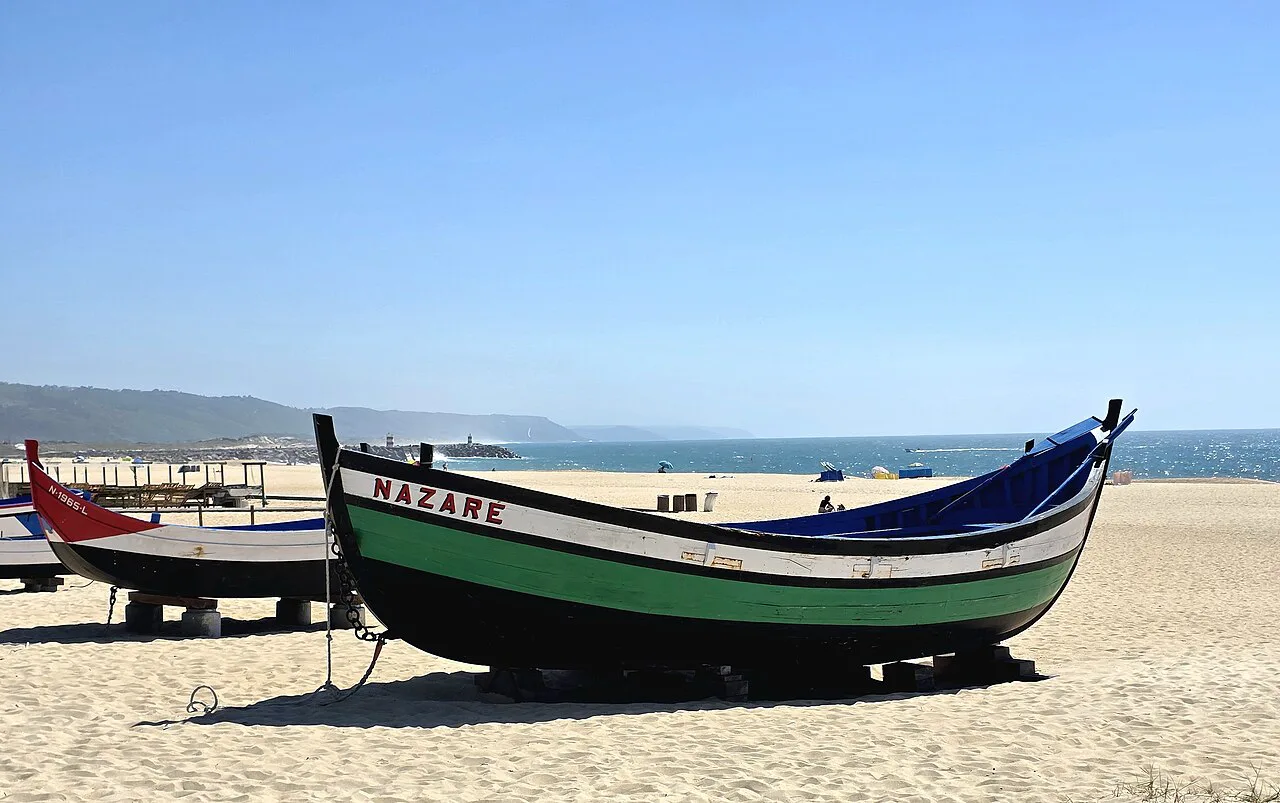
How far is Lisbon from Nazaré?
Nazaré lies roughly 117 km north of Lisbon, on the coast of the Centro region in the district of Leiria. That is close enough for a one- or two-day break, but far enough that a there-and-back day trip leaves little time for both halves of the town. The practical consequence is that you should decide in advance whether you are staying overnight or treating Nazaré as a long day out.
If you are weighing up whether the journey is worth it, our guide to how many days in Nazaré sets out what one, two and three days realistically cover once you have arrived.
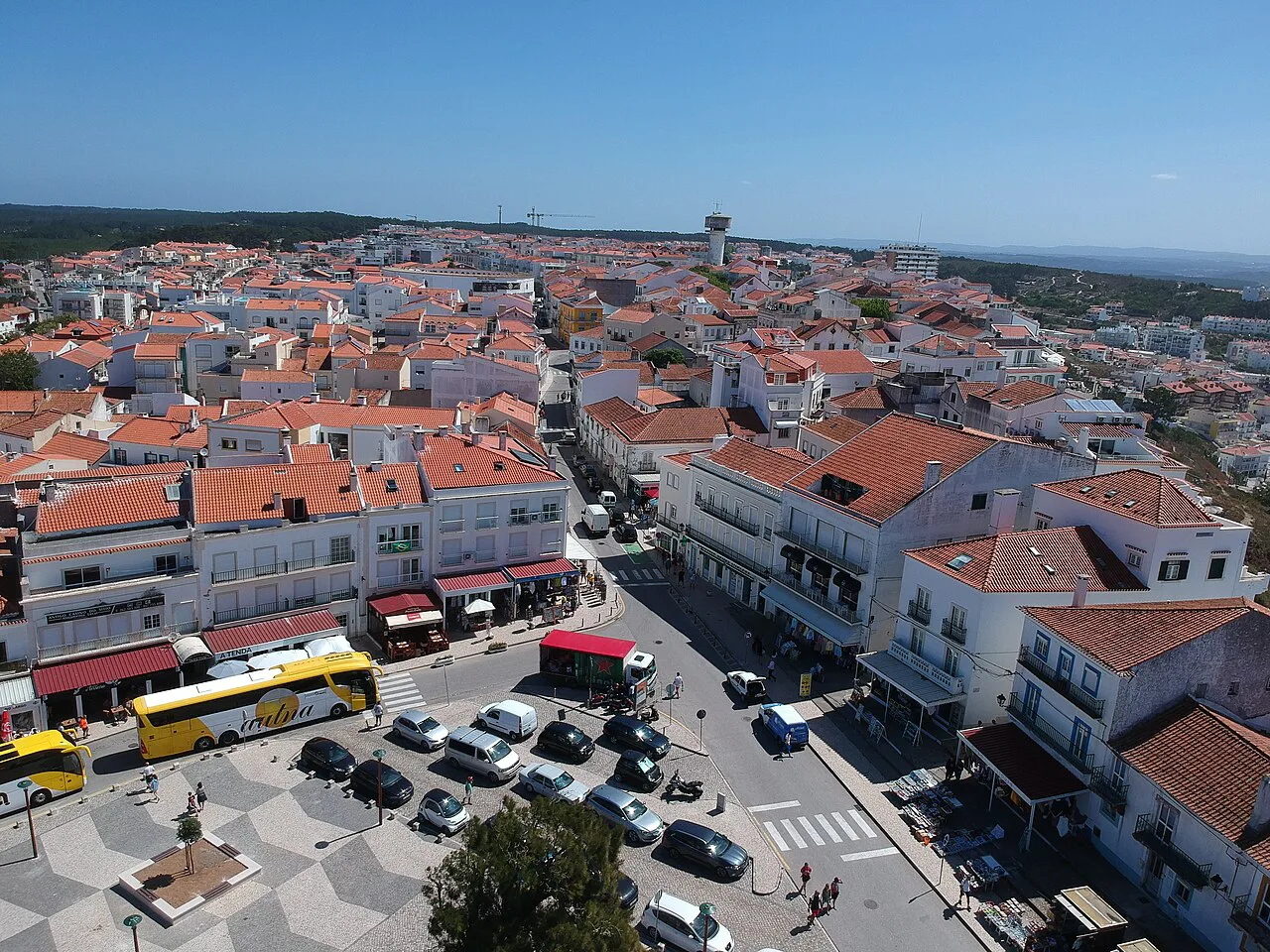
Lisbon to Nazaré by bus: where it leaves from and where it arrives
Coaches from Lisbon to Nazaré are the obvious choice for travellers without a car, and Sete Rios is the Lisbon bus station most commonly cited for the route. Confirm the current operator, departure point and drop-off location when you book, because the town has more than one possible stopping point and the walk to your accommodation depends on it.
On arrival, work out which half of Nazaré you are staying in before you haul luggage uphill. The Praia seafront is walkable and flat; Sítio sits high on the promontory and is linked by funicular and by road. A coach that drops you in the lower town makes a Praia base easy but leaves a climb or a funicular ride to reach Sítio.
Lisbon to Nazaré by car: parking and getting around once there
Driving gives you the most flexibility: you can stop at Alcobaça or Óbidos on the way, park near the seafront, and drive up to Sítio and out to Praia do Norte without depending on the funicular. The trade-off is parking in a compact resort town, which tightens in summer and around big-wave days. Budget time to find a space rather than assuming you can park at the door of your accommodation.
A car also makes the most of the coastline either side of town. Keep in mind that the famous waves break at Praia do Norte, not the main beach, so having your own transport saves you a long walk along the front when you want to watch the surf.
Is there a Lisbon to Nazaré train?
There is no direct train service into Nazaré, so a rail-only plan does not work. The realistic rail option would involve a mainline train towards the Leiria or Alcobaça area and then a bus or taxi for the final stretch, which adds a connection and eats into a short break. For most visitors the coach or the car is simpler.
If you specifically want to travel by rail, check CP (Comboios de Portugal) for the nearest staffed stations and then a local bus operator for the onward leg before committing. Do not assume a station in Nazaré itself.
Which option suits a one- or two-day Nazaré break
For one night, the coach plus a base in the Praia is the least fuss: you arrive, walk to your room, see the seafront and take the funicular up to Sítio. For two nights, a car pays off because you can add Praia do Norte, the Forte de S. Miguel Arcanjo and a short detour to Alcobaça without losing half a day to connections.
If you are still deciding whether the town justifies the trip, our honest answer on whether Nazaré is worth visiting sets out what it does well and where it falls short for a short break.
Getting between Nazaré's Praia and Sítio once you arrive
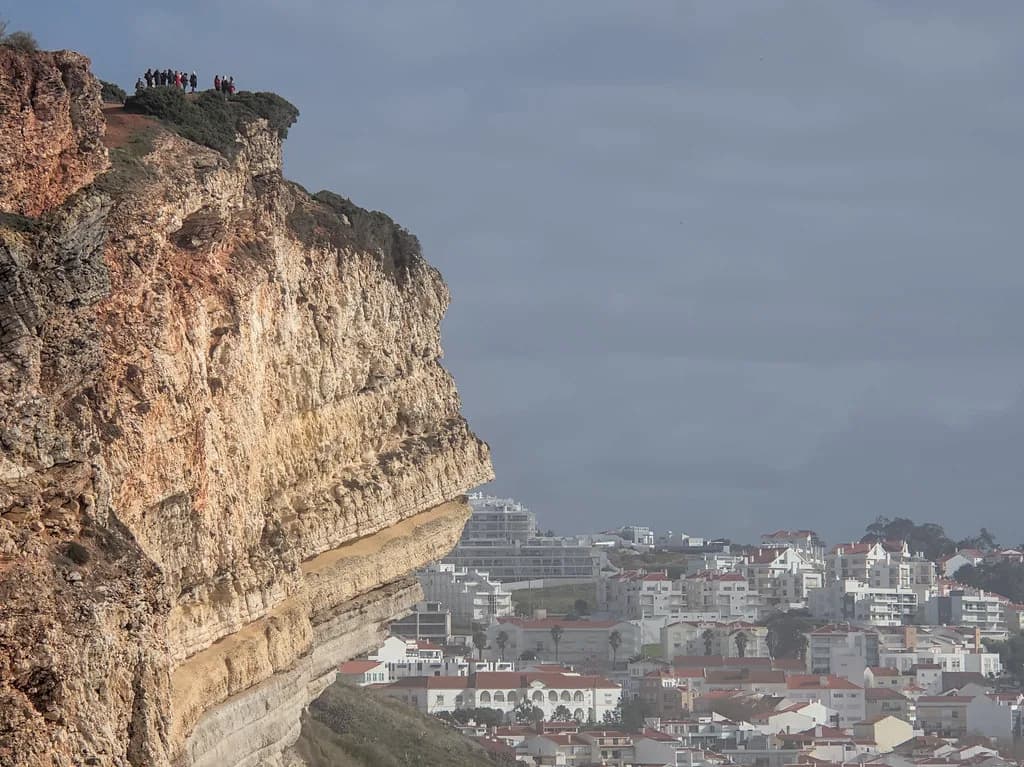
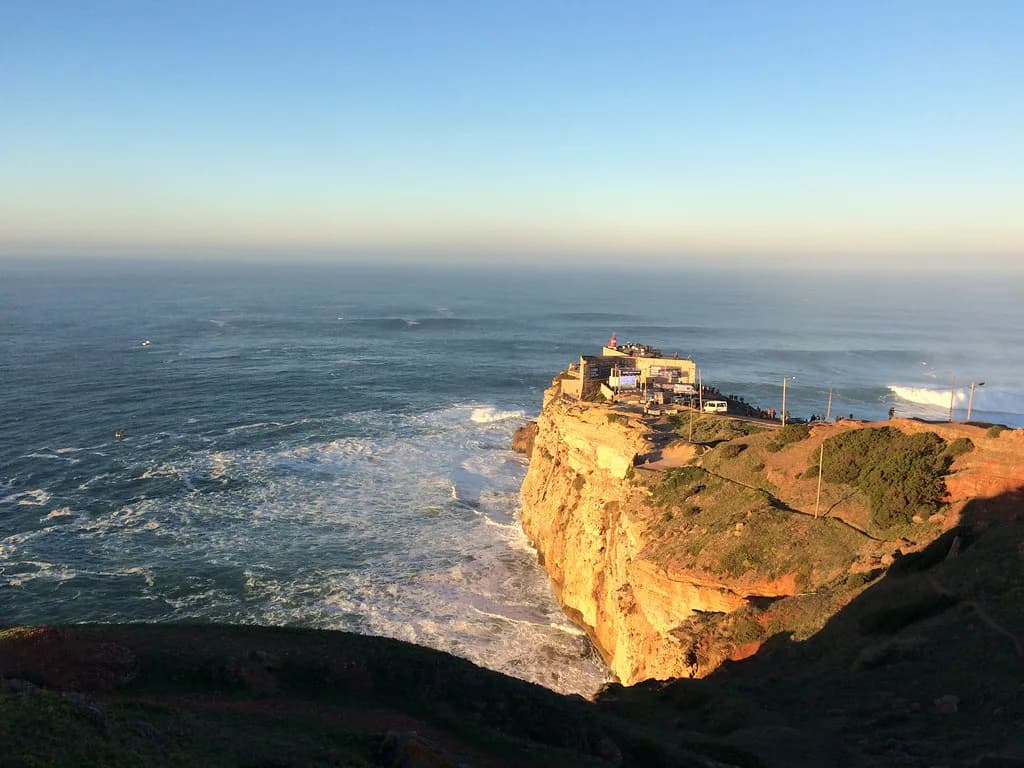
Sítio da Nazaré sits on the clifftop above the Praia and is the best place for the view back over the town and sea. A funicular, the Ascensor, connects the lower town with Sítio, and the walk between the two quarters is steep enough that most visitors ride up and walk down, or the reverse. Center of Portugal names the funicular as the way up to the best viewpoint in town.
Up in Sítio you also find the Ermida da Memória, the small hermitage tied to the town's founding story, and the clifftop squares where the view opens out. Praia do Norte, where the big waves break, is a further walk or short drive north of the main beach, so allow time for it separately rather than folding it into a Sítio visit.
Filling one day in Nazaré: what to see after the journey
Start on the Praia seafront, where the fishing boats, the dried-fish tradition and the Municipal Market give the town its character, then take the funicular up to Sítio for the view and the Ermida da Memória. Center of Portugal lists the market, the Sítio district and the Dry Fish Museum among the things to see, alongside the Ladeira panoramic swing and the Chaby Pinheiro Theatre.
At the Forte de S. Miguel Arcanjo, above Praia do Norte, the Surfer Wall displays boards ridden by the big-wave surfers who made the beach famous, including Garrett McNamara, Maya Gabeira and Sebastian Steudtner. The fortress is listed with daily opening from 10.00 to 20.00, last entry at 19.30, and entry at one euro, with children under ten free.
Elsewhere in town, the Museu Dr. Joaquim Manso covers the local ethnography and the fishing community's history, and makes a sensible wet-weather or mid-afternoon stop. Opening days vary, so check the museum's page before you build it into a tight schedule.
Big-wave watching is seasonal rather than guaranteed: Center of Portugal describes the big-wave season as running from November to February, when the Nazaré canyon funnels swell into the beach at Praia do Norte. If seeing the waves is the point of your trip, plan around that window but accept that no given day is promised.
For a fuller plan, our Nazaré Attractions hub groups the individual sights, and the Nazaré itinerary sequences them into a walkable day.
Which way should you book?
Book the coach if you want the simplest journey and a base in the Praia, and rely on the funicular for Sítio. Book a car if you want Praia do Norte, the fortress and a detour to Alcobaça or Óbidos without losing time to connections. Either way, check current departures, fares and opening hours directly with the operator or venue before you travel.
Frequently Asked Questions
Which airport is closest to Nazaré?
Lisbon is the practical arrival airport for Nazaré, and the town sits about 117 km north of the city. From Lisbon you continue by coach or car; no direct train runs into Nazaré. Check current coach departures from Lisbon before you book flights so the two legs connect sensibly.
Can you swim at the beach in Nazaré?
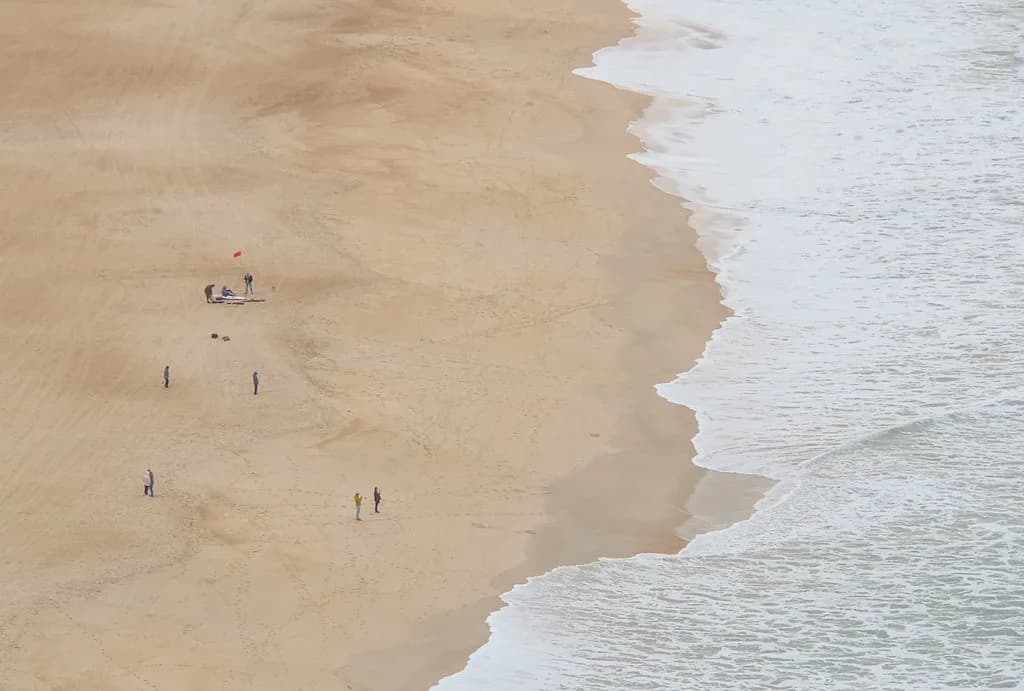
The main beach at Praia da Nazaré is the town's bathing beach, while the giant waves that made Nazaré famous break at Praia do Norte. Conditions vary, so follow local flag warnings and lifeguard advice on the day rather than assuming calm water.
Is Nazaré worth the journey from Lisbon?
Nazaré justifies the trip if you want the clifftop views from Sítio, the fishing-town character of the Praia and the Surfer Wall at the fortress. It suits a one- or two-night stay better than a rushed day trip, because the two halves of town and Praia do Norte each take time to reach.
Sources
Notes for your next Portuguese break
Optional updates to our town guides.
You might also like
Continue reading
More guides you'll find useful