Nazaré History: The Story Behind the Town and Its Big Waves
A short history of Nazaré for visitors, from the Pederneira lagoon and the Sítio legend to the 2011 record wave that made Praia do Norte famous.
On this page
Nazaré's history is three stories stacked on one stretch of coast: a fishing lagoon that silted into a beach, a pilgrimage site on the clifftop above it, and a submarine canyon that made the northern beach famous worldwide. Understanding them explains why the town has two levels and why you will spend more time on the promontory than you expect. This guide follows the thread from the lagoon and the Legend of Nazaré through the fishing years to the record waves at Praia do Norte.
Most visitors arrive knowing only the 2011 wave, but the town's layout makes far more sense once you know the lagoon and the Sítio came first. Use the dates here as history, not as a fixture list, and treat the promontory as the main physical remnant you can actually walk through.
The short answer: what shaped Nazaré
Three forces shaped the town: the silting of the Pederneira lagoon, which pushed settlement down to the shore; the religious legend attached to the clifftop; and the Nazaré canyon offshore. The first two gave you the two-level town, with the beachfront at sea level and the Sítio district high on the promontory. The third gave you the giant waves that turned a fishing village into an international destination after 2011.
For a short break, that means history here is mostly about position and viewpoint rather than museums. You read the town by walking between the beach and the Sítio, not by following a timeline on a wall.
The lagoon that became the beach: Pederneira and the silting of the shoreline
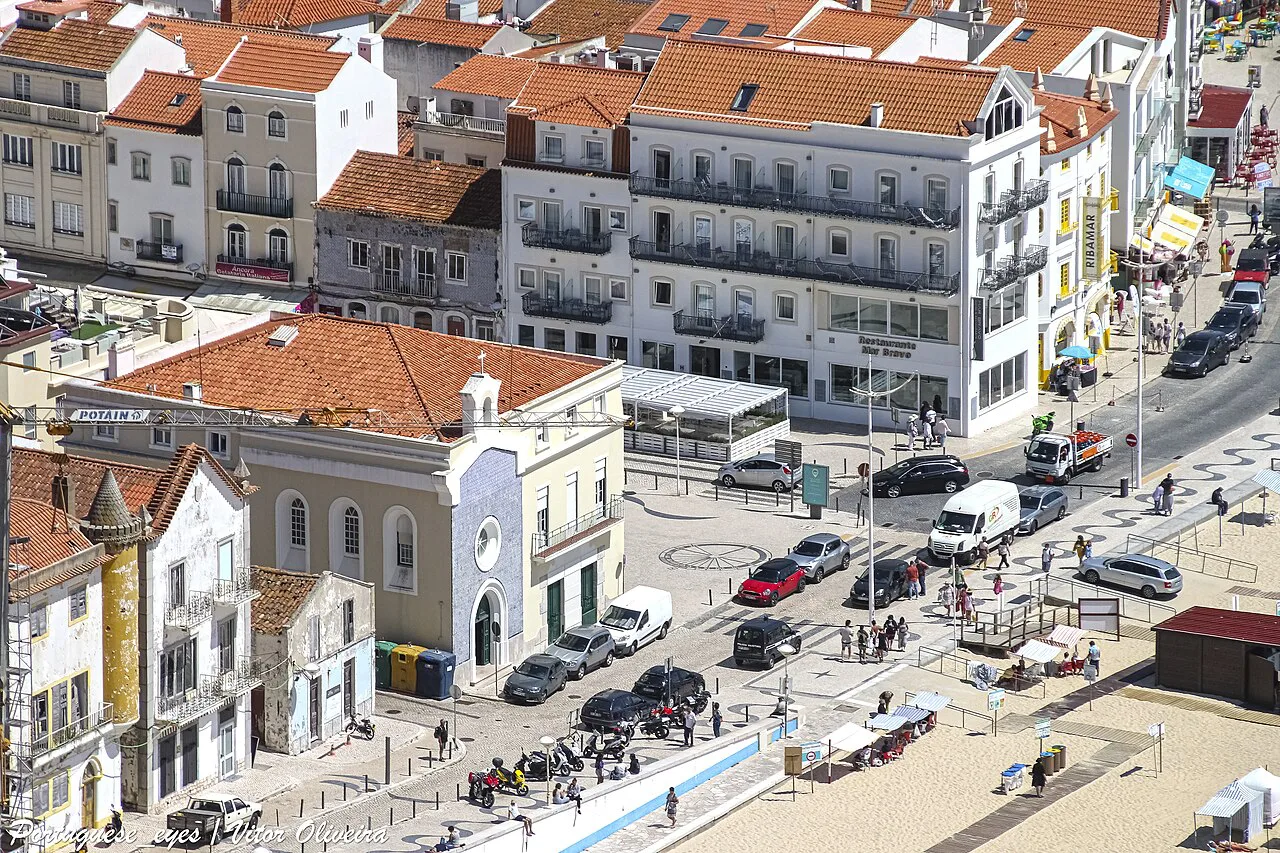
The beach at Nazaré was once a lagoon rich in fish, described as a vast peaceful watercourse and named the Pederneira Lagoon by the end of the 12th century. Pederneira grew into the wealthiest and most populated town of the Cistercian lands, with a hospital, shipyard, guesthouses, taverns and a cereal fair. That prosperity rested on water that was slowly disappearing.
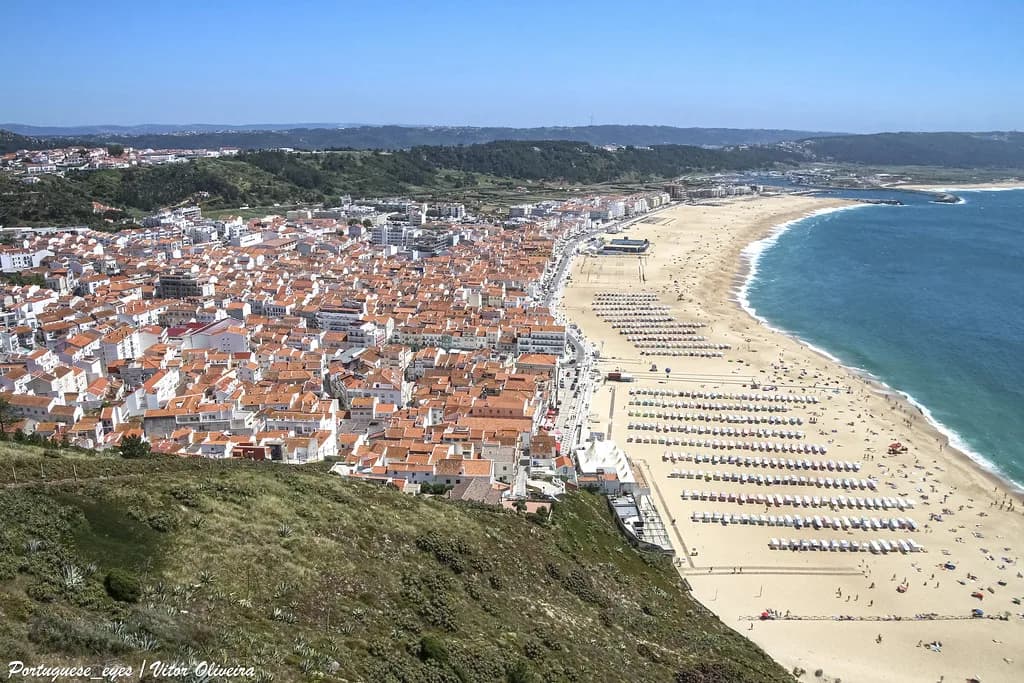
As the lagoon silted, the population of Pederneira fell and settlement shifted to the new beach below the promontory. Fishermen's houses began to appear under the cliff, and by 1780 there were 58 single-storey houses there. The place took the name Nazaré, and the old lagoon town became the quiet upper neighbourhood it is today.
The Legend of Nazaré and the Ermida da Memória on the Sítio
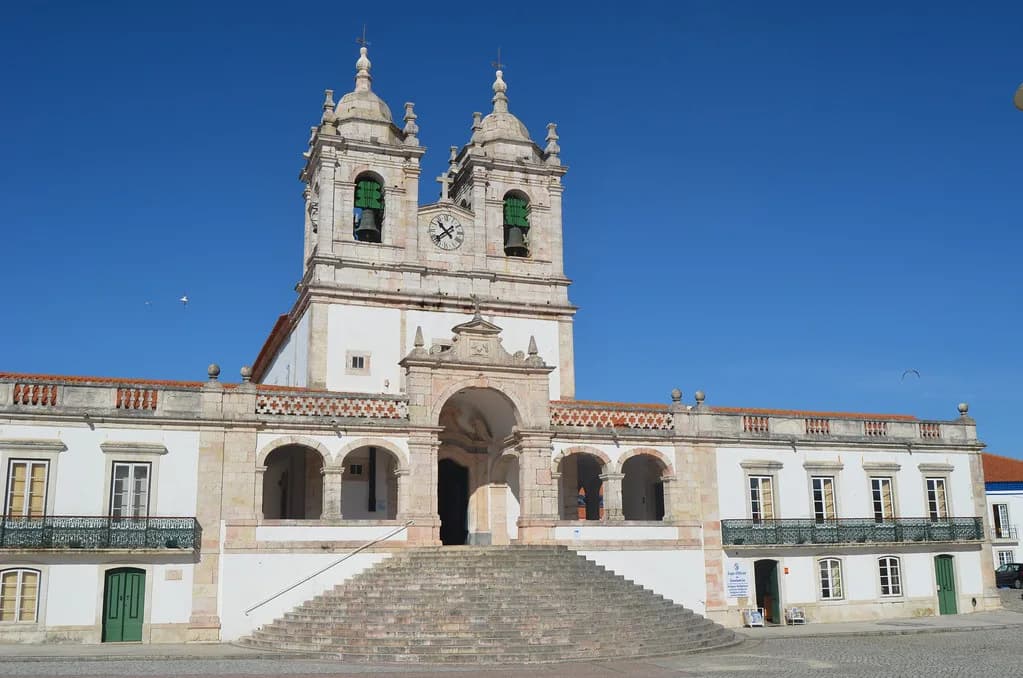
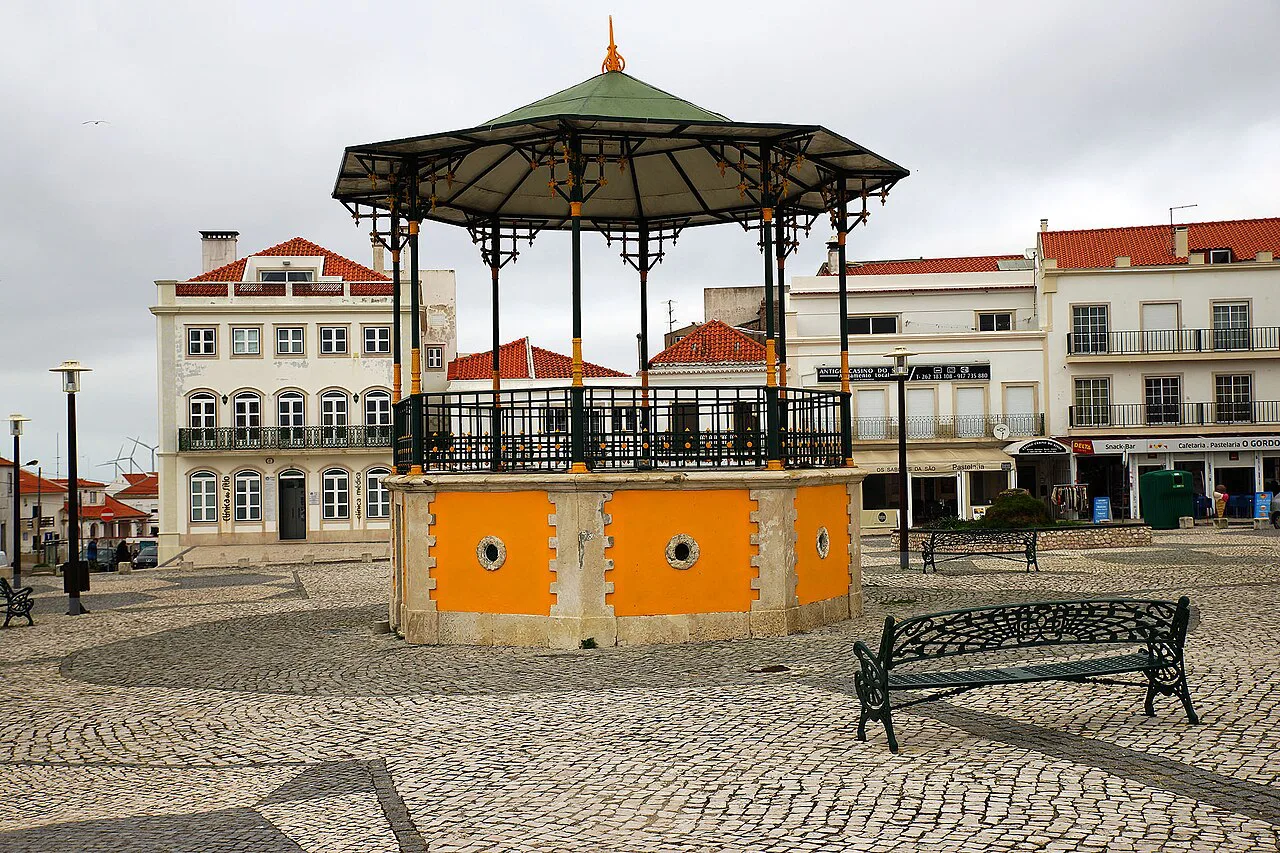
The town's name comes from a small wooden statue of the Virgin Mary said to have been brought from Nazareth in the Holy Land. An image of Our Lady was found in a small cave in 1182 and identified as coming from Nazareth in Galilee, according to the Legend of Nazaré. The Ermida da Memória, the little hermitage on the Sítio, marks that spot and is the origin point for everything built above the beach.
Treat the legend as the town's founding story rather than a documented fact, and you will read the sanctuary and the cliff path correctly. Pilgrimage, not surfing, is what first put the Sítio on the map.
Why the town sits in two halves: the beachfront and the Sítio promontory
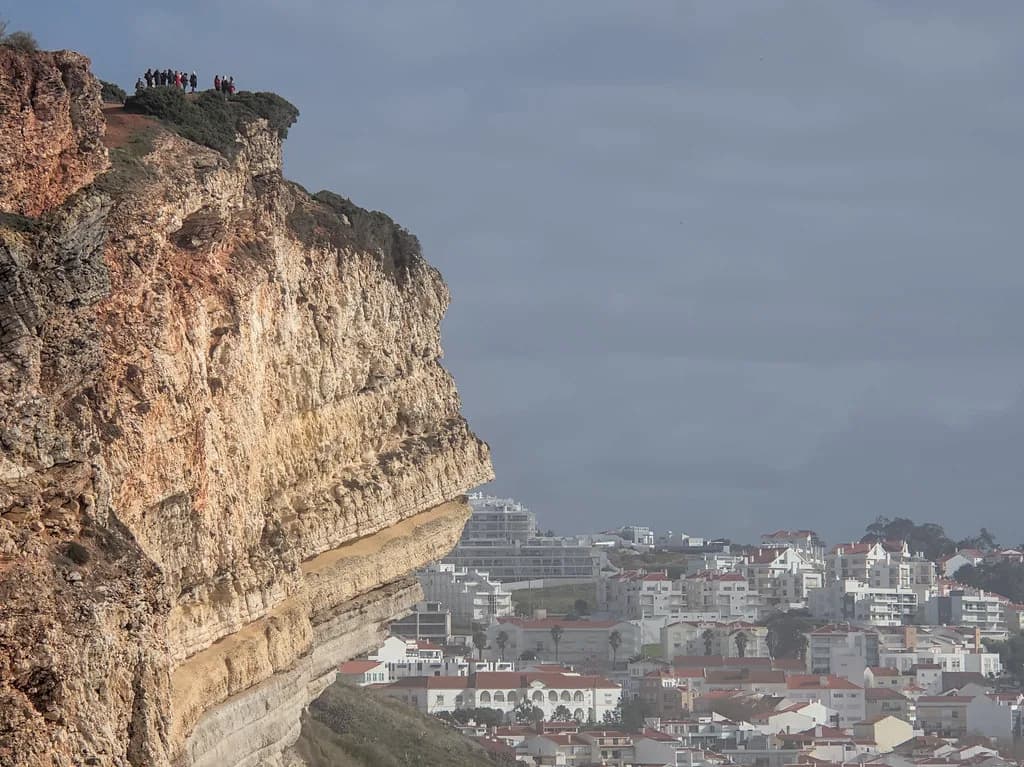
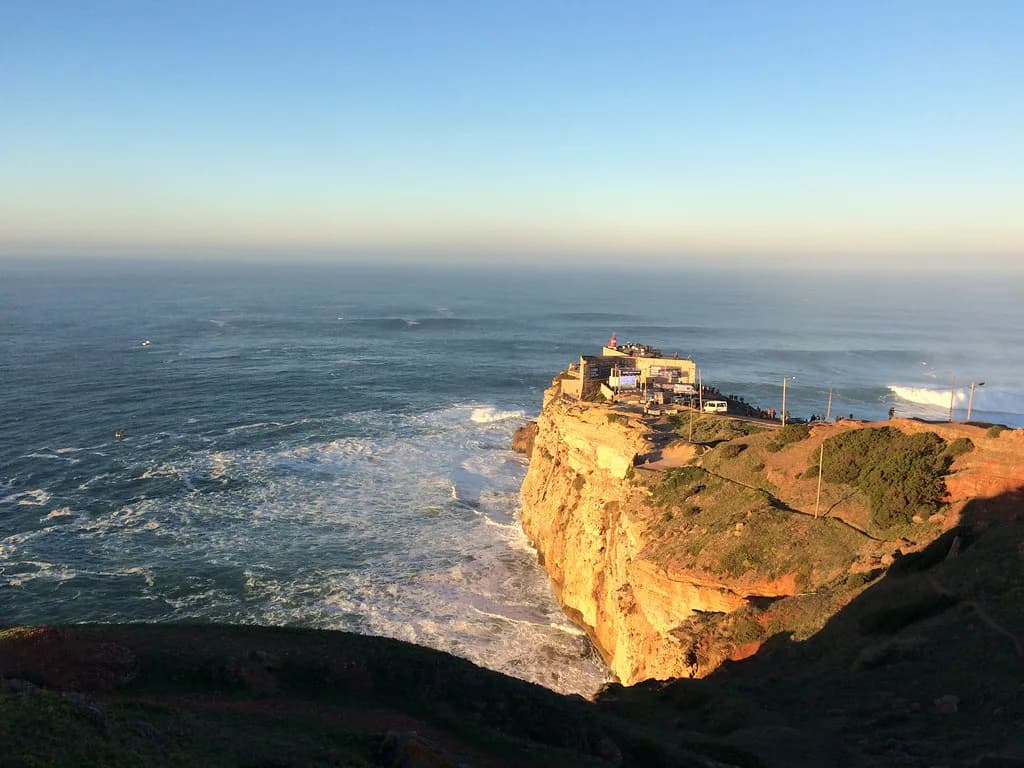
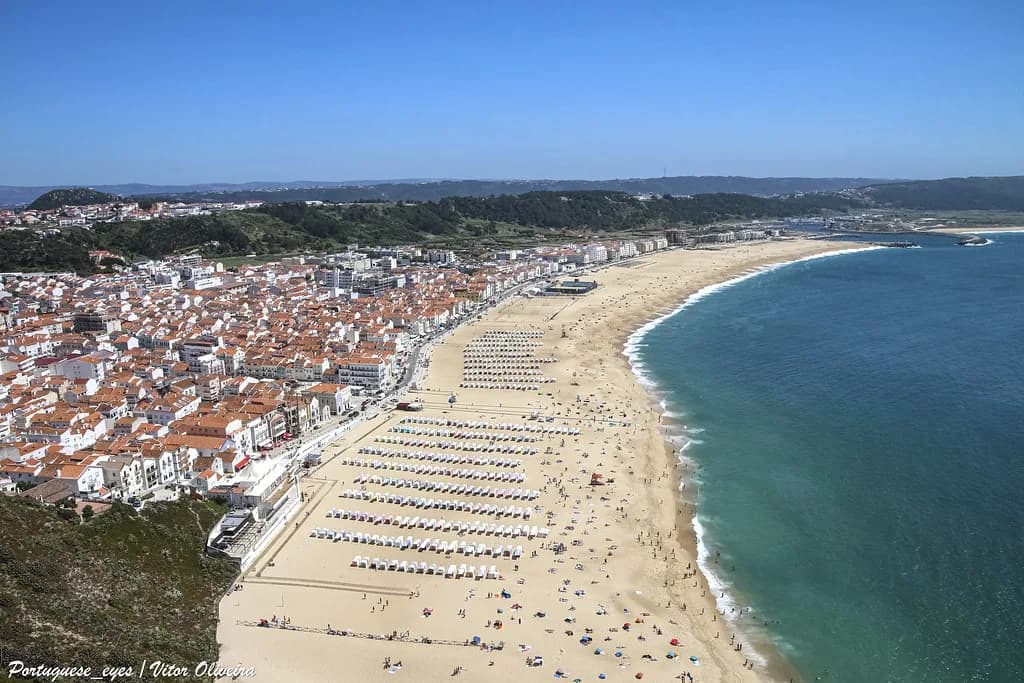
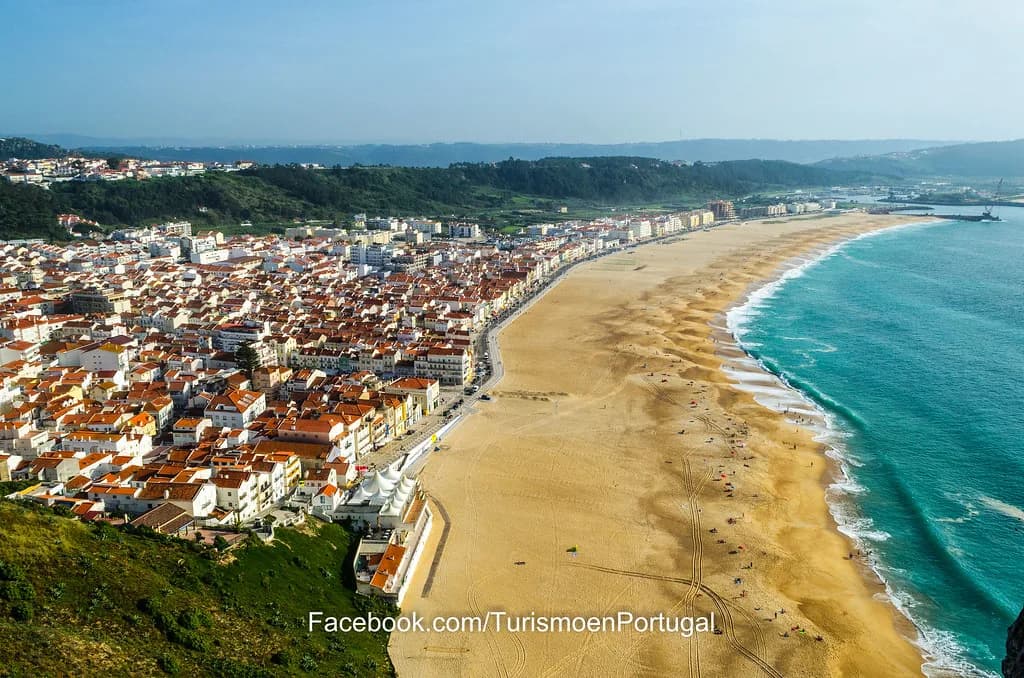
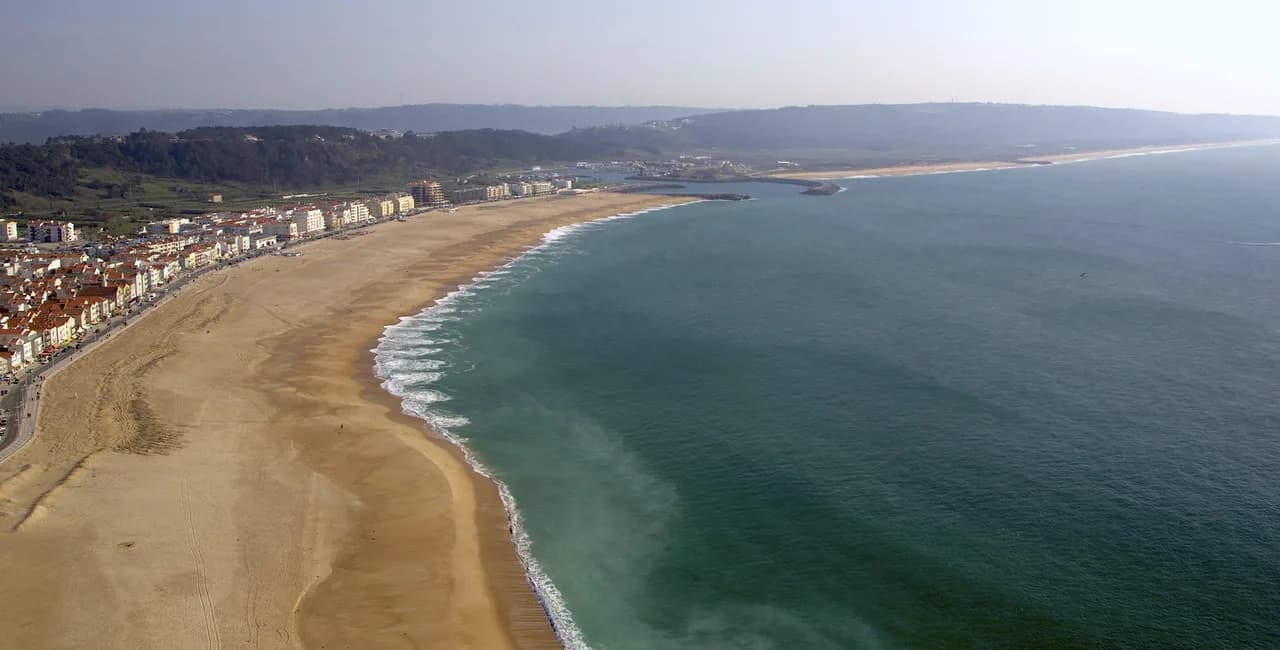
The promontory of Nazaré, where the lighthouse stands, separates two very different beaches. South of the lighthouse is the quieter main beach of the town; north of it is Praia do Norte, with a rougher temperament thanks to the canyon offshore. The Sítio sits on top of that same headland, which is why the funicular and the cliff road both climb between two worlds.
Plan your walking around that split. The beachfront is where the fishing life and the summer-resort streets are; the Sítio is where the sanctuary, the legend and the big-view terrace are. Allow a half-day for the upper level if you want to see the hermitage and the lighthouse without rushing.
The fishing town: boats, dried fish and the old summer-resort years
Nazaré has always been a place of fishermen and sea people, and the most moving image of the town is still the horse mackerel, carapau, hung out to dry in the sun. Brightly painted boats carry life-related messages along the seafront, and women in the traditional seven skirts once sold dried fruit on the beach. Local cooking follows the same thread, built on shellfish and fish stews such as caldeirada, with dried fish an absolute must.
At the start of the 20th century the beach became a flourishing summer resort, and in the Sítio the Grand Hotel Club and Casino-Hotel opened their doors. That genteel resort era sits oddly beside the working fishing beach, and the contrast is still visible in the architecture of both levels. It is the reason Nazaré feels like a holiday town and a working port at once.
The Nazaré Canyon: why the waves at Praia do Norte are so big
The Nazaré canyon is the geological explanation for everything that happened after 2011. It is roughly 5,000 metres deep and about 230 kilometres long, and it funnels ocean swell straight towards Praia do Norte. That is why the northern beach, not the calm main beach south of the lighthouse, produces the monster waves.
Big-wave season runs from November to February, when the swell is most likely to arrive. Outside those months the canyon is still there, but the spectacle is not guaranteed; the waves are a winter phenomenon, not a year-round attraction.
2011 and after: Garrett McNamara, the record waves and what changed
Surfing has been recorded at Nazaré since the 1960s, when American surfers were filmed riding the small waves on the main beach in 1968. Bodyboarders later took on Praia do Norte, and the Nazaré Special Edition bodyboarding championship has been held there since 2003. The turning point came when Garrett McNamara, invited to Nazaré by local bodyboarder Dino Casimiro, rode a wave of 78 feet, about 23.77 metres, at Praia do Norte on 1 November 2011 during the Zon North Canyon Show.
That ride gave Nazaré worldwide prominence and made the town one of the most coveted destinations for big-wave surfers. It also rebranded a fishing resort almost overnight, with the lighthouse and the clifftop above Praia do Norte becoming the place to stand and watch. The first big-wave competition at Nazaré, the WSL Nazaré Challenge, followed in 2016.
Later records at Praia do Norte in brief
The records kept coming, and each belongs to its year rather than to any current ranking. In 2017 the Brazilian Rodrigo Koxa rode a wave measured at 80 feet, roughly 24.38 metres, at Praia do Norte. Also in 2017, the Portuguese Nuno Figueiredo set a kitesurf mark on a wave of about 19 metres.
In 2020 Maya Gabeira set a women's Guinness record for the largest wave surfed, measured at 73.5 feet, about 22.4 metres, during the Nazaré Tow Surfing Challenge. Sebastian Steudtner then set a new men's unlimited record for a wave ridden in October 2020 and measured at 86 feet, around 26.21 metres, certified in 2022. From the 2025/26 season, Guinness World Records rather than the World Surf League validates the largest waves surfed.
Where you still see the history: Sítio, the funicular and the sanctuary
The Sítio is the one place where the town's whole history is legible in a single walk: the hermitage of the legend, the sanctuary above the beach, and the clifftop view back over the fishing town. The best view over Nazaré is taken from the Sítio district, which you reach by funicular, and the ride itself is part of the experience.
Below, the beachfront keeps the fishing-town texture: the boats, the drying fish and the streets where the resort grew. Pair a Sítio morning with a beachfront afternoon rather than treating them as separate outings, and the geography tells the story for you.
How long Nazaré's history needs in a short break
Give the human history one full day: a morning on the Sítio with the hermitage and the viewpoint, a beachfront afternoon among the fishing streets, and a walk to the lighthouse above Praia do Norte if the weather allows. A second day lets you add the municipal market and the smaller museums without hurrying. The dates and heights above are history you can carry with you rather than an itinerary.
If the winter swell is running, the spectacle at Praia do Norte can absorb an afternoon on its own, so build slack into the plan. Nazaré is about 117 kilometres from Lisbon, which makes it a straightforward base for a one- to two-night stay rather than a day trip from the capital.
Should the Sítio or the beach come first?
Start on the Sítio: it holds the legend, the sanctuary and the view that makes sense of everything below, and you can walk down to the beach afterwards. The beachfront and the fishing streets then read as the working town rather than a resort backdrop.
Leave Praia do Norte for a separate outing in the November-to-February swell window, and accept that the waves are weather, not a schedule. Fares and opening times for the funicular and the hermitage change with the season, so confirm them locally before you climb.
Explore more Nazaré guides
Frequently Asked Questions
Why is Nazaré, Portugal famous?
Nazaré became famous after Garrett McNamara rode a wave of about 23.77 metres at Praia do Norte in 2011, which turned a fishing resort into a big-wave destination. The town also has an older identity as a pilgrimage site on the Sítio and a fishing port on the beach below.
Who surfed Nazaré first?
American surfers were filmed riding the small waves on Nazaré's main beach in 1968, according to the town's surfing history. Local bodyboarders later took on the bigger surf at Praia do Norte, and bodyboarding championships have been held there since 2003.
Why does Nazaré have the biggest waves in the world?
An offshore canyon roughly 5,000 metres deep and about 230 kilometres long funnels Atlantic swell directly towards Praia do Norte. The result is a concentration of wave energy at the northern beach, while the main beach south of the lighthouse stays calmer.
When is the big-wave season at Nazaré?
The big-wave season at Nazaré runs from November to February, when Atlantic storms are most likely to send large swell into the canyon. Outside those months the beach is still worth visiting, but giant waves are not guaranteed.
Sources
Notes for your next Portuguese break
Optional updates to our town guides.
You might also like
Continue reading
More guides you'll find useful