Surfing in Nazaré: Big Waves, Beginners' Breaks and When to Go
Surfing in Nazaré means monster winter waves at Praia do Norte and gentler water elsewhere. Here is the season, the skill needed and where to watch.
On this page
Surfing in Nazaré suits two very different travellers: spectators who want to see the world's biggest rideable waves, and experienced big-wave surfers who come for the challenge at Praia do Norte. Beginners should treat the town's gentler water as their patch, not the famous break. This guide sets out why the waves get so large, when the season runs, where to watch from, and how to fill the rest of a short break.
The practical answer for most visitors is to plan a winter visit for the spectacle and a summer visit for everything else. The big-wave window runs from November to February, according to Center of Portugal, when Atlantic storms and the undersea Nazaré Canyon combine to produce walls of water at Praia do Norte. Outside that window the town is a working fishing resort with a beach, a clifftop quarter and a market.
Why Nazaré's waves are so big: the canyon in plain terms
The Nazaré Canyon is the engine behind the town's reputation. Center of Portugal describes it as roughly 5,000 metres deep and about 230 km long, a submarine gash that funnels Atlantic swell straight towards Praia do Norte with very little to slow it down. Where other coasts lose energy as waves cross a shallow shelf, here the energy arrives almost intact.
You do not need to understand the geology to use it. The canyon explains why the break at Praia do Norte behaves nothing like the calmer water in front of the town, and why forecasts for the two can differ sharply on the same day. Seeing the physical setup from the clifftop makes the whole phenomenon easier to read.
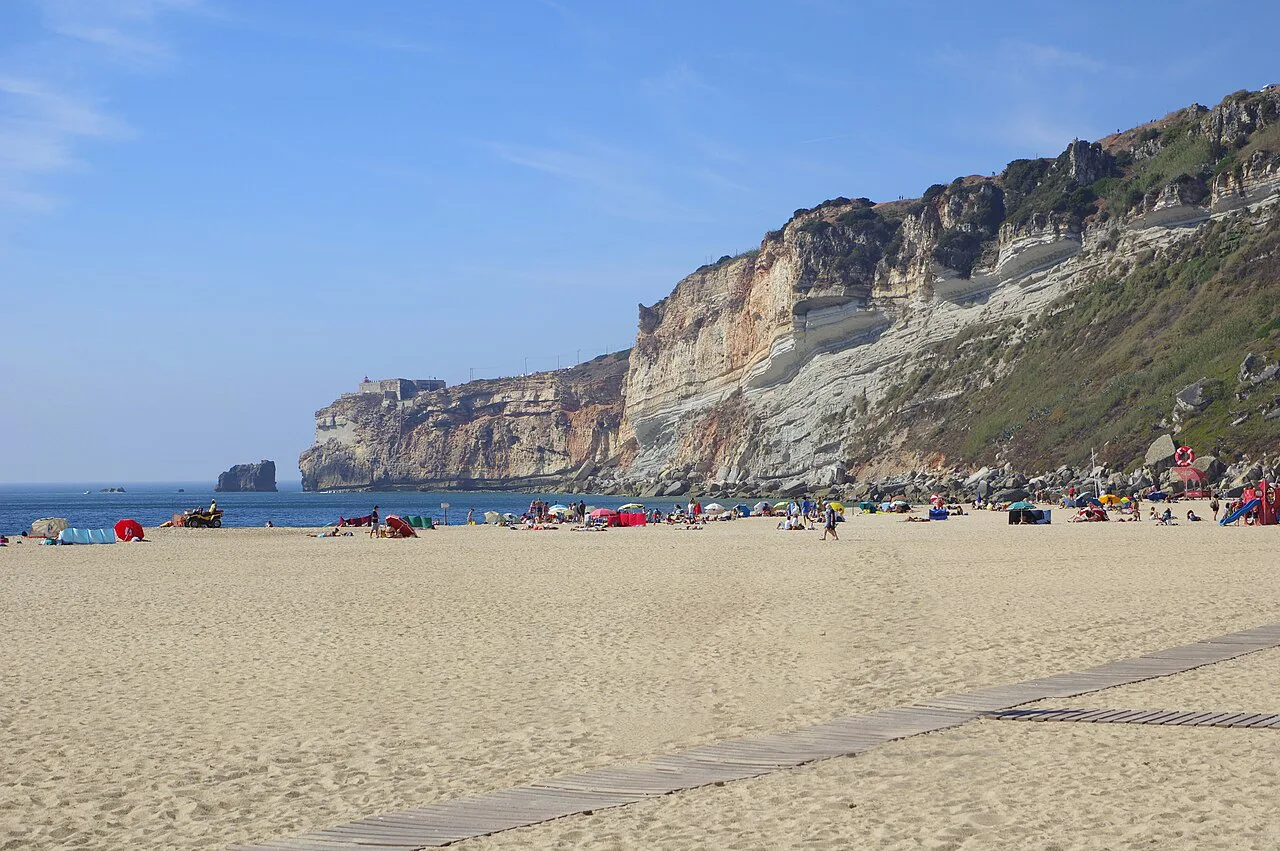
Big-wave season: November to February at Praia do Norte
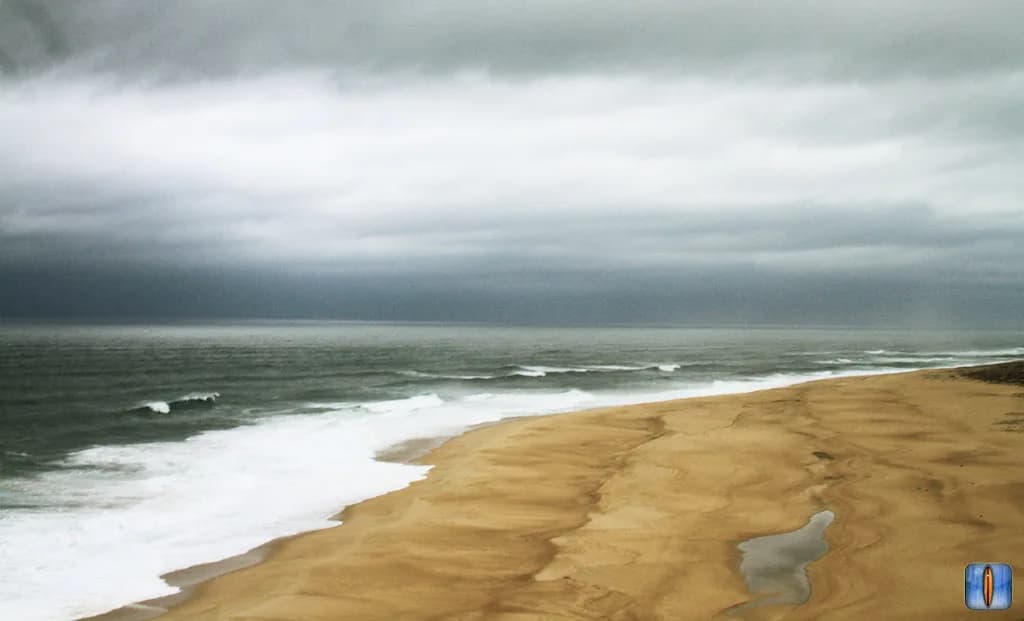
The big-wave season begins in November and ends in February, per Center of Portugal. That is when winter Atlantic storms send swell into the canyon and Praia do Norte produces the waves that made the town famous. Arrive outside those months and you will still find surf, but not the spectacle.
A stormy winter day is not a guarantee of giant surf, because swell direction, period and local wind all matter. Check a surf report before committing a morning to the clifftop; Surfline publishes swell, wind and tide data for Nazaré that will tell you whether the day is likely to deliver. Treat any forecast as guidance rather than a promise, and remember that a flat day still leaves the fortress, the museum and the market.
How hard Nazaré really is: what a 20-metre-plus wave demands
Big-wave riders at Nazaré are used to walls of water over 20 metres high, and they chase those conditions on storm days. That is a specialist pursuit requiring tow-in or paddle experience, serious fitness, safety cover and local knowledge. It is not a break where a competent intermediate can test themselves on a good day.
The remainder of Nazaré's water is a different matter, and it is where most visitors who actually want to get wet should be looking. The town beach, Praia da Nazaré, fronts the settlement itself and is the natural base for a gentler session. Our guide to things to do in Nazaré covers the beach alongside the rest of the town's sights.
Watching the big waves: the Forte de São Miguel Arcanjo and Praia do Norte
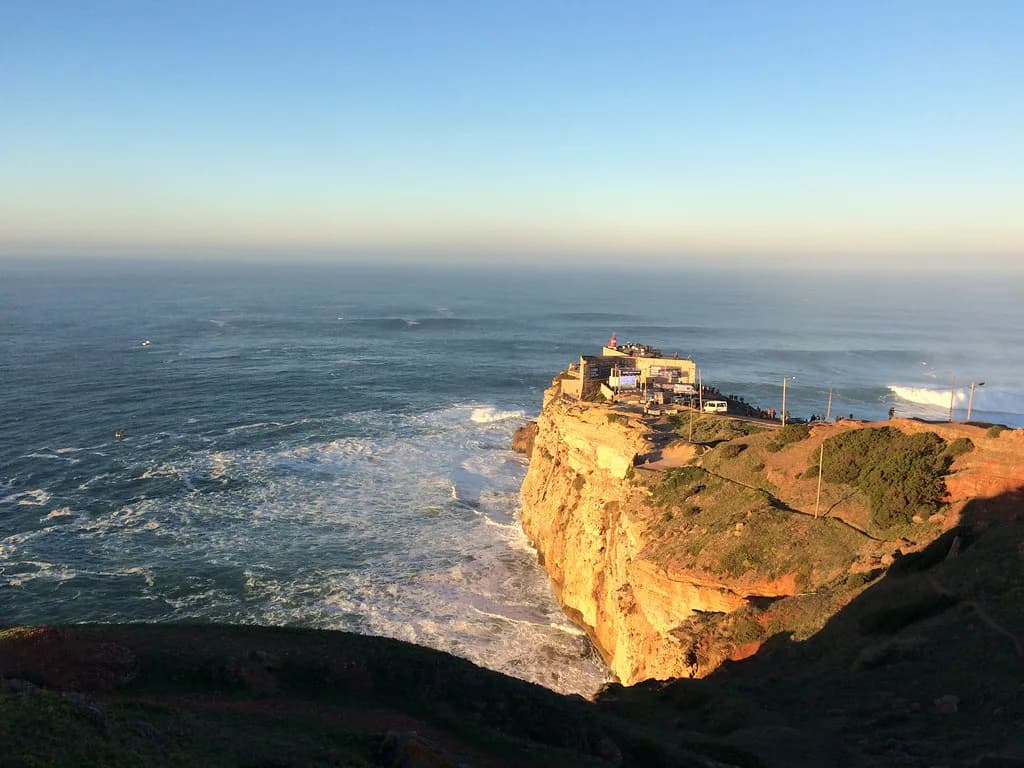
The Forte de São Miguel Arcanjo is the viewing base for the big-wave show, sitting above Praia do Norte at the northern end of the promontory. Center of Portugal lists it as open daily from 10.00 to 20.00, with last entry at 19.30, admission at 1 euro and free entry for children under 10. Those are the published details rather than a guarantee, so confirm before a special trip.
The fort's position gives you a raised platform over the break, which matters more than it sounds: from sea level the scale of the waves is almost impossible to judge. The town council treats the fort as one of Nazaré's heritage monuments, so a visit doubles as a piece of local history.
The Surfer Wall: 35 boards from the world's big-wave riders
Inside the fort, the Surfer Wall displays 35 surfboards ridden at Praia do Norte by the leading big-wave names. The collection began with a board donated by Pedro Scooby and grew from there, and it includes equipment from riders such as Garrett McNamara, Maya Gabeira, Sebastian Steudtner and Justine Dupont. It is the most concrete reason to pay the small entry fee rather than watch from the road.
For anyone who follows the sport, the boards turn an abstract reputation into something tangible. For everyone else it is a compact, weatherproof stop that takes little time and explains what the fuss is about. Pair it with a walk along the clifftop and you have covered the big-wave story in an hour or two.
Sítio da Nazaré and the cliff-top view over the break
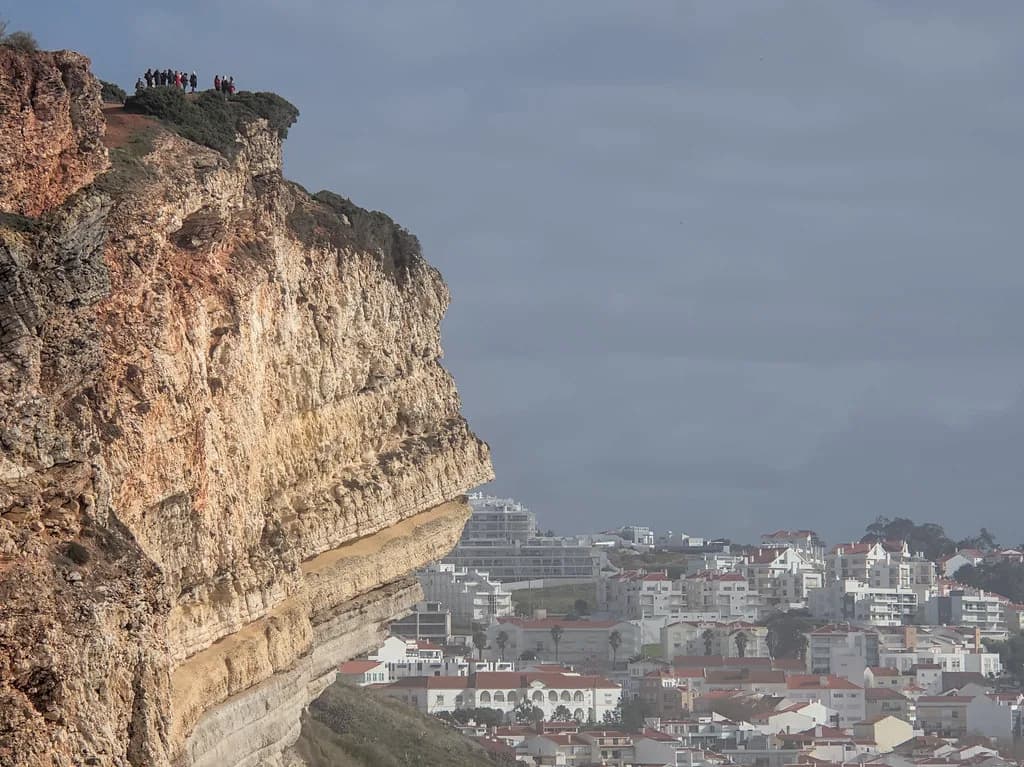
Sítio da Nazaré occupies the highest, most dramatic point of the promontory, and it is where you get the broad view back over the town and the sea. The Ermida da Memória stands here, tied to the legend of an image of Our Lady found in a cave in 1182. It is a short walk from the funicular's upper station on the Ladeira do Sítio.
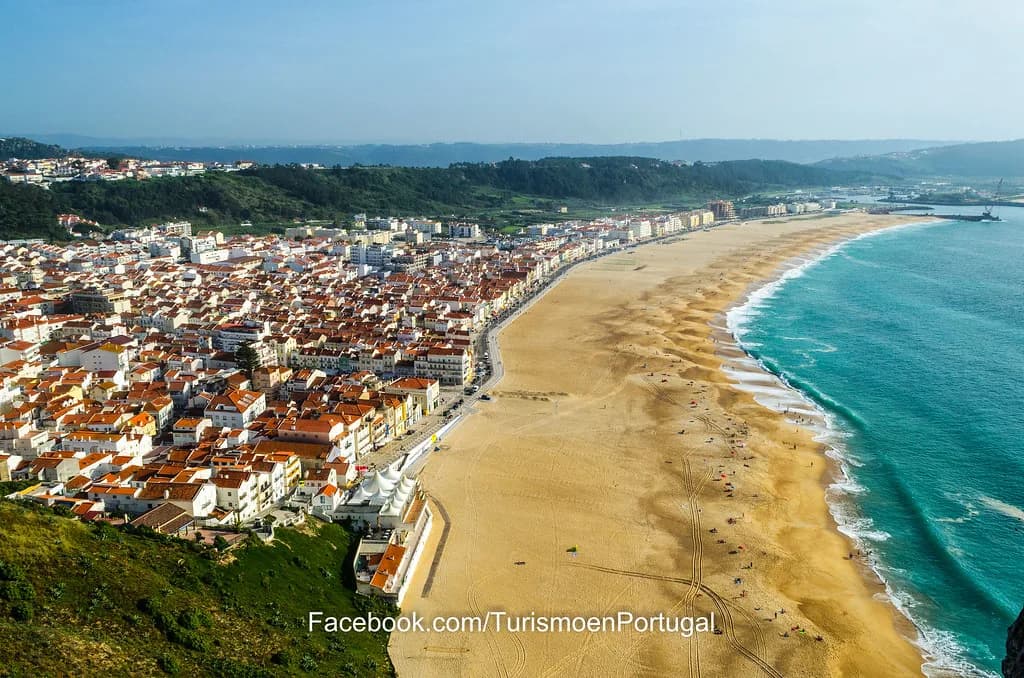
Center of Portugal calls the Sítio district the best place to take in the view over Nazaré, reached by funicular. Come up late in the afternoon for softer light over the water, or earlier if you plan to continue north to the fort. Our round-up of the best viewpoints in Nazaré helps you choose between the clifftop, the swing and the fort if you only have time for one.
The rest of Nazaré's water: Praia da Nazaré and the town beach
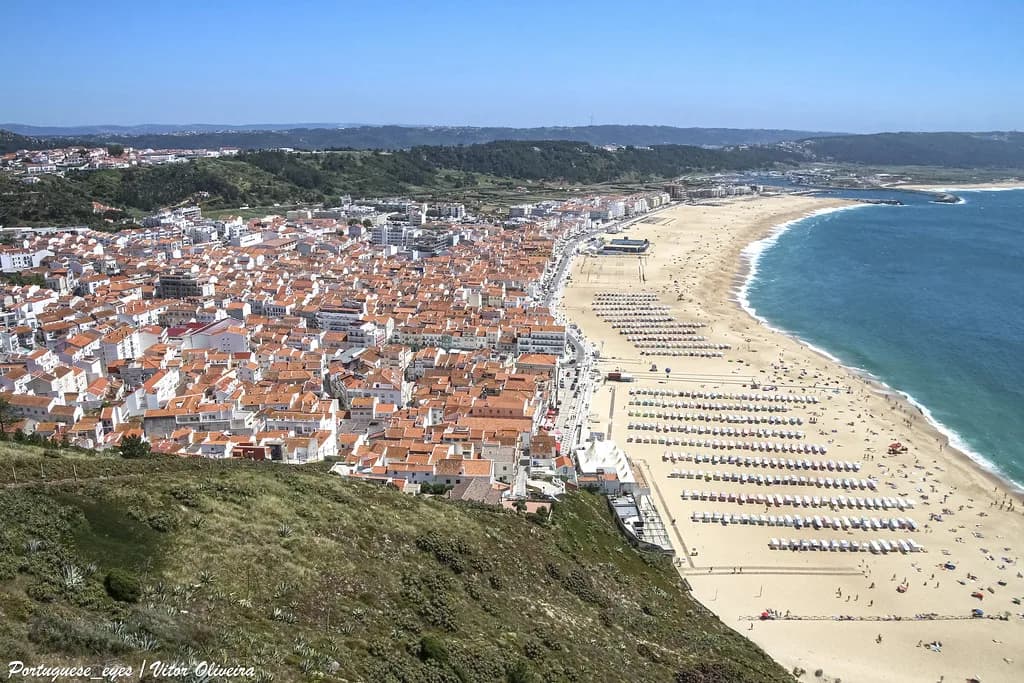
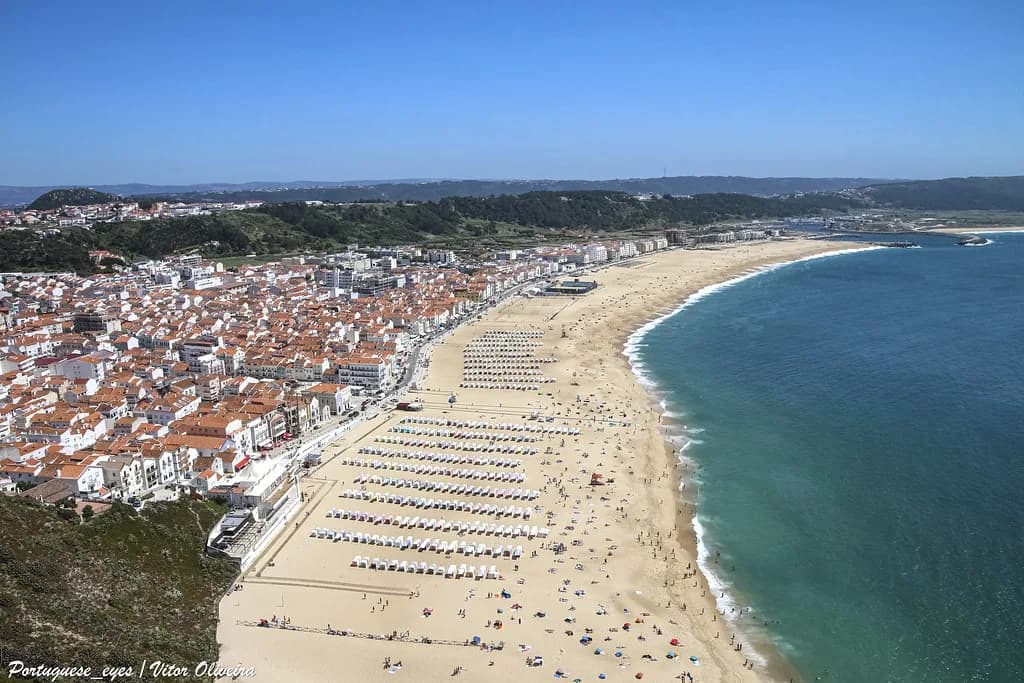
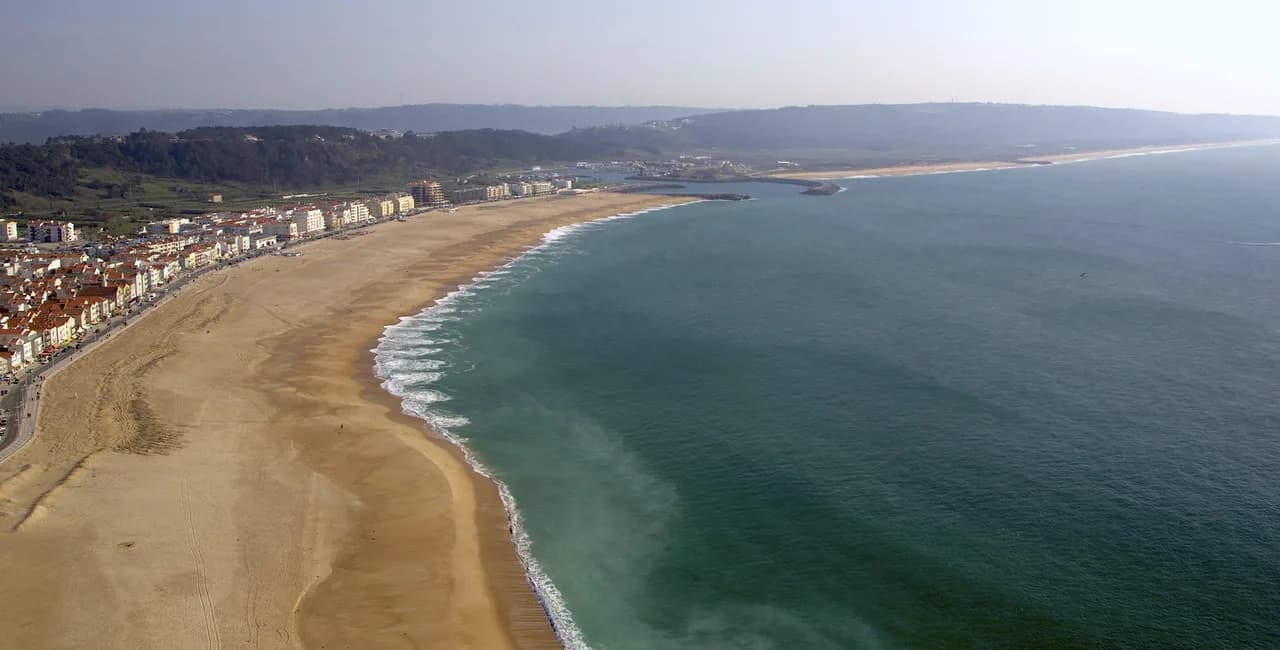
Praia da Nazaré is the beach in front of the town itself, a broad sweep of sand backed by the seafront and the fishing quarter. It is the obvious place for a swim or a first taste of Atlantic surf, and it is far removed from the canyon-fed walls at the northern end. Families and casual swimmers gravitate here for good reason.
Surf schools, board hire and lesson arrangements are best sorted on the ground: look for the school signage along the seafront and ask directly about group sizes, insurance and the ratio of instructors to beginners before you commit. The old town sits just behind the beach, so you can combine a session with a wander through the fishing streets.
Nazaré in the record books: Garrett McNamara's 2011 ride
Nazaré's fame dates from 1 November 2011, when the Hawaiian surfer Garrett McNamara rode a wave measured at 78 feet, or 23.77 metres, during the ZON North Canyon Show at Praia do Norte. That ride put the town on the world surf map and turned a fishing resort into a big-wave destination. The canyon behind it had been there all along.
Since then Nazaré has become a fixture of the big-wave circuit, and the town's identity has shifted to accommodate it. The Surfer Wall, the fort and the clifftop paths all speak to that change. For a fuller account of how the place evolved from lagoon and fishing village to surf landmark, our Nazaré history page fills in the earlier chapters.
Practical trade-offs: wind, crowds, watching versus surfing
The biggest decision is whether you are coming to watch or to surf, because the two experiences happen at opposite ends of the promontory. Watching means a winter storm day, warm layers, a windproof jacket and patience; surfing means a gentler part of the coast and a school that knows the local conditions. Trying to do both properly in a single morning rarely works.
Big swells draw a crowd, so give yourself extra time and expect the clifftop and fort approach to be busier on a forecast storm day. Off-season weekdays are quieter, but a flat sea means no spectacle; that is the trade-off you accept. A bit of planning around the swell will save you a wasted morning.
Beyond the waves: the market, the museum and the funicular up to Sítio
The Mercado Municipal da Nazaré is where the fishing side of the town shows itself, and it features among the places to visit on the council's own website. Nearby, the Museu Dr. Joaquim Manso is listed by the town council as a local museum, making a sensible bad-weather alternative when the sea is flat or the wind is too fierce for the clifftop. Our Nazaré museum guide sets out what each collection covers.
The funicular, the Ascensor da Nazaré, links the seafront to Sítio and spares you the climb up the Ladeira do Sítio. Ride up, walk the clifftop, then continue north to the fort if the swell is running. If you are building a longer itinerary, the wider set of Nazaré Attractions: 5 Visitor Guides covers the rest of the town in depth.
Watching or surfing: which Nazaré day is yours?
Choose a winter storm day if you want to see the big waves, base yourself at the Forte de São Miguel Arcanjo, and allow time for the Surfer Wall and the clifftop view back over the town. Check a surf report the night before, because a forecast swell can arrive late or miss entirely.
Choose the town beach and a local school if you want to surf rather than spectate, and keep Praia do Norte for watching only unless you are an experienced big-wave rider. Either way, the market, the museum and the funicular give you a full day when the sea refuses to cooperate.
Explore more Nazaré guides
Sources
Notes for your next Portuguese break
Optional updates to our town guides.
You might also like
Continue reading
More guides you'll find useful