Guimarães: Birthplace of Portugal — What to See and Why
Guimarães earned the birthplace label through Afonso Henriques and the 1128 Battle of São Mamede. Here is what to see and how long the city needs.
On this page
Guimarães earns the birthplace label through people and events rather than paperwork: the area around the castle is tied to Afonso Henriques, the first king of Portugal, and the Battle of São Mamede in 1128 helped create the political conditions for independence. You can walk the whole story in a single day, starting on Castle Hill and finishing in the squares below. This guide groups the sights by the part of the story they tell, then covers the Couros Zone and how to fit Braga in.
Plan on one full day for the essentials and two nights if you want museums and Penha Mountain as well. The historic centre sits in the lower city around Oliveira and Santiago squares, with the castle and palace immediately to the north, so the geography itself keeps the narrative in order. For a wider menu of sights, see our guide to things to do in Guimarães.
What the birthplace label actually means
Two things sit behind it. The first is symbolic: the castle district is associated with Afonso Henriques, and the 1128 Battle of São Mamede is credited with establishing the conditions that led to Portuguese independence. The second is urban: Guimarães preserves medieval street patterns and granite-and-timber houses that show how the town grew over roughly a thousand years.
Treat the phrase carefully. Guimarães was the medieval first capital of Portugal, but it is not the working capital today, so read any modern claim about government in that light. Britannica records the city as founded in the 4th century and as Portugal's first capital in the 12th. To fit this founding moment into the wider story, our guide to Portugal's history shows where the rest of the eras sit.
Why Afonso Henriques and the Battle of São Mamede matter here
Afonso Henriques is the figure the origin story hangs on, and the castle hill is where the association is strongest. Nothing in the reliable record should be stretched to say he was born in a particular building, so enjoy the legends while keeping the documented event, the 1128 battle, as your anchor. If the first king interests you more than the walls, our page on Afonso Henriques and the castle goes deeper.
Castle Hill: the castle and the church of São Miguel
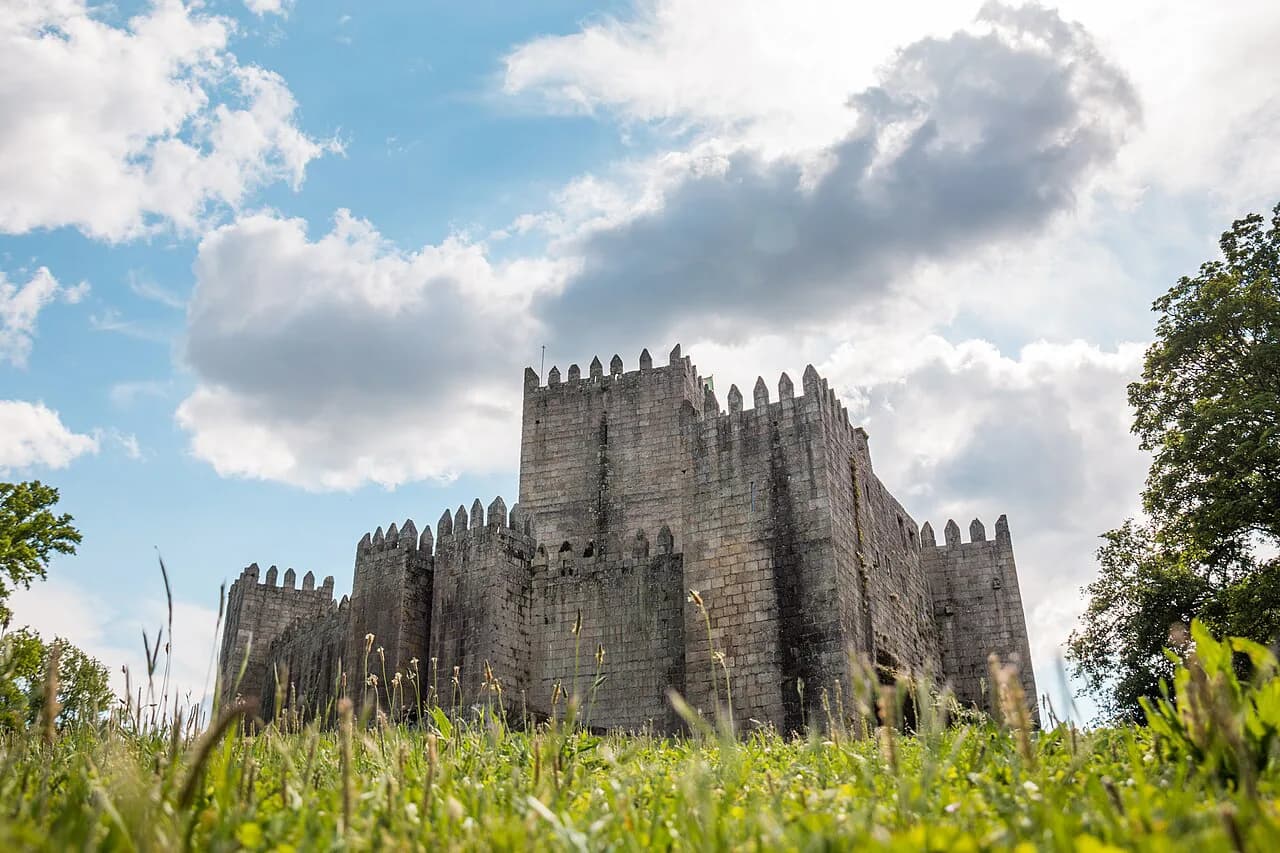
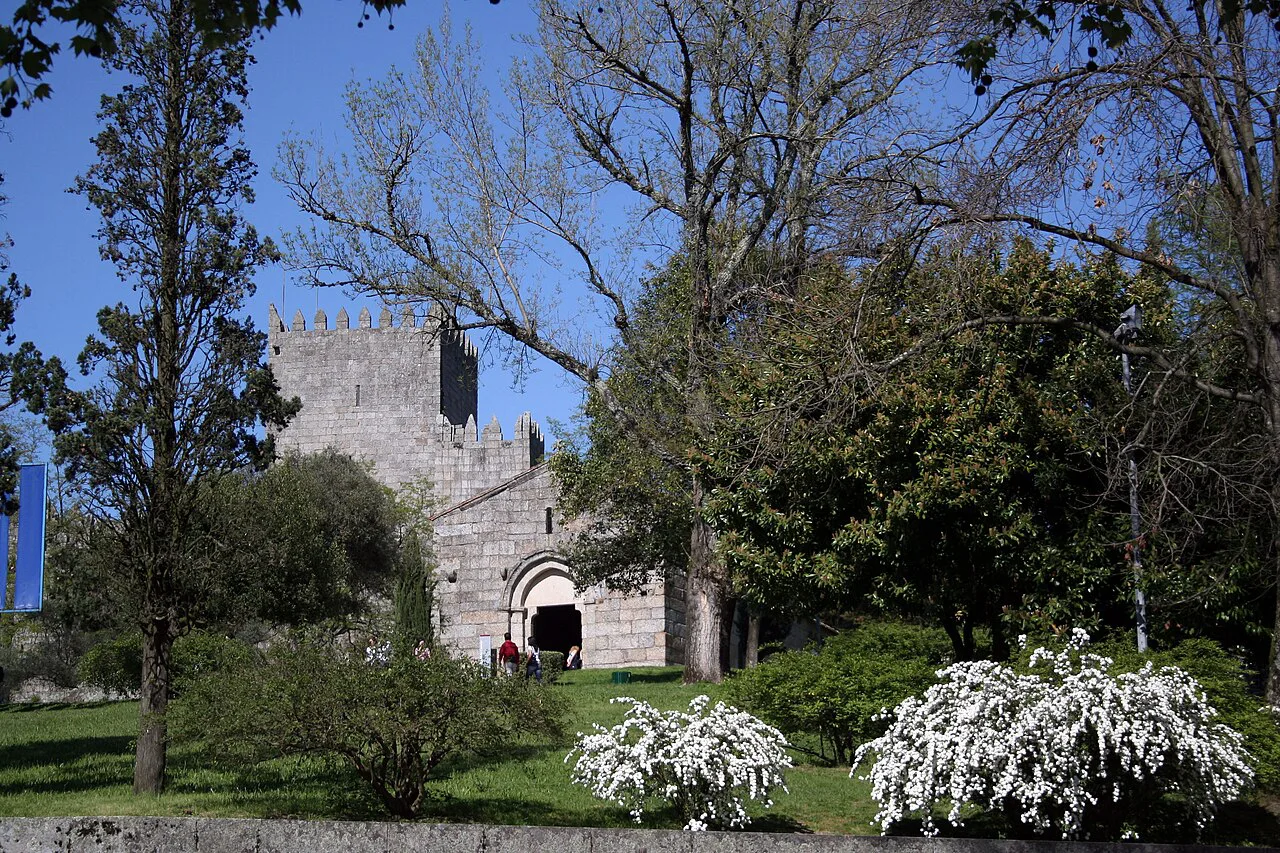
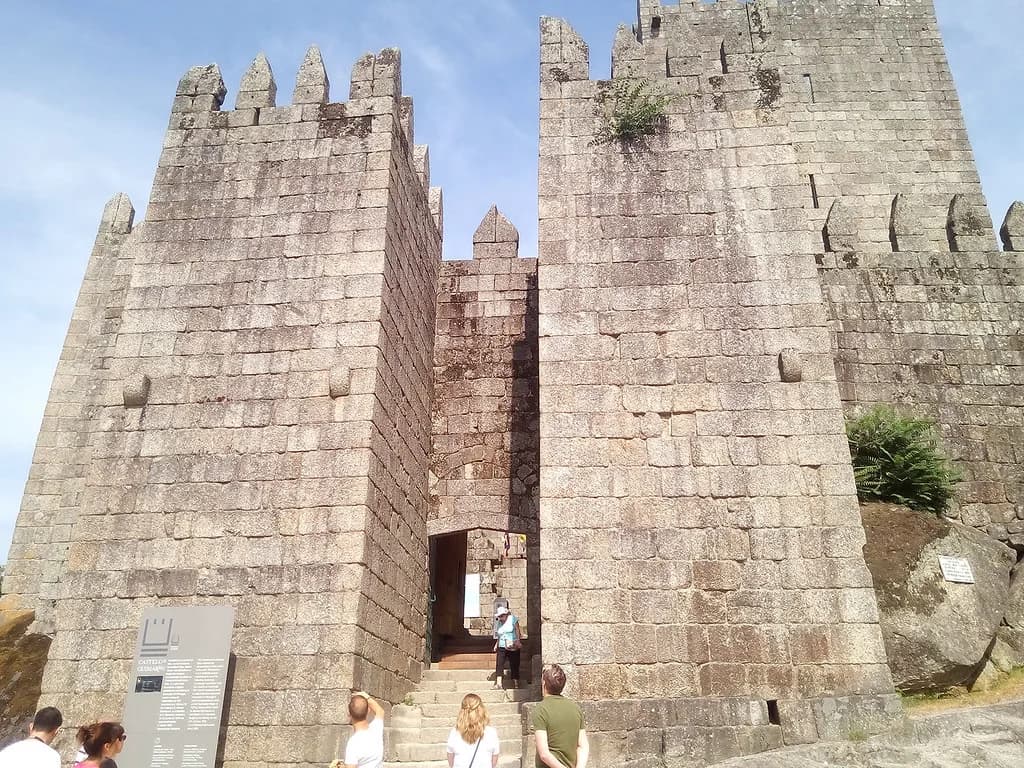
Start at the top. Guimarães Castle and the small Romanesque church of São Miguel stand together on the hill just north of the centre, forming the city's sacred and military core. The walk up from the squares is short and sets up everything below, so do it first rather than last.
Castle opening days and ticket prices vary with the season, so check the current schedule on the official municipal or monument channels before you build your day around it rather than assuming a seven-day week. The Castelo de Guimarães page on this site covers approaches, timing and what the visit involves.
The Palace of the Dukes of Braganza
A few minutes from the castle, the Palace of the Dukes of Braganza gives you the other half of the story: not the founding battle but the aristocratic power that followed. Its granite bulk, steep roofs and interior collection make it the natural second stop on the hill before you drop into the medieval streets.
Allow an hour here if you like furnished rooms and tapestries, less if you are pacing yourself for the squares. Opening days can differ from the castle's, so confirm before you travel rather than assuming a seven-day week. Our Museums in Guimarães guide covers the palace alongside the city's other collections.
Oliveira Square and Santiago Square: the medieval centre below the castle
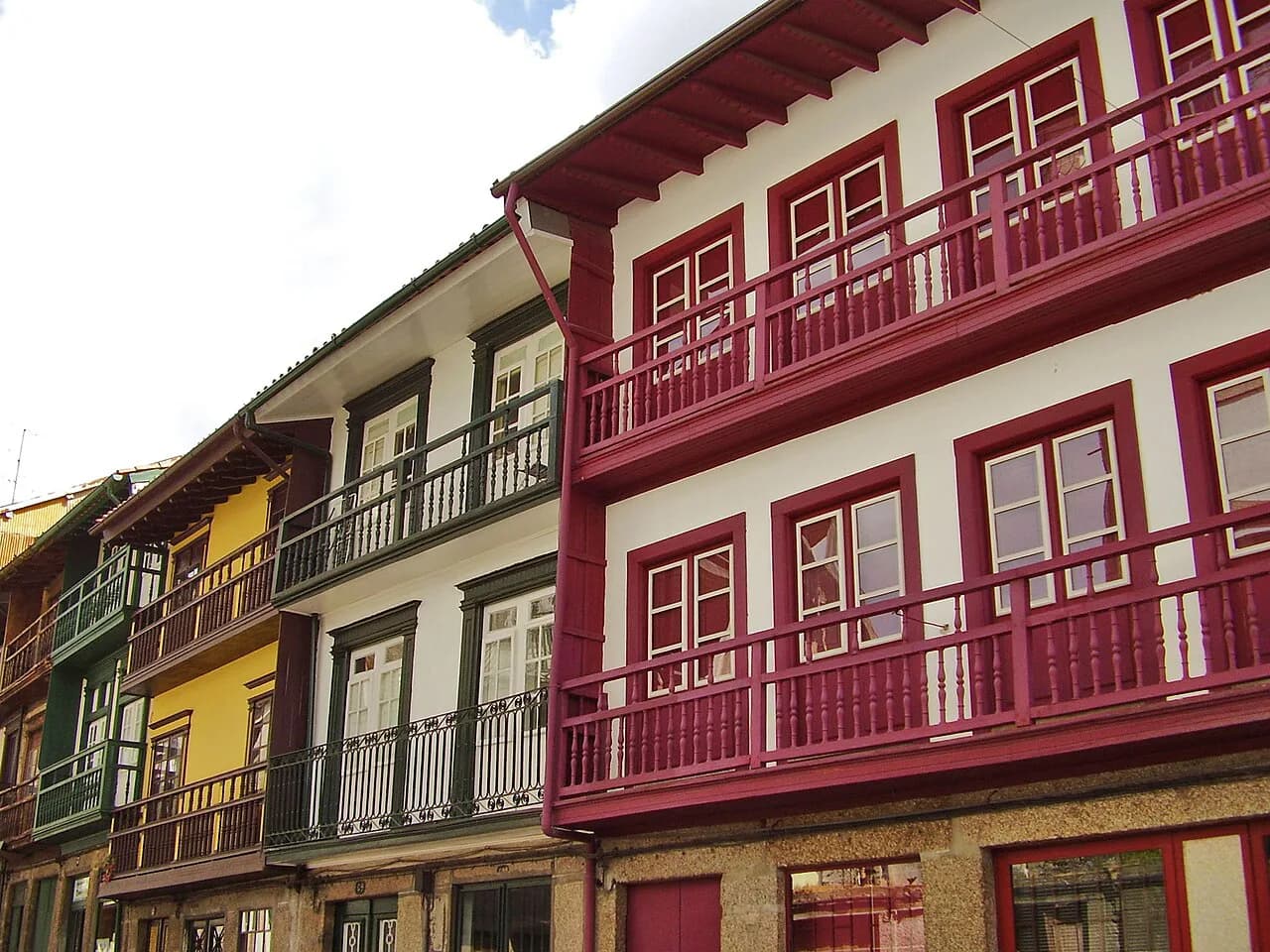
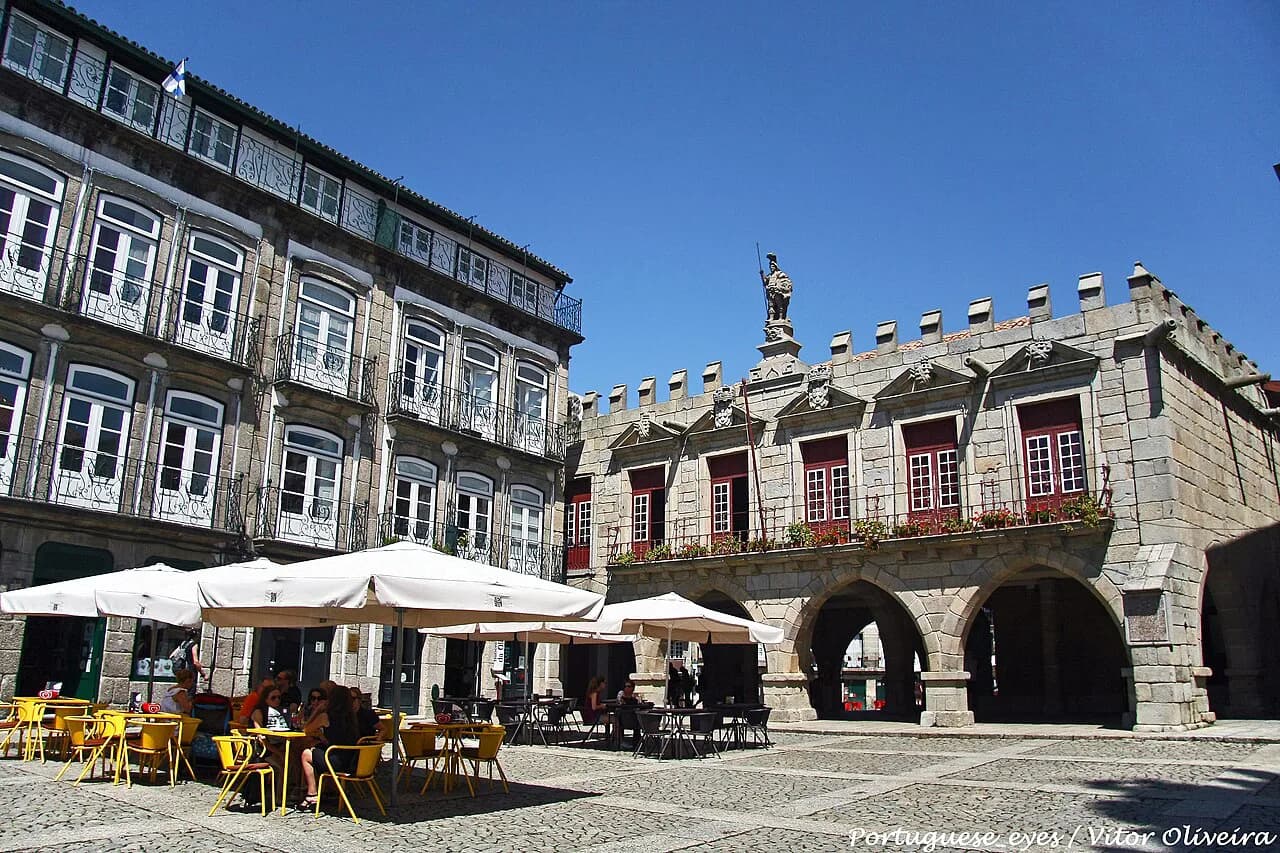
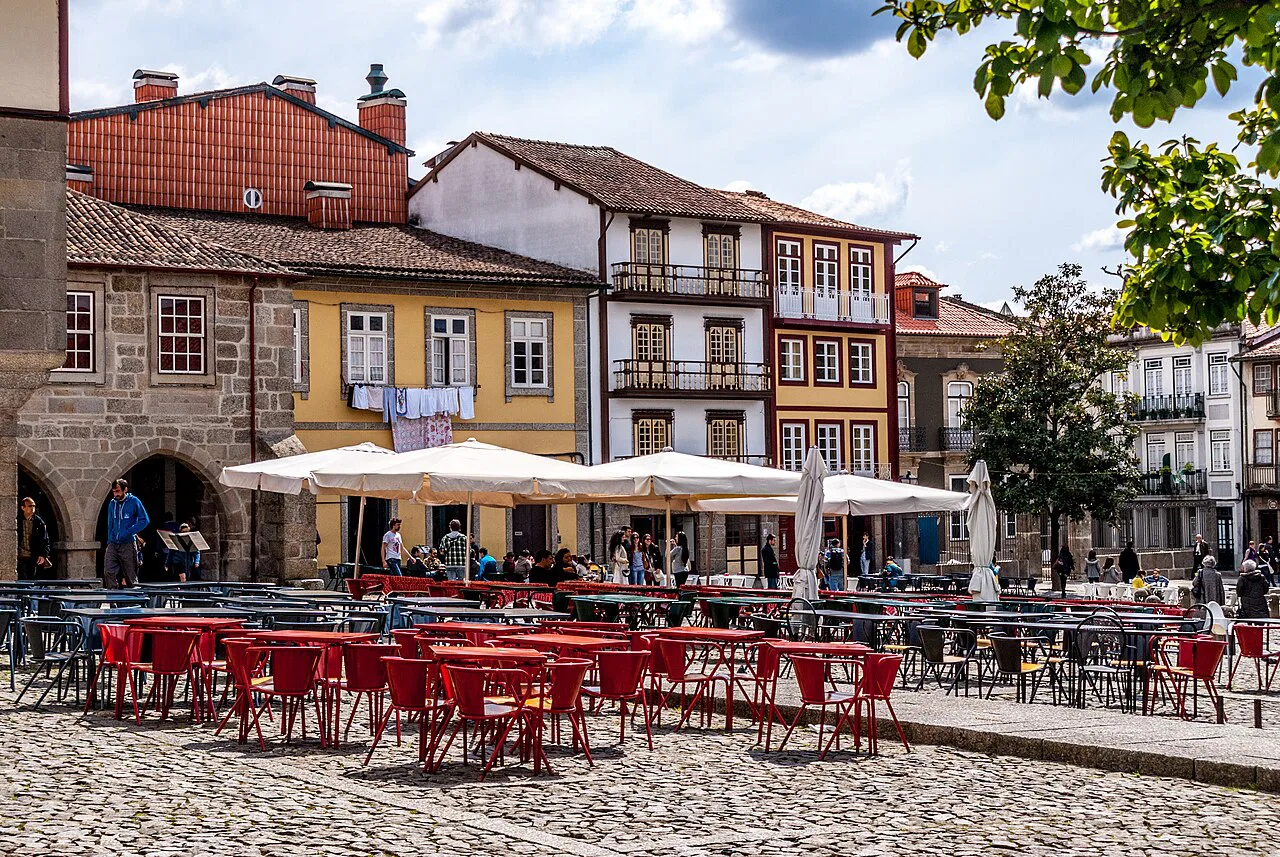
Come down from the hill into the lower city, where Oliveira and Santiago squares were the historic public spaces between the castle to the north and the religious complex around Oliveira to the south. This is where the medieval town reads most clearly: arcaded granite ground floors, timber upper levels and narrow lanes leading off each square.
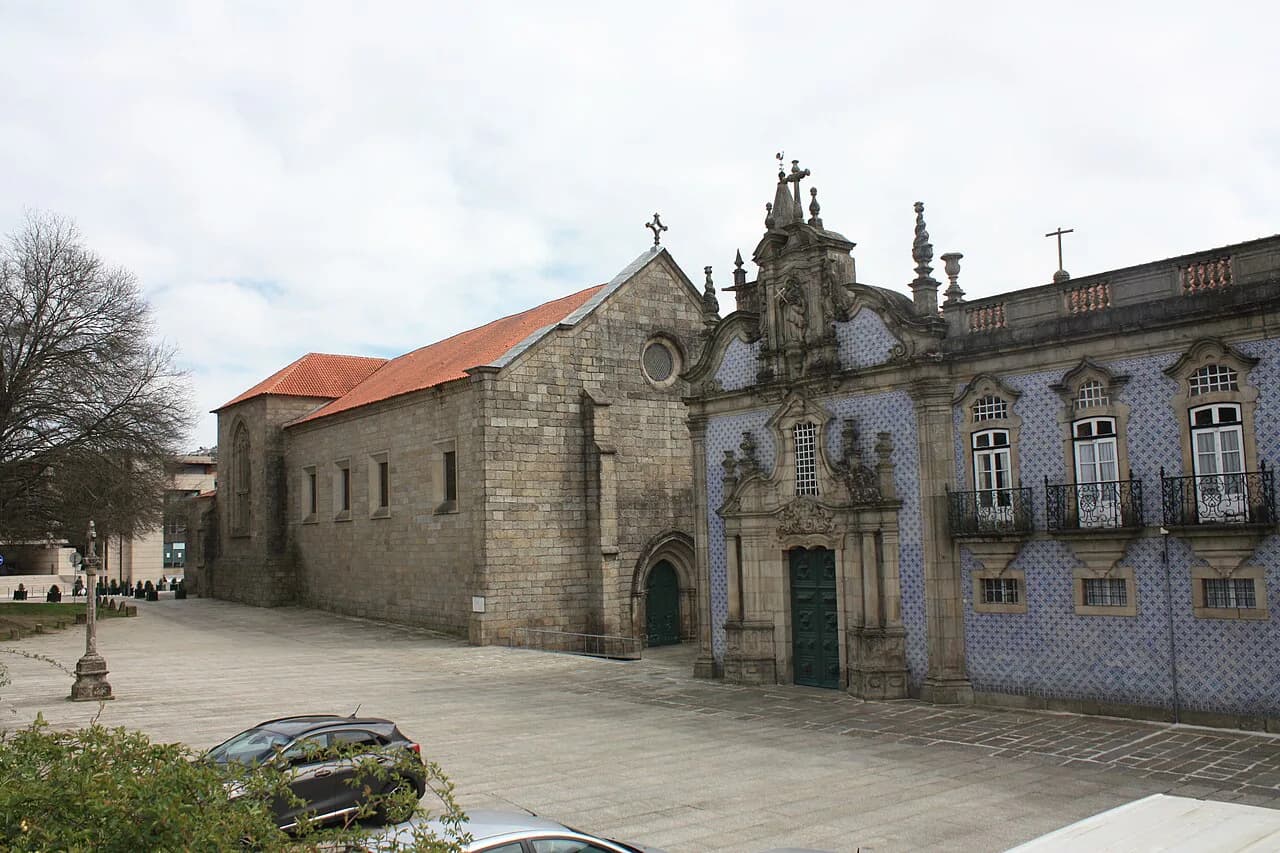
Take the lanes slowly and look up at the upper storeys, which is where the older construction shows. Churches around these squares keep their own hours, and Portuguese churches often close over lunch, so slot any interior visit into the morning and check the door before counting on it. Churches in Guimarães covers the ones worth stepping inside.
Largo do Toural and the central streets
Largo do Toural marks the transition from the medieval core to the busier modern centre, and the streets radiating from it are where you will find cafés and shops between sights. Use it as your reset point: coffee here, then decide whether to head back into the lanes or out towards the Couros Zone.
If you would rather follow a route than improvise, a Guimarães walking tour stitches castle hill, the squares and Toural into a coherent half day. Our Guimarães old town guide sets out the layout in more detail, including which streets reward a detour.
The Couros Zone and the UNESCO listing
The Historic Centre of Guimarães joined the UNESCO World Heritage List in 2001, and in 2023 the listing was extended to take in the Couros Zone, the former leather-working district. That expansion matters because it brings industrial heritage into the same walk as the castle and squares, showing how the town earned its living rather than only how it was founded.
The Couros Zone sits along the river edge, with the old tanning structures and water channels still legible in the streetscape. It is quieter than the squares and takes perhaps forty minutes at an unhurried pace, which makes it a good late-afternoon addition rather than a main event.
Penha Mountain as the counterpoint to the medieval core
Penha Mountain rises southeast of the centre to around 617 metres, roughly five kilometres out, with wooded slopes and viewpoints over the city. After a day of granite and narrow streets, the space and the view reset your sense of the town's shape. A cable car and road access serve the hill.
How many days Guimarães needs, and combining it with Braga
One full day covers the essentials: castle, church of São Miguel, palace, the two squares and a wander through Toural. Add a second day if you want the museums, the Couros Zone at a relaxed pace and Penha Mountain without rushing. Two nights is the comfortable version; a day trip from Porto works but leaves the hill and the museums tight.
Guimarães sits about 55 kilometres northeast of Porto and roughly 25 kilometres southeast of Braga, with Porto the main international gateway and Braga the closest major historic city. That geometry makes a Braga pairing easy, and trains connect the city with the wider region. Browse our Guimarães attractions guide if you want each sight on its own page.
For lunch and dinner, the lower city around the squares gives you the widest choice within a short walk of the sights. Our Guimarães restaurants guide points to where kitchens cluster, and since Portuguese restaurants often close one day a week, check a particular address before you commit to it.
Is a second day in Guimarães worth it?
Book one full day if the origin story is your reason for coming: castle, São Miguel, the palace and the squares deliver it in a single loop. Add a second day only if you want the museums and Penha Mountain without watching the clock, and confirm monument days on the ground before you build the itinerary around them.
Explore more Guimarães guides
Frequently Asked Questions
Is Guimarães the capital of Portugal?
No. Guimarães was the medieval first capital in the 12th century, and the city is celebrated as the birthplace of the nation. Lisbon is the modern capital, so treat any present-tense claim about Guimarães as capital as a reference to history, not to current government.
Who founded Portugal?
The origin story centres on Afonso Henriques, the first king of Portugal, whose rise is tied to the area around Guimarães Castle. The 1128 Battle of São Mamede helped establish the political conditions for independence. Treat the more colourful legends about his birth and childhood as tradition rather than documented fact.
Do I need to book castle tickets in advance?
The sources here give no current price or booking system for the castle or the Palace of the Dukes of Braganza, so check the official municipal or monument channels for opening days and ticket arrangements before you travel, rather than assuming a seven-day week or a walk-up ticket.
Can I see Guimarães as a day trip from Porto?
Yes, but it is tight. Porto is roughly 55 kilometres away and trains serve the region, so a day trip covers the castle hill and the main squares. You will likely skip the museums, the Couros Zone and Penha Mountain. Two nights gives you a slower, more complete visit.
Sources
Notes for your next Portuguese break
Optional updates to our town guides.
You might also like
Continue reading
More guides you'll find useful