Guimarães Walking Tour: A Self-Guided Route Through the Old Town
Walk Guimarães old town in a morning or afternoon: a self-guided route from Largo do Toural through Couros and Oliveira to the castle, plus a guided option.
On this page
Guimarães works as a walking tour because the historic centre is small and tightly packed, with the castle and the Paço dos Duques de Bragança sitting on its edge rather than out in the suburbs. A local guide describes the whole city as easily explorable in just a day, and the centre is listed as a UNESCO World Heritage Site. This route covers it in walking order, from Largo do Toural through the Couros quarter and Largo da Oliveira up to the castle, so you never double back.
Plan on a half-day for the old-town core and the castle edge at an unhurried pace, or a full day if you add a museum, a long lunch and the Paço dos Duques interior. Read the stops below as a sequence: Toural, Couros, Oliveira, the lanes around it, São Miguel do Castelo, the castle and the palace. If you only want the headline sights, the castle stretch is the part to keep.
Why Guimarães suits a walking tour
The centre is compact enough that the main sights sit within one continuous stroll, and the terrain splits neatly into two parts: a flat grid of squares and lanes around Toural and Oliveira, then a short climb to the castle and palace. That split matters for planning, because it lets you do the flat half on tired legs and save the rise for when you are fresh. Grouping the stops in this order also means the uphill section comes once, at the end, rather than being climbed twice.
Guimarães is roughly 60 kilometres northeast of Porto and about 40 minutes away by train, which is what makes it realistic as a walking day out from the coast rather than a separate trip. The city is also the place associated with Afonso Henriques, the first king of Portugal, and the old centre carries that identity in its squares and monuments. If you are weighing up whether the city justifies the journey, the answer sits in the density of the centre rather than in any single sight.
How long the walk takes and how to split it
Allow three to four hours of walking and looking for the core route, with stops at the squares, the Couros lanes and the monuments on the castle edge. That is a time band for the walk itself, not a fixed distance, and it leaves room to wander a side street or pause on Oliveira. Add an hour or more if you go inside the Paço dos Duques and a museum.
The simplest split is a morning on the flat section from Toural to Oliveira, a lunch break in the centre, then the climb to São Miguel, the castle and the palace in the afternoon. Doing it the other way round also works, but you finish the day downhill in the busiest lanes. Either way, keep the castle group together, because the three sights there sit close to one another.
The route at a glance
The order is Largo do Toural, the Couros quarter, Largo da Oliveira, the lanes and shops around Oliveira, then Igreja de São Miguel do Castelo, the castle and the Paço dos Duques de Bragança. Each stop follows naturally from the last, so you can walk the whole line without checking a map more than a couple of times. Treat the first four as the town and the last three as the monument edge.
If you are building a fuller day around this, the town guide to things to do is the place to check what else fits alongside the walk. For a plan that covers arrival, meals and the evening, work from a Guimarães itinerary rather than bolting extras onto the route.
Stop 1: Largo do Toural and the 'Aqui Nasceu Portugal' inscription
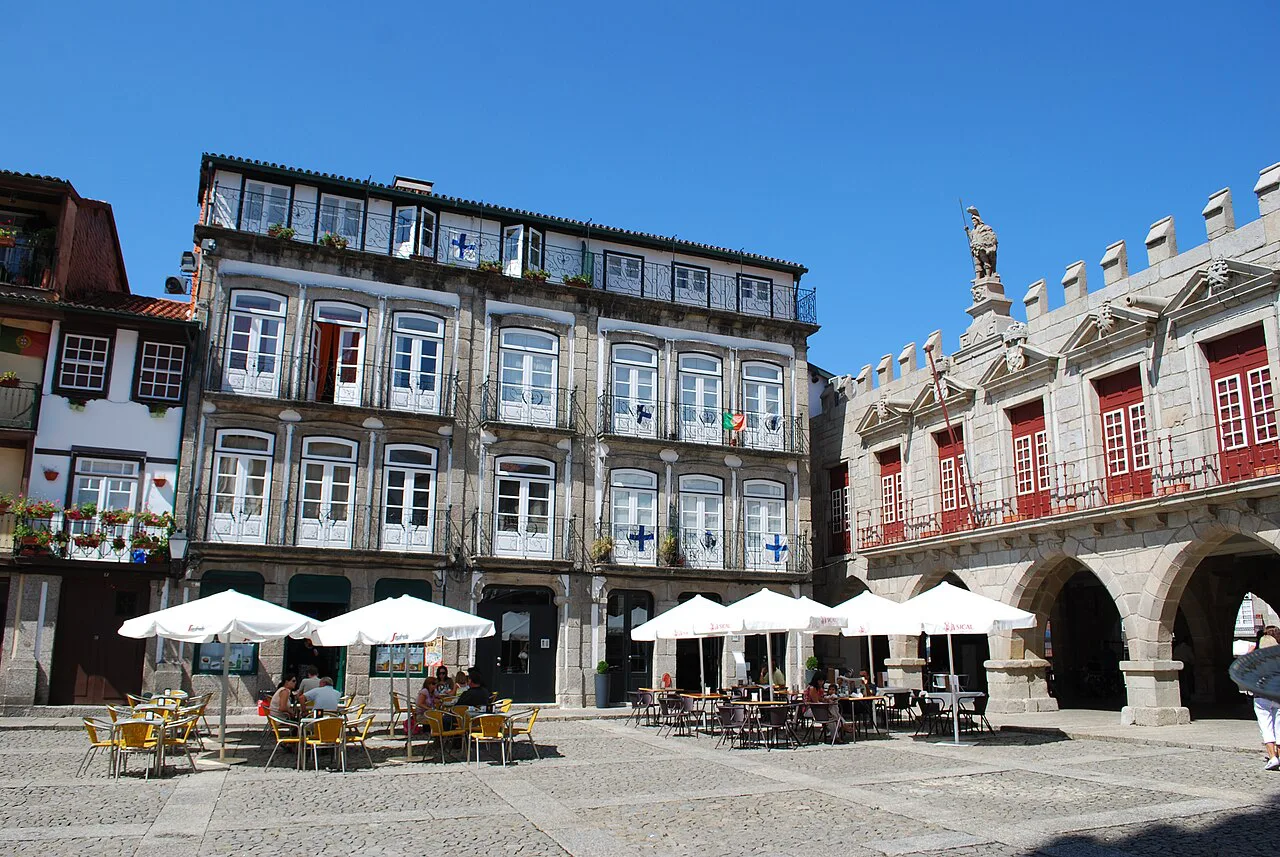
Start at Largo do Toural, the central square where a guided city walk typically begins, and look for the 'Aqui Nasceu Portugal' inscription set into a walled panel. The slogan translates as 'Portugal was born here', and it sets the tone for everything that follows. It is a quick stop, but a good orientation point before you head into the narrower streets.
From Toural, the route turns towards the Couros area, so use the square to sort out your bearings and your water before moving on. The centre's lanes are more rewarding when you are not stopping every few metres to check a phone.
Stop 2: Couros — narrow streets and the old tanners' quarter
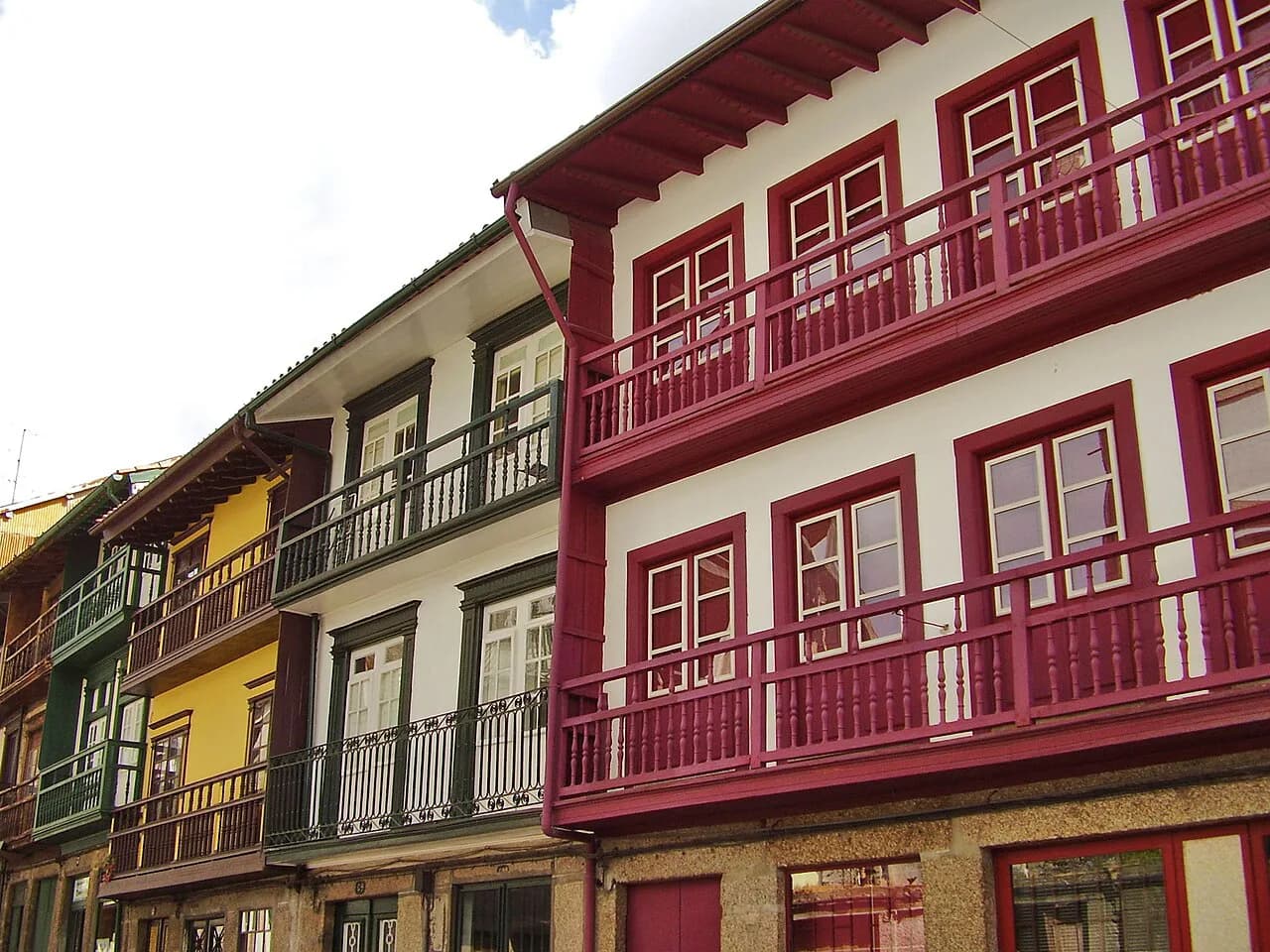
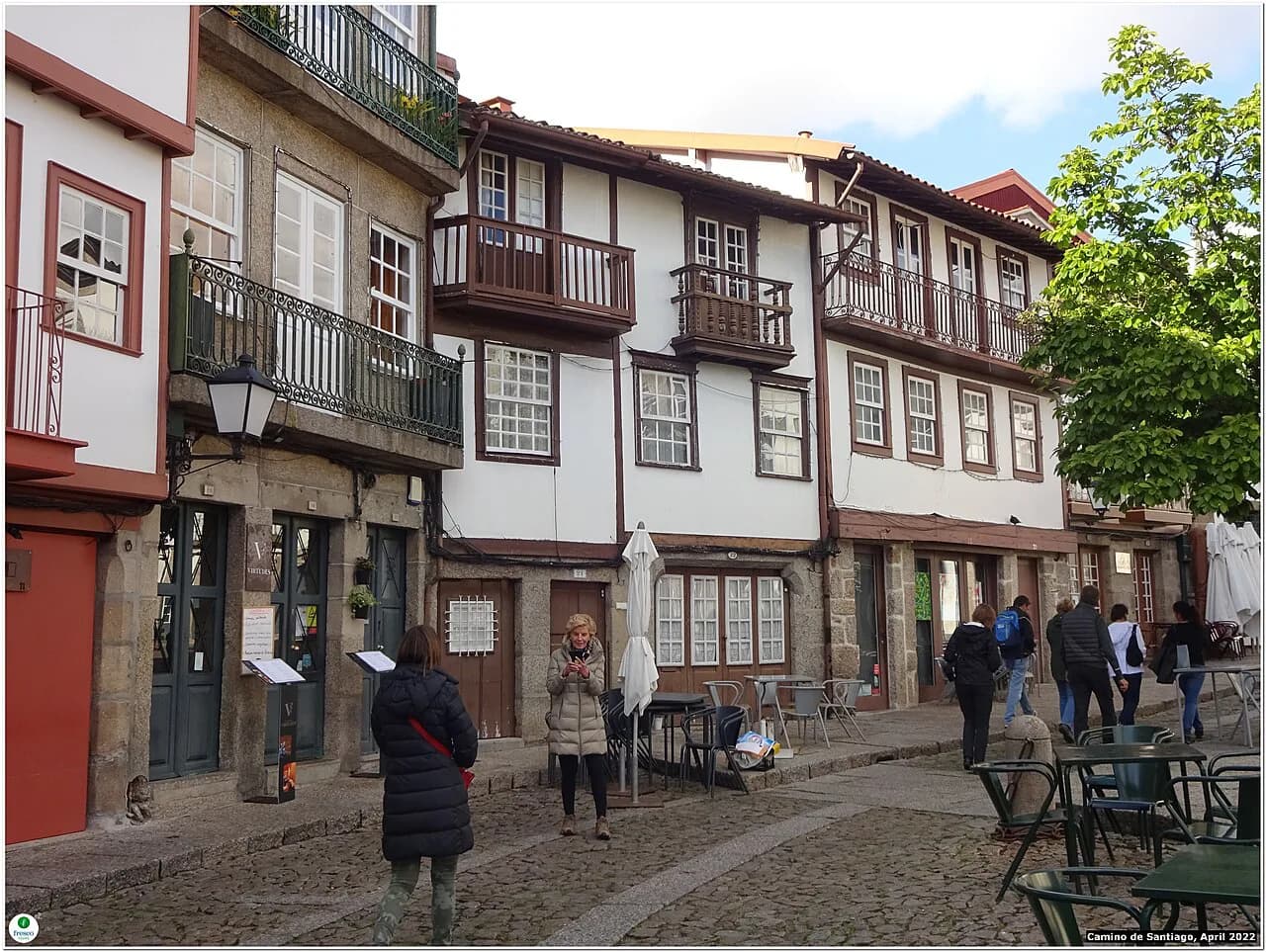
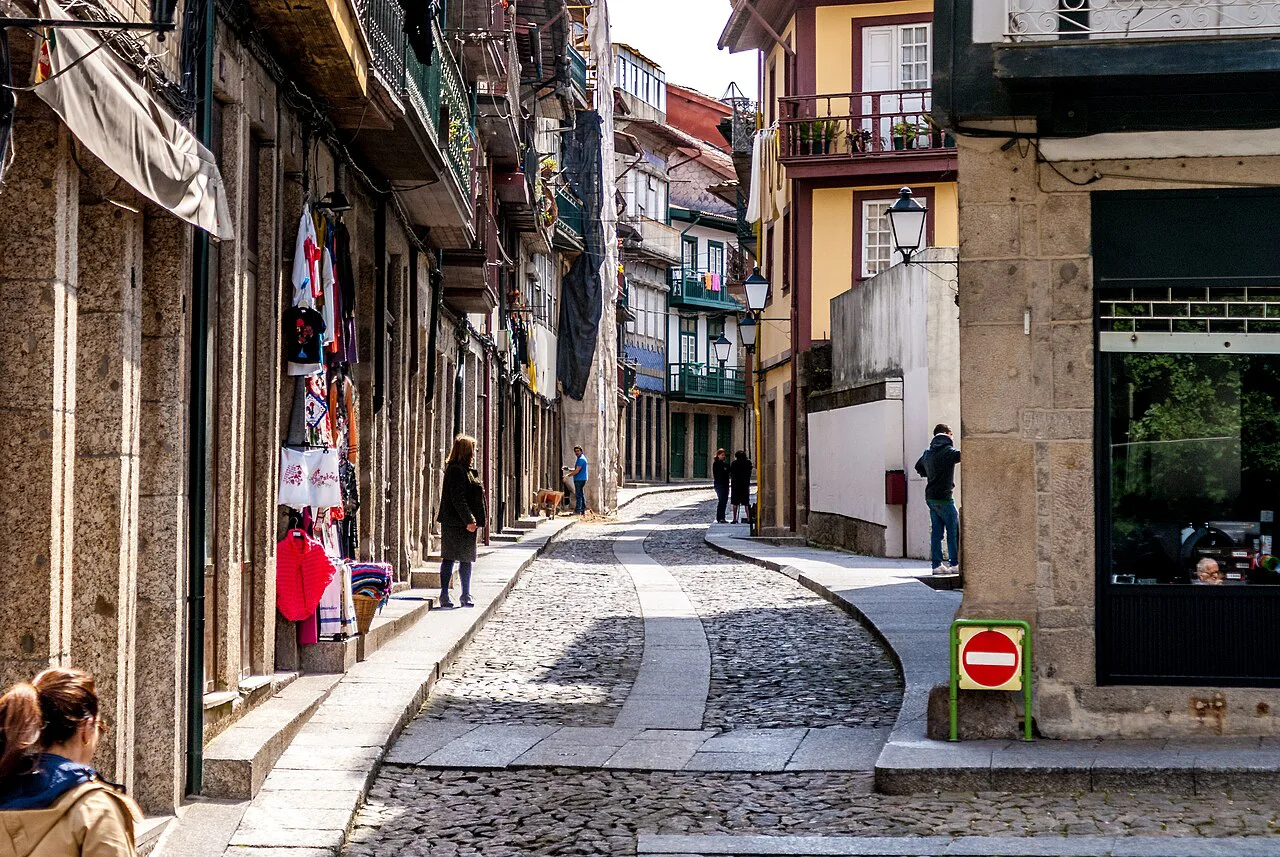
Couros is the picturesque quarter of narrow streets and typical houses, and it is the section where the walk slows down of its own accord. The lanes follow the leather trade that once gave the neighbourhood its character, and the scale is small enough to take in on foot without hurrying. This is the part of the route to linger in rather than tick off.
Watch the surfaces here: the lanes are traditional and uneven underfoot, so shoes with a bit of grip make a difference on a damp morning. Keep an eye out for the azulejos on the facades as you go, because the quarter's tiled fronts are easy to walk past while looking ahead.
Stop 3: Largo da Oliveira and the Padrão do Salado
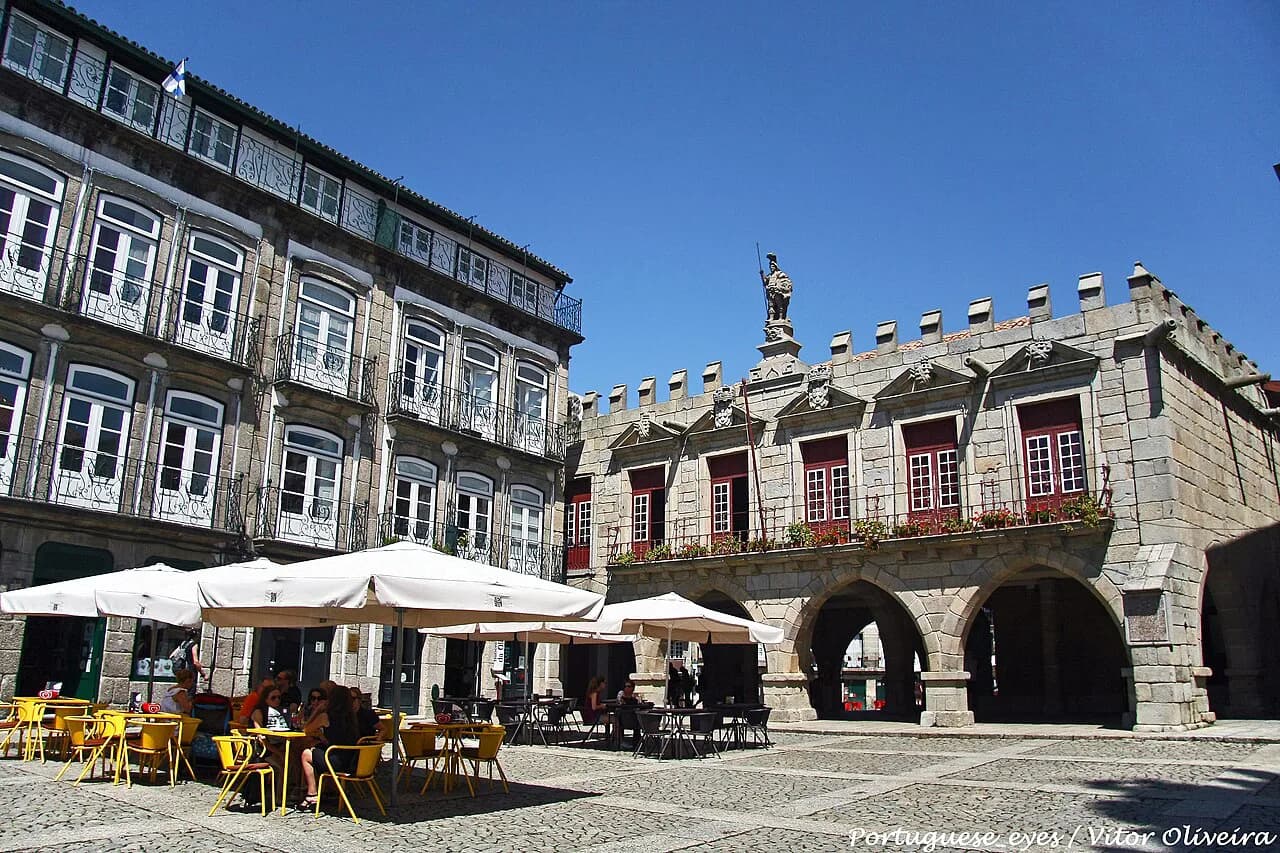
Largo da Oliveira is where the walk opens out again, a square that concentrates restaurants, bars, traditional shops and museums around a single open space. It anchors the Oliveira stretch and gives you a natural pause before the lanes and the climb. Sit at the edge for ten minutes and the rest of the route is in front of you.
The square is also the obvious place to break the walk for lunch, since it puts you in the middle of the eating options rather than on the empty stretch towards the castle. Check the day's opening before committing: individual kitchens keep their own weekly closing and holiday patterns.
Stop 4: the historic centre lanes, shops and museums around Oliveira
The lanes fanning off Oliveira are the part of Guimarães that rewards an unplanned detour: small shops, traditional storefronts and museums tucked into the old streets. This is where you decide whether to spend the afternoon inside a museum or press on to the castle while the light holds. Do the interiors first if you are walking in the rain.
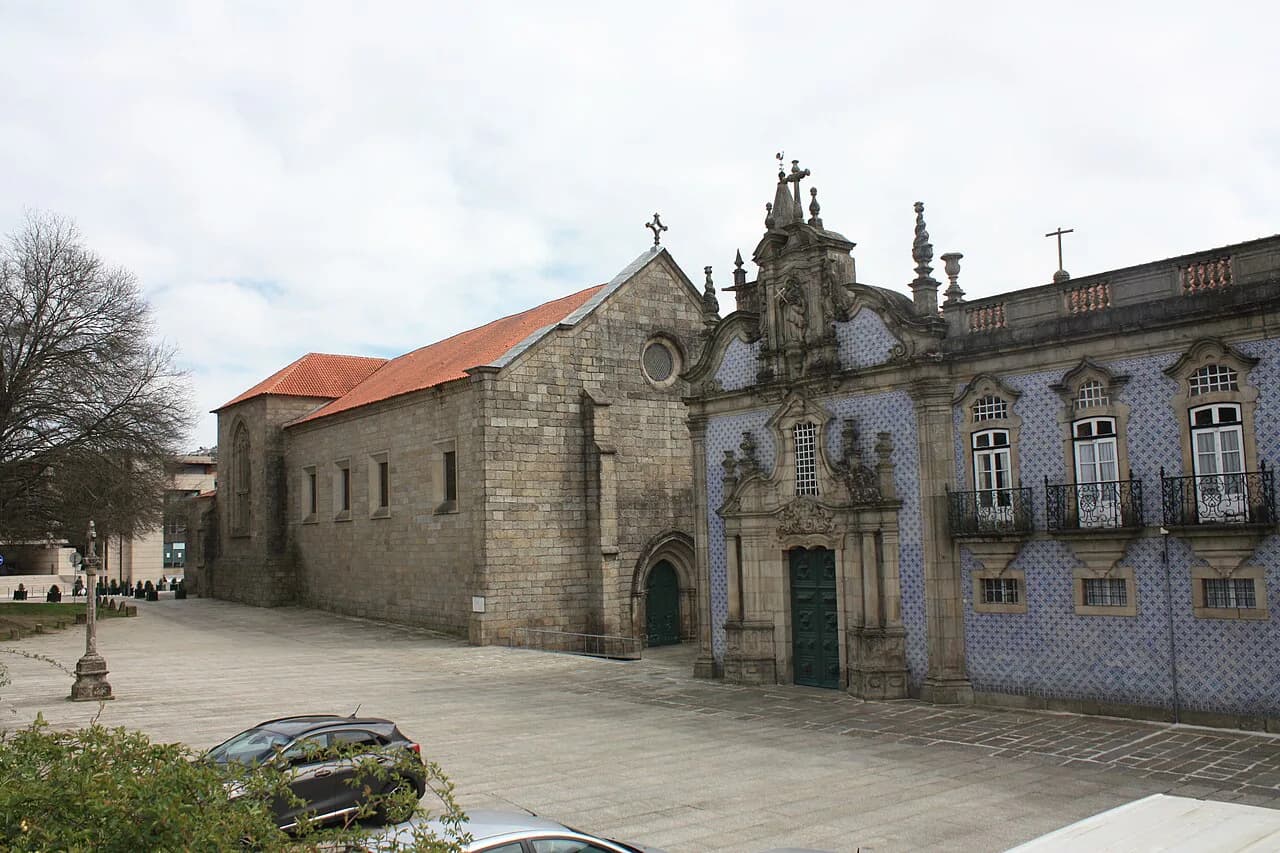
Churches sit among these lanes too, and their doors and opening patterns vary from one to the next, so treat any one you pass as a bonus rather than a fixed stop. Most visitors under-plan this section and end up rushing the castle because of it.
Stop 5: Igreja de São Miguel do Castelo
The walk turns uphill here, and the first of the three castle-edge sights is the Igreja de São Miguel do Castelo, a small Romanesque church beside the castle park. Short guided walks of the area link the castle park, the palace and this church as one cluster, which is exactly how to take them. It is a brief stop, but it explains the setting for what comes next.
Because the three sights are close together, the climb is paid for once and then you are moving between them on level ground. Save your energy for the castle walls rather than the approach.
Stop 6: Guimarães Castle
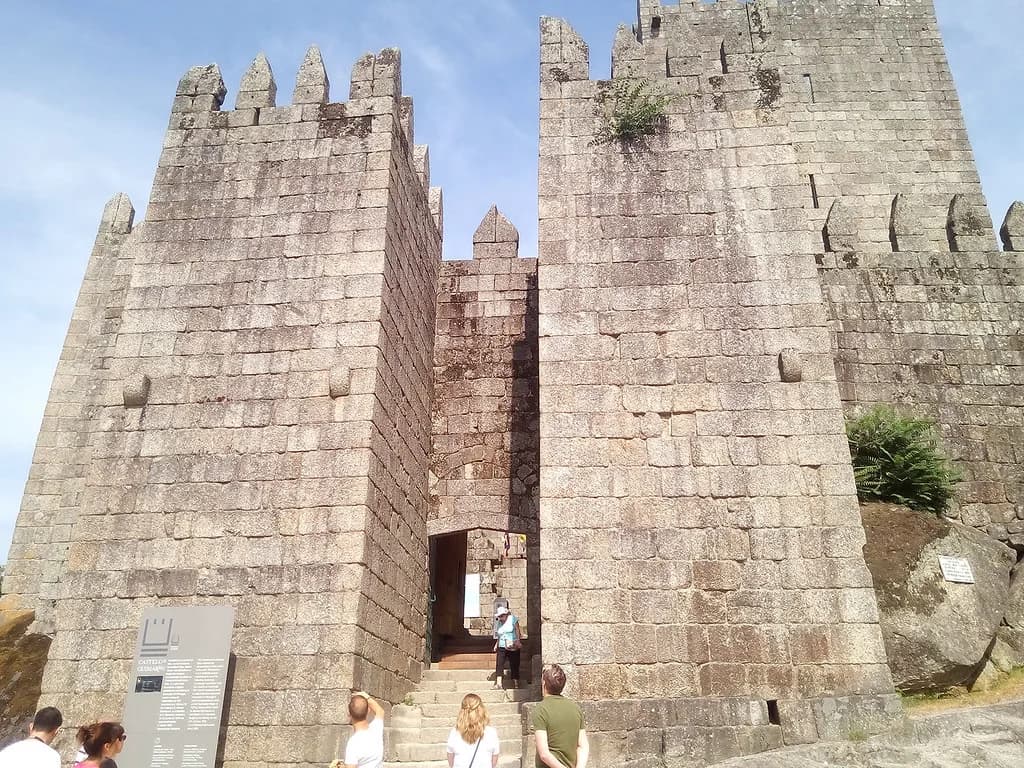
The Castelo de Guimarães is the city's main monument, and the guided city tour finishes here, which tells you how it ranks among the sights. Expect the castle to be the busiest point on the route, so the earlier in the day you reach it, the calmer it will be. Use the detailed guide to the Castelo de Guimarães if you want its story before you arrive.
Entry to the castle is included when you take the operator's guided walking tour, so if you are weighing up a self-guided day against a paid walk, factor that into the comparison. Confirm on the operator's own booking page what the price covers before you commit.
Stop 7: Paço dos Duques de Bragança
Finish at the Paço dos Duques de Bragança, the ducal palace that is listed among the city's essential sights alongside the castle. It is a substantial interior, so decide before you go in whether you have the appetite for another museum after a full morning on your feet. If you are running short, its exterior and courtyard still complete the route.
From the palace it is downhill back towards Oliveira and Toural, which makes a sensible end point for a drink or an early dinner. The walk back takes less time than the climb out.
Optional extension: the Serra da Penha cable car and the Citânia de Briteiros site
If the town walk leaves you with an afternoon spare, the Serra da Penha cable car and the Citânia de Briteiros archaeological site are the two add-ons outside the centre, both among the city's wider attractions. They are separate outings rather than extra stops on the old-town route, so treat them as a second walk, not padding.
Both sit beyond the compact centre, so they need their own travel time and cannot be squeezed between the palace and dinner. Choose one or leave both for another visit.
Guided walking tours: what a two-hour guided walk covers
A guided city walk covering the highlights runs for around two to two and a half hours and starts at Largo do Toural. It passes through Couros and Oliveira before finishing at the castle, with castle entrance and a certified guide included in the price. That structure mirrors the self-guided route above, which makes the choice mainly about commentary versus pace.
The operator sells this walk from €30 per person, and the same page sets a cancellation cut-off of 72 hours before departure for a refund. Note that the stated duration differs within the listing, so plan for the longer end. Also check that the departure you want is running on your date, since the times shown on that page are the operator's own schedule rather than a fixed city timetable.
Practicalities: where to start, walking surfaces and the lunch break
Start at Largo do Toural, which is central and easy to find, and finish at the palace with a downhill return. The surfaces mix paved squares with traditional, uneven lanes in Couros, so comfortable shoes matter more than any other bit of kit. The climb to the castle is short but steady.
For lunch, aim to be back at Largo da Oliveira around midday, when the square's concentration of kitchens works in your favour. If you would rather eat earlier and walk the castle edge on a fuller stomach, reverse the order and do the monument cluster first. Either way, build in a proper pause: the walk is short but the day is long if you skip it.
If you want a sit-down start rather than a lunch stop, a brunch in the centre before setting off keeps the route unbroken until Oliveira. That suits a morning arrival from Porto, when the train gets you in with the day ahead of you.
Should you walk Guimarães alone or book the guide?
Walk it yourself if you want to control the pace and stop for lunch on Oliveira without watching the clock; the compact centre makes the route easy to follow and the castle cluster pays off at the end. Book the guided walk if you want the commentary, the castle entrance bundled in and someone else navigating Couros, at the published price and departure times.
Whichever you choose, check the operator's booking page for the current departure times and what the ticket covers before you commit, and confirm any site you plan to enter on the day. The walk itself is the constant: Toural, Couros, Oliveira, then up to the castle.
Explore more Guimarães guides
Sources
Notes for your next Portuguese break
Optional updates to our town guides.
You might also like
Continue reading
More guides you'll find useful