Guimarães Castle: What to See and How Long to Allow
Guimarães Castle is a compact medieval fortress with battlements and hilltop views. Here is what a visit covers and how to pair it with the Paço dos Duques.
On this page
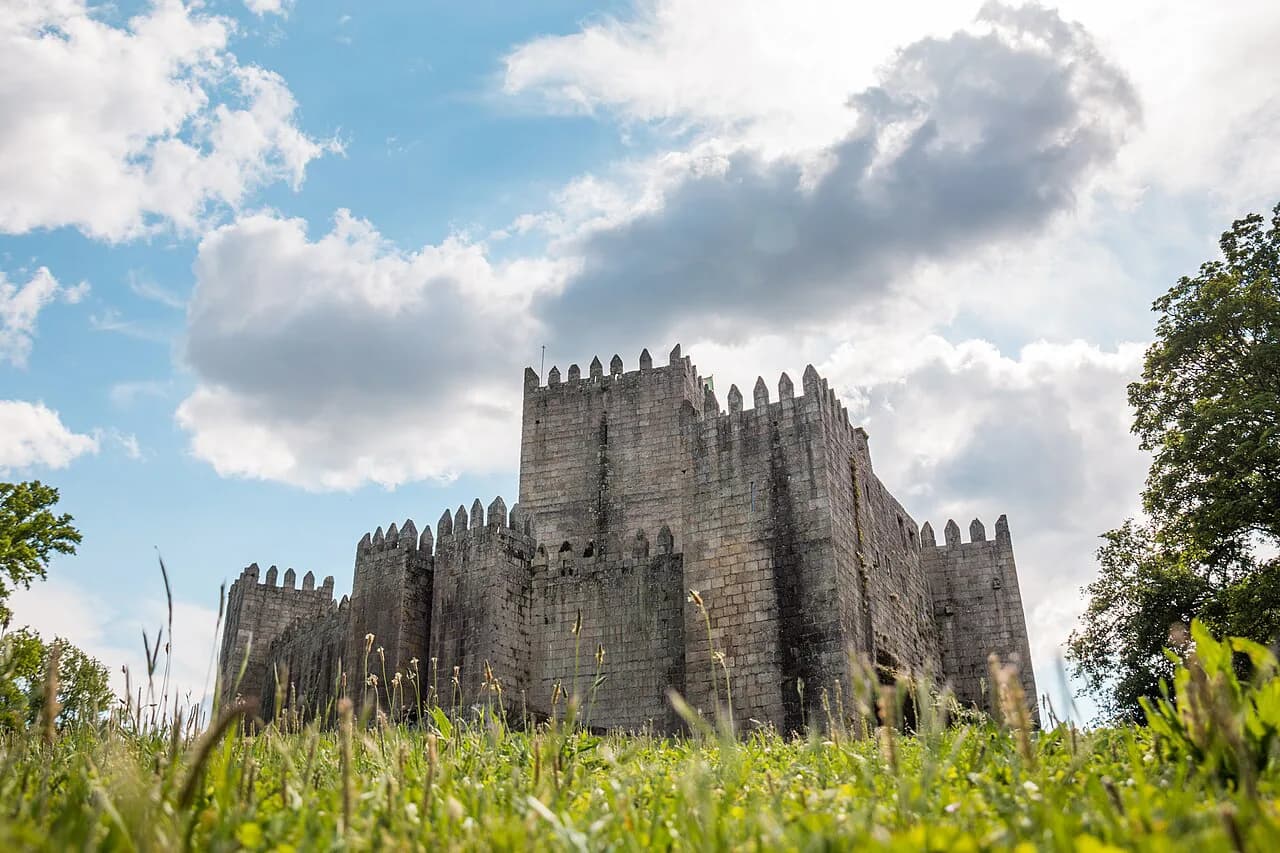
Guimarães Castle needs about 30 to 40 minutes, not an afternoon. It is a compact medieval shell of walls, towers and a central keep on the hill above the old town, and the reward is the walk along the battlements and the view over Guimarães and the green hills of the Minho. This guide covers what the fortress actually contains, how to fit it into a half-day with the Paço dos Duques next door, and where to confirm tickets and opening days.
What Guimarães Castle is and why it matters
The Castelo de Guimarães is a tenth-century hilltop fortress tied to Afonso Henriques and the founding of the Portuguese nation, which is why the town carries the slogan that Portugal was born here. Its national symbolism is far larger than its physical size: the monument began as a fortification ordered by Countess Mumadona Dias to protect a nearby monastery, and later rulers including Count Henry and King Dinis expanded and remodelled it. The castle is a National Monument, and the surrounding historic centre has held UNESCO World Heritage status since 2001.
Treat the heavy billing as context rather than a promise of scale. The castle is a symbol of Portuguese identity and independence, but the structure you walk through today is a preserved medieval shell rather than a room-by-room museum. That gap between reputation and reality is the single most useful thing to know before you climb the hill.
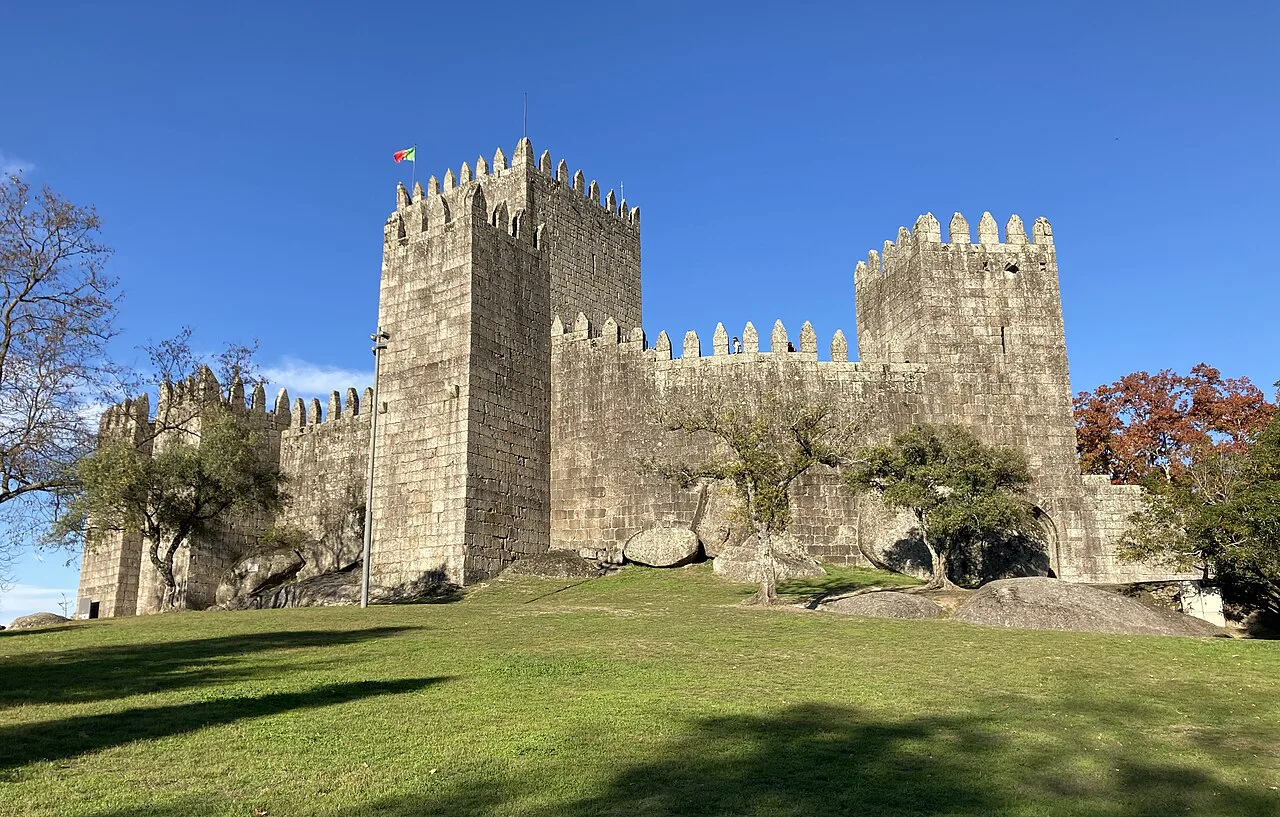
Where the castle sits on the hill
The castle occupies the high ground immediately north of the old town, with the Paço dos Duques de Bragança a short walk away and the small Romanesque chapel of São Miguel between the two. Because all three sit within a few minutes of each other, the sensible approach is to treat the hill as one stop rather than three separate outings. The Paço dos Duques has its own address on Rua Conde Dom Henrique.
Allow roughly a half-day for the castle, the palace and the chapel together, then walk downhill into the centre. The descent into the old town is short and is where the rest of your day naturally continues.
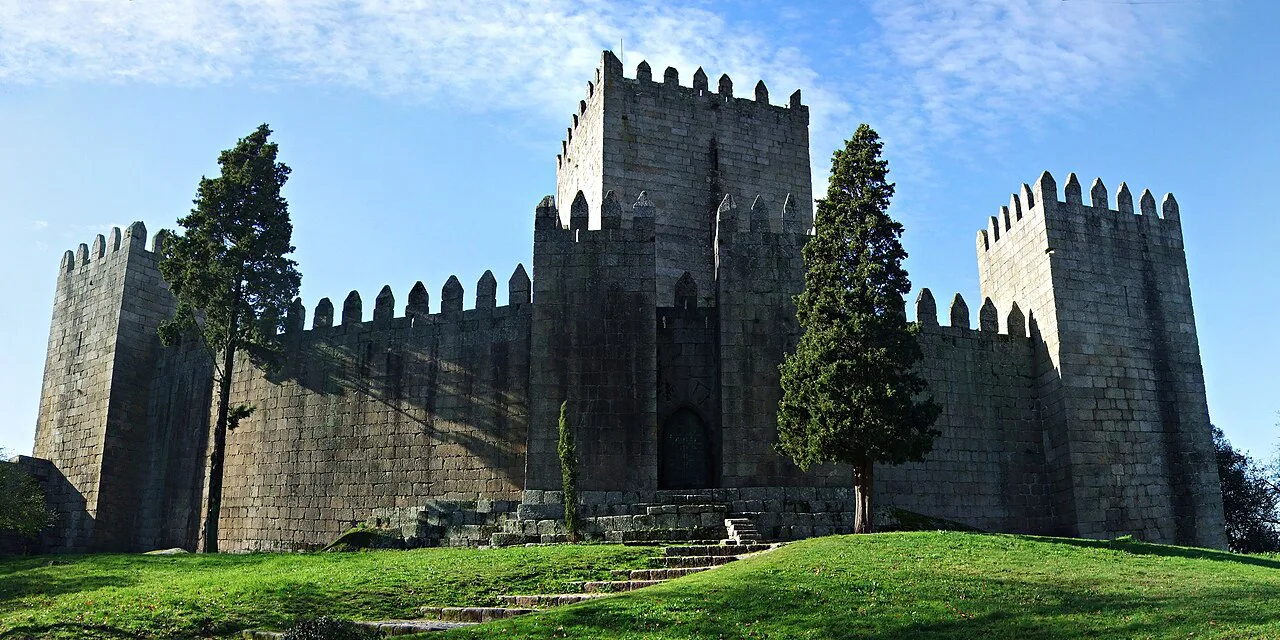
What you actually see inside
Inside the walls you get the ramparts, the surviving towers and the central keep, plus long views across the town and countryside. There is no sequence of furnished rooms to work through, so the visit is mostly about climbing, looking and reading the layers of construction left by successive rulers. Look for the changes between the early medieval foundations and the later Gothic rebuilding rather than expecting a single frozen moment in time.
The battlements are the highlight and the reason to come. They are also exposed, so the visit is best in dry weather and does not need to be padded with anything else on site.
How long to allow and who it suits
Thirty to 40 minutes comfortably covers the castle from gate to gate. Families with small children and travellers who enjoy ramparts and views will get the most from it; anyone hoping for armoury displays and reconstructed interiors should put their time into the palace instead. The castle is the quick, evocative add-on beside a larger furnished attraction.
Tickets and where to buy them
Independent guides have quoted figures in the region of a few euros for the castle and a combined ticket with the Paço dos Duques, but treat those as indicative only and check the current fare before you travel rather than budgeting from memory.
The Paço dos Duques publishes its own admission charge and opening hours on its official page, which makes it the reliable place to start when planning the hill. Confirm the castle's ticket arrangements at the same time, since the two monuments are run as neighbouring sites.
Opening days and closures to plan around
Confirm the castle's current opening hours and closure dates before you go. Its neighbour gives a useful model of how Portuguese national monuments handle holidays: the Paço dos Duques opens every day from 10am to 6pm but closes on 1 January, 1 May, Easter Sunday, 13 June and 25 December.
The official palace page also carried a notice of closure between 13 and 17 April in the year it was published, a reminder that short maintenance closures appear at short notice. Check the castle and palace pages in the week before you visit rather than months ahead.
The Paço dos Duques de Bragança next door
The Paço dos Duques is the larger, furnished attraction on the hill and deserves the bulk of your time. Built in the fifteenth century by D. Afonso, first Duke of Bragança, it was abandoned and ruined over the following centuries, then reconstructed between 1937 and 1959 and opened as a museum that year. Its permanent displays of tapestry, porcelain, painting, furniture and weaponry are arranged so that the rooms feel like a lived-in house.
Its official page lists an admission charge, and the palace forms part of the national museums and monuments network. Pair it with the castle and you have a coherent morning or afternoon without leaving the hill.
Walking down into the historic centre
From the castle the natural next move is downhill into the UNESCO-protected centre, where the streets and squares carry the weight of the day. If you want a structured route through the lanes rather than an aimless wander, a Guimarães walking tour can anchor the descent.
The centre is also where you will spend the rest of your budget, so keep the castle as a compact opening act. For the wider choice of sights across the city, including the church and square just below the hill, use the full list of things to do in Guimarães.
Is the castle worth the climb?
Yes, if you go in expecting a small, atmospheric fortress rather than a full museum. Thirty to 40 minutes on the battlements, then the Paço dos Duques with its published hours, makes a tidy half-day before the old town.
Confirm ticket prices and opening days for the castle shortly before you travel. Build the rest of your day around the hill and the centre, and the logistics take care of themselves.
Explore more Guimarães guides
Frequently Asked Questions
Can you go inside Guimarães Castle?
Yes. Visitors walk the ramparts, climb the towers and the central keep, and look out over the town and the Minho countryside. There are no furnished rooms to tour, so the visit is short and mainly about the walls and the views.
Is Guimarães Castle the same as the Paço dos Duques?
No. They are two separate monuments on the same hill, a few minutes apart, with the chapel of São Miguel between them. The castle is the medieval fortress; the Paço dos Duques is the reconstructed fifteenth-century palace with furnished rooms and collections.
Sources
Notes for your next Portuguese break
Optional updates to our town guides.
You might also like
Continue reading
More guides you'll find useful