Azulejos in Guimarães: Where to See the Town's Painted Tiles
A guide to spotting azulejos in Guimarães: how to read a Portuguese tile panel, where reproduction workshops sit, and the named Painel de azulejos de Fontelo.
On this page
You can see azulejos in Guimarães simply by slowing down in the old centre: the town's painted tiles reward a half-day of looking rather than a dedicated museum trip. This guide explains how to read a panel, where tiled façades and church interiors sit, and how to link them on a short walk.
Treat it as a walk with stops rather than a checklist. The town centre is compact and much of the pleasure is in spotting the blue-and-white patterns on ordinary buildings as you cross the squares.
What azulejos are and how to read a panel
Azulejos are ceramic tiles, usually glazed and often painted, and the word covers both single tiles and the large composed panels — painéis — that cover whole walls. You will meet the singular azulejo and the plural azulejos on signage throughout Portugal, and it is worth knowing both terms before you start looking.
Read a panel the way you would read a picture: find the central scene, then look at how the figures are arranged and how the frame relates to the building. A panel above a doorway or along a nave is doing a job, whether it tells a religious story or simply protects and decorates a wall.
Keeping the two words azulejo and painel in mind is enough to follow Portuguese labels and to ask a question at a counter. You do not need a technical vocabulary to enjoy what you see.
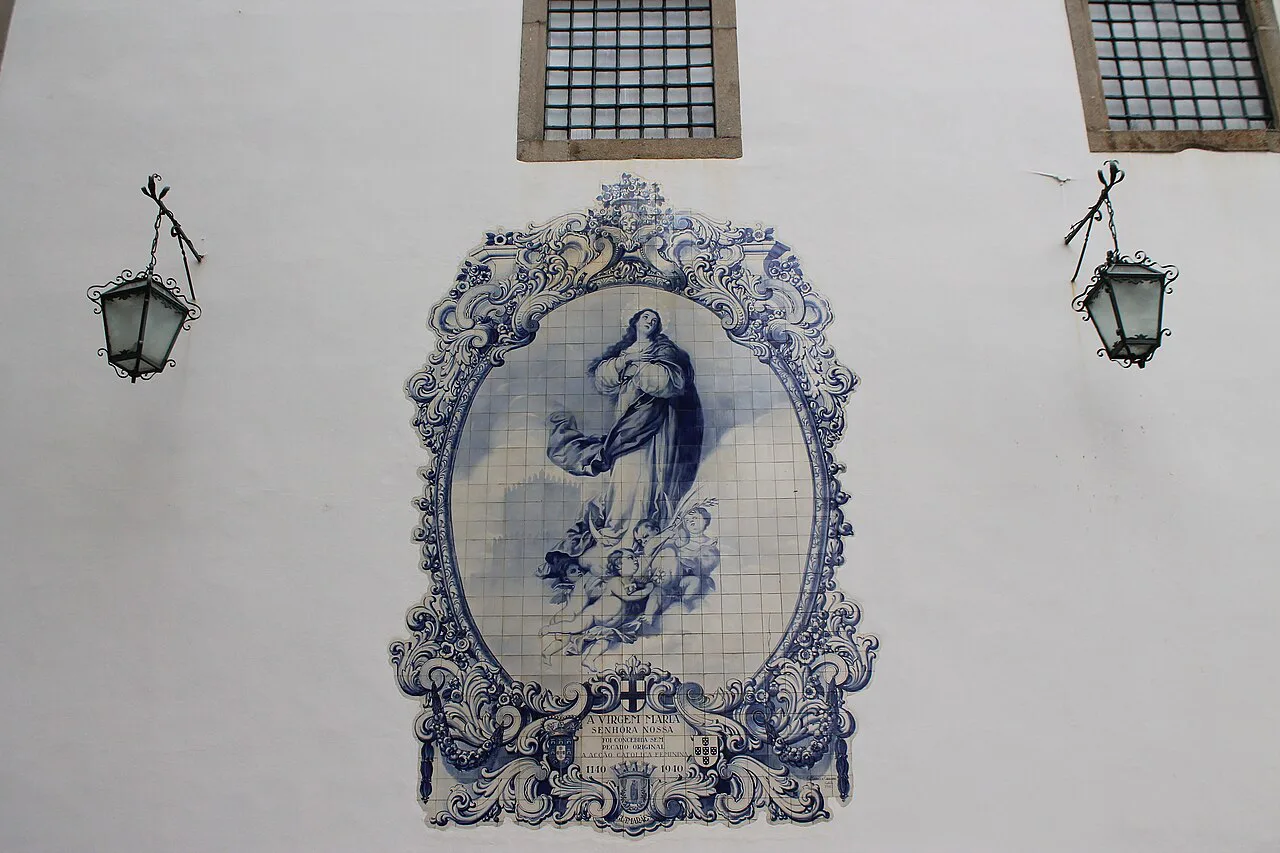
Start in the old centre: façades and squares
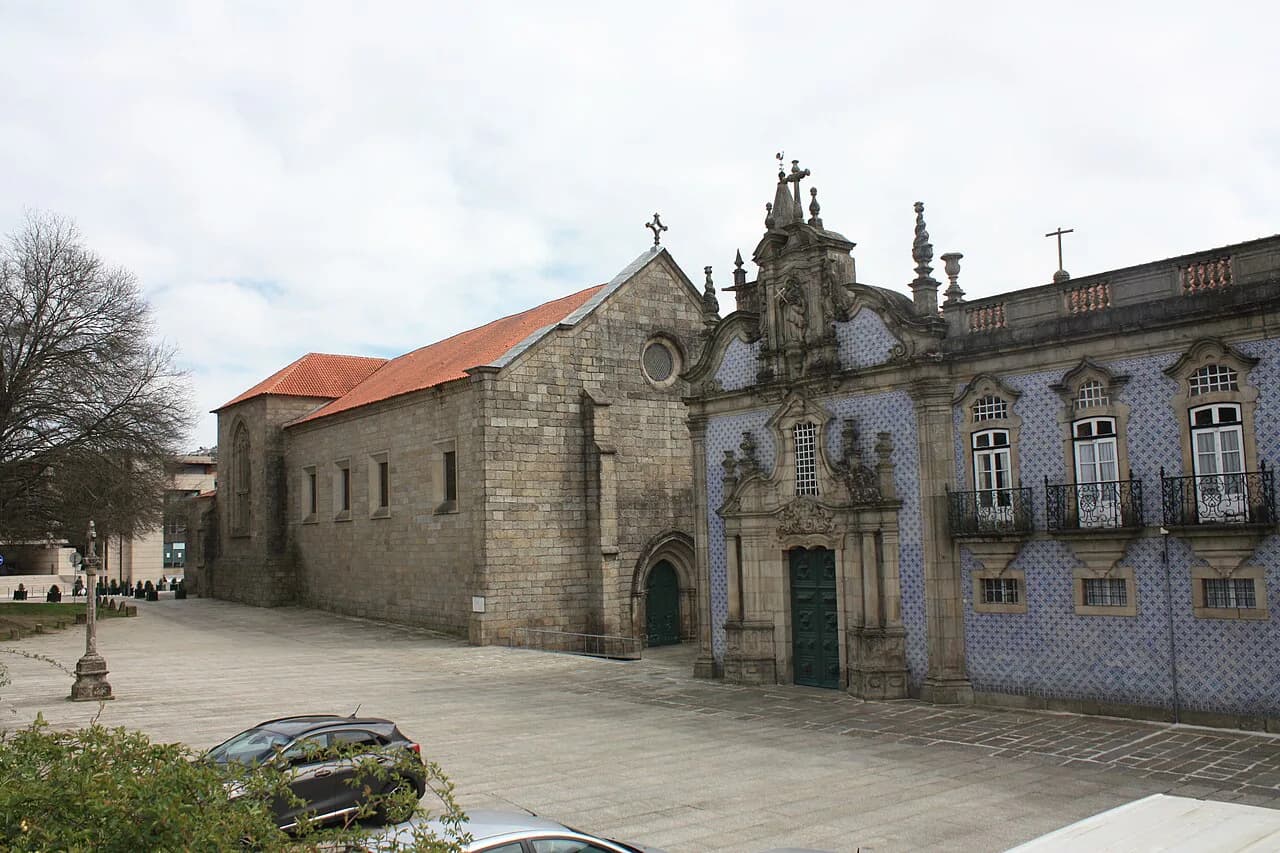
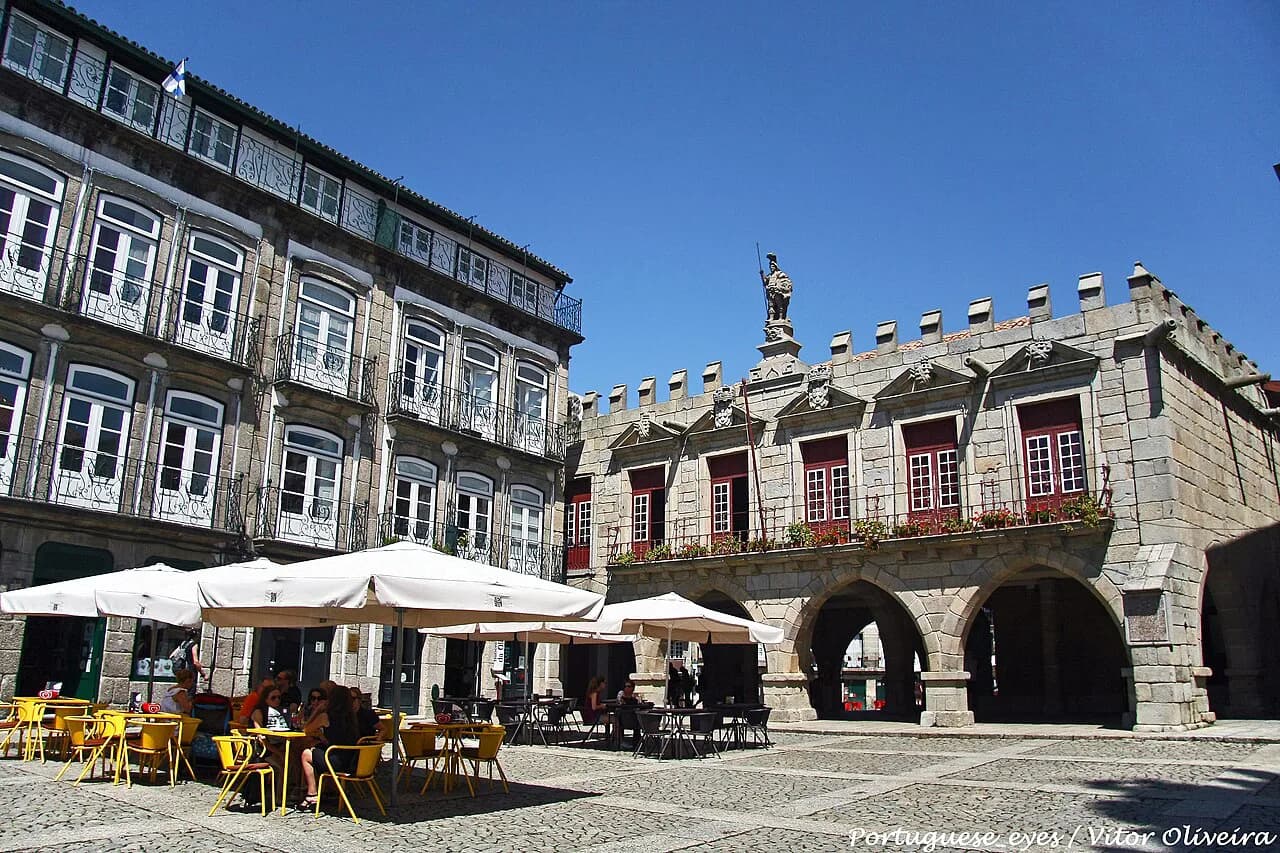
Start in the Guimarães Old Town, where the streets are narrow and the buildings close together, so tiled surfaces sit near eye level. The old centre is compact and easy to cross on foot, which makes it the natural place to begin a tile-spotting walk.
Look at the lower storeys as well as the upper ones. Tiles on a street façade often run along the base of a building or frame a shopfront, and these are the panels you walk past without noticing. Once you start checking walls at shoulder height, the town changes.
Because the centre is small, a tiled façade reads as part of its street rather than a lone survivor. Walk slowly and the repetition — one patterned wall after another — becomes the point.
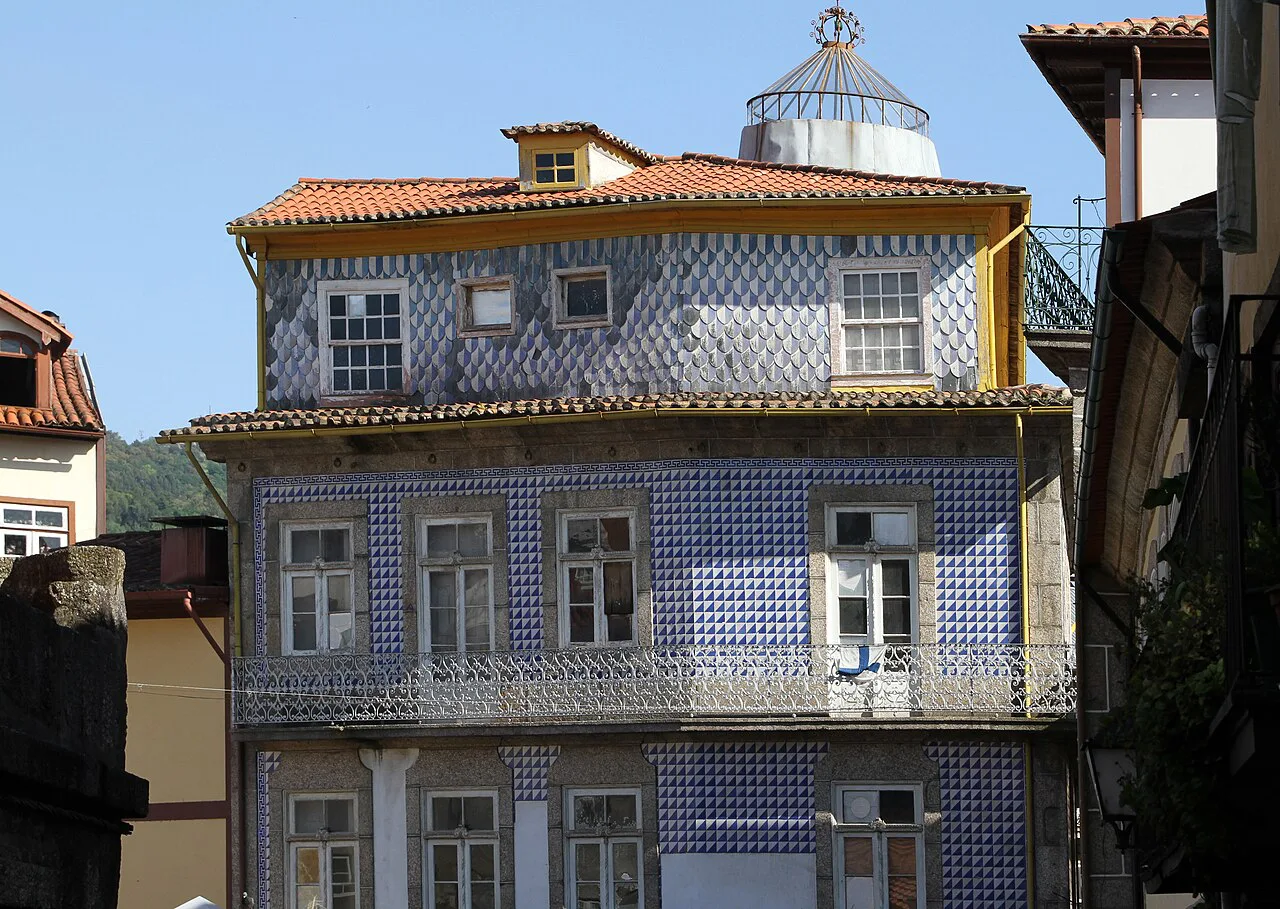
Church interiors: what to look for inside
Church interiors are where azulejos become architecture. Look for tiles lining the lower walls of a nave or covering a chapel, and notice how the blue-and-white patterning sits against altarpieces and stonework.
Inside, give yourself time to look up as well as along the walls. A tiled dado often carries a repeating pattern that only becomes legible when you step back, while figurative panels need close viewing to pick out faces, ships or landscapes.
Opening arrangements vary from church to church and can change with services, so build some flexibility into a church visit. If a door is shut, walk on and come back later rather than waiting outside.
The Painel de azulejos de Fontelo
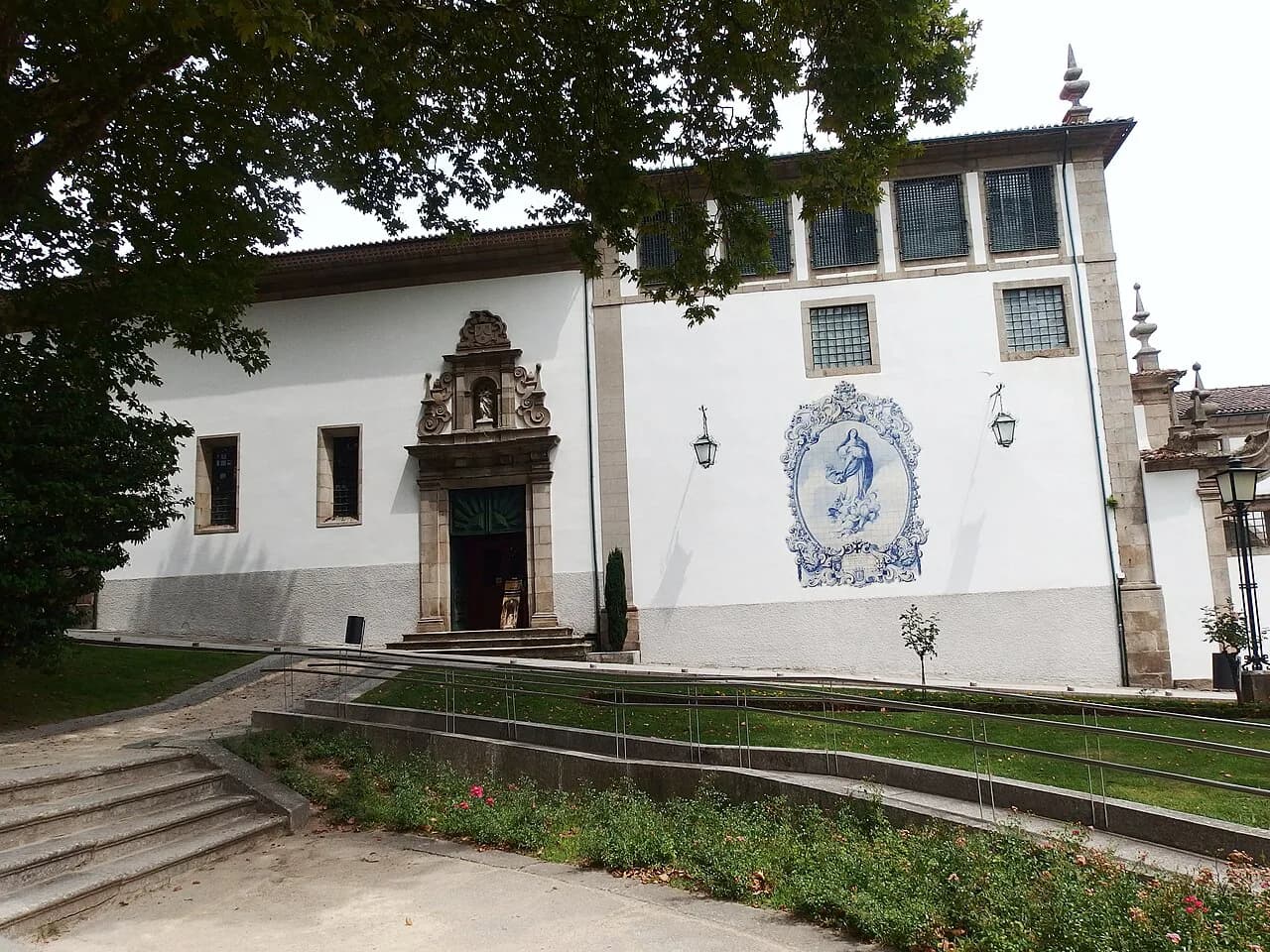
The Painel de azulejos de Fontelo is a named tiled panel in Guimarães, listed as an attraction for the town but without published location, description or opening details. Treat it as a stop to confirm before setting out, and do not assume you will pass it by chance between the old-centre streets.
Approach it as a single viewing stop rather than a site with facilities. Look at the panel from the street, take in the composition, and fold it into the wider walk rather than building an afternoon around it.
A short walking route linking the panels
A workable approach is to cross the old centre first on foot, then, if Fontelo proves reachable once you have confirmed its location, fold that detour into the walk and return through the church streets, so the outing stays on foot and ends near somewhere to sit down. The order matters less than keeping the walk continuous.
Allow a half day rather than an hour. The distances are short, but tile-spotting is slow work: every façade invites a second look, and church interiors absorb time in a way that a map cannot show.
Break for coffee in the old centre rather than pressing on to the next stop. A pastelaria gives you somewhere to compare what you have seen and decide whether the Fontelo detour is still worth it.
If you want the town's broader sight list as well as its tiles, the things to do in Guimarães are easy to weave into the same walk and give context to the buildings the panels decorate.
Reproduction workshops and the Fontelo panel
Not every tiled surface you notice is period work. Tiles4You, listed with a workshop address on Rua da Casa Noca in Guimarães, describes reproducing azulejos and panels as well as Art Nouveau and other motifs chosen by the client, which tells you that modern reproduction is part of the local picture.
The same listing gives a phone number and a website but no opening hours and no indication of a shop you can drop into, so treat it as a workshop to contact in advance if you want to discuss tiles, not a visitor attraction on the route.
That distinction matters when you are reading a façade. Original panels and later reproductions can sit side by side on the same street, so enjoy the pattern without insisting on its age.
Practical trade-offs: timing your tile walk
Much of this walk happens outdoors, so the pressure points are church interiors and any building with a door. Outdoor façades and street panels can be seen at almost any daylight hour, which makes the walk easy to rearrange around a closed door.
Museums and monuments in Portugal often close one day a week, commonly Monday, but confirm the current position for any specific Guimarães sight before you build a day around it.
Keep the walk flexible rather than fixed. If a church is shut, move on to the next stretch and return later; if a museum is closed, the outdoor tiles alone still justify the outing.
Finish with a meal rather than squeezing in one more stop. Guimarães restaurants in the centre make a natural end to a morning of walking and looking, and a long lunch is a better use of the afternoon than rushing a final façade.
Is the tile walk worth half a day?
Yes, if you like looking at buildings closely. The azulejos in Guimarães are, for the most part, part of the streetscape rather than a ticketed attraction, so the walk itself costs little beyond your time and a coffee.
Keep the old centre as your base, treat Fontelo as one deliberate detour only once you have confirmed where the panel actually is, and accept that a closed church door is a reason to come back rather than a failed morning.
Explore more Guimarães guides
- Guimarães Castle (Castelo de Guimarães)
- Is Guimarães Worth Visiting? What You Get on a Short Break
- Museums in Guimarães
- Porto to Guimarães
- Brunch in Guimarães
- Churches in Guimarães
- Guimarães Food
- Guimarães History
- Guimarães Itinerary
- Guimarães Market
- Guimarães Walking Tour
- Guimarães, Birthplace of Portugal
- Shopping in Guimarães
- Vegan and Vegetarian Food in Guimarães
Frequently Asked Questions
Do you need a ticket to see azulejos in Guimarães?
Street façades and outdoor panels are seen from public streets at no cost. Church interiors may have their own access arrangements, so check at the door on the day you visit.
How long does a tile-focused walk take?
Half a day is realistic if you include church interiors and, once its location is confirmed, the Fontelo panel. A quick circuit of the old-centre streets takes much less, but you will see far fewer details.
Sources
Notes for your next Portuguese break
Optional updates to our town guides.
You might also like

Continue reading
More guides you'll find useful