Guimarães Itinerary: A Practical 2–3 Day Plan
Plan a Guimarães itinerary day by day, grouping the castle, Paço dos Duques and old-town squares, with honest trade-offs on Penha and how many days you need.
On this page
Two days give you Guimarães properly: one for the castle hill and the Paço dos Duques de Bragança, one for the old-town squares, the Museu de Alberto Sampaio and the walls. Three days add either the cable car up to Penha or the Iron Age hill fort at Citânia de Briteiros, but not both without rushing. This itinerary groups sights by area so you climb the hill once, and it names the stretches you can cut if you only have a day.
How many days you need in Guimarães
One day covers the castle, the palace and the Largo da Oliveira area at a brisk pace, which is what most day-trippers from Porto attempt. Two days let you slow down, add the Museu de Alberto Sampaio and walk the walls without clock-watching. Three days make Penha or Citânia de Briteiros comfortable.
If you are weighing up whether the trip is worth the rail journey, the honest answer is that the historic centre is compact and dense enough to justify an overnight stay rather than a dash. Our answer to is Guimarães worth visiting sets out what a short break actually delivers.
How Guimarães is laid out: the castle hill, the old town and Penha
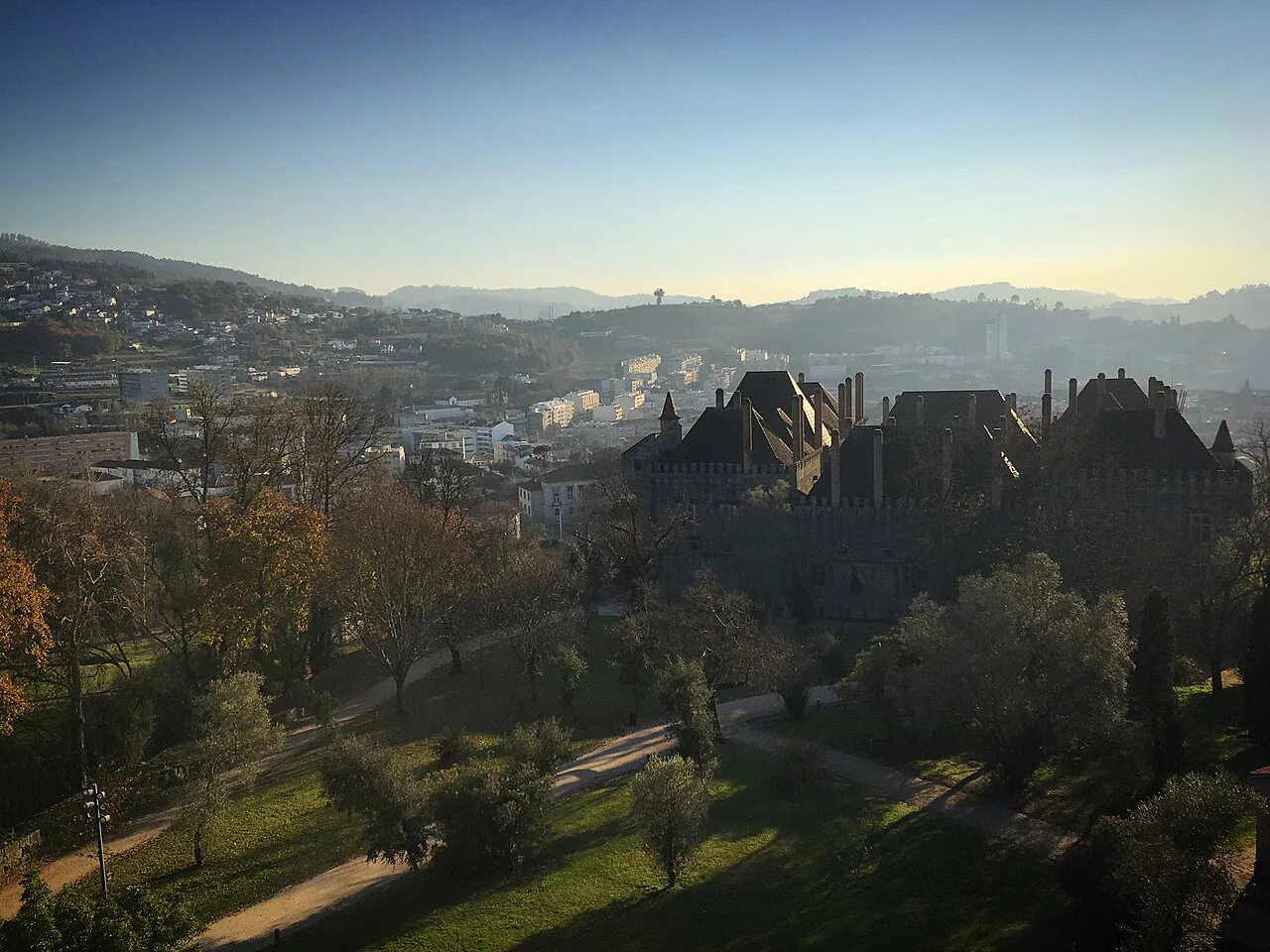
The city divides into three usable pieces. The castle hill sits at the top, with the Castelo de Guimarães, the small Igreja de São Miguel do Castelo just outside its walls and the Paço dos Duques de Bragança alongside. Below it, the old town runs through Largo da Oliveira, the Padrão do Salado and Largo do Toural. Penha is a forested hill south of the centre, reached by the Teleférico da Penha cable car. Our Things to Do in Guimarães guide and the Guimarães Old Town guide cover the individual sights in more depth.
That geography is why the plan below never sends you up the hill twice. The medieval walls are the seam between the two halves: the best-preserved stretch runs along Avenida Alberto Sampaio, where you can walk the old ramparts above the town.
Day 1 morning: Castelo de Guimarães and Igreja de São Miguel do Castelo
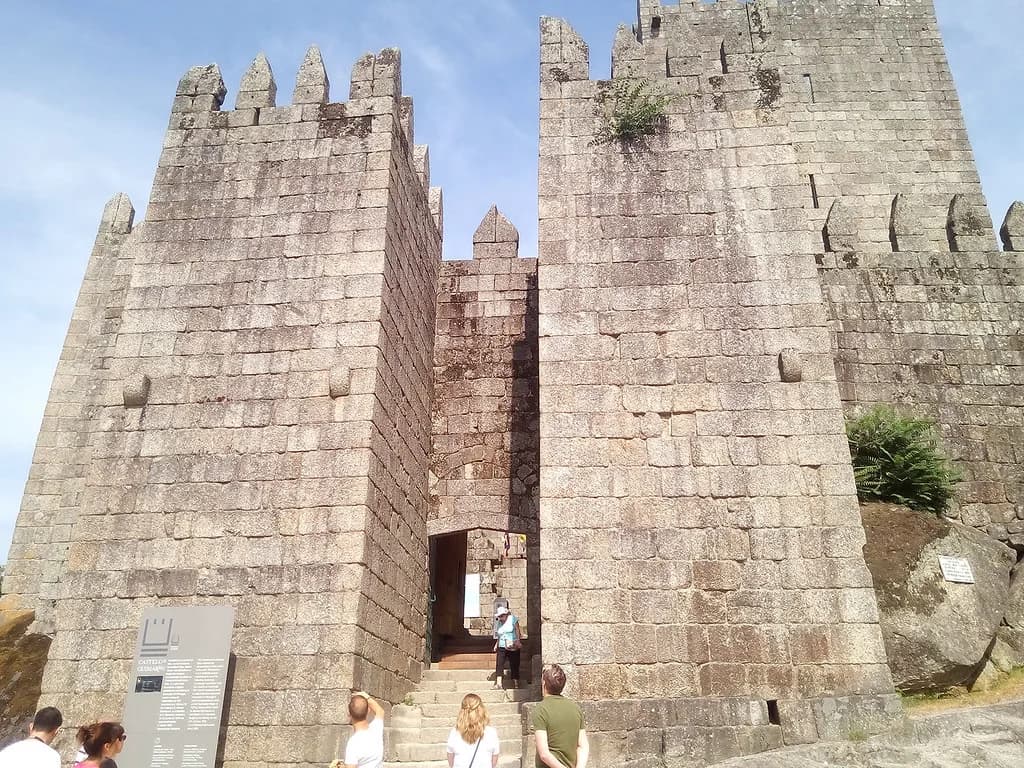
Start at the castle, founded in 959 by Countess Mumadona Dias and built onto the granite outcrop of Monte Latito. Afonso Henriques, the future first king of Portugal, was born here in 1110, and the 28-metre square keep added in the 13th century is the part you climb for the view. The original entrance sits several metres above ground, once reached by a removable wooden ladder.
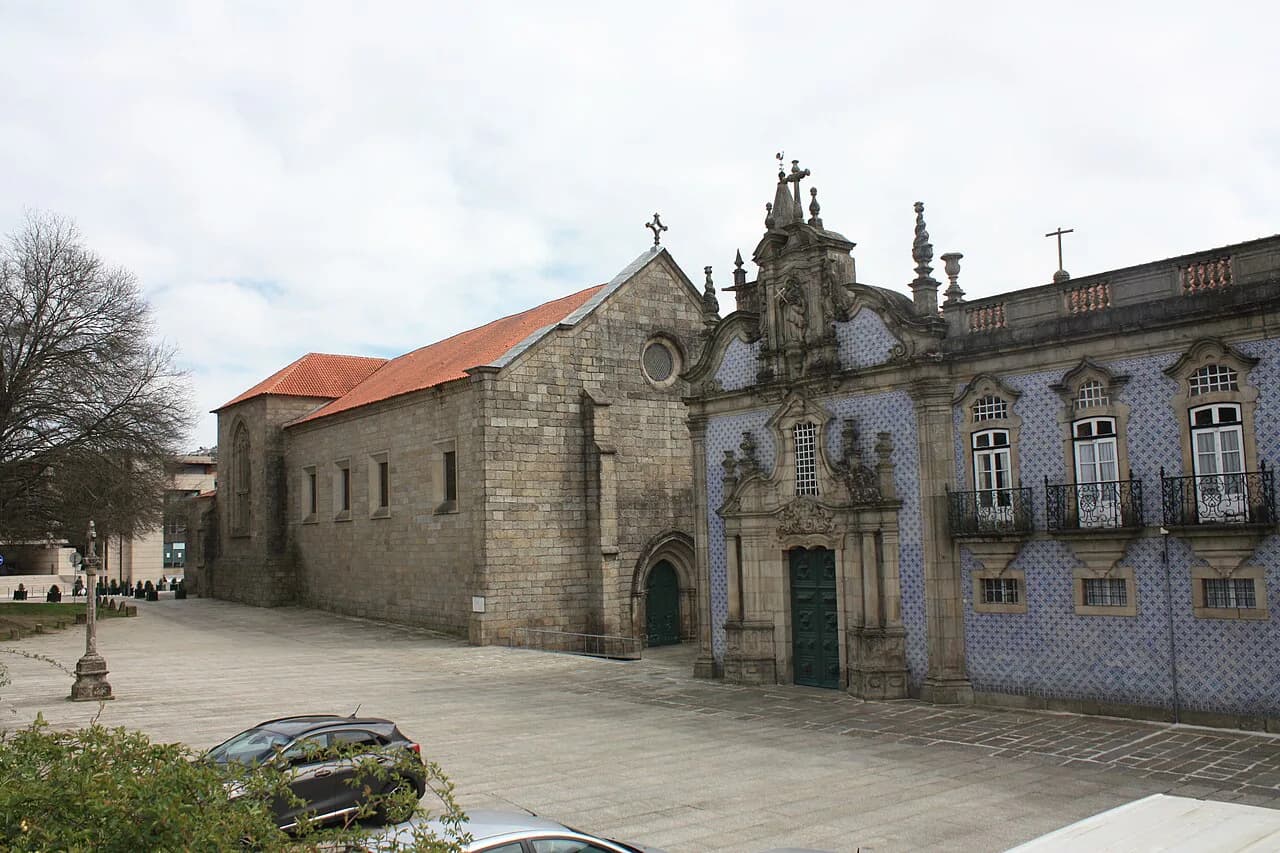
Five minutes away, the Igreja de São Miguel do Castelo is a tiny Romanesque chapel holding the original baptismal font used for Afonso Henriques in 1106. It is a short stop, not a museum visit, and it sits outside the castle walls rather than inside them. The castle exterior and walls can be admired without a ticket; for the keep and any interior access, check the current entry arrangement at the door.
Day 1 afternoon: Paço dos Duques de Bragança and the old-town squares
The Paço dos Duques de Bragança is a 15th-century palace built in a style closer to a Burgundian manor house than a Portuguese palace, with more than 60 rooms of tapestries, weapons and period furniture. It still serves as an official presidential residence, which is part of why the interior feels formal rather than homely. Allow an hour or more inside if you like tapestries and armour.
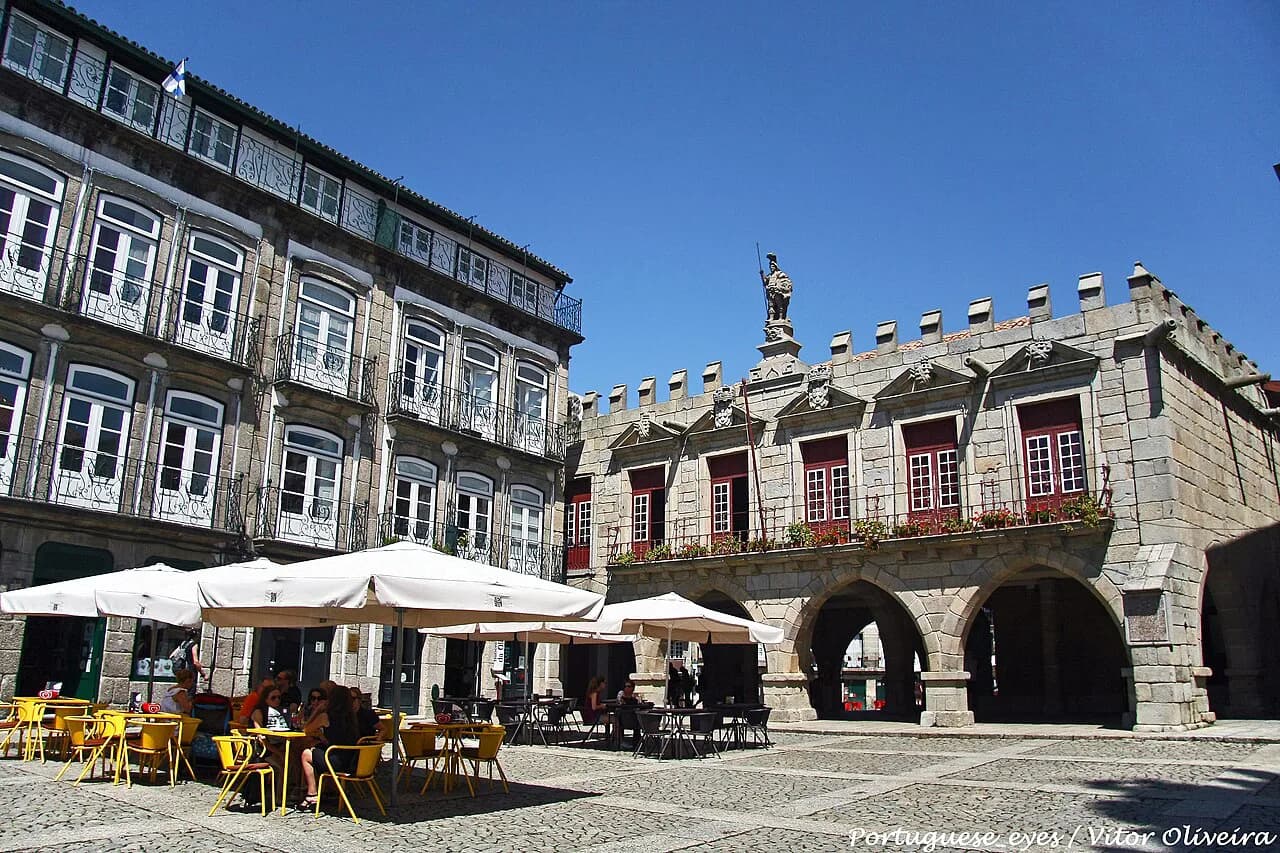
From the palace, walk down into the centre rather than back up. Praça de São Tiago is the natural first square you meet on the descent, and from there Largo da Oliveira opens up with the old town hall, a 14th-century Gothic shrine and the olive tree that named the square. Linger here rather than treating it as a corridor.
Day 1 evening: Largo do Toural and the streets around Largo da Oliveira
Largo do Toural is the broad, modern-feeling square at the edge of the historic centre, and it makes a sensible meeting point before dinner. From there the lanes back towards Largo da Oliveira are where the evening passes most pleasantly, with the lit façades doing more work than any single sight.
For dinner, stay in the old town rather than trekking back up the hill. Our Guimarães restaurants guide covers the practical side: booking habits, typical closing days and what a tasca dinner looks like. If you want a structured route through the lanes rather than aimless wandering, a Guimarães walking tour or self-guided route fits neatly into this slot.
Day 2 morning: Igreja de Nossa Senhora da Oliveira and the Museu de Alberto Sampaio
Begin day two at the Igreja de Nossa Senhora da Oliveira, a Gothic church with roots going back to 950 and home to one of Portugal's finest medieval silver altarpieces. The adjoining monastery now houses the Museu de Alberto Sampaio, so the two visits sit back to back without a walk between them.
Museums in Guimarães keep varied opening days, and several Portuguese museums and national monuments close on Mondays as a general pattern, so build this morning around whatever is open on your date. If a religious building is your priority, remember that churches elsewhere in Portugal often shut over lunch, and confirm times locally before setting out.
Day 2 midday: the medieval wall walk along Avenida Alberto Sampaio
The wall walk is short, which makes it the ideal filler between the museum and lunch. The best-preserved stretch of the Muralhas de Guimarães runs along Avenida Alberto Sampaio, letting you walk the old ramparts above the town. Access is on foot along the avenue; confirm locally before making it the centrepiece of a morning. Go before the midday heat if it is summer, because the parapet offers little shade.
Take the view from above rather than a detour, then drop into the old town for a proper sit-down meal. A tasca lunch of caldo verde or arroz malandrino is the sensible midday move when an afternoon of walking follows.
Day 2 afternoon: Teleférico da Penha and the Santuário da Penha
Penha is a forested hill south of the city, laced with trails through massive granite boulders, reached by the Teleférico da Penha cable car. The hilltop has the Santuário da Penha, and the standard approach is to ride up and walk down, or to spend a half day on the trails and the sanctuary. Treat it as an optional half day rather than an automatic inclusion.
The trade-off is straightforward. Penha eats an afternoon and delivers views and forest rather than monuments, so if you only have two days and history is the draw, skip it and give the old town the extra hours. The cable car runs on its own timetable, so check that before committing the half day.
Day 2 alternative: staying in the old town with the Igreja dos Santos Passos and Jardim da Alameda
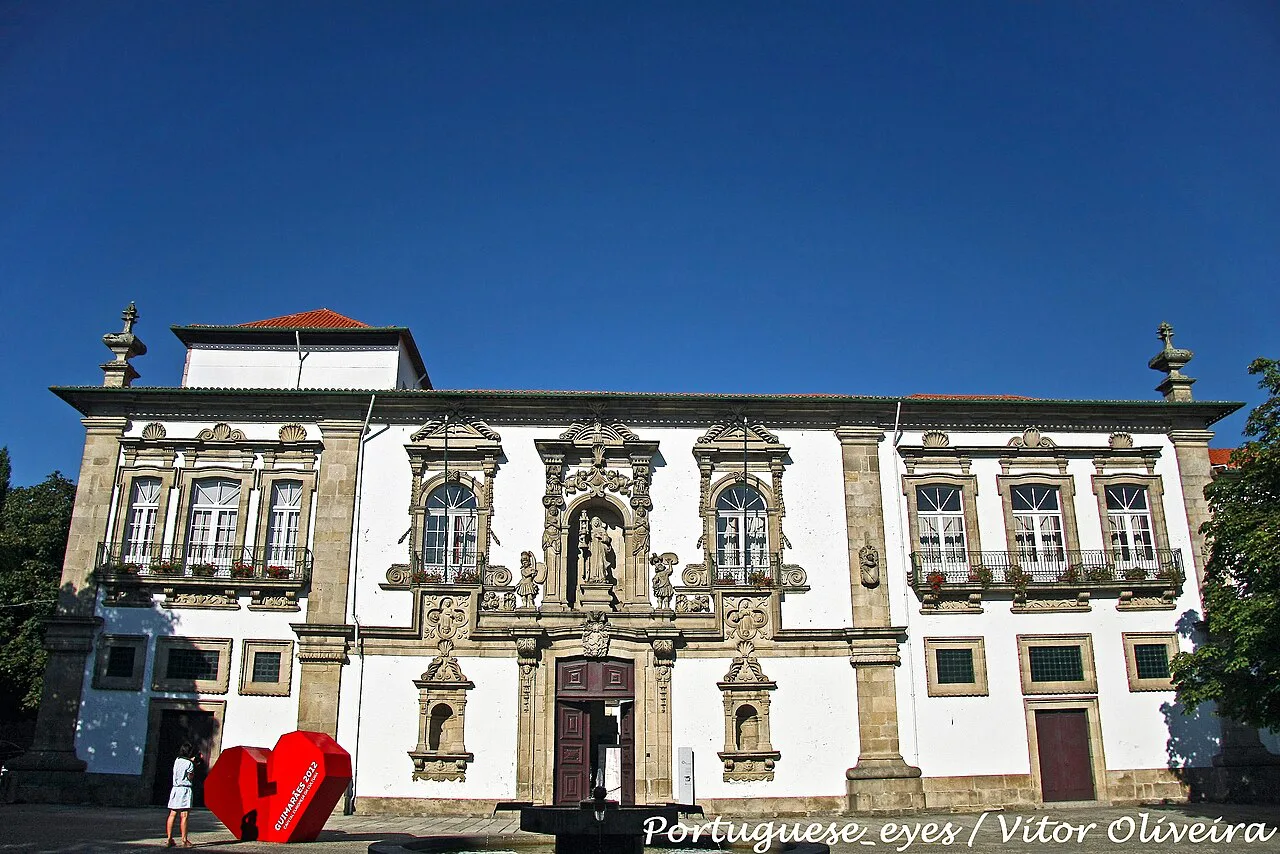
If it is raining, you are tired, or Penha does not appeal, stay low. The Igreja dos Santos Passos is the twin-towered Baroque church framing the end of the Jardim da Alameda, and its ornate façade is among the most photographed sights in the city. A slow circuit of the garden and the surrounding streets fills an hour without any climbing.
This is also the better afternoon if you want to look properly at tilework. Guimarães rewards close attention to façades and interiors, and the azulejos in Guimarães are spread across churches and civic buildings rather than concentrated in one museum. If brunch matters more than a third church, brunch Guimarães options near the centre fit the same slow schedule.
Day 3: Citânia de Briteiros or a slower second pass through the centre
Citânia de Briteiros, about 15 km from Guimarães, is the remains of an Iron Age hill fort with over 150 circular stone dwellings and paved streets. It is one of the best places in Portugal to see how pre-Roman Celtic communities lived, but it is a trip out of the city, not a walk from the centre. Go only if archaeology genuinely interests you.
The alternative third day is the one most people actually enjoy: a second pass through the centre with no list. Return to Largo da Oliveira in the morning light, revisit whichever museum you rushed, and leave the afternoon open. Three days without a day trip is not a wasted itinerary in a city this compact.
Where to break for lunch and coffee in the old town
Place your main meal at Largo da Oliveira or the lanes just off it, where the density of tascas and pastelarias means you can eat without a plan. Praça de São Tiago is the other natural pause on the way down from the castle hill. Both keep you inside the old town rather than sending you back up.
Restaurants across Portugal commonly close one day a week, and lunch service often ends in mid-afternoon, so a late-afternoon sit-down can catch you out. Build lunch into the middle of the day and keep a pastelaria in reserve for the gap. A coffee stop is also the polite way to break up the museum-and-church stretch.
Walking times between the castle hill, the centre and the cable car
The castle hill to Largo da Oliveira is a short downhill walk, and the Paço dos Duques sits beside the castle, so the upper cluster is done on foot in one block. The old town itself is compact enough that Largo da Oliveira to Largo do Toural takes minutes. Nothing in the historic centre justifies a taxi.
The cable car base is the one leg worth planning, because it sits away from the old-town core. Look up the exact approach for the Teleférico da Penha before you set off, and treat the ride and the hill as one half-day block rather than squeezing it between two museums.
Trade-offs: what to drop on a one-day visit and when Penha is worth the half day
On a single day, do the castle, the Igreja de São Miguel do Castelo, the Paço dos Duques and Largo da Oliveira, then stop. Drop Penha, drop Citânia de Briteiros and treat the Museu de Alberto Sampaio as optional. The wall walk costs nothing but time, so it survives the cut if you are moving briskly.
Penha earns its half day when you have already seen the centre and want landscape rather than granite and gilt. It does not earn it on a first visit of two days, and it is the wrong choice on a wet day when the cable car view is the whole point. Be honest with yourself about which of those you are.
Practical points: opening days, ticket prices and lunchtime church closures
Several Portuguese museums and national monuments close on Mondays as a general pattern, so if your date falls on a Monday, plan around streets, squares and the wall walk and confirm which interiors are open. Ticket prices for the castle and the Paço dos Duques change and vary by category, so check the price at the ticket desk rather than relying on a guidebook figure.
Churches often close their doors over the lunch period, so visit religious interiors in the morning or mid-afternoon and treat the middle of the day as outdoor time. A final check of opening times the evening before each day saves a wasted walk up the hill.
Two days or three in Guimarães?
Choose two days unless archaeology or hill scenery is a priority. The castle hill and the old town between them fill two comfortable days, and a third only pays off if you commit to Citânia de Briteiros or a genuinely slow Penha afternoon.
Sources
Notes for your next Portuguese break
Optional updates to our town guides.
You might also like
Continue reading
More guides you'll find useful