Guimarães History: What to See and Why It Matters
Guimarães history for visitors: how the medieval centre became a UNESCO site, where Afonso Henriques fits in, and which monuments tell the story.
On this page
Guimarães history fits into a single compact centre, and that is what makes it worth a day of any short break. The old town has been a UNESCO World Heritage Site since 2001, recognised as an exceptionally well-preserved example of a medieval settlement that grew into a modern town. This guide ties each period to a building or square you can stand in, so the story stays concrete rather than abstract.
Plan on the monuments clustering tightly: the castle, the palace and the Romanesque church of São Miguel sit together on one hill, while the medieval squares and the museum are a short walk downhill. That means you can cover the main historical sights on foot in a morning or an afternoon without transport.
Why Guimarães is called the birthplace of Portugal
Guimarães carries the nickname Cidade Berço, the cradle city, because Portugal's first king, Afonso Henriques, is widely believed to have been born here. The city was also the scene of the Battle of São Mamede, fought in its vicinity and regarded as the founding event of the Kingdom of Portugal. Those two claims, a birth and a battle, are the reason the town punches above its size in the national story.
Residents are known as Vimaranenses, and sometimes as Conquistadores, a nod to the conquest that began here. Keep that in mind as you walk the centre: the self-confidence of the place comes from being first, not from being grand. For a wider look at how the town trades on that identity, see the guide to Guimarães, Birthplace of Portugal.
Vimaranes and the County of Portugal
The city was settled in the ninth century under the name Vimaranes, possibly taken from the warrior Vímara Peres, who chose the area as the seat of the County of Portugal. For some decades Guimarães served as the county's capital before Coimbra took over as the kingdom's capital after 1128, when the Reconquista pulled attention south. That early prominence explains why the oldest stonework in town predates the nation itself.
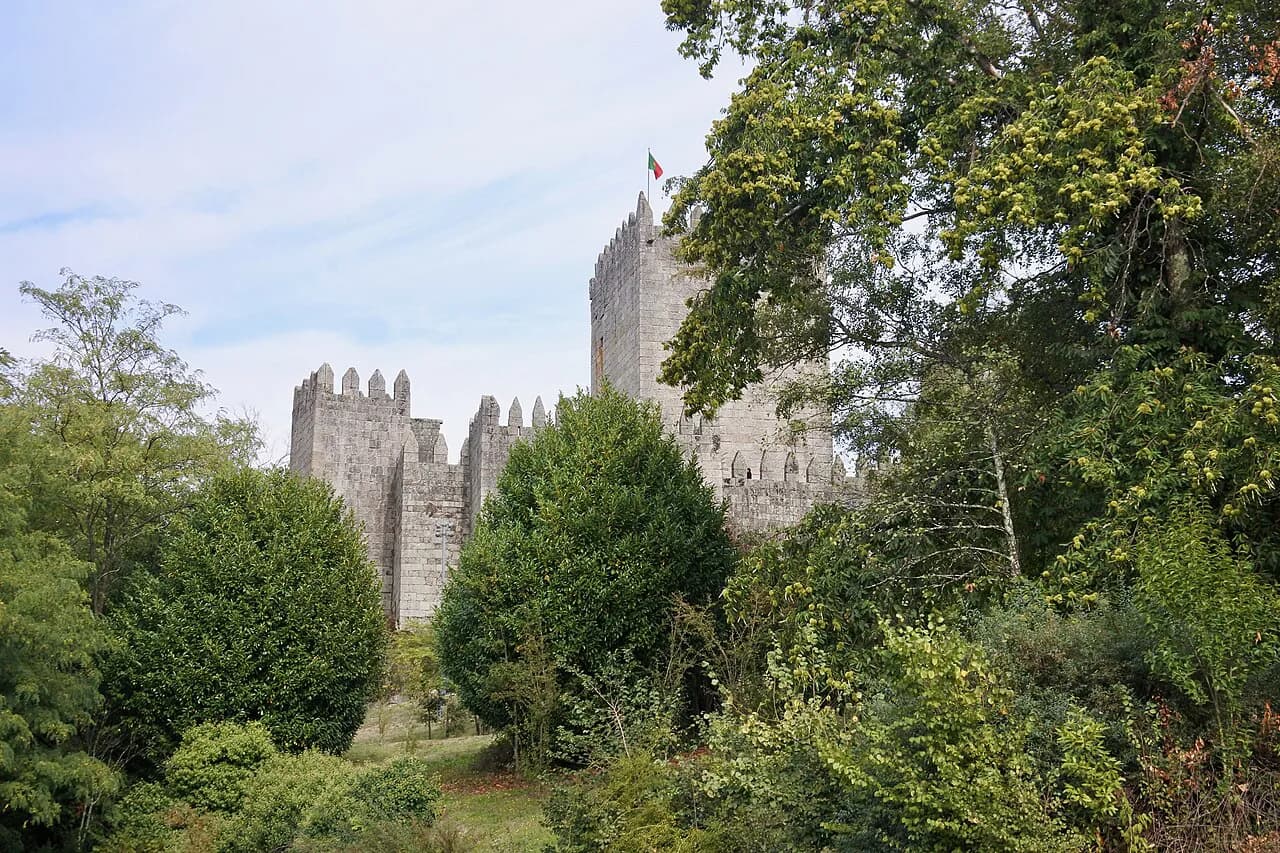
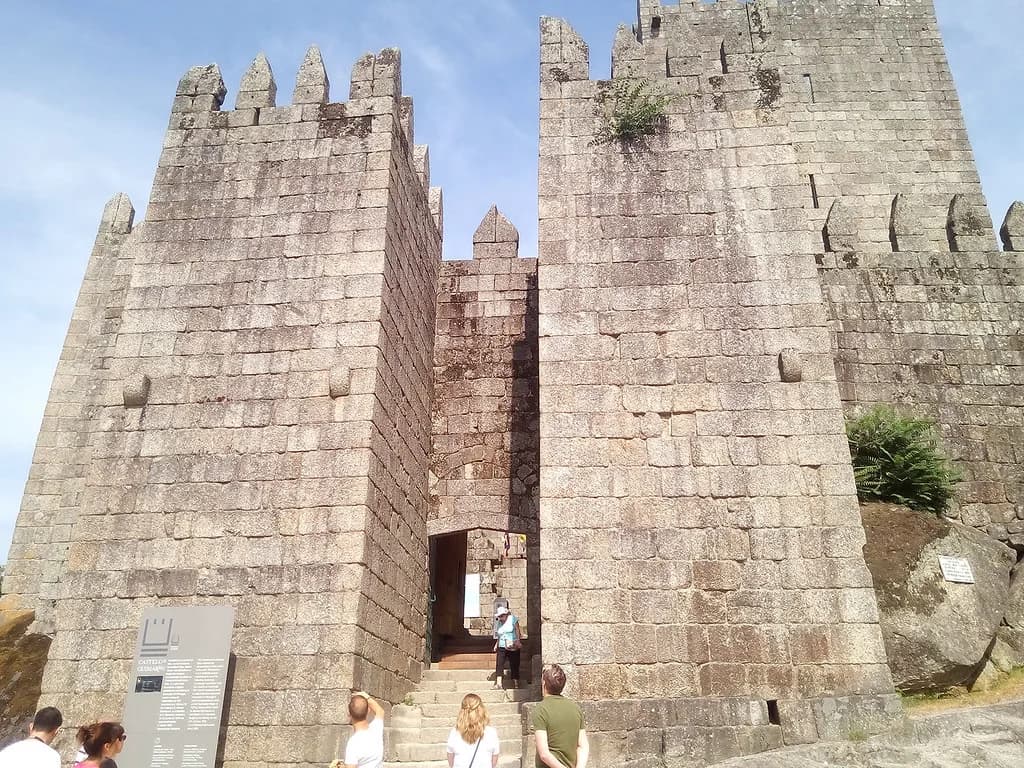
The castle's own beginning belongs to this period: Countess Mumadona Dias, described as the most powerful woman in the north-west of the Iberian Peninsula in the tenth century, built it. Count Henry, father of Afonso Henriques, later extended it. In the eighteenth century there was even a petition to demolish the castle entirely, which is a useful reminder of how casually earlier generations treated the heritage now protected by UNESCO.
The Castle of Guimarães: what survives and what to look for
Be honest about expectations: the castle looks impressive from outside, but little remains inside the walls, so the visit is really about the battlements and the views from them. Go up, look out over the town, and use your imagination for the rest. Read more practical detail in the Castelo de Guimarães guide before you climb, or start from the things to do in Guimarães overview.
A bronze statue of Afonso Henriques greets you on the approach to the castle, a good orientation point on the hill. In 2025 the castle was listed at two euros, open daily from ten in the morning to six in the evening, with free admission on the first Sunday of each month and for children under twelve. Treat those figures as the rate published in 2025 and confirm before you travel, as they can change.
The Palace of the Dukes of Bragança and its restoration
The first Duke of Bragança built his palace next to the castle between 1420 and 1422, and its cluster of tall red-brick chimneys is the giveaway on the skyline. The building was radically altered in the sixteenth century, then abandoned and used as a military building during the Napoleonic invasions. Salazar ordered its reconstruction after visiting it in ruins in 1933, and it opened to the public in 1959.
The restoration is the interesting part for a visitor: it reconstructs a seventeenth-century royal house rather than the medieval palace that stood here, and the renovation was controversial at the time. Go expecting a furnished interior of carved antiques, tapestries, painted ceilings and stained glass, plus exhibitions including works by the local artist José de Guimarães, not a medieval shell. In 2025 entry was listed at five euros, open daily ten to six, free on the first Sunday of the month and for under-twelves.
São Miguel and the line between legend and record
The Church of São Miguel is where Afonso Henriques is said to have been baptised, and the building's origins are placed in the ninth or tenth century, in the era of Mumadona Dias. The documented story is thinner than the legend: the church is first referenced only in 1216, long after the king's death, and was consecrated by the Archbishop of Braga in 1239. In 2025 it was listed as free to enter and open daily from ten to six, with a striking bareness inside that makes it a quiet stop after the castle crowds.
Largo da Oliveira and Praça de Santiago: the medieval squares
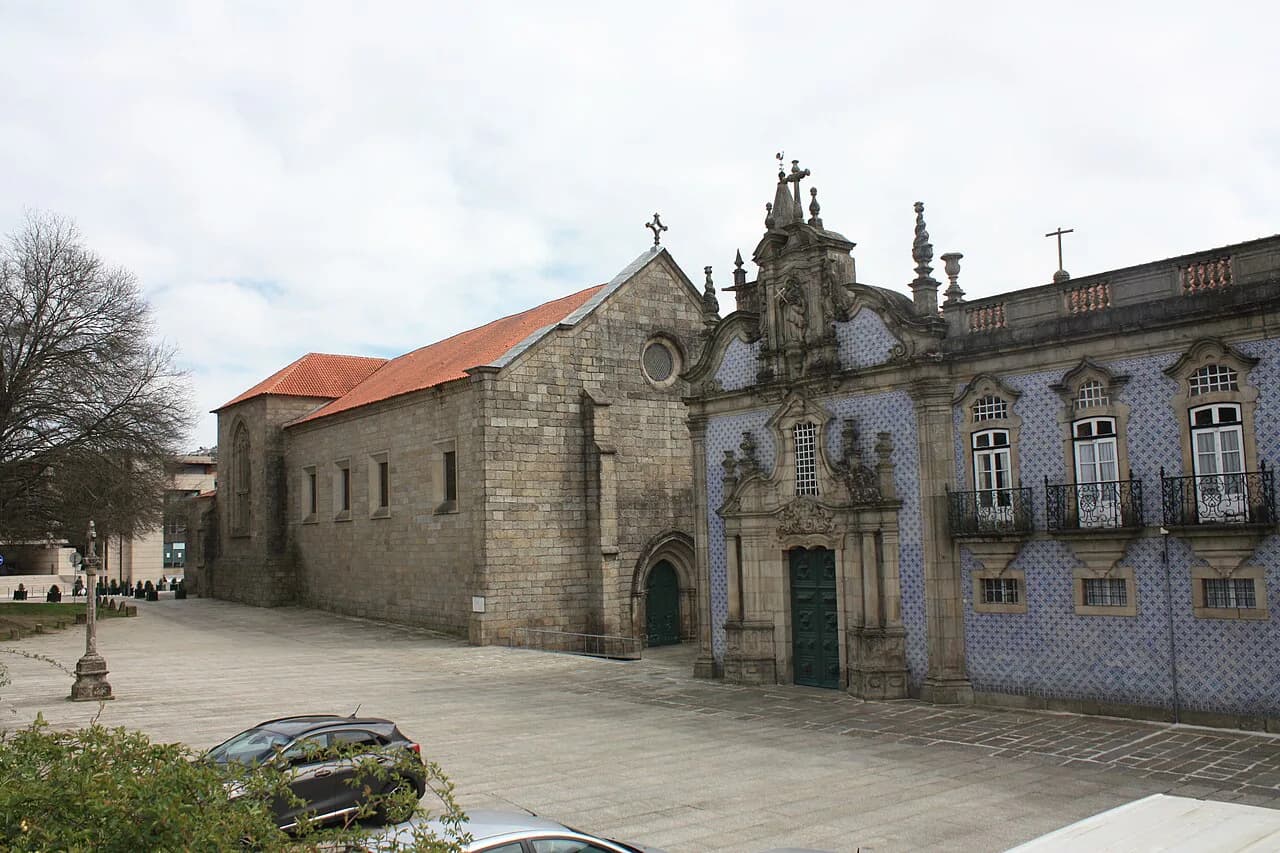
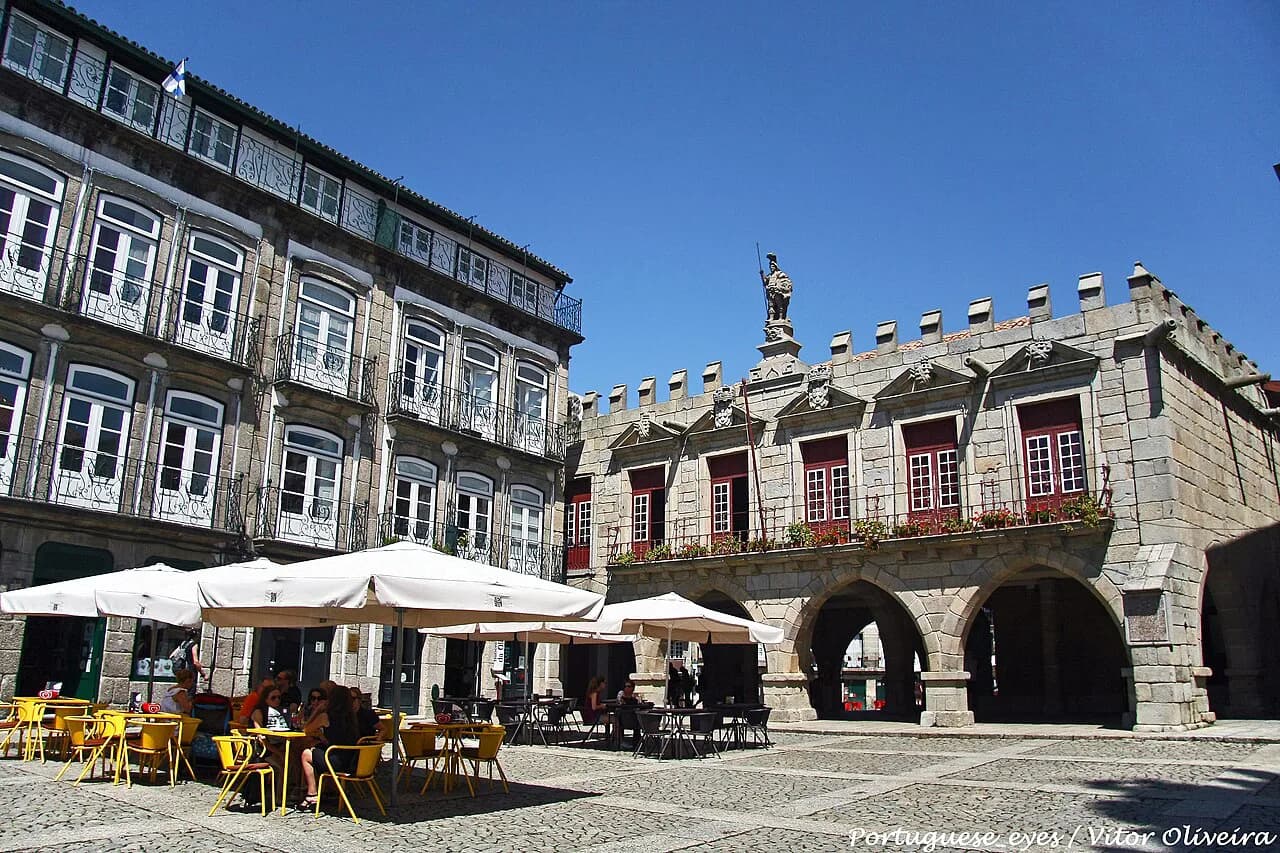
Largo da Oliveira takes its name from an olive tree said to have flowered miraculously in 1342, after a trader named Pero Esteves placed a Norman cross beside a dry tree. The original was removed in 1870 against popular feeling and a replacement planted in 1985, with the three dates carved into the stone base around it. The square also holds the Our Lady of the Olive Tree church, the Gothic arches of the Salado monument and the Alberto Sampaio Museum.
Largo da Oliveira and Praça de Santiago are the two most charming squares, partly separated by the former council chambers building, and both are ringed with cafés. Largo do Toural, by contrast, is more modern and was a livestock market outside the city walls until the eighteenth century. Sit in either medieval square with a coffee and you are reading the town's history at street level; the Guimarães walking tour covers them in sequence if you want the order fixed for you, and the Guimarães Old Town guide sets the wider context.
The Alberto Sampaio Museum and religious art
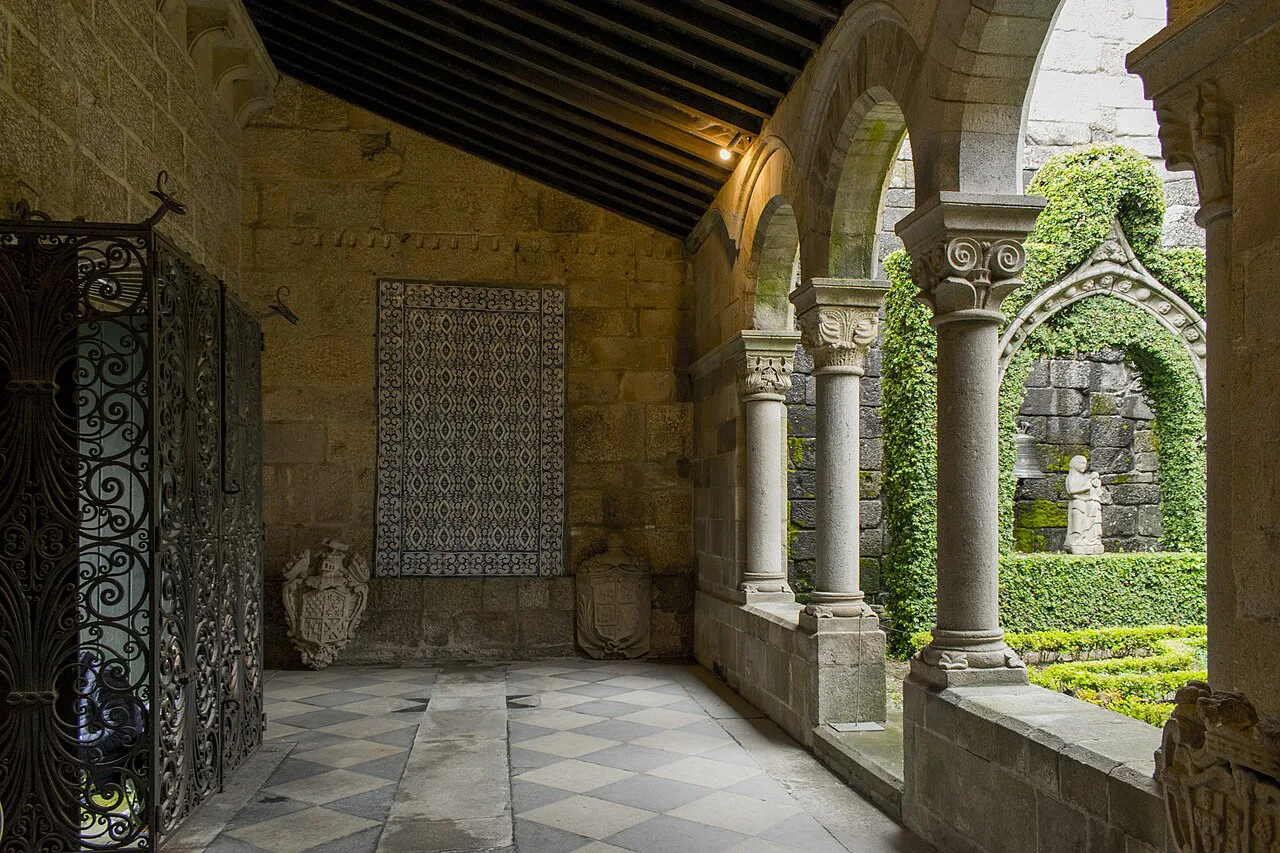
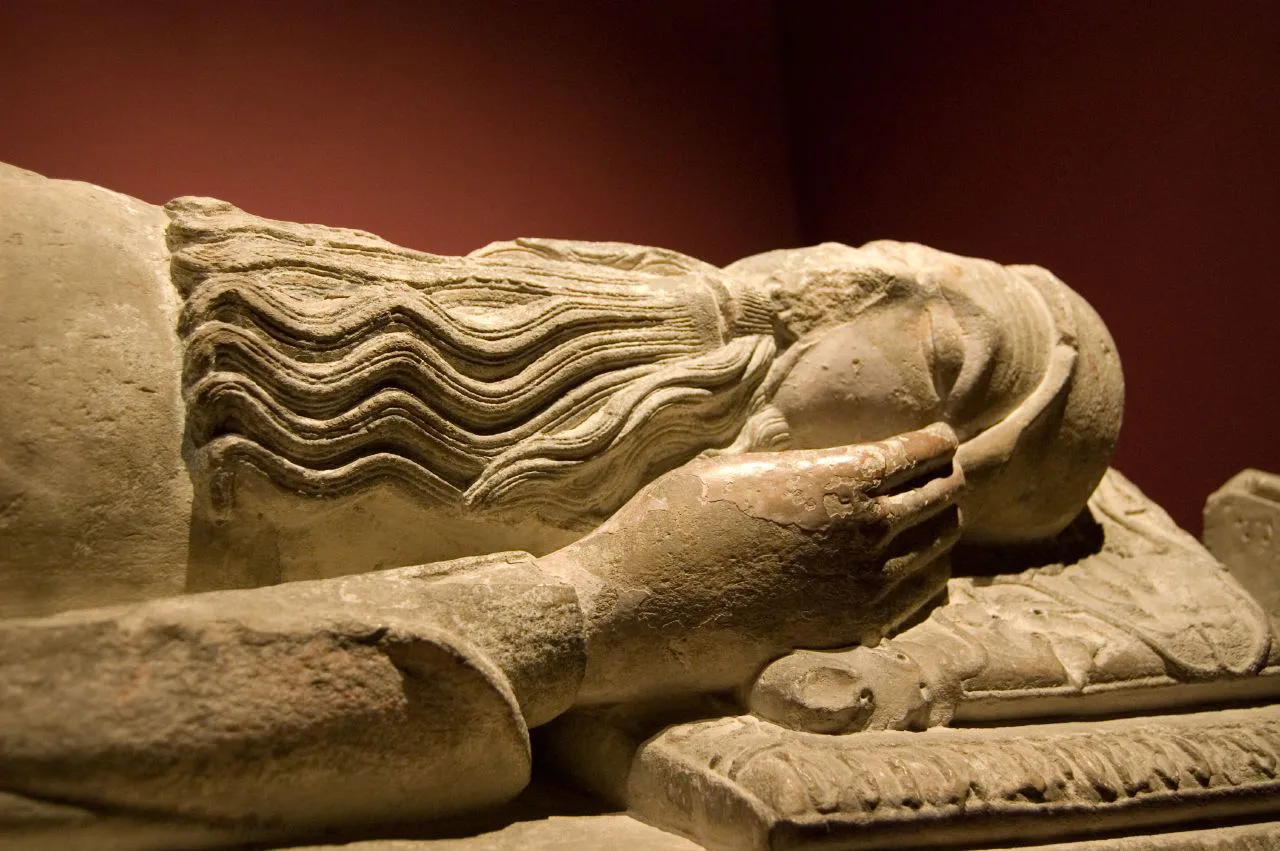
The Alberto Sampaio Museum occupies a former church, chapter house and cloisters, and its collections cover statues, wood carvings, ceramics and religious gold and silverwork. The writer José Saramago valued it for the way the art sits against that ecclesiastical architecture. It is the strongest single stop in the old town for understanding Guimarães' religious and noble patronage, and it sits right beside Largo da Oliveira, so pair the two.
The Zona de Couros and the leather trade
The Zona de Couros, the tanneries' zone, preserves the medieval craft of leather-working that developed in Guimarães over centuries and was carried on outside the main centre. It is a grittier, more industrial heritage than the granite squares, and it rewards a slow look at the old tanning buildings rather than a quick photo. Build it into a loop down from the centre rather than treating it as a separate outing.
UNESCO status and the preserved centre
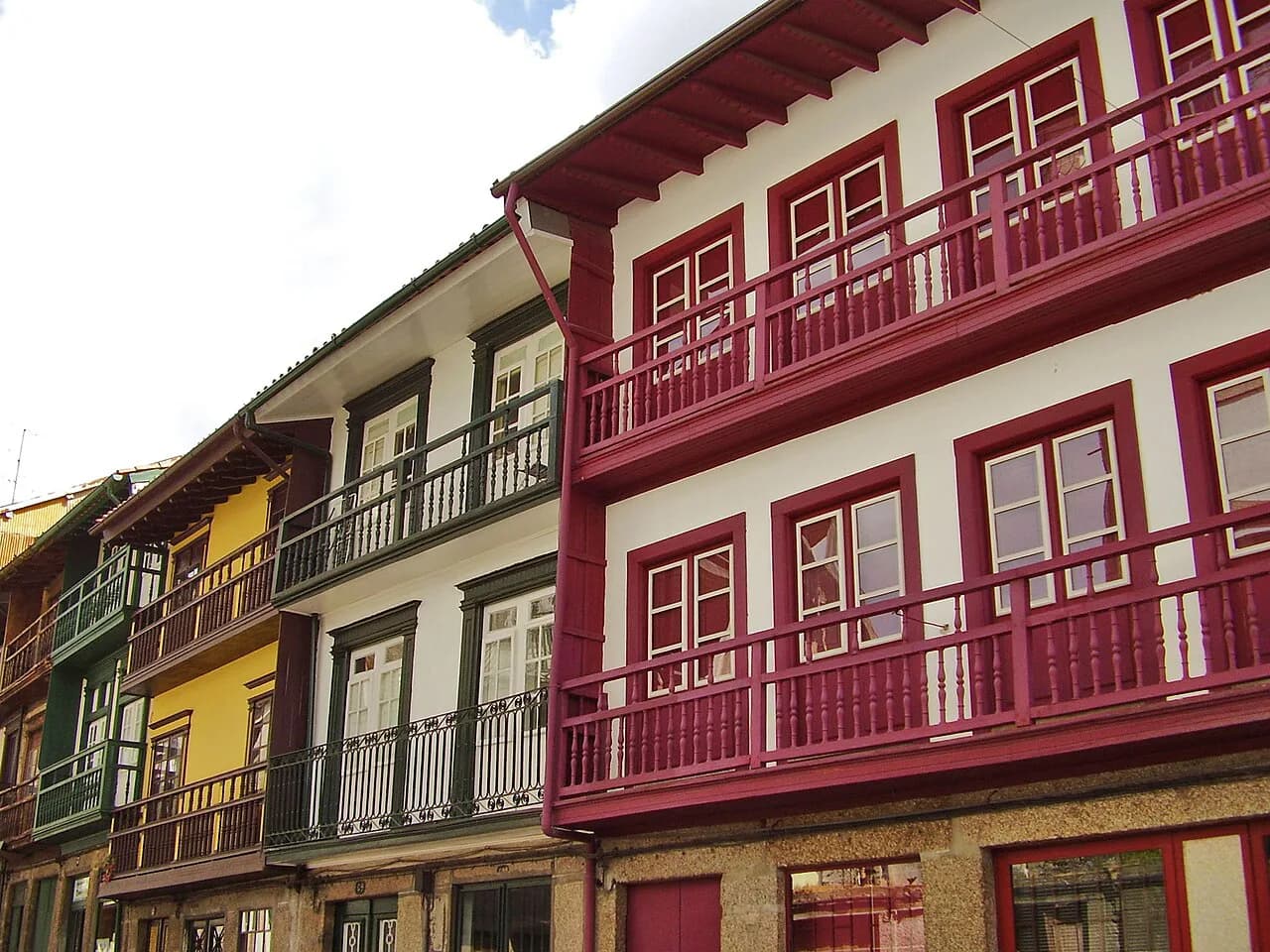
The UNESCO listing, granted in 2001, rests on the centre being an authentic example of a medieval settlement evolving into a modern town rather than a rebuilt showcase. You see it in the mix: beamed, balconied town houses from the Middle Ages beside sturdy granite buildings, and some buildings joined above street level by archways. That layering is why the town works for a short break, and why the Guimarães old town rewards walking without a fixed route.
Guimarães sits in the Ave subregion of the historic Minho province, in the district of Braga, and was European Capital of Culture in 2012 alongside Maribor in Slovenia. Those labels explain the polish on the centre without changing the substance. If you are deciding whether the town justifies the trip, the honest answer for a short break is covered in is Guimarães worth visiting.
How long the history sights take on foot
The castle, palace and São Miguel sit together on the hill with free parking at Campo de S. Mamede, so that cluster is a single stop of a couple of hours once you add the interiors. From there, walk down to Largo da Oliveira and the museum, then on to Praça de Santiago and the Zona de Couros. A half day covers the history comfortably; a full day lets you add the squares at leisure and still eat properly.
The palace, castle and São Miguel were all listed in 2025 as open daily from ten to six, which makes the hill cluster easy to schedule, but confirm times before relying on them. If you want the days mapped out, the Guimarães itinerary sequences the sights with realistic walking times. For the fuller list of what else is in town, start from the Things to Do in Guimarães guide.
Which historical sight should you see first?
Start at the castle and palace on the hill, because they carry the founding story and sit side by side with São Miguel. Then walk down to Largo da Oliveira for the museum and the squares, and finish in the Zona de Couros if you have the legs. That order uses the town's slope in your favour and keeps the heaviest history for fresh feet.
If you are arriving from elsewhere in the north, the practical options are set out in Porto to Guimarães, which covers the train and road approach. Allow for the fact that the stated prices and daily hours above come from published listings and can shift, so check the official municipal pages or the ticket desk on the day.
Explore more Guimarães guides
Frequently Asked Questions
What was the old capital of Portugal?
Guimarães served as the capital of the County of Portugal for some decades before Coimbra became the kingdom's capital after the Battle of São Mamede in 1128. It was a county seat rather than the capital of an independent Portugal, and the town's nickname as the cradle city comes from that early role and from the belief that Afonso Henriques was born here.
How far is Porto from Guimarães?
Guimarães lies in the district of Braga, north-east of Porto, and is commonly visited as a day trip from the city. The practical details of the rail and road journey, including where trains leave from, are set out in our Porto to Guimarães guide rather than guessed at here.
What is special about Guimarães?
It combines a founding-place claim in the national story with a historic centre listed by UNESCO in 2001 as an exceptionally well-preserved example of a medieval settlement that evolved into a modern town. The castle, the Palace of the Dukes of Bragança and the medieval squares are all within a short walk of each other.
Sources
Notes for your next Portuguese break
Optional updates to our town guides.
You might also like
Continue reading
More guides you'll find useful