
Almendres Cromlech: A Visitor's Guide to Évora's Stone Circle

The Cromeleque dos Almendres (Almendres Cromlech) is a prehistoric stone circle of standing stones set in the countryside west of Évora, and it rewards a half-day rather than a quick photo stop. Visits combine a drive out of the city, a final approach on foot and a slow walk around the stones. This guide covers where the site sits, what you see when you arrive, how long to allow and how to combine it with nearby megalithic monuments.
What the Cromeleque dos Almendres is
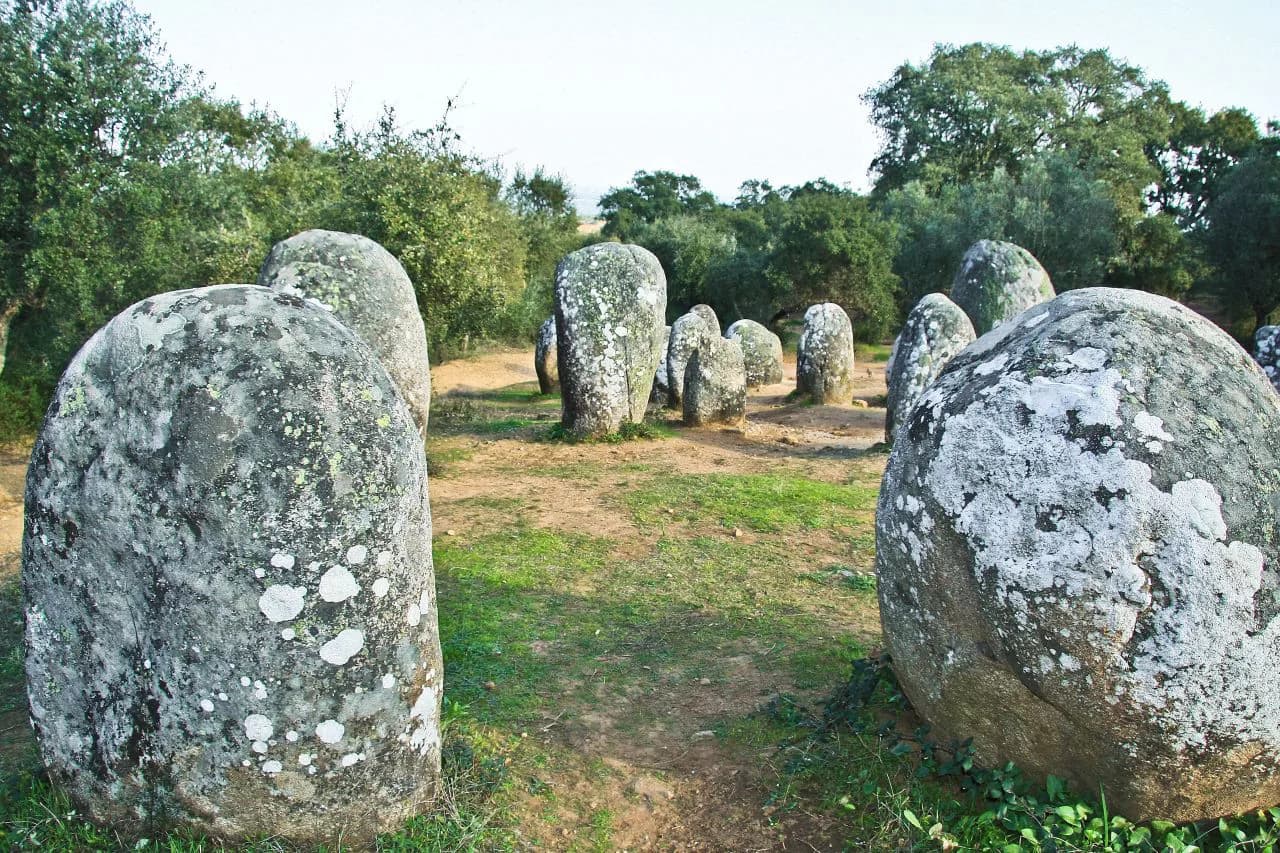
A cromlech is a ring or arc of standing stones, the megalithic equivalent of a stone circle. Tour operators describe Almendres as one of the largest and oldest megalithic sites in the Iberian Peninsula; it stands in open cork-oak and olive country rather than in a town.
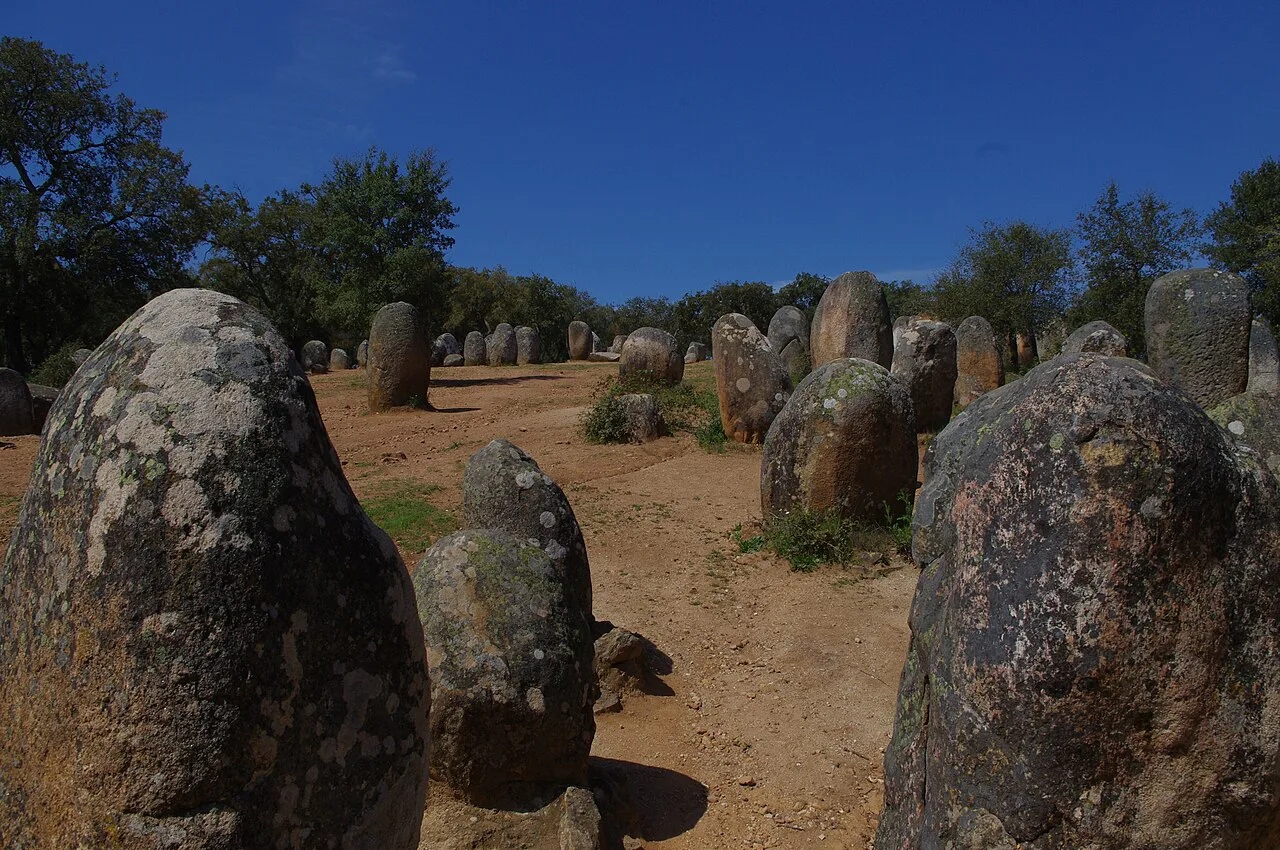
Because the stones stand in farmland, the appeal is the setting as much as the archaeology: weathered granite menhirs, some leaning, arranged along a gentle slope with the Alentejo plain around them. Read up before you go if you want the phases and probable functions to mean anything.

Where it sits in the landscape
Évora is an inland Alentejo city roughly an hour and a half by road from Lisbon, and the cromlech lies out in its rural fringe rather than in the historic centre. The old town itself is compact and walkable, with the Roman temple, cathedral and the chapel of bones Évora is known for packed inside the walls, which makes a contrast with the empty country beyond.
This is megalithic country: the Almendres circle belongs with the Great Dolmen of Zambujeiro and other prehistoric monuments scattered through the same cork forests, which is why it is worth treating as a cluster rather than a single pin on the map. Plan the drive so the stones are one stop among two or three, and the trip out of Évora earns its fuel.

How to get there from Évora
Most visitors drive or join a small-group tour that includes the cromlech and the Zambujeiro dolmen. The final stretch is likely to be on rural lanes and a track with a short walk to the stones, so build that approach into your timing rather than assuming you can park beside the menhirs.
If you are basing yourself in Évora without a car, the train from Lisbon is the easy way into the city, with services arriving in under ninety minutes from Sete Rios, Entrecampos and Oriente. From there, a guided excursion is the straightforward way to reach the cromlech, and it saves you navigating farm tracks on your own.
The site sits in a working agricultural landscape, so access can be affected by farming activity and you should not assume facilities or an attendant. Check locally in Évora before setting out if you are travelling specifically for the stones.
What you actually see
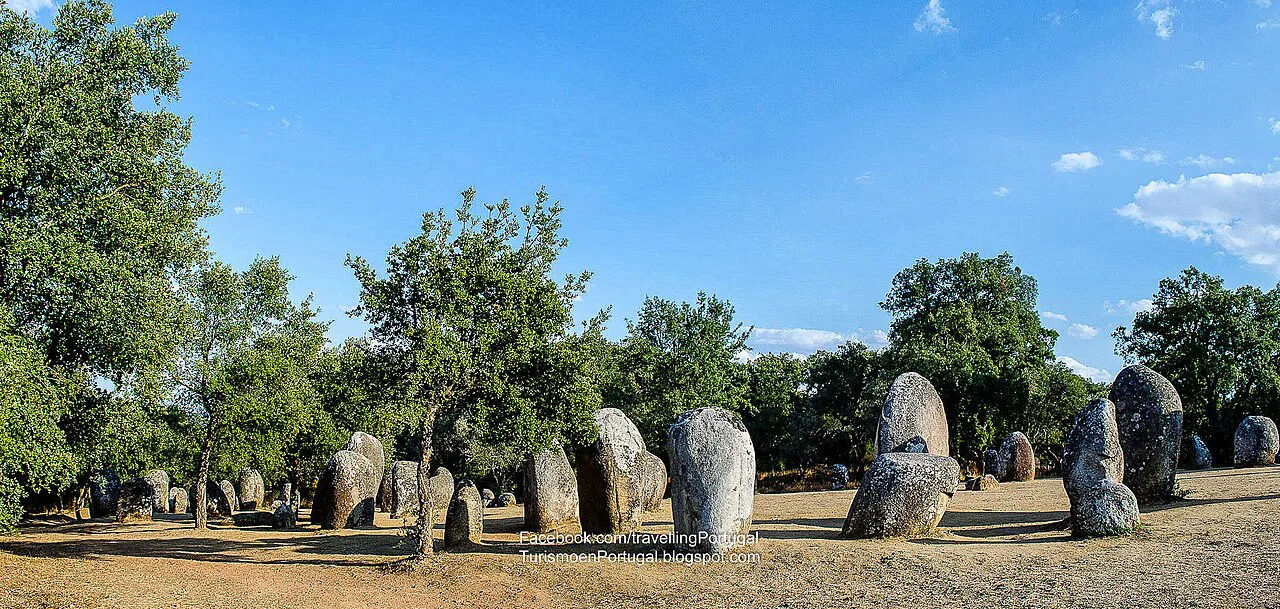
You arrive at an arc of granite menhirs of varying height, several with the rounded, weathered profiles that come from millennia of exposure. Walk the line slowly: the stones are set in groups and alignments rather than a neat perfect circle, and the changes in spacing and lean are the interesting part.
Treat it with the care you would give any ancient monument: stay on the paths between the stones, do not climb or lean on them, and keep your distance if others are photographing. The low scrub and olive trees frame the views in every direction.
How long to allow
The stones reward unhurried walking: the arc is worth covering from end to end, and the view deserves time. The bigger time cost is the drive and the final walk, so a sensible half-day pairs the cromlech with the Zambujeiro dolmen and perhaps a cork farm or winery stop on the way back into Évora.
Early morning and late afternoon give the best light on the granite and the longest shadows across the plain, and they are also cooler and quieter than midday. Allow extra time in the middle of the day, when the site is fully exposed and there is no shade to retreat to.
Access and what to check
The cromlech is visited as an outdoor archaeological site in open country, and no authoritative published admission charge is attached to walking among the stones in the sources available. Because the practical constraints are daylight and the condition of the farm track, check with the Évora tourist office or your accommodation before setting out in case access or facilities have changed.
For anything beyond the stones themselves, including whether a guided visit is running or whether the track is passable for a normal car, ask at the Évora tourist office or your accommodation when you arrive. That is more reliable than any sign at the site.
Nearby megalithic sites
The Great Dolmen of Zambujeiro is the natural companion visit, a substantial chambered tomb in the same stretch of countryside, and it appears on the same small-group itineraries as the cromlech. Seeing both in one morning makes the scale and variety of the local megalithic landscape much clearer than either site alone.
Back in Évora, the historic centre fills the rest of the day: the Roman temple and cathedral are a short walk from each other, the university of Évora occupies former Jesuit buildings, and the Aqueduto da Água de Prata runs through the northern edge of town. Keep these for the afternoon rather than trying to fit them in before the drive.
Practical points: ground, sun and footwear
The site is on a slope of rough grass and earth, so wear closed shoes with grip rather than sandals, and expect uneven ground around the stones. Carry water, especially between May and September when the Alentejo sun and wind are both strong.
Wind is a genuine factor here: the site is exposed and the granite is weathered, so a light layer helps even when Évora itself feels warm. If you are combining the cromlech with a walk along the Évora walls or a wander down to Praça do Giraldo, save the town for after the country.
Is the cromlech worth the drive from Évora?
Yes, if you treat it as a landscape visit rather than a monument with a turnstile: the appeal is the arc of stones, the quiet and the sense of a much older Alentejo. Pair it with the Zambujeiro dolmen, go early or late, and take a jacket against the wind.
Explore more Évora guides
Frequently Asked Questions
Can you visit the Almendres Cromlech without a car?
Not easily, because the stones sit on farm tracks in the countryside west of Évora. Book a small-group tour from Évora or Lisbon, or hire a car for the morning.
Is there an entrance fee for the Almendres Cromlech?
No authoritative published admission charge is attached to walking among the stones in the sources available. Check with the Évora tourist office before you go in case access or facilities have changed.
How long does a visit to the stone circle take?
Give the stones themselves a good hour or so to walk the arc from end to end, plus driving and walking time from Évora. Most visitors turn it into a half-day by adding the Great Dolmen of Zambujeiro.
What should I wear to the Almendres Cromlech?
Closed shoes with grip for rough, uneven ground, plus a windproof layer and water. The site is fully exposed with no shade.