
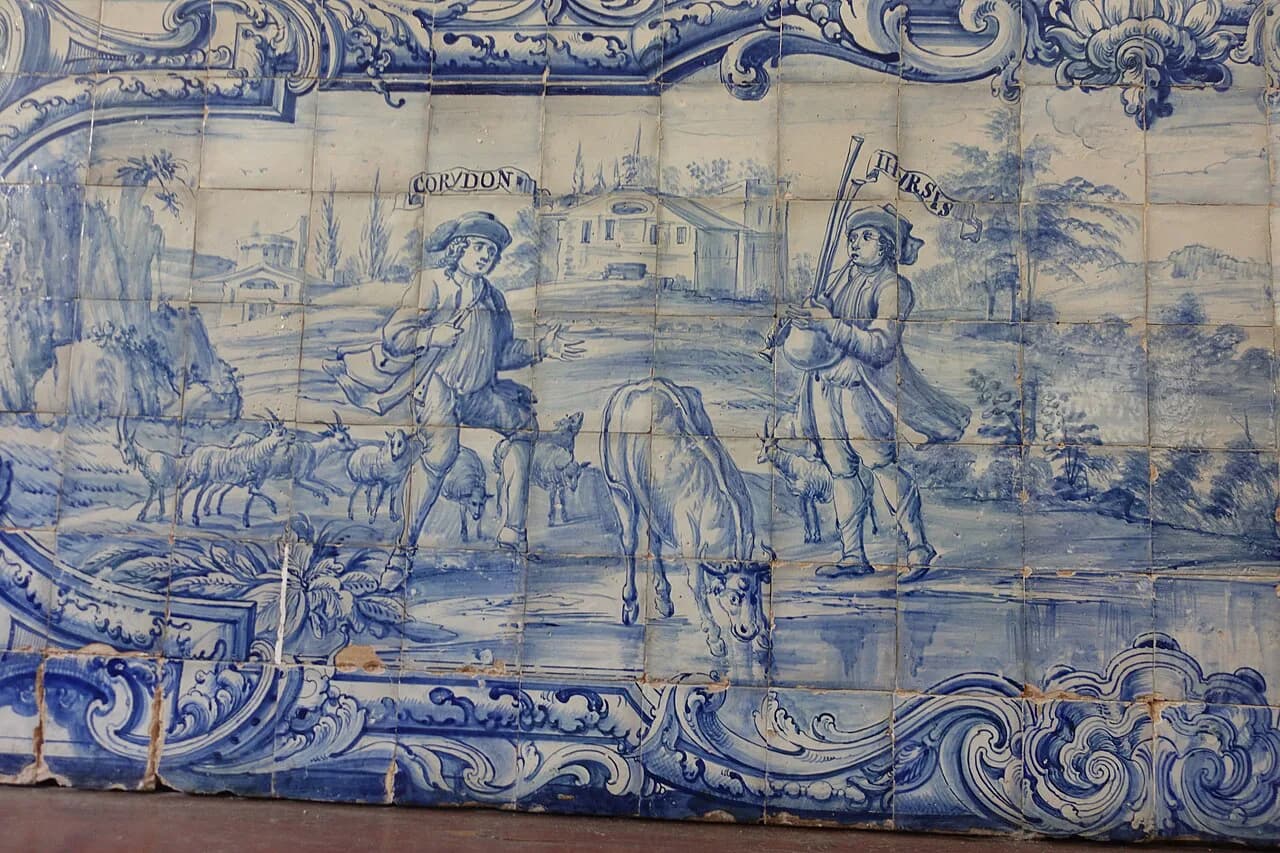
University of Évora: What to See at the Old Jesuit Colégios

The University of Évora is a working public university housed in a group of former Jesuit buildings in the heart of Évora's UNESCO-listed old town, so you can see its courtyards and façades as part of an ordinary walking circuit rather than a separate campus trip. Its stated address is Largo dos Colegiais, nº 2, which is the reference to use when you are finding it on a map. This guide covers where the historic buildings sit, how to reach them on foot, what to look at and how long to allow.
What the University of Évora is and where its historic buildings sit
The university is a modern institution whose historic core occupies a cluster of former Jesuit colégios inside the walled old town, close to the cathedral and the Roman temple. Visitors should read the setting as an ensemble: several connected buildings around courtyards, not a single grand palace with one entrance. Because teaching continues here, the buildings are part of the city's daily life rather than a museum set piece.
For orientation, think of the university as the upper-old-town neighbour of the Sé and the Templo Romano, both a few minutes away on foot. The university publishes its main address and contacts on its site, which is the reliable way to confirm where to aim for. If you are building an old-town route, this is a natural stop between the cathedral square and the Largo do Conde de Vila Flor.

How to reach the university on foot from Praça do Giraldo
From Praça do Giraldo, walk uphill through the grid of narrow streets towards the cathedral; the Largo dos Colegiais sits just beyond it, and the climb takes only a few minutes at an easy pace. The route passes shops, pastelarias and stretches of calçada, so wear shoes with grip rather than smooth soles. There is no need for a bus or taxi within the walls.
If you are coming from the lower town or the aqueduct side, allow a little longer and use the Sé as your landmark: keep the cathedral tower in view and you will arrive at the university's flank without needing a map. Two narrow approaches converge near the Largo, so pick whichever street looks clearer rather than doubling back. Walking is the only sensible way to link the university with the rest of the old town.

The Jesuit colégios: what the cluster looks like from the street and courtyard
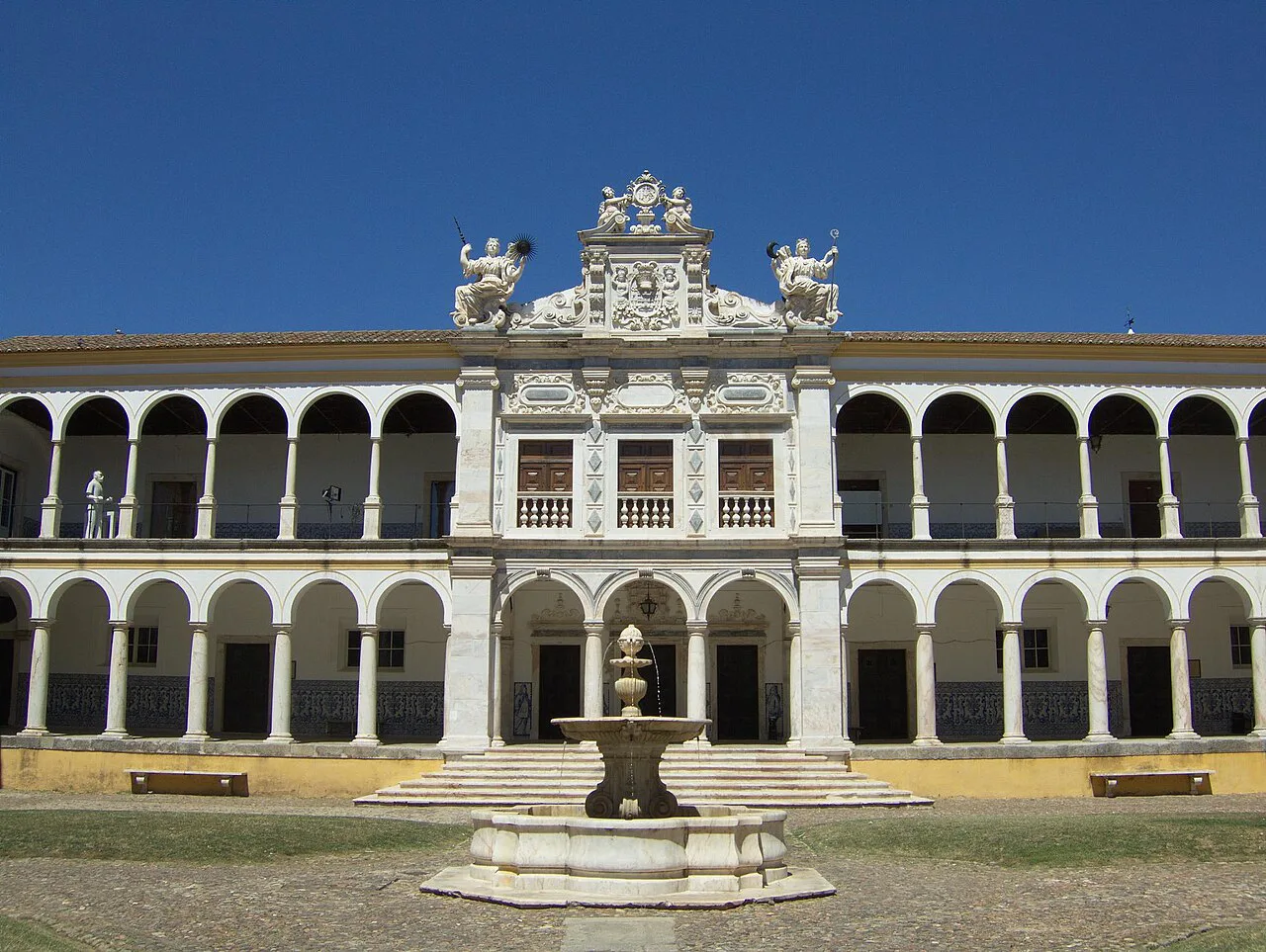
From the street, the colégios read as long whitewashed façades punctuated by stone doorways and rows of windows, with the weight of the ensemble only apparent when you step back. Inside, the courtyards give the buildings their character: arcaded galleries, quiet stone floors and a sense of enclosure that suits the order that built them. Look up for the upper galleries and down for the worn thresholds.
Photographers do best in the morning, when the light rakes across the façades and the courtyards are emptier; by afternoon the stone can look flat. Keep your voice down and give way to students moving between classes, since this is their workplace as much as a sight. A wide-angle lens helps in the arcades, where the galleries are tight.
Colégio do Espírito Santo as a landmark reference
The Colégio do Espírito Santo is the name to remember when asking directions, because it anchors the university's presence at Largo dos Colegiais. Use it as your pin on the map and the rest of the cluster falls into place around it. The university lists its institutional address and telephone contact on its site if you want to confirm details before setting out.
Nearby, the Cadaval palace and the cathedral square give you two more fixed points, so a short loop of the upper town can fold the university in without any detour. Walk the Largo once in each direction: the façades look different depending on which way the sun is falling. This is also where you are most likely to see the university in use, with students crossing between buildings.
How much time to allow for a walk past and through the accessible parts
Allow 20 to 30 minutes to walk the Largo, look into whatever courtyards are open and read the façades; add ten minutes if you want photographs of the arcades. This is a stop within a circuit, not a half-day destination, so pair it with the cathedral and the Roman temple in the same morning. If gates are shut, the street view alone takes five minutes.
The buildings belong to a working university, so the parts you can enter depend on the day's teaching and administrative activity, and no reliable public timetable for visitor access is available to plan around. Ask at reception on arrival or contact the university in advance through the address and phone number it publishes, and have a fallback route ready in case the courtyards are closed. Do not plan your day around going inside.
Nearby sights to pair with the university
The obvious companions are within a few minutes' walk: the Sé de Évora with its cloister, the Templo Romano with its raised podium, and the lanes running down to Praça do Giraldo. Build a single loop that takes in the university's Largo, the cathedral and the temple, then descend for coffee. Our Évora Attractions: 8 Visitor Guides page sets out the full set of sights and how they fit together.
If you want one heavier interior after the university, the Capela dos Ossos is a short walk away and makes a strong contrast with the calm courtyards. Alternatively, use the Teatro Garcia de Resende as an indoor stop on a wet afternoon, or walk a stretch of the Évora walls for views back over the rooftops. Keep the university as the quiet opening to a day rather than its climax.
Practical constraints: courtyards, teaching buildings and access
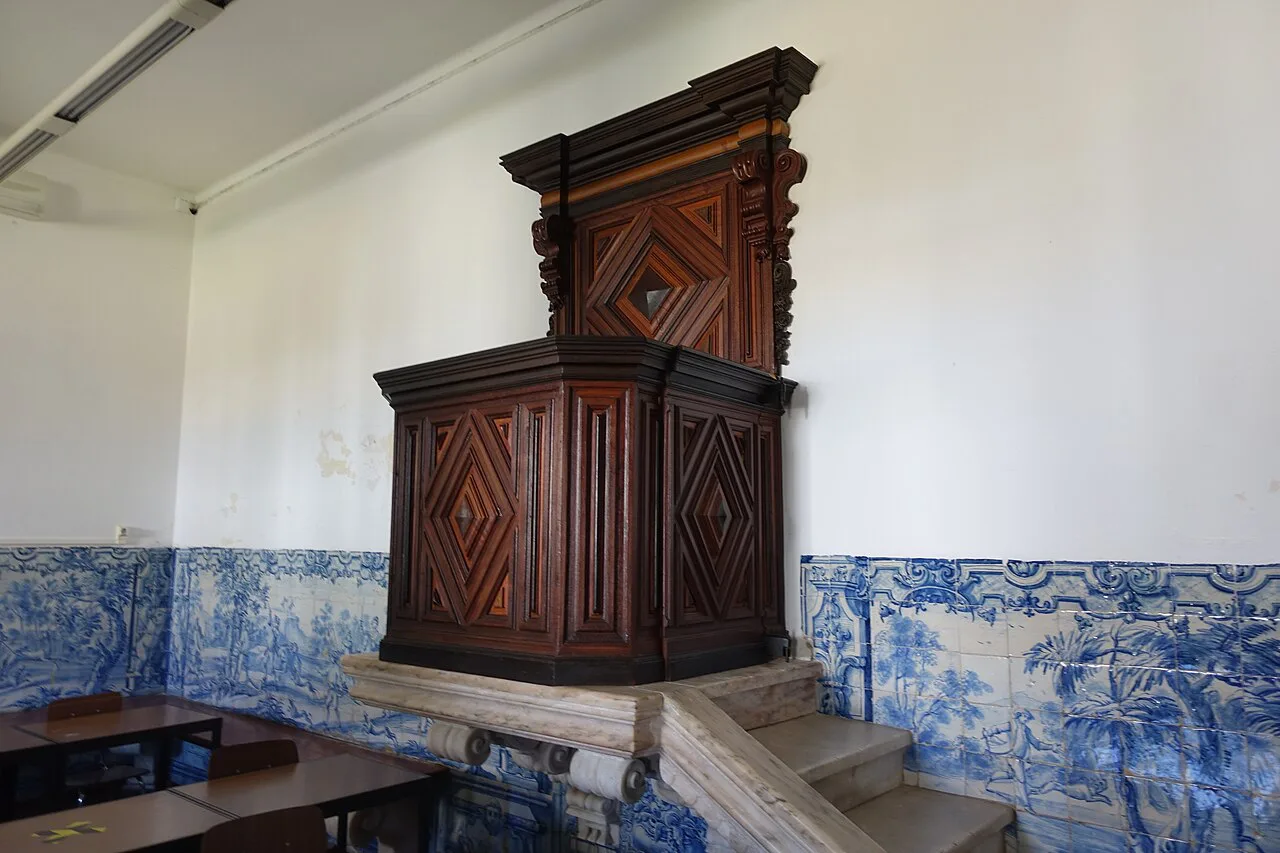
Treat every doorway as private until a sign says otherwise, and stay out of stairwells and lecture rooms even when a door stands open. The courtyards are the realistic target for a visitor, and even those can be in use for events or maintenance. A polite request at reception is the right move when you are unsure.
The university does not publish visitor opening hours, ticket prices or guided-tour times for the historic buildings in the information it puts online, so build your plan around the exterior and the Largo rather than a booked interior visit. Confirm anything you need by contacting the institution directly through its published address and phone number. For a wider sense of how the old town fits together, see our things to do in Évora guide.
Remember that the university is an academic institution first: term-time weekdays are busy, and quiet periods follow the academic calendar rather than the tourist one. That rhythm is part of what you are looking at, and it rewards a slow, unobtrusive visit over a rushed one. If you are weighing up a run out to the megaliths at Almendres Cromlech, keep the university as a short city-centre stop and give the stones their own half-day.
Should you put the university on your Évora route?
Yes, if you are already walking the upper old town: the Jesuit colégios add ten minutes of quiet courtyards and good stonework to a circuit built around the cathedral and the Roman temple. No, if you were hoping for a ticketed monument with guaranteed interiors and a set tour, because access here depends on a working university's day. Plan it as a walk-past stop and you will not be disappointed.
Slot it between the Sé and the Largo, keep your expectations on the courtyards, and confirm access through the university's published contacts if going inside matters to you. The reward is a genuine piece of the old town in use, not a museum reconstruction.
Explore more Évora guides
Frequently Asked Questions
Why is Évora famous?
Évora is known for its remarkably intact walled old town, which is listed by UNESCO, and for the density of monuments inside the walls: the Roman temple, the cathedral, the aqueduct and the Chapel of Bones all sit within a short walk of one another. The University of Évora's historic colégios are part of that same ensemble in the upper town.
Can you go inside the University of Évora as a visitor?
The university occupies working teaching and administrative buildings, and it does not publish visitor opening hours or guided-tour times for the historic buildings in the information it puts online. Ask at reception when you arrive or contact the institution through the address and phone number it publishes before you travel.
How long does a visit to the university buildings take?
Allow 20 to 30 minutes for the Largo, the façades and any courtyard that is open, plus ten minutes if you are photographing the arcades. If the gates are closed, five minutes on the street is enough before moving on to the cathedral or the Roman temple.