
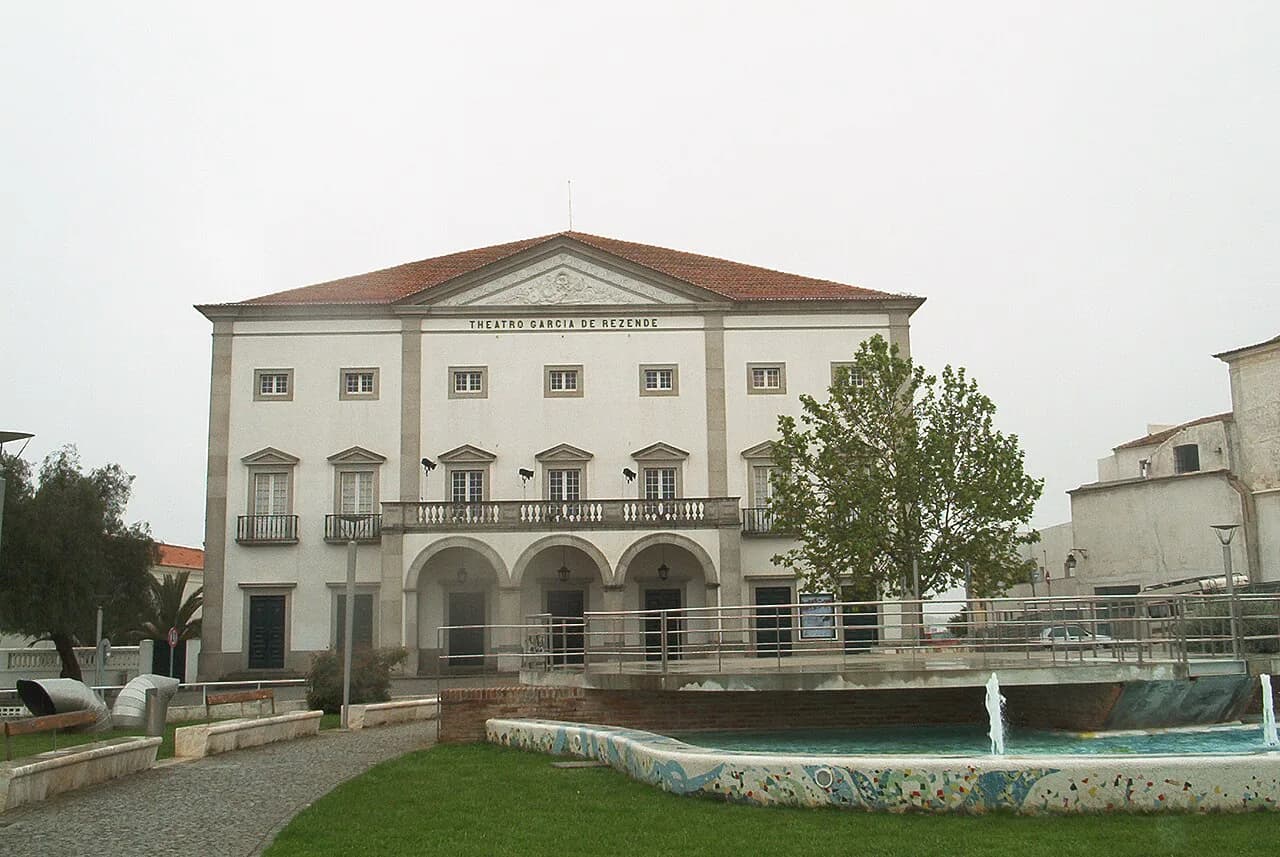
Teatro Garcia de Resende: Évora's Italian-Style Theatre

The Teatro Garcia de Resende is worth twenty to forty minutes of your Évora day if the building is open, and worth an evening if something is playing. It is the city's Italian-style horseshoe auditorium, a rare survival in a small Alentejo capital, and the resident company CENDREV uses it as its main stage. This guide covers where it sits, what you actually see inside, and how to decide between a quick architectural look and a proper night out.
The catch is that a theatre is not a museum: the foyer and auditorium are not a guaranteed walk-in sight, and performance dates change with each season. Plan around the building's role as a working venue rather than a fixed exhibit, and treat any show you catch as the bonus rather than the reason for the trip.
What the Teatro Garcia de Resende is and why it is worth a look
This is one of Portugal's Italian-style theatres, built to the horseshoe plan that puts most seats in a curve facing the stage rather than in a single raked bank. The interior is the draw: a horseshoe auditorium that makes a performance feel close and formal. It is a compact building, so the pleasure comes from the detail rather than scale.
For a short break in Évora, it earns a place for two reasons. First, the architecture gives you a contrast to the granite Roman temple and the tiled churches elsewhere in town. Second, it is a live venue, so a ticket buys you an evening inside a building most visitors only photograph from the street.
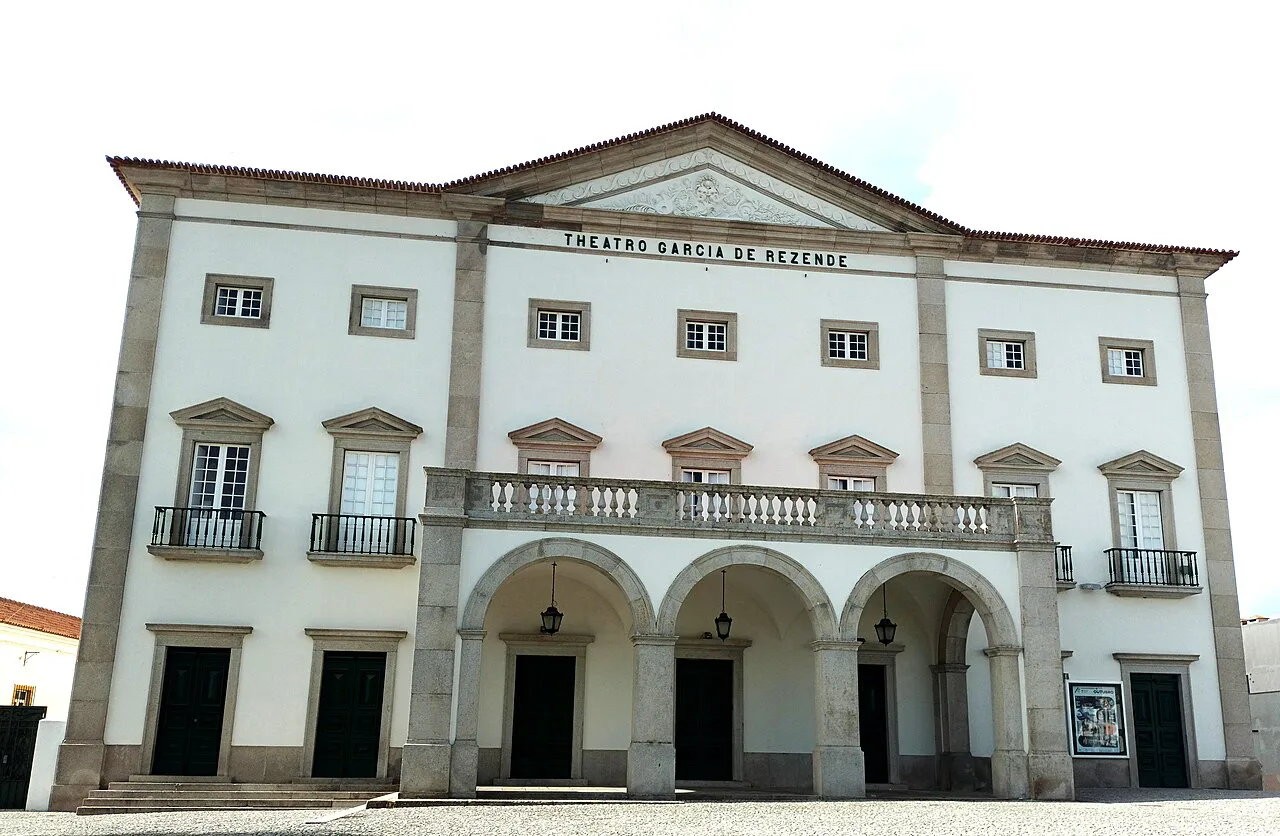

Where the theatre sits in Évora and how to reach it on foot
The theatre stands in the heart of the walled old town, within easy walking distance of the main squares and the cathedral quarter. Évora's historic centre is compact and largely pedestrianised, so you reach it on foot from wherever you are staying inside the walls. Wear shoes with grip, because the calçada and polished marble pavements are slippery when wet.
If you are arriving by train or bus, allow a steady fifteen to twenty minutes' walk uphill from the station area into the centre, then follow signs for the theatre and the adjoining historic streets. The venue is listed in Portugal's national ticketing network under its municipal name, Teatro Municipal Garcia de Resende, which is the name to use when searching listings or asking at an information desk.
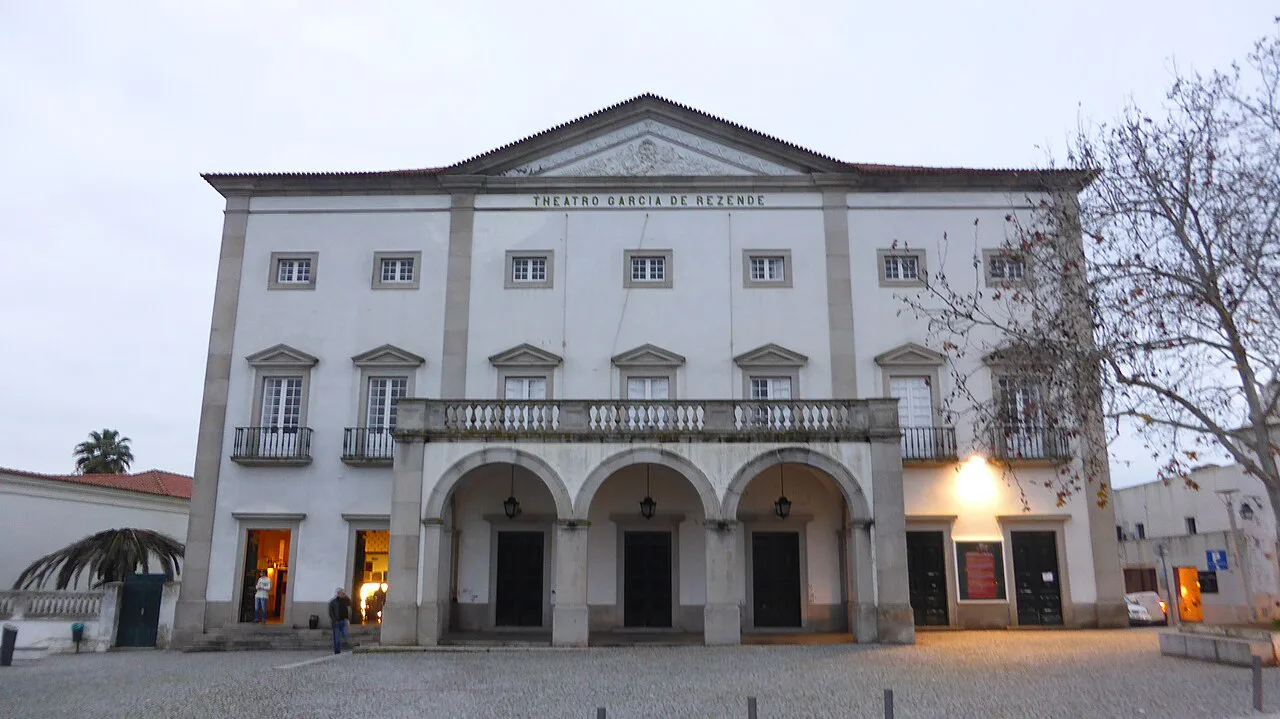

The building itself: the Italian-style auditorium
Inside, the auditorium follows the classic Italian horseshoe layout: a curved sweep of seating facing the stage, with boxes at the sides. Look up as well as forward. The form is intimate, which is part of why the space suits spoken theatre and small ensembles.
The theatre is also known as the Teatro Municipal Garcia de Resende, and it carries the name of the Évora-born poet and chronicler Garcia de Resende. That local link is a neat thread: the same city that produced the chronicler of the Age of Discovery now stages its drama under his name.
CENDREV, the resident company, and the programme
CENDREV is the resident company based at the theatre, and its programme mixes classic texts, contemporary work and its distinctive Bonecos de Santo Aleixo puppet tradition, which keeps a specifically Alentejan form of theatre alive. Recent seasons have staged Molière in the theatre's main hall. If a puppet production is on during your dates, that is the one to choose over a straight play.
The company's own site is the place to look for what is currently staged, since it lists productions and the contact line for the theatre at the foot of the page. The listings run by season, and touring shows appear alongside the resident company's work, so you get a genuine mix rather than a single troupe's repertoire.
Seeing a show versus simply admiring the building
Choose a performance if you have a free evening and want the interior at its best: lit, full and used as intended. Check the programme before you book anything else into that night, because the seasons run in blocks and the theatre is dark between runs. An evening here also pairs naturally with a late dinner in the old town afterwards.
Choose the architectural look if your days are full and you cannot commit to a two-hour performance. The theatre is a working building, so what you can see outside performance times depends on the day's schedule; ask at the door or at the city's information office rather than assuming the auditorium is open.
How long to allow and what to pair with it
Budget twenty to forty minutes for a look around if access is possible, and a full evening if you take a ticket. Either way, do not build the day around the theatre alone. The old town around it holds enough for a comfortable half day, and the theatre works best as one stop on that loop.
Two strong pairings sit within a short walk. The Capela dos Ossos, the chapel lined with human bones at the Igreja de São Francisco, is the town's most famous interior and needs about half an hour. Slightly further out, the Cromeleque dos Almendres, the great prehistoric stone circle in the cork-oak fields west of town, is a half-day trip by car or taxi rather than a walk.
Closer still, the Évora aqueduct runs across the city and gives you an easy walk without a ticket, and the Cadaval Palace, in the old town, adds a noble interior to the same loop.
Tickets, dates and box-office hours to confirm
Ticket prices and performance dates change with each production, so check the current programme on the CENDREV site and the national ticketing listing before you travel. The theatre's contact line, published with the company's details, is the surest way to ask about a specific date, seating or access.
If your trip falls in a quiet week and nothing is scheduled, do not treat that as a wasted stop: the exterior and the streets around it are part of the old-town walk anyway. Confirm opening arrangements for any non-performance visit before making the detour.
Should you book a seat or just walk past?
Book a seat if the programme has something that appeals and you want an evening inside the horseshoe auditorium; walk past with a pause if your days are already full of churches, museums and viewpoints. Either way, put the theatre on your Évora route rather than making it a separate trip, and check the current programme and ticket details before you commit.
Explore more Évora guides
Frequently Asked Questions
Is the Teatro Garcia de Resende open to visitors outside show times?
The theatre is a working venue rather than a museum, so there is no general rule about wandering in. Ask at the door or at the city information office on the day, and confirm access arrangements before making a special journey.
How do you book tickets for the Teatro Garcia de Resende?
Check the current programme with CENDREV and the national ticketing listing, then book through whichever channel the listing gives for that production. The theatre's published contact line is the simplest way to ask about a specific date.
What is the seating layout of the Teatro Garcia de Resende?
The auditorium is built on an Italian horseshoe plan, with seats curving around the stage and boxes at the sides. Ask at the box office or contact line if you need details for a specific seat or group booking.