
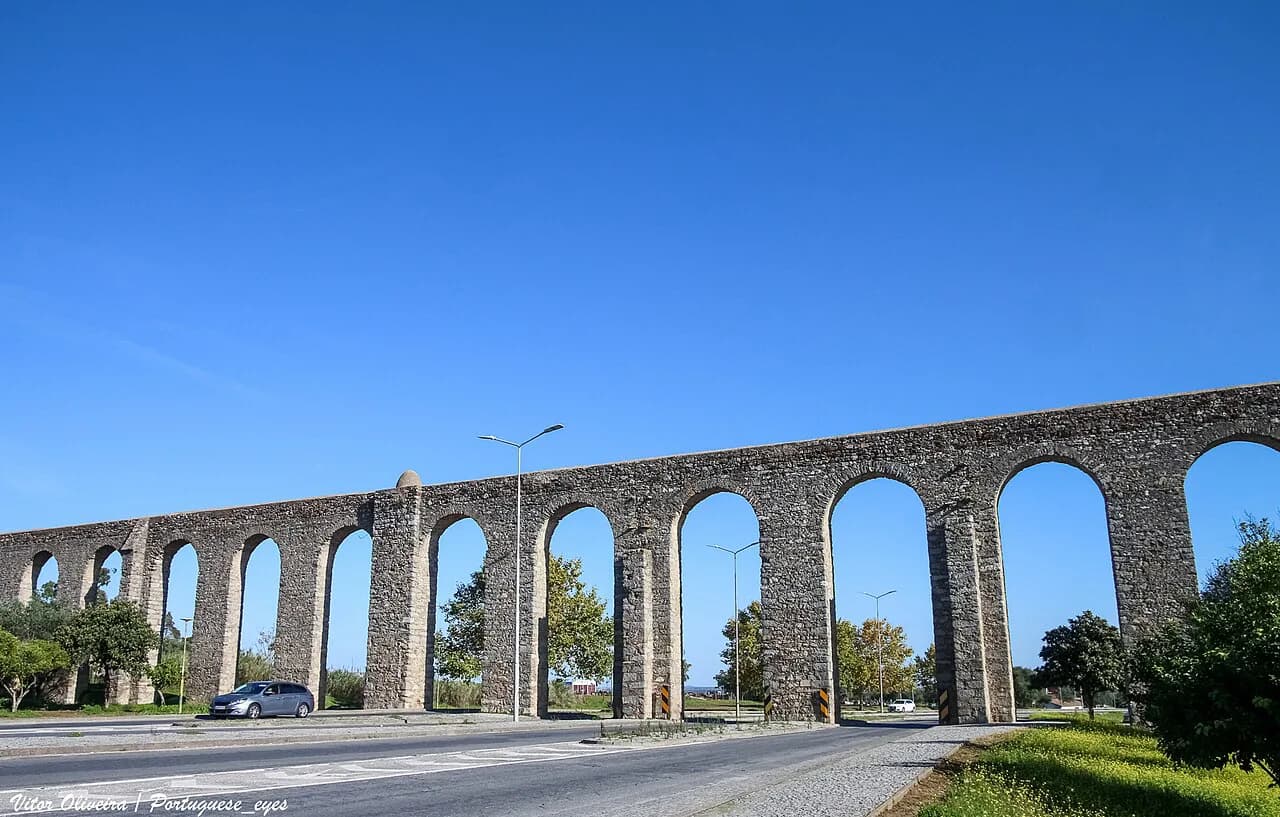
Aqueduto da Água de Prata: Évora's Silver Water Aqueduct

The Aqueduto da Água de Prata (Silver Water Aqueduct) is best seen in its last few hundred metres inside Évora, where the arches run along Rua do Cano with houses, shops and cafés built between them. You do not buy a ticket or enter a building: you walk beneath and alongside it. This guide covers where the aqueduct sits, how to reach it from the historic centre, the longer walk from Estrada de Arraiolos, and which nearby sights pair well with it.
What the Aqueduto da Água de Prata is and why it matters in Évora
The aqueduct was finished in the 1530s and was designed by Francisco de Arruda, the architect also associated with the Tower of Belém in Lisbon, to carry water into the city from the north-east. It is a working piece of Renaissance engineering rather than a ruin fenced off for viewing, which is why it rewards a walk instead of a quick photograph.
Treat the aqueduct as infrastructure threading through the Alentejo landscape rather than a single stop on a sightseeing list. It reaches Évora from open country and then dives into the built-up streets, so the experience changes completely depending on which end you start from.
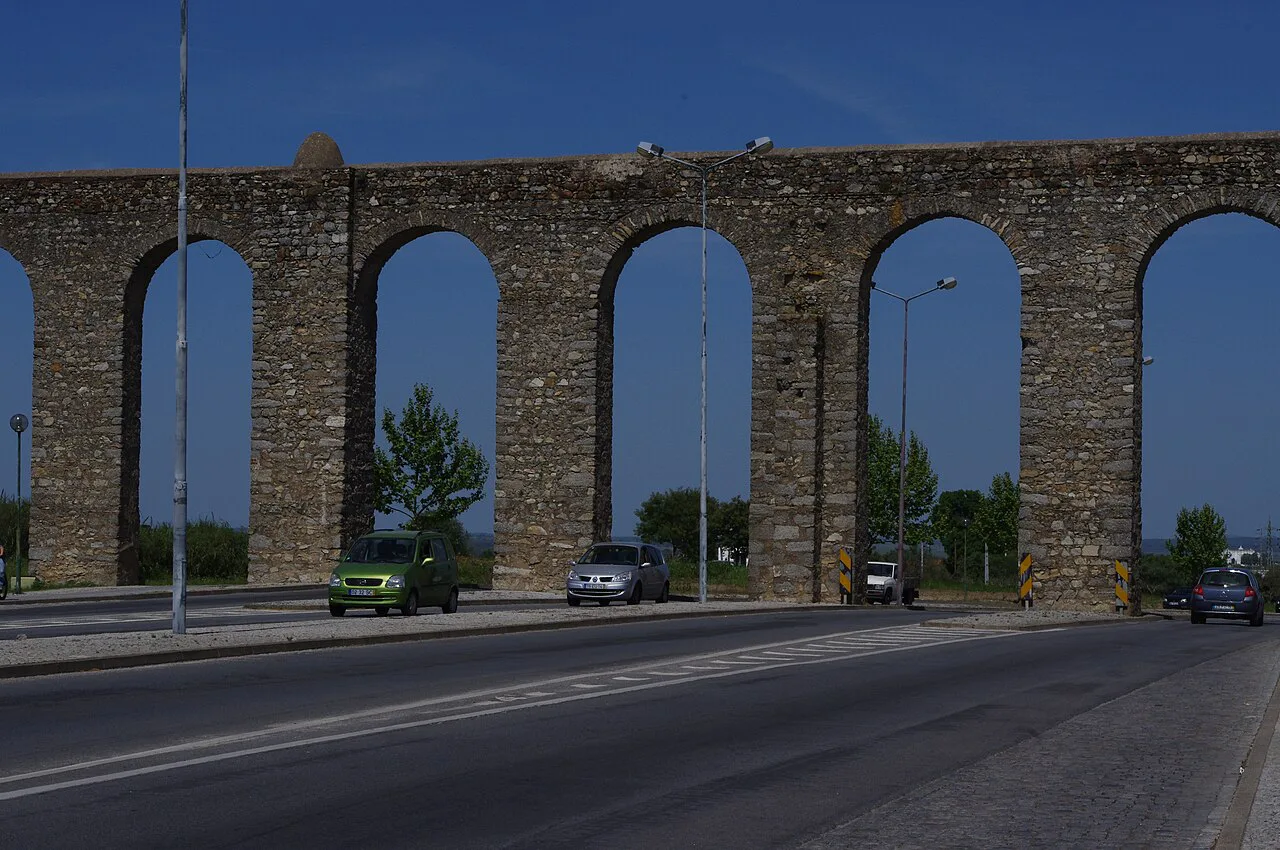

Where the aqueduct is: the Rua do Cano stretch inside the city walls
At the city end, the aqueduct arrives along Rua do Cano, where the arches form a neighbourhood in their own right: houses, shops and cafés occupy the spaces between them. This is the stretch to choose if you have an hour spare and want the aqueduct without committing to a country walk. It is reached on foot from the historic centre and pairs naturally with a wander through the old town.
The drama here is the collision of ordinary life and monumental stone: doorways and shopfronts tucked under arches that once carried the city's drinking water. Walk the length of the street slowly and look up at the point where the arches meet the buildings.

How to reach it on foot from Praça do Giraldo and the historic centre
Start at Praça do Giraldo, Évora's main square, and head through the grid of streets towards Rua do Cano. The walk is short enough to do in the middle of a sightseeing day. The calçada paving is uneven in places, so wear shoes with grip rather than smooth soles.
If you are planning the day around the aqueduct, use the Évora Attractions: 8 Visitor Guides hub to slot it in beside the other sights. The aqueduct works best as a thirty-minute addition to a half-day in the centre, not as a standalone excursion.
Walking a stretch: the Estrada de Arraiolos starting point
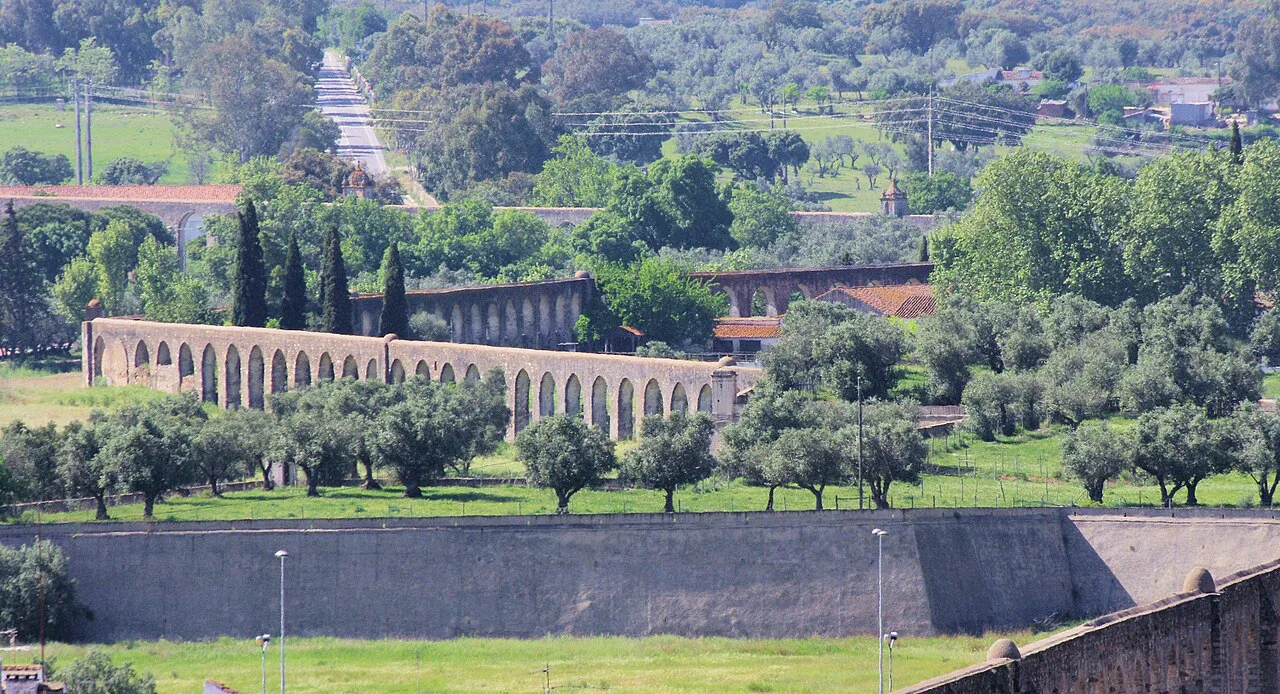
For the full experience, the walkable line runs about 8.5 kilometres from Estrada de Arraiolos on the outskirts of the city, where the aqueduct crosses open Alentejo countryside. The countryside stretch shows the structure in profile against the sky, with far fewer people than the city streets.
The route is not a circular circuit, so plan your return before you set out. Either arrange a lift back from the far end, walk a there-and-back section and turn around, or finish on the city stretch and make your own way home from Rua do Cano.
The three main access points and planning a one-way walk
There are three main access points along the aqueduct, which lets you cut the walk short instead of committing to the full 8.5 kilometres. Choose the section that matches your energy and the time you have before the next sight on your list.
A one-way walk is the sensible plan: start at the outer end and finish inside the city walls, so the reward at the end is a street of arches, a coffee and an easy walk back to your base. Build in time for the return leg and do not assume you can flag down a bus at the far end.
What you see along the arches
Close to town, the arches frame everyday Évora: doorways, small shopfronts and café tables set under the stone. It is a photogenic stretch in low morning or late afternoon light, when the arches cast shadows across the street.
Further out, the scene shifts to open Alentejo farmland and the long, repeating rhythm of the arcade against the sky. Bring water and sun protection for the outer stretch, since shade is limited once you leave the built-up area.
How much time to allow
Allow around thirty to forty-five minutes for the Rua do Cano stretch, including pauses for photographs and a look at how the arches meet the buildings. For the full 8.5-kilometre line from Estrada de Arraiolos, budget a half-day once you factor in the return leg and the walking pace on uneven ground.
The city stretch is the better choice if you are in Évora for one or two days and want to see several sights in the same morning. The countryside walk suits travellers with a spare half-day and a plan for getting back.
Are there tickets or opening hours?
The aqueduct is a piece of open infrastructure rather than a ticketed monument, so there is no entrance desk, no set opening hours and no booking to arrange for walking along it or beneath the arches. That means you can slot it into an early morning or an evening without checking a timetable.
If you want to confirm that nothing has changed before you travel, the Évora municipal sources are the place to look, since conditions on the ground can change with works or weather.
Nearby sights to pair with the aqueduct
The Capela dos Ossos, the bone chapel attached to the Igreja de São Francisco, is one of the most distinctive stops in Évora and sits within walking distance of the city stretch. Pair it with the aqueduct for a morning that covers both the macabre and the monumental.
The Templo Romano de Évora, usually called the Temple of Diana, and the cathedral are among the central sights to add to an aqueduct morning. The Cadaval Palace, Évora, which stands beside the Roman temple, is another nearby stop. Build a loop that takes in the aqueduct and these central sights without doubling back.
If you are staying longer, the Almendres Cromlech, the prehistoric stone circle in the countryside west of Évora, makes a natural companion outing for travellers interested in the region's older history. It needs its own transport, so plan it as a separate half-day rather than tacking it onto an aqueduct walk.
Practical trade-offs: sun, ground and the missing loop
The outer stretch has little shade and the Alentejo sun is strong from late spring to early autumn, so start early, carry water and wear a hat. The city stretch is the easier option if you are visiting in high summer or travelling with children.
The calçada paving in Évora's centre is uneven and slippery in places, and the aqueduct walk covers rough ground once you leave the streets. Sturdy shoes matter more than they would for a museum morning.
The lack of a loop is the main logistical drawback: a full-length walk leaves you several kilometres from where you started. Decide in advance whether you are walking out and back, arranging a lift, or simply staying in the city stretch.
Should you walk the whole aqueduct or just the city stretch?
For most short-break visitors, the Rua do Cano stretch delivers the aqueduct in under an hour and leaves the rest of the day for the chapel, the temple and the cathedral. Choose the full 8.5-kilometre walk from Estrada de Arraiolos only if you have a spare half-day, water, and a plan for the return leg.
Either way, go early or late for better light and cooler walking, and wear shoes that handle calçada and rough country ground. The aqueduct asks nothing of your wallet, only a little planning.
Explore more Évora guides
Frequently Asked Questions
How long does it take to see the aqueduct in Évora?
The Rua do Cano stretch inside the city takes around thirty to forty-five minutes at an unhurried pace, including stops for photographs. The full line from Estrada de Arraiolos runs about 8.5 kilometres, so allow a half-day once you factor in the return leg.
Can you walk the whole aqueduct from the city?
Yes, but the route is not a loop, so you will finish several kilometres from where you started. Plan a return lift, walk out and back, or stay with the city stretch if you do not want to arrange transport.
Is the aqueduct in Évora accessible without a ticket?
Walking along the street and beneath the arches involves no entrance desk or booking. There is no enclosed monument to enter at the city stretch, so you can visit early or late without checking a timetable.