
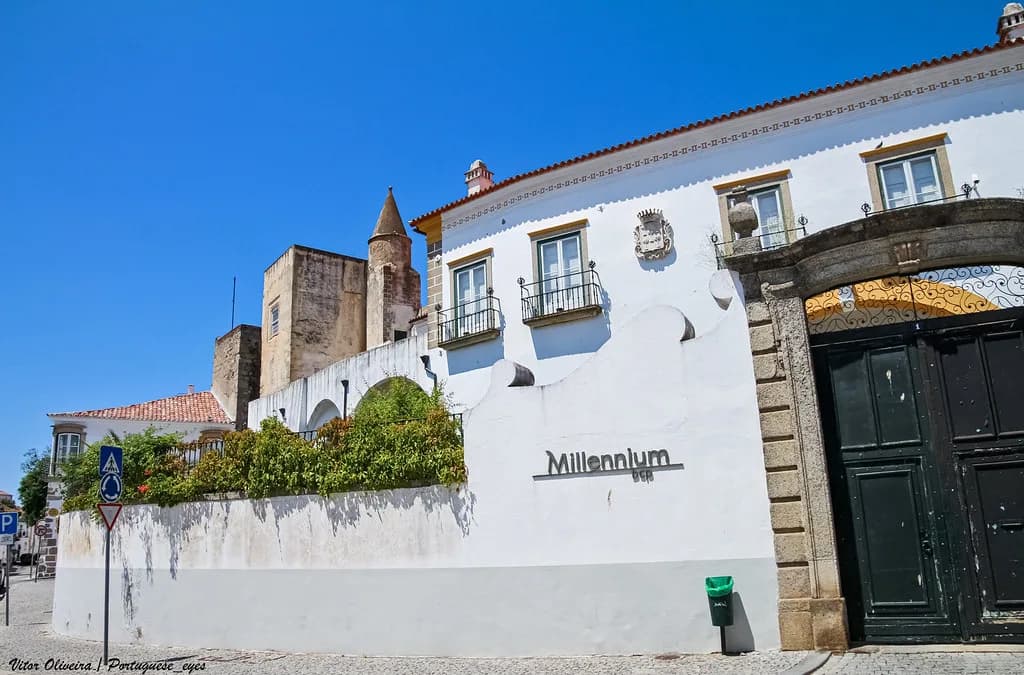
Cadaval Palace (Palácio dos Duques de Cadaval), Évora
Cadaval Palace is worth 30 to 45 minutes of an Évora day: you come for the private Church of Saint John the Evangelist, whose nave carries signed azulejo panels dated 1711, and for a handful of ducal rooms in a building that still belongs to the family. The palace stands directly opposite the Roman Temple, so it slots easily into a walk through the acropolis. This guide covers where it sits, what the visit includes, how long to allow and what to see next door.
What Cadaval Palace is and why it earns a stop
The Palácio dos Duques de Cadaval is the ancestral home of the Dukes of Cadaval, held by the family since its foundation in the 14th century and still their residence today. That status shapes the visit: you see a church and selected rooms rather than a state museum, so expect a compact, personal collection instead of long galleries. The building's fabric mixes Mudéjar, Gothic and Manueline elements, a combination that reflects centuries of alteration on one site.
It also carries a dark piece of Évora's history. The palace served as a temporary residence for monarchs including Dom João II, Dom João IV and Dom João V, and it was used to imprison Duke Dom Fernando II of Braganza, beheaded in the Praça do Giraldo in 1483. Knowing that gives the rooms a bit more weight than the furniture alone would.
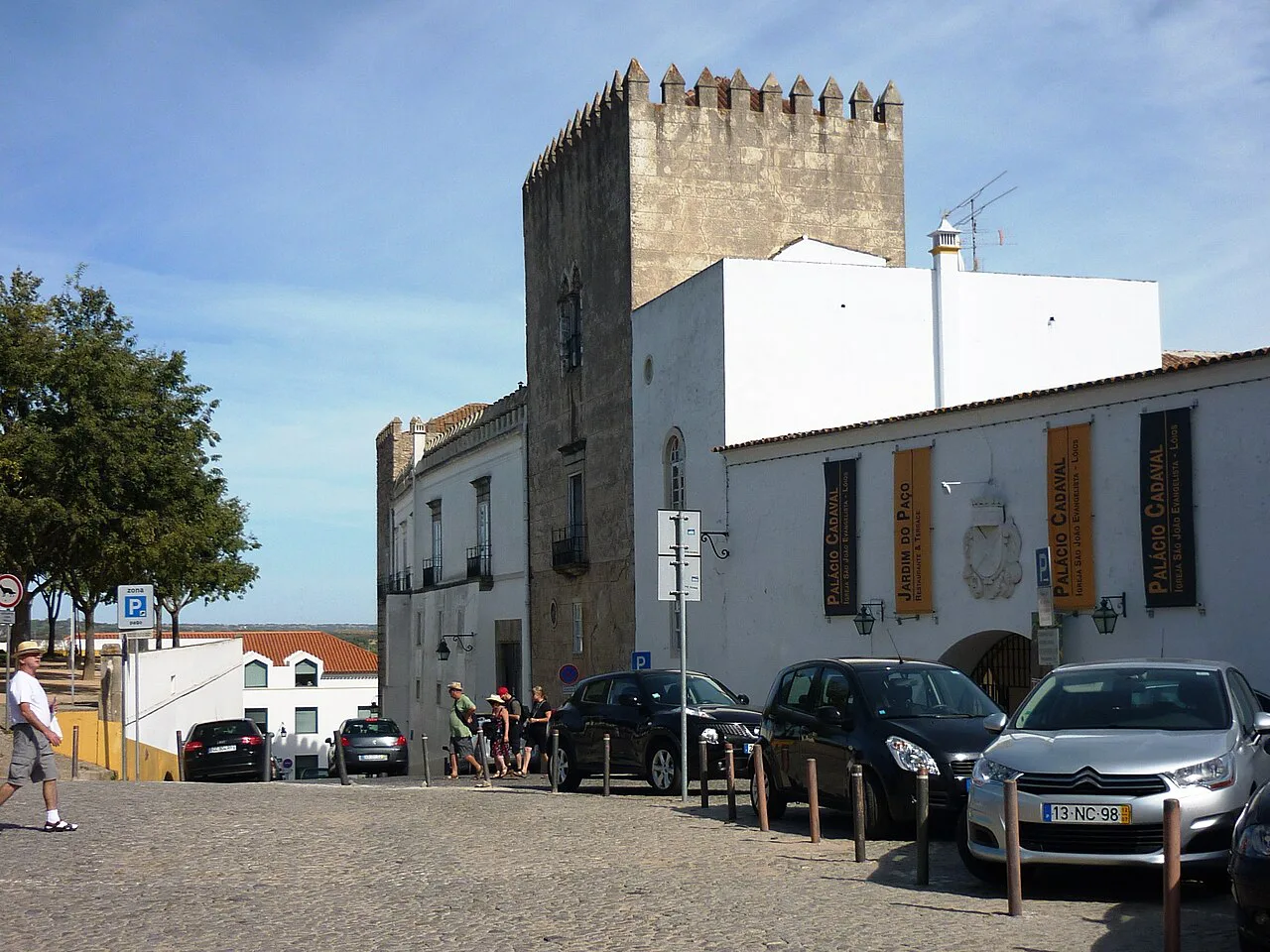

Where it is: the acropolis, facing the Roman Temple
The palace sits in the acropolis at the top of the old town, in front of the Roman Temple, with the cathedral a short walk away. If you are coming up from the lower town, aim for the temple's columns as your landmark and the palace entrance is the building facing them.
This is the most convenient corner of Évora for a short break: the temple, the cathedral and the palace form a tight cluster you can cover without a bus or taxi. Coming through the old centre means calçada underfoot, so wear shoes that cope with uneven stone.
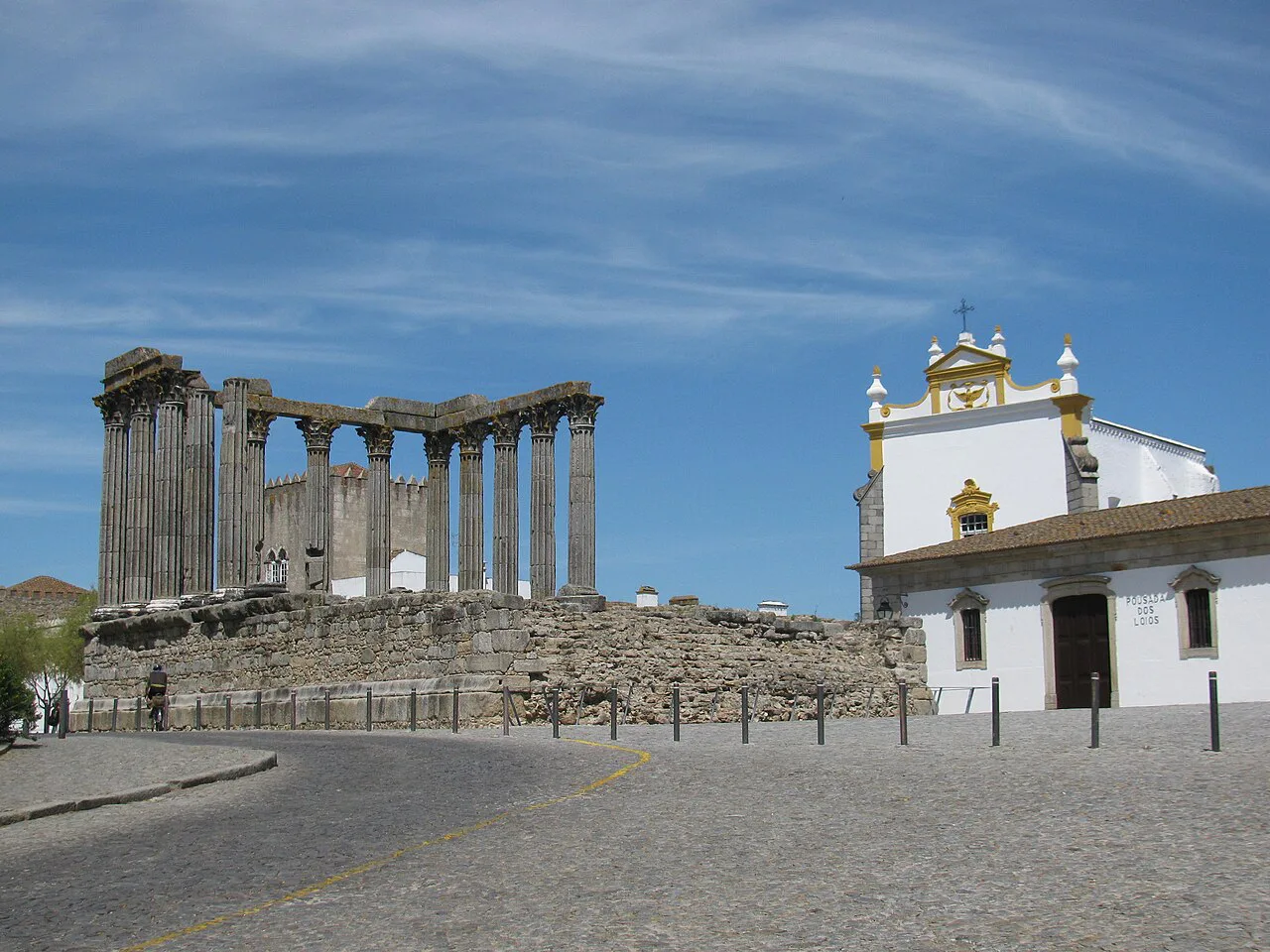

The building: a ducal residence over a Moorish castle
The palace was built on the ruins of a Moorish castle destroyed in the 14th-century revolts, and it grew over time through successive interventions rather than a single design. Its body includes a large multi-storey residential wing, two interior gardens and the church, which serves as the burial place for every generation of the Dukes of Cadaval.
Because it remains a home, some spaces host temporary cultural and artistic exhibitions alongside the historic rooms — a ceramics show brought together pieces from 35 artists of various nationalities across the palace's historical rooms. What is on display changes, so it is worth knowing before you climb the hill whether an exhibition interests you.
Which parts are open to visitors
The church and some of the rooms are open to the public through the year, while the rest of the palace stays private. The open rooms show the family's historical and contemporary collection: books, charters, armoury, painting, sculpture, furniture, porcelain, portraits and travel accessories. Read that as a cabinet of a family's life rather than a chronological museum display.
Set expectations accordingly. You will not walk through the whole residential wing or the interior gardens, and the visit is short by design. If you want a long, label-heavy museum afternoon, the chapel and other sights in town will fill it better.
Inside the Church of Saint John the Evangelist
The church, also called the Church of Lóios after the Convent of the Order of Saint Eligius it belonged to, was founded in 1485 and restored in 1957 and 1958 by the 10th Duke of Cadaval. It is a private property and a place of worship, which is why the atmosphere feels different from a parish church open all day.
Look first at the nave: signed and dated azulejo panels painted by António de Oliveira in 1711, showing scenes from the life of Saint Lawrence Giustiniani, founder of the Order of Saint Eligius. Above them runs Gothic ribbed vaulting, and the chancel holds a gilt carved altar in the Mannerist transition style, with walls covered in multi-coloured 17th-century tapestry-style tiling.
The floor is part of the visit: tombs of generations of the Dukes of Cadaval and their ancestors since the 15th century, a crypt with an ossuary attributed to the order's friars, a Moorish cistern in the central nave, and two engraved marble tombstones showing the founder Dom Rodrigo de Melo and his wife, and Dom Álvaro de Braganza and his wife. A 17th-century tribune connecting to the palace still overlooks the nave.
For tile lovers this is the main event, and it pairs naturally with Évora's other azulejo interiors. If the panels are the reason you came, give them ten unhurried minutes rather than treating the church as a five-minute photo stop.
How long to allow, and what to pair with it
Budget 30 to 45 minutes: the church takes the bulk of it, the open rooms a quick pass. Because the palace faces the Roman Temple, you can step out and walk the temple's platform in a couple of minutes, then continue to the cathedral. That makes a comfortable half-day on the acropolis.
If you are building a fuller day, add the Capela dos Ossos and the university quarter, both within the old centre. The Évora aqueduct and the walls are a longer walk but give you the shape of the city beyond the hill.
Outside the walls, the Almendres Cromlech and the Great Dolmen of Zambujeiro need wheels or a taxi, so keep them for a separate half-day rather than squeezing them in after the palace.
Tickets, opening days and temporary exhibitions
The palace publishes its visiting arrangements and current exhibition on its own site, and that is where ticket prices, opening days and any closures should be confirmed before you go. Do not rely on guidebook print runs for either.
Two practical points follow from the building's status. As a private residence and working place of worship, access can be adjusted around events or services, and temporary exhibitions change through the year. Check the day you plan to visit, especially if the palace is the main reason for your trip.
Nearby: temple, cathedral and the Praça do Giraldo
The Roman Temple is literally across the way, and Évora Cathedral is a few minutes' walk, so the three make a natural sequence from the top of the hill down. Allow extra time for the cathedral, which is a bigger building with a museum and climbable towers.
Finish by dropping to the Praça do Giraldo for a coffee and a pastel de nata; it was in this square that Duke Dom Fernando II of Braganza was beheaded in 1483. The Teatro Garcia de Resende, an Italian-style theatre, is close by if you want an evening plan. The Évora walls are also walkable from the centre if you have energy left.
Is Cadaval Palace worth it on a short Évora break?
Yes, if you want the 1711 azulejo panels and a sense of a working ducal house: 30 to 45 minutes, right beside the Roman Temple, with no travel between stops. Skip it if you are short of time and would rather give the cathedral and the Capela dos Ossos your full attention.
Either way, confirm the day's opening and ticket price on the palace's own pages before you set out, since both the exhibition programme and access to a private residence can change.
Explore more Évora guides
Frequently Asked Questions
Can you go inside Cadaval Palace?
Yes, partly. The Church of Saint John the Evangelist and some of the palace rooms are open to the public through the year, but the rest of the building remains the Dukes of Cadaval's private residence, so you see a selection rather than the whole house.
How long does a visit to Cadaval Palace take?
Plan on 30 to 45 minutes. The church, with its 1711 azulejo panels, Gothic vaulting and family tombs, takes most of that time; the open rooms are a quicker pass.
What is the highlight inside Cadaval Palace?
The church nave: signed and dated azulejo panels painted by António de Oliveira in 1711, illustrating the life of Saint Lawrence Giustiniani, set above Gothic ribbed vaulting with a gilt carved chancel altar.
What else is close to Cadaval Palace?
The Roman Temple is directly opposite, Évora Cathedral is a few minutes' walk away, and the Praça do Giraldo is a short descent downhill for coffee.