
Évora Walls: A Visitor's Guide to the Medieval Ramparts

The Évora walls are best treated as a walk rather than a monument: a defensive circuit grown over centuries that still wraps much of the historic centre. Tracing them on foot without entering a single paid sight doubles as a route between the old town's headline attractions. This guide covers where the ramparts run, how to reach them from the centre, and how to fold the circuit into a day of sightseeing in Évora.
What the Évora walls are
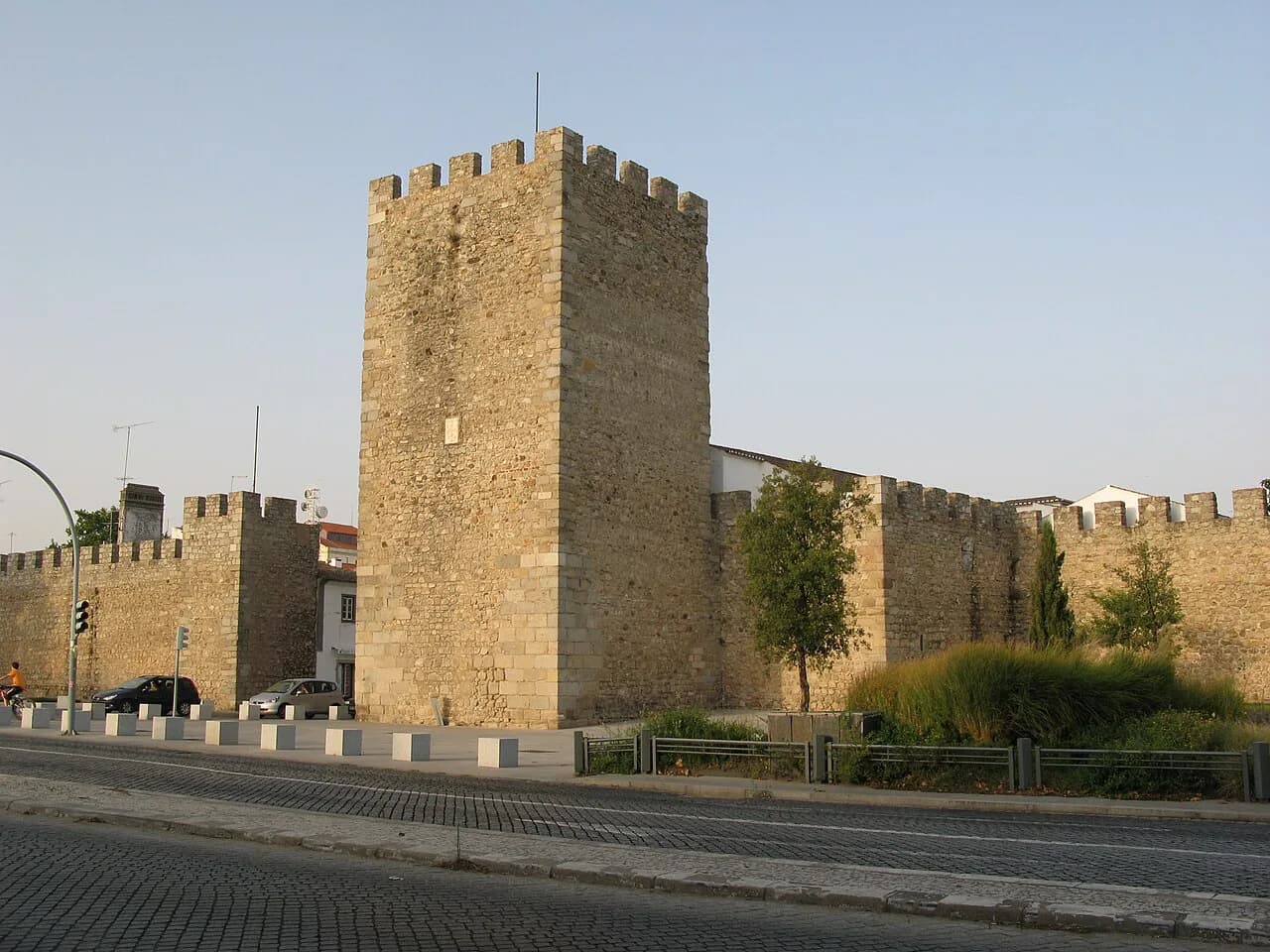
Évora's walls are known as the Cerca Romana, or Roman Enclosure, a defensive set of military architecture erected across several centuries rather than in one campaign. Roman foundations, Moorish-era repairs and a medieval crown still partly enclose the UNESCO-listed centre. Reading the circuit as a single wall misses the point.
The medieval phase is the one most visible on a walk. The wall as it stands today is largely a 15th-century construction, with four gates and around 40 turrets punctuating the line. That combination gives the circuit its rhythm: you are never far from a point where the wall opens to let a street through or bulges out to watch the approach.
The walls are also why the old town reads as a contained place rather than a set of scattered monuments. The Roman temple, the cathedral and the churches all sit packed inside the enclosure in a compact grid. Walking the line is the quickest way to see how the city grew.

Where the walls run and how to reach them
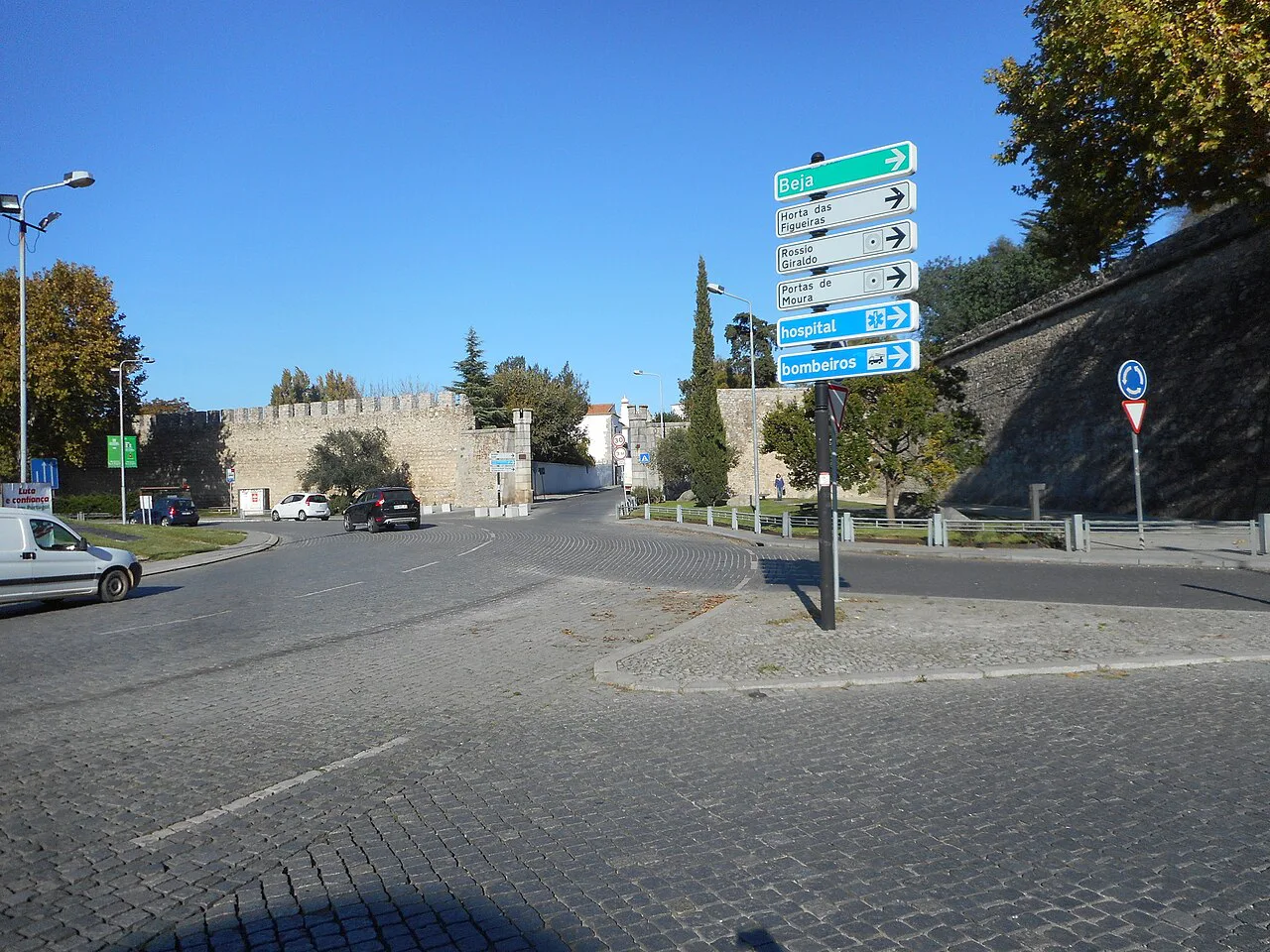
The ramparts form a rough ring around the old town, and the gates still act as entry points for streets coming in from the modern city. Walk outward from the centre and you will meet the wall as streets funnel through the historic gates. Start from Praça do Giraldo, then follow a street until it passes through a gate.
Look for the change in building line where streets squeeze through the gates; that pinch point is your cue that you have reached the circuit. If you want a single orientation walk covering the main squares and streets before you commit to the ramparts, the wider set of things to do in Évora will help you sequence the day.
The Cadaval Palace sits close to the wall line and gives you a fixed point to navigate back to. The palace and the ramparts make a natural half-loop: see the palace, then follow the wall along until you find a gate to re-enter.

Walking the outside of the ramparts
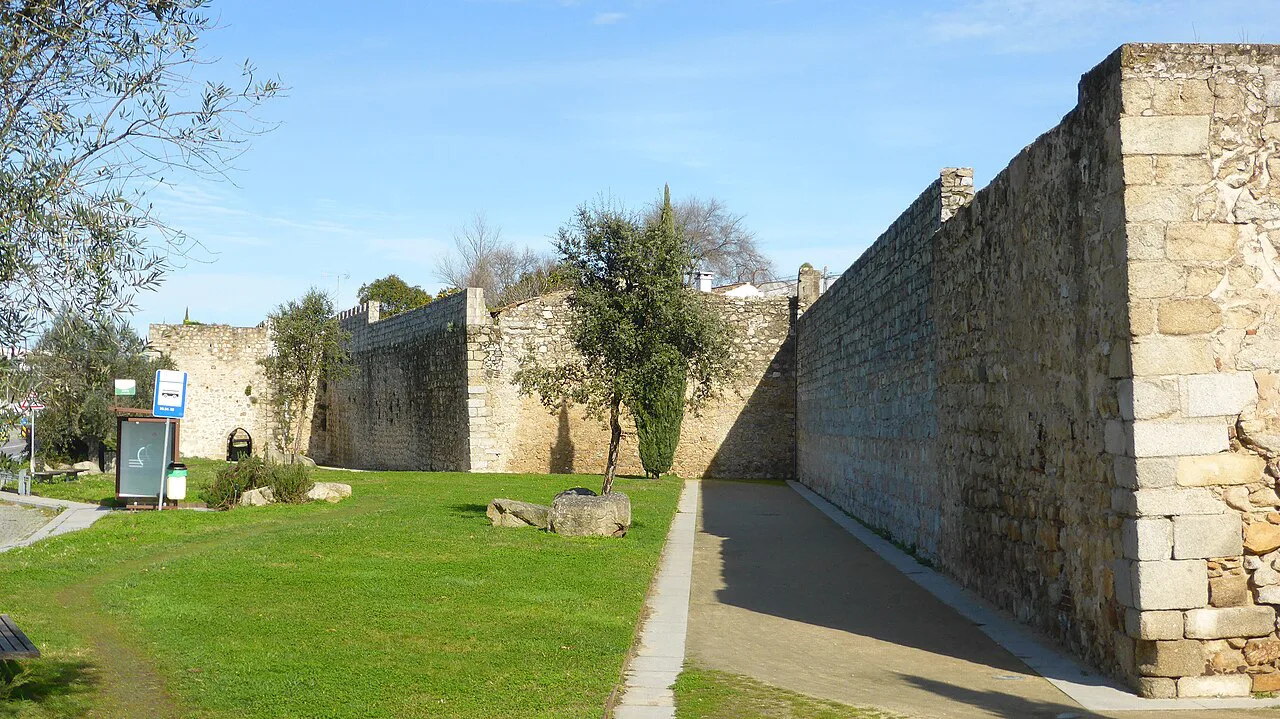
The most rewarding stretch is the outside face of the wall, where you see the full height of the stonework rather than the sliver visible from inside. Walk along the base and you pass a garden with a fountain, a pleasant pause before the wall turns. The scale becomes obvious beneath the turrets.
Look for the almost hidden walkway that cuts through the wall near the garden. It is easy to miss because no grand entrance announces it, but people heading that way and not returning to the fountain are your clue. Taking it puts you back inside the enclosure without retracing your steps, so the circuit feels like a loop rather than an out-and-back.
Just beyond this stretch lie the Ruinas Fingidas, or False Ruins. They were built in the 19th century from old stones and architectural fragments collected from demolished buildings to look like genuine medieval remains. They convince well enough that visitors have mistaken them for a medieval villa, so enjoy them as Romantic-era stagecraft rather than antiquity.
The Ruinas Fingidas are also where you are likely to hear peacocks before you see them, strutting around the constructed ruins. It is an odd, memorable juxtaposition: fake medieval masonry, real birds, and the actual city wall a few paces away. Allow a few minutes here rather than treating it as a pass-through.
Turrets, gates and views back over the old town
As you follow the circuit, the turrets give repeated vantage points back over the rooftops. The wall's height means even a modest rise at a tower puts the roofscape and church towers in view. Walk the outside face for the best sense of the wall's bulk, then step inside for the tighter medieval streets.
The gates themselves are worth studying rather than hurrying through. Each marks a historic entry point, and the streets that pass through them still carry traffic and pedestrians into the centre. Pausing at a gate gives you a clean before-and-after: modern city on one side, enclosed medieval grid on the other.
The Aqueduto da Água de Prata is the other piece of infrastructure that defines Évora's edges, and it stands partly inside and outside the wall line. Give the Évora aqueduct its own slot rather than trying to absorb it into the walls circuit.
Pairing the walls with sights just inside them
The Roman Temple, known as the Temple of Diana, stands inside the enclosure and is the city's signature ancient monument. It has long been linked to the goddess Diana, though it is more recently thought to have been built for Emperor Augustus. Seeing it after walking the wall makes the layers click: Roman Évora, medieval Évora, and the wall that outlasted both.
The Cathedral of Évora, the Sé, is the other anchor inside the walls. Built between 1186 and 1204 and enlarged between 1280 and 1340, it is the largest medieval cathedral in Portugal, and its bulk dominates the skyline you have been circling. Step in after the walk, and consider the rooftop for the elevated view back over the walled centre.
The Igreja de São Francisco, built between 1475 and 1550, sits inside the walls and holds the Capela dos Ossos, the Chapel of Bones. Bones from Évora's cemeteries are arranged there to make visitors reflect on mortality, above a doorway inscription that greets those who enter. It is a short walk from the cathedral and a strong second stop after the walls; the chapel of bones Évora page covers the interior in detail.
The cathedral roof as a view over the walled centre
The cathedral rooftop is the best elevated view of the walled centre, and it is reached by a narrow spiral staircase that feels longer than it looks. The climb is the trade-off: tight, steep and not for anyone uneasy with enclosed spaces, but the reward is the roofscape and the line of the walls from above. Budget more time for the climb than for the view itself.
Roof access carries a small charge, so confirm the current ticket at the cathedral rather than trusting an old trip report. The rooftop is the one paid view that genuinely adds to the walls walk.
How much time to allow
A circuit that takes in the outside face, the garden stretch, the hidden walkway and the Ruinas Fingidas fills a good chunk of an afternoon at an unhurried pace. Add the cathedral, the Roman temple and the chapel and you are into a half-day or more. The walls themselves are the connective tissue between sights you were going to see anyway.
Start in the morning if you want the streets quieter, or save the walk for evening when the medieval lanes empty out. The circuit is short enough to split: do half before lunch, half after, using the gates as natural re-entry points. If you only have one day in Évora, the walls make a good opening orientation loop before you commit to interiors.
Tickets, opening hours and access
The ramparts are a historic street-level circuit rather than a gated monument, so there is no single entrance to plan around for the wall itself. Sights inside the enclosure set their own hours and ticket prices, and those are the ones to confirm before you set out: check the cathedral and the chapel directly.
Some stretches involve uneven ground and the hidden walkway is easy to miss, so wear shoes that handle cobbles and stone. The Ruinas Fingidas and the garden involve the flattest walking; the cathedral roof is the least accessible part. Plan the walk around your tolerance for stairs and uneven surfaces.
Sun, shade and quieter evenings
The outside face of the wall is largely open, so expect direct sun on exposed stretches and little shade until you reach the garden. The medieval streets inside the enclosure are the opposite: narrow, tall-sided and cooler. Alternating between the two keeps the walk comfortable.
Evenings along the medieval streets are noticeably quieter, and the wall is best seen then without crowds. The trade-off is that interiors close, so save the cathedral and chapel for earlier in the day.
Beyond the walls: the Almendres Cromlech
If the walls leave you wanting more of Évora's deep history, the Almendres Cromlech is the region's prehistoric counterpoint: a stone circle in the countryside outside the city. It is a separate trip needing its own transport planning, so treat it as another day rather than an add-on to the walls walk. The Great Dolmen of Zambujeiro lies in the same area and pairs naturally with it.
Should the walls be your first stop in Évora?
Yes, if you want the city to make sense before you start paying for interiors. The walls give you the shape of the old town, the gate logic and the rooftop sightlines in about an hour. Do the circuit first, then pick your interiors with the map already in your head.
With only an afternoon, walk the outside face past the garden and the Ruinas Fingidas, take the hidden walkway back in, and finish at the cathedral. That sequence captures the wall, the honest history of the false ruins and the best view over the enclosure without committing to a full day.
Explore more Évora guides
Frequently Asked Questions
Are the Évora walls free to walk?
The ramparts are a historic circuit you walk at street level rather than a gated, ticketed monument, so tracing the wall and its gates does not require a ticket. Paid entry applies to individual sights inside the enclosure, such as the cathedral and the Capela dos Ossos, and those set their own prices.
How long does it take to walk the Évora walls?
Budget a good part of an afternoon for the outside face, the garden, the hidden walkway and the Ruinas Fingidas at an easy pace. Add more if you stop at the cathedral or chapel.
What are the Ruinas Fingidas in Évora?
They are constructed ruins built in the 19th century from old stones and fragments to look medieval. They are not genuine ancient remains, though they are convincing enough that visitors have mistaken them for a medieval villa.