One Day in Évora: A Realistic Walking Itinerary
Plan one day in Évora with a walkable route past the Roman temple, the Sé and the Capela dos Ossos, plus honest trade-offs on timings.
On this page
One day in Évora covers the essentials of the walled centre comfortably on foot, because the main sights sit within about ten minutes of one another and the old town is compact enough to walk end to end. The trade-off is everything outside the walls, above all the Almendres Cromlech stone circle, which needs a car and a half-day of its own. This route runs from the station through the Roman temple and the cathedral to the Capela dos Ossos, with timings and the honest case for staying the night.
What fits into one day, and what does not
A single day gives you Praça do Giraldo, the Templo de Diana with the Jardim Diana beside it, the Sé de Évora and the Capela dos Ossos, plus time to wander the whitewashed lanes between them and eat a proper lunch. That is a full day at an unhurried pace, and the walks between these stops are short enough that you never need transport inside the centre. Treat the whole historic centre as one continuous walk rather than a checklist of separate trips.
What a day forces you to drop is the countryside around the city, most notably the Almendres Cromlech, a stone circle roughly 8 miles (13 km) west of town that predates Stonehenge. Reaching it without a car is impractical, so a car-less day should stay inside the walls and accept the loss. If the stone circle matters to you, build the trip around more than a day using this Évora itinerary as the spine and adding a half-day for the megaliths.
Getting there: train or bus from Lisbon, then the walk in
Évora sits about 80 miles (130 km) southeast of Lisbon, and the train from Comboios de Portugal and the express buses of Rede Expressos both cover the run in roughly 90 minutes. The train is the more scenic option and the bus runs more often, so a flexible day out usually favours the bus. Fares vary by service and class, so price the journey when you book rather than budgeting from an old figure.
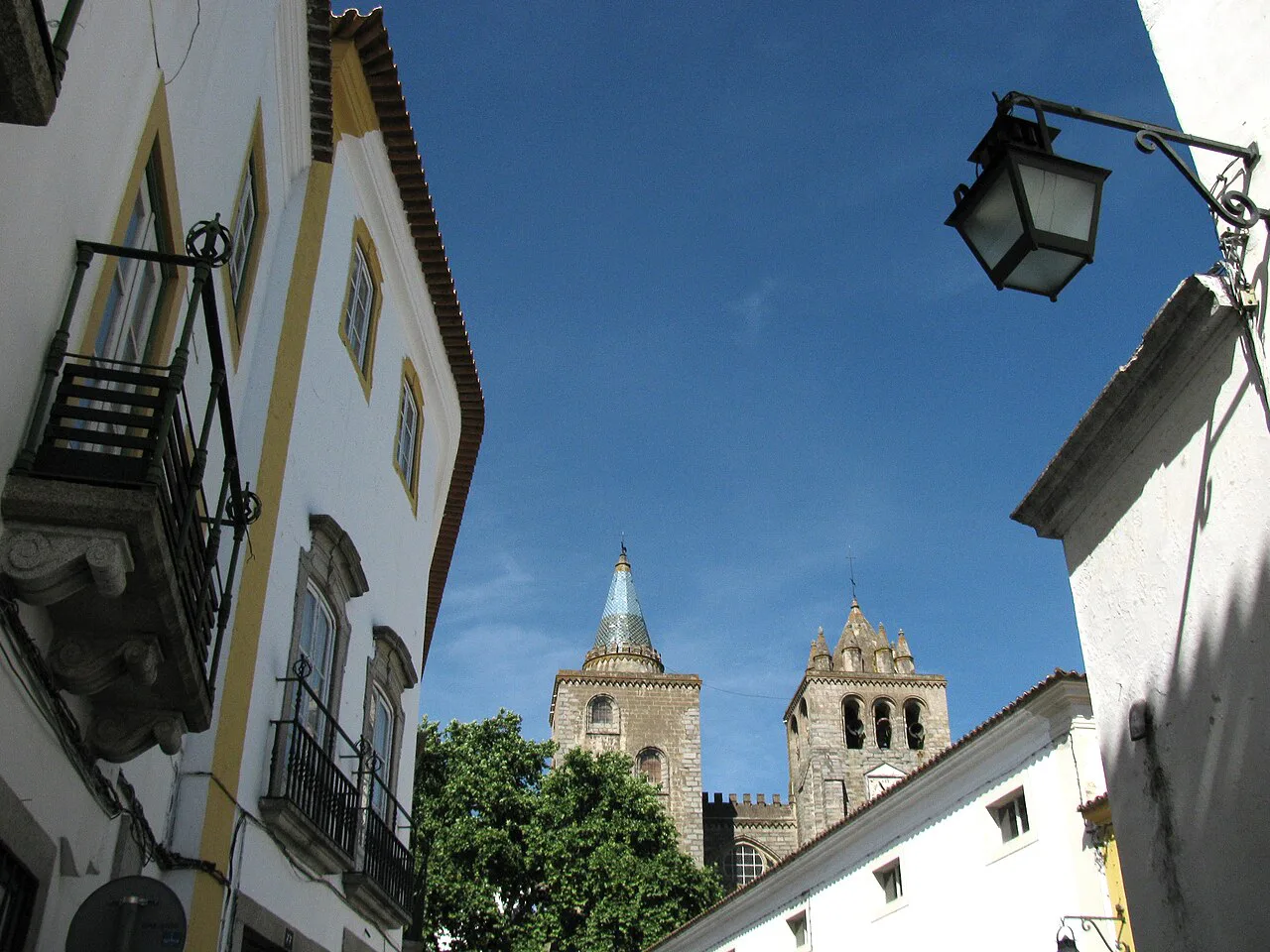
From Évora station it is a walk of about 15 to 20 minutes into the centre, and from the edge of the old town every sight on this route is within a ten-minute stroll. That makes the station walk the longest single leg of the day, so wear shoes that cope with cobbles and calçada. Arriving mid-morning leaves the best part of the day for the centre before the light softens over the rooftops.
Start at Praça do Giraldo
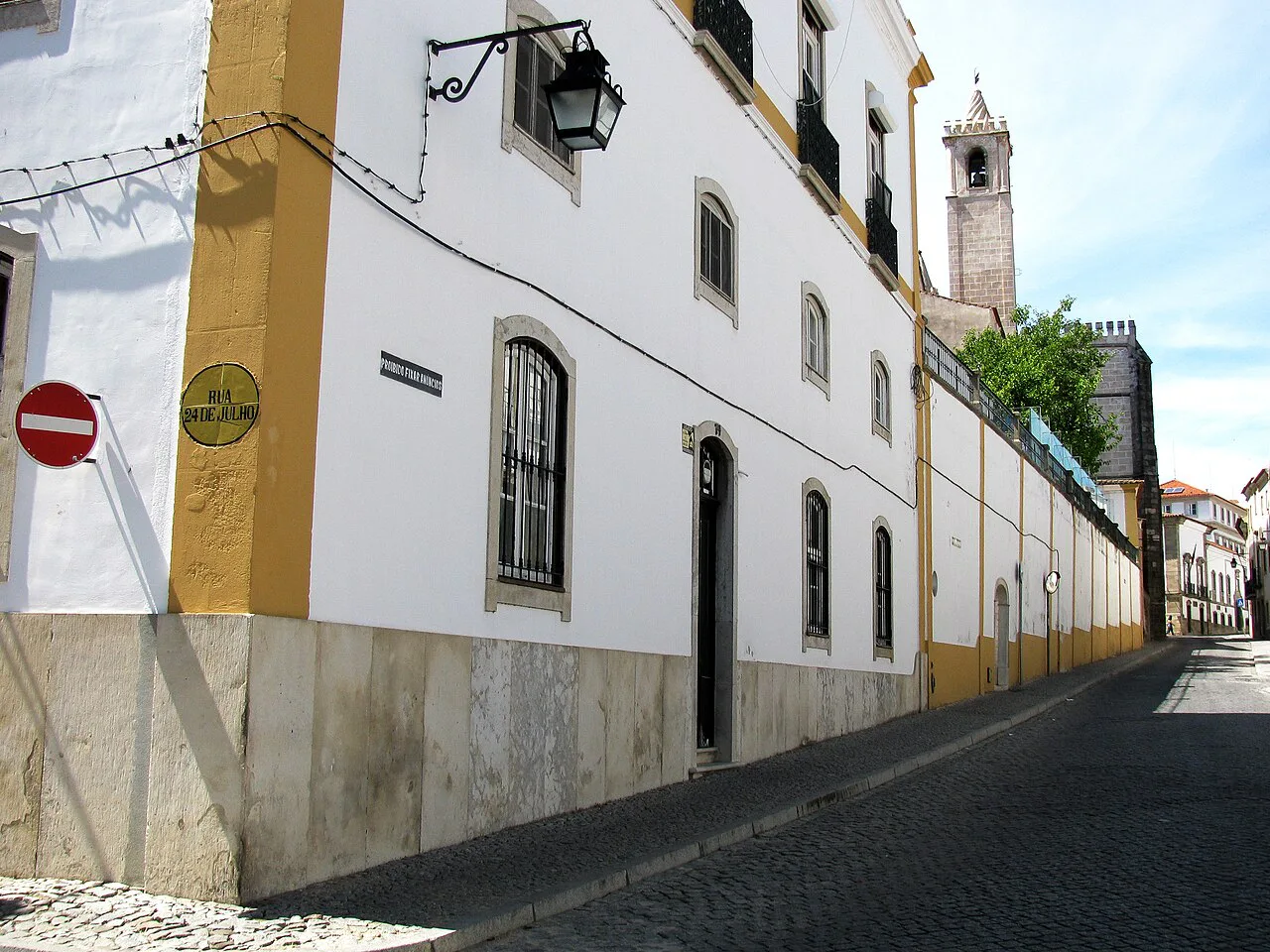
Begin on Praça do Giraldo, the arcaded square at the heart of the old town, where the streets fan out towards the cathedral and the Roman temple. It is the natural place to get your bearings, with cafés for a coffee while you work out which lane leads where. The square also sets the tone for a city whose historic centre holds UNESCO World Heritage status for its Roman, Gothic, Manueline and Baroque layers.
Templo de Diana and Jardim Diana
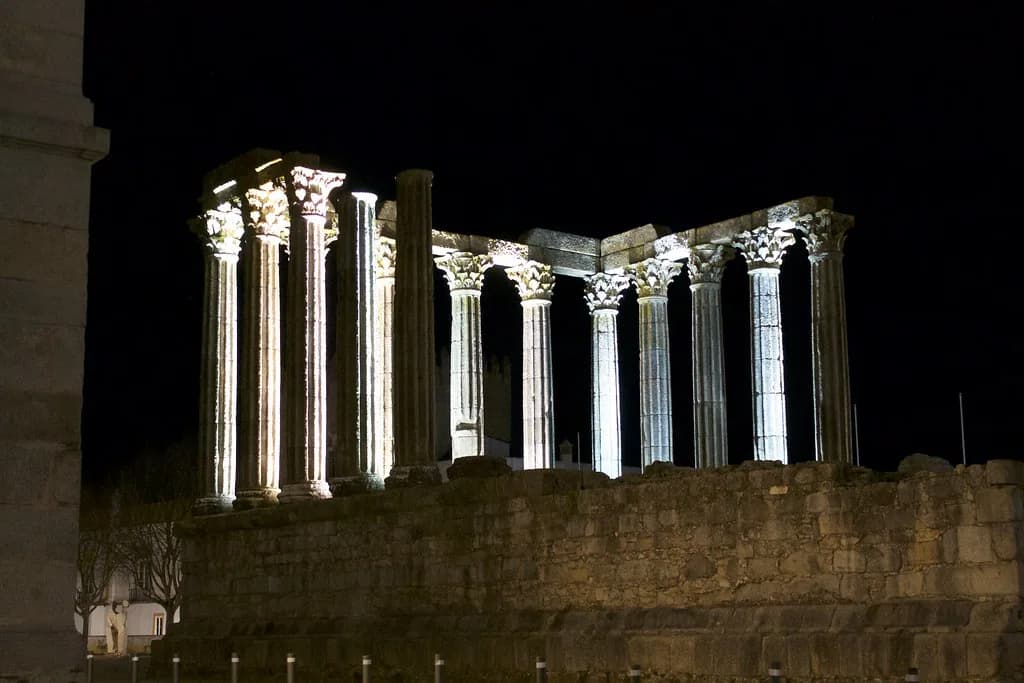
The Templo de Diana is the city's Roman showpiece, a first-century AD temple whose columns still stand roofless on the highest point of the old town, and it has served as everything from a place of worship to a butcher's over its two thousand years. Walk up from the square in the morning, when the tour groups are thinner and the stone is at its best in the light. The temple is an open monument in the heart of the old town, viewed from the surrounding square.
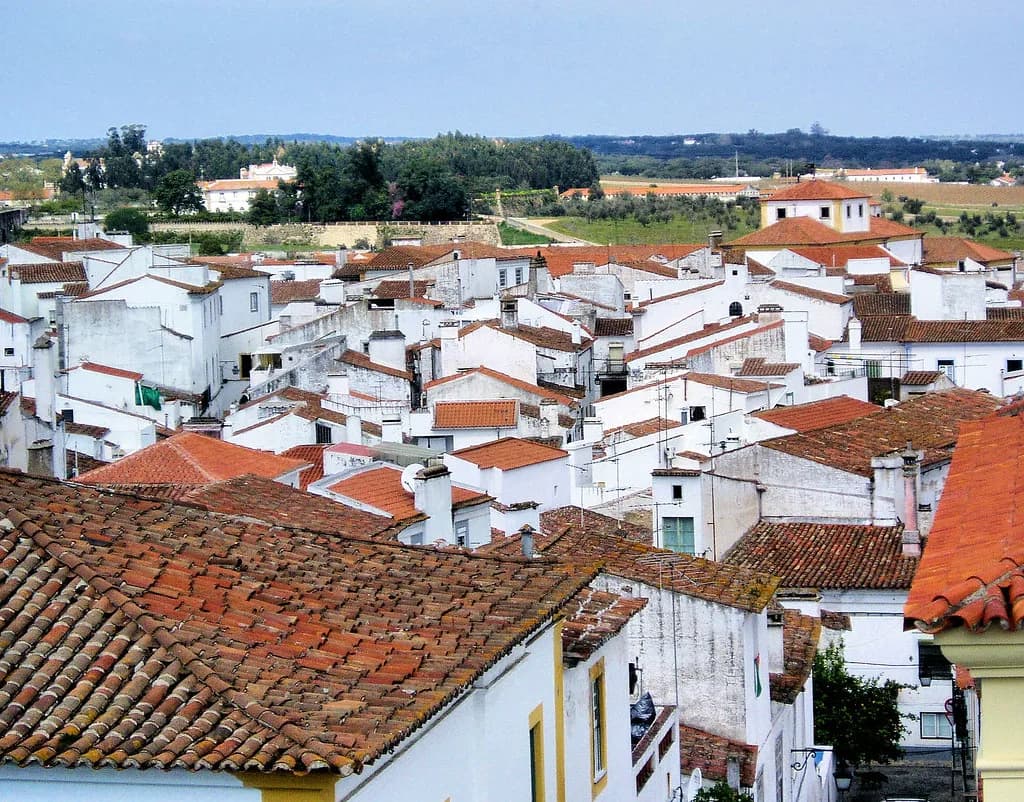
Beside it, the Jardim Diana is a small garden with a view over whitewashed houses and terracotta rooftops stretching into the Alentejo plain. It is the obvious place for a pause, and the kiosk in the park is a good spot for a cold drink before the climb to the cathedral. Give the pair half an hour to forty-five minutes, longer if the view holds you.
Sé de Évora: the cathedral and the tower climb
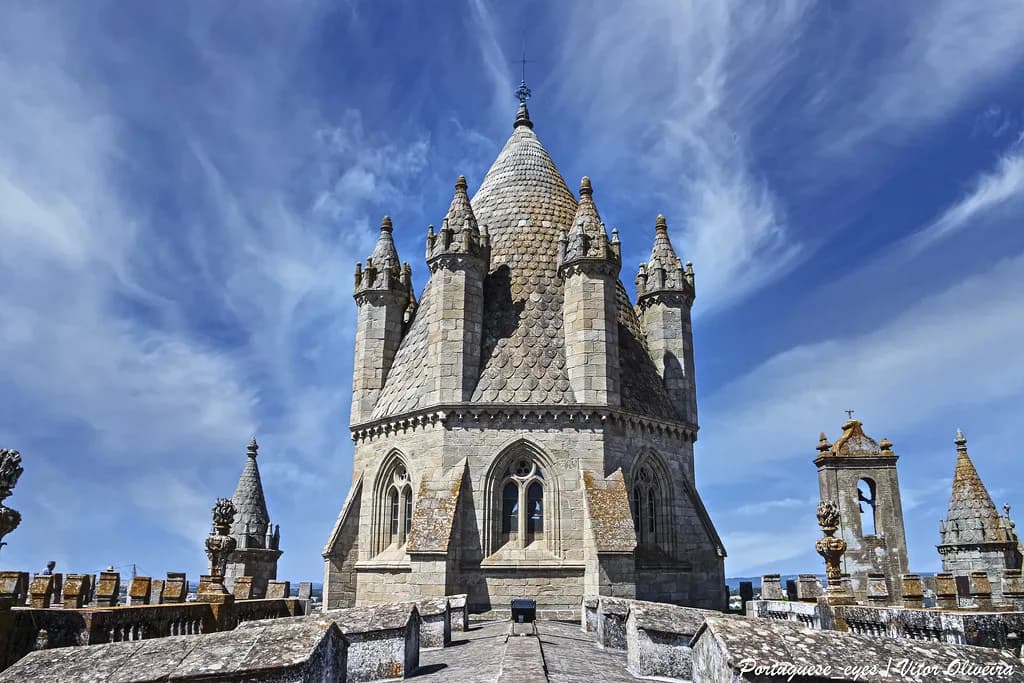
The Sé de Évora stands across from the temple and is the largest cathedral in Portugal, begun in the twelfth century and completed centuries later, with a Gothic façade and vaulted interior. The highlight is the climb up the towers, where the view takes in the whole city and the rolling Alentejo countryside beyond. Budget around an hour if you go up, less if you stay at ground level.
Cathedral opening hours shift with the season and with religious services, so check the times posted at the door or on the diocesan site on the morning you visit instead of planning the day around a fixed slot. Build the cathedral into the late morning and keep the afternoon free for the Chapel of Bones and the lanes. If the tower is closed when you arrive, the cloister and interior still justify the stop.
Capela dos Ossos and Igreja de São Francisco
The Capela dos Ossos, attached to the Igreja de São Francisco, is the stop most people come to Évora for: a sixteenth-century chapel lined with the skulls and bones of more than 5,000 people, with an inscription at the entrance that sets the tone. Two mummies are displayed in glass cases, and a study identified them as a woman and a young girl rather than the father and son of legend. It is unsettling and unforgettable in equal measure, and it takes perhaps twenty minutes to walk through.
A ticket for the chapel also covers the church museum, so pay once and see both rather than treating them as separate stops. That combined ticket is the main paid entry of a one-day visit, and it is worth comparing against other entries before you decide what to skip if you are keeping to a Évora cost budget. Leave the chapel for early afternoon, after lunch, when the morning crowds have thinned.
Lunch: a tasca stop or a quick pastelaria
For a sit-down lunch, a tasca in the lanes near the chapel gives you Alentejo cooking and a proper break in the middle of the day; Botequim da Mouraria, with its handful of counter seats and no reservations, is the kind of place to arrive early for. For a faster stop, a pastelaria does coffee, a pastel de nata and a savoury snack in twenty minutes, leaving more of the afternoon free. Restaurants in a city this size often close one day a week, so check the door or phone ahead if a particular place matters.
An afternoon through the streets: Graça and the aqueduct
After lunch, walk north-east to the Igreja da Nossa Senhora da Graça, whose facade and square make a quiet contrast with the cathedral crowds. From there the lanes lead towards the Aqueduto da Água de Prata, the sixteenth-century aqueduct that once carried water into the city and whose arches still frame parts of the old town. This is the stretch of the day with no queue and no ticket, and it is where Évora feels most like itself.
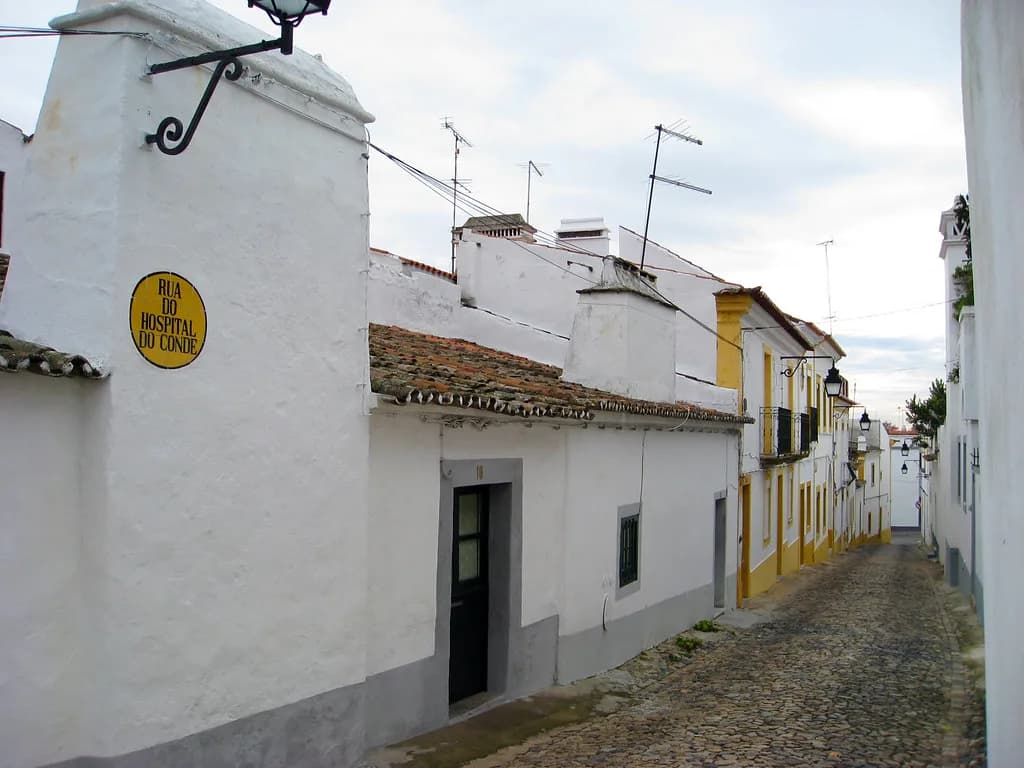
Allow an hour for this loop and use the time to wander rather than follow a strict line; the white and yellow streets open onto small squares and decorated doorways that reward drifting. If you want a wider menu of sights to slot into the afternoon, the Évora Attractions guides cover individual monuments in more depth. By late afternoon the terraces are filling and the light on the temple is worth a second look.
After the walls: the Almendres Cromlech
The Almendres Cromlech, a stone circle set among cork oaks about 8 miles (13 km) west of Évora, is older than Stonehenge and free to visit. It is also the one major sight a one-day itinerary cannot reasonably fit without a car, because the journey out and back plus time on site swallows half a day. If you have hired a car for the Alentejo, it makes a fine early-morning add-on before the city wakes up.
One day or two: the honest case for staying
One day works, but it is a taste: you see the quartet of headline sights and the streets between them, and you leave without the slower pleasure of an evening in the squares or a morning at the market. Évora rewards a second day more than most Alentejo towns, and staying overnight also lets you catch the temple and the cathedral at quieter hours. Weigh how many days you can spare honestly before booking transport back.
If you are still deciding whether the city justifies the journey at all, the case rests on the density of Roman, medieval and Baroque sights inside a walkable walled centre, and on food that punches above its size. Read Is Évora Worth Visiting? What Évora Does Well and Who It Suits before you commit a day of a short Portugal break. For most travellers the answer is yes, provided you accept the pace.
Filling the evening before the last train or bus
If you are returning to Lisbon the same day, use the late afternoon for the things that need no ticket: a drink at the kiosk in the Jardim Diana, a last wander through the lanes below the cathedral, and a coffee on Praça do Giraldo while the arcades light up. Keep an eye on the time so you leave a buffer for the walk back to the station, which is the longest leg of the day. Confirm the last departure when you buy your ticket, since the timetable is the one thing that can strand a day-tripper.
Should you give Évora one day or two?
Give Évora one full day if the city is one stop on a longer Portugal trip and you want the Roman temple, the Sé, the Capela dos Ossos and a good lunch without rushing. Give it two if you want the Almendres Cromlech, an unhurried evening and a second look at the cathedral tower, which is where most people wish they had booked the extra night. Either way, do the centre on foot and treat the station walk as part of the day, not an inconvenience.
Frequently Asked Questions
Can you see Évora in one day without a car?
Yes. The train and express bus from Lisbon both reach the city in roughly 90 minutes, and the walk from the station into the centre takes about 15 to 20 minutes. Once inside the walls, Praça do Giraldo, the Templo de Diana, the Sé and the Capela dos Ossos are all within about ten minutes of one another on foot.
What is the single sight not to miss in Évora?
The Capela dos Ossos, attached to the Igreja de São Francisco, is the stop that defines a visit: a chapel lined with the bones of thousands of people, with two mummies displayed in glass cases. Its ticket also covers the church museum, so one payment covers both.
Is Évora doable as a day trip from Lisbon?
It is, and the journey is short enough to leave most of a day in the city. The trade-off is that the Almendres Cromlech stone circle and any lingering in the evening squares fall outside a single day, so a day trip suits travellers who want the walled centre rather than the surrounding countryside.
Sources
Notes for your next Portuguese break
Optional updates to our town guides.
You might also like
Continue reading
More guides you'll find useful