
Elevador de Santa Luzia: the Funicular Up to Monte de Santa Luzia

Take the Elevador de Santa Luzia if you want the summit of Monte de Santa Luzia without the climb: the funicular covers the whole ascent in a single short ride, and the ride itself is half the attraction. The upper station sits beside the Templo do Sagrado Coração de Jesus, so you step out within a couple of minutes of the viewpoint over the town, the Lima estuary and the coast. This guide covers where to board, how the ride works, who it suits and how to fit it into a short break in Viana do Castelo.
What the Elevador de Santa Luzia is
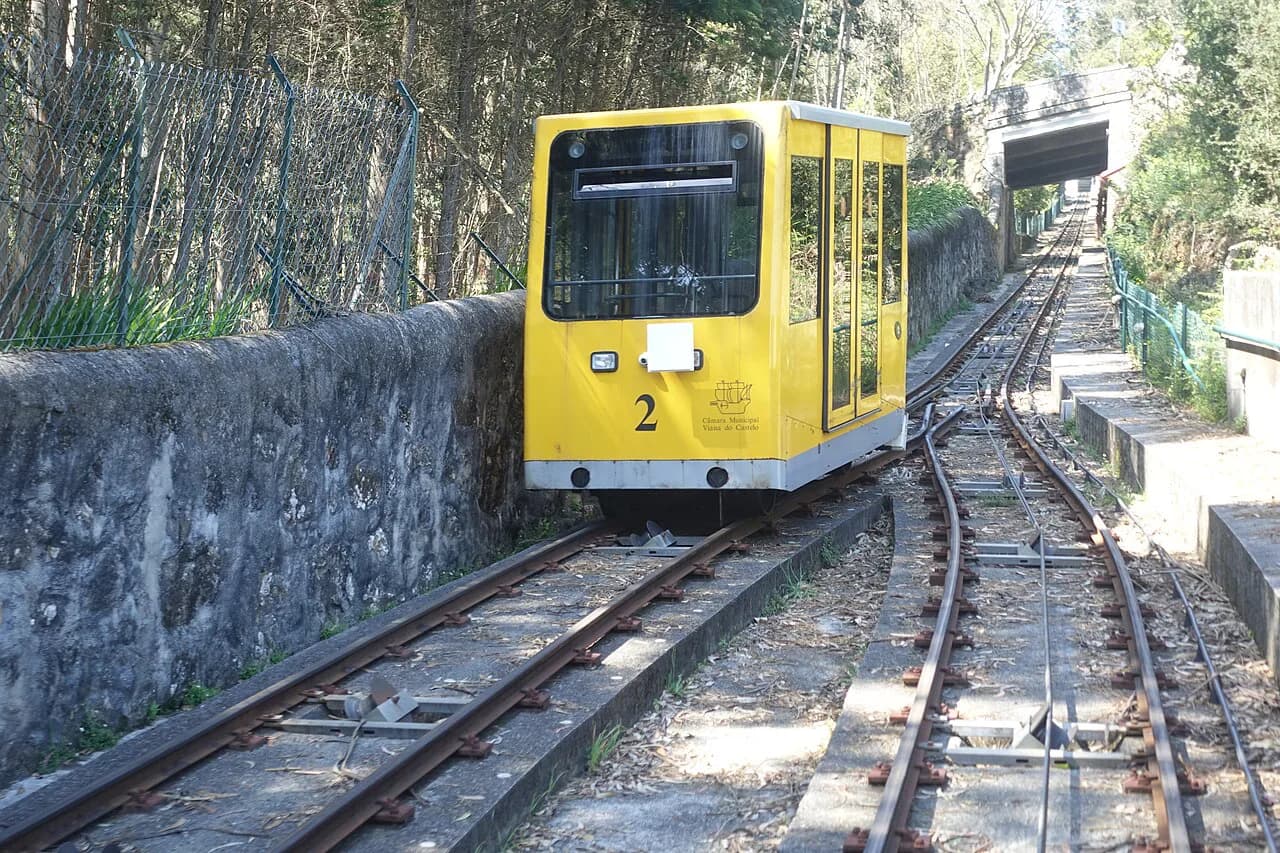
The Elevador de Santa Luzia, also called the Funicular de Santa Luzia, is a railed cable car that connects the city to the top of Monte de Santa Luzia. It opened on 2 June 1923 specifically to make the summit easier to reach, and the upper station is the natural arrival point for the Templo do Sagrado Coração de Jesus. Treat the ride as transport with a view rather than a sight in its own right, and the visit makes sense.
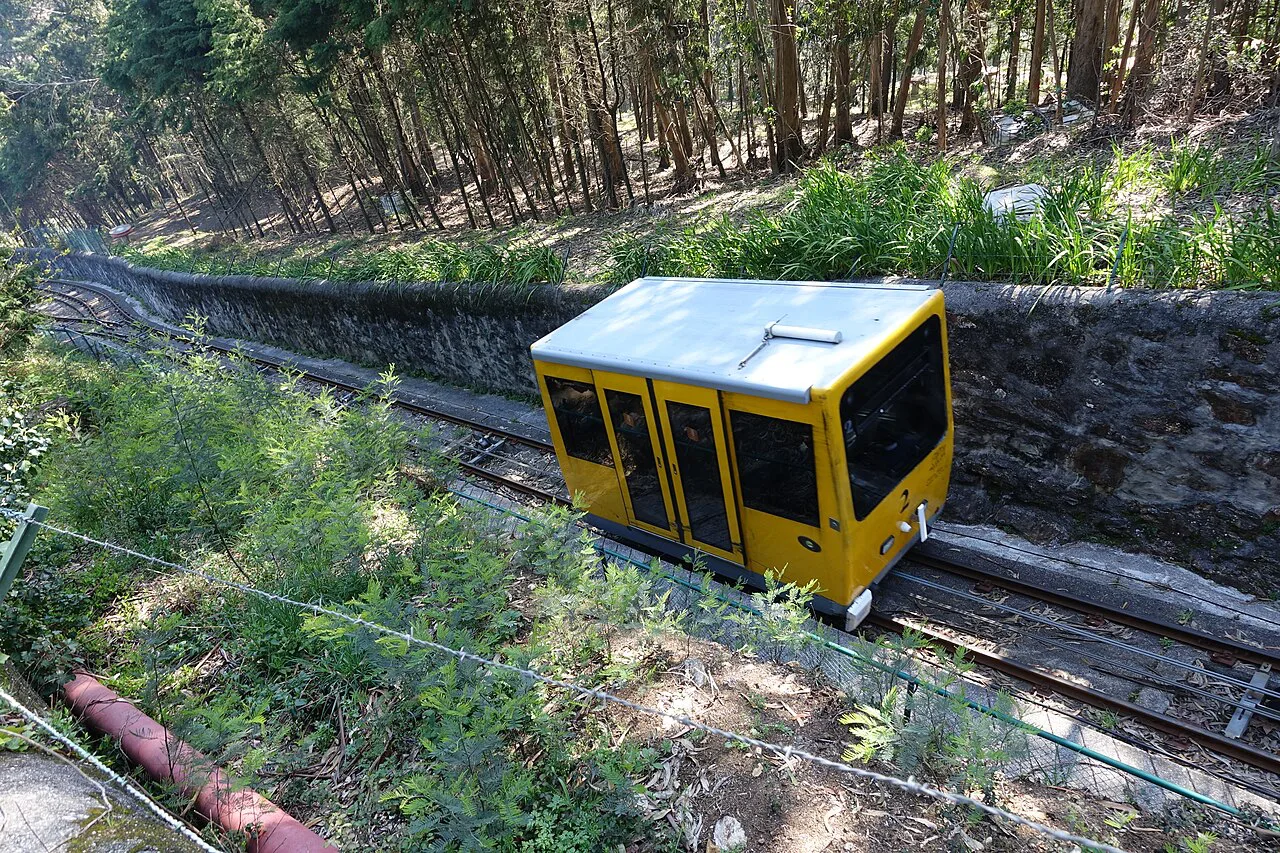
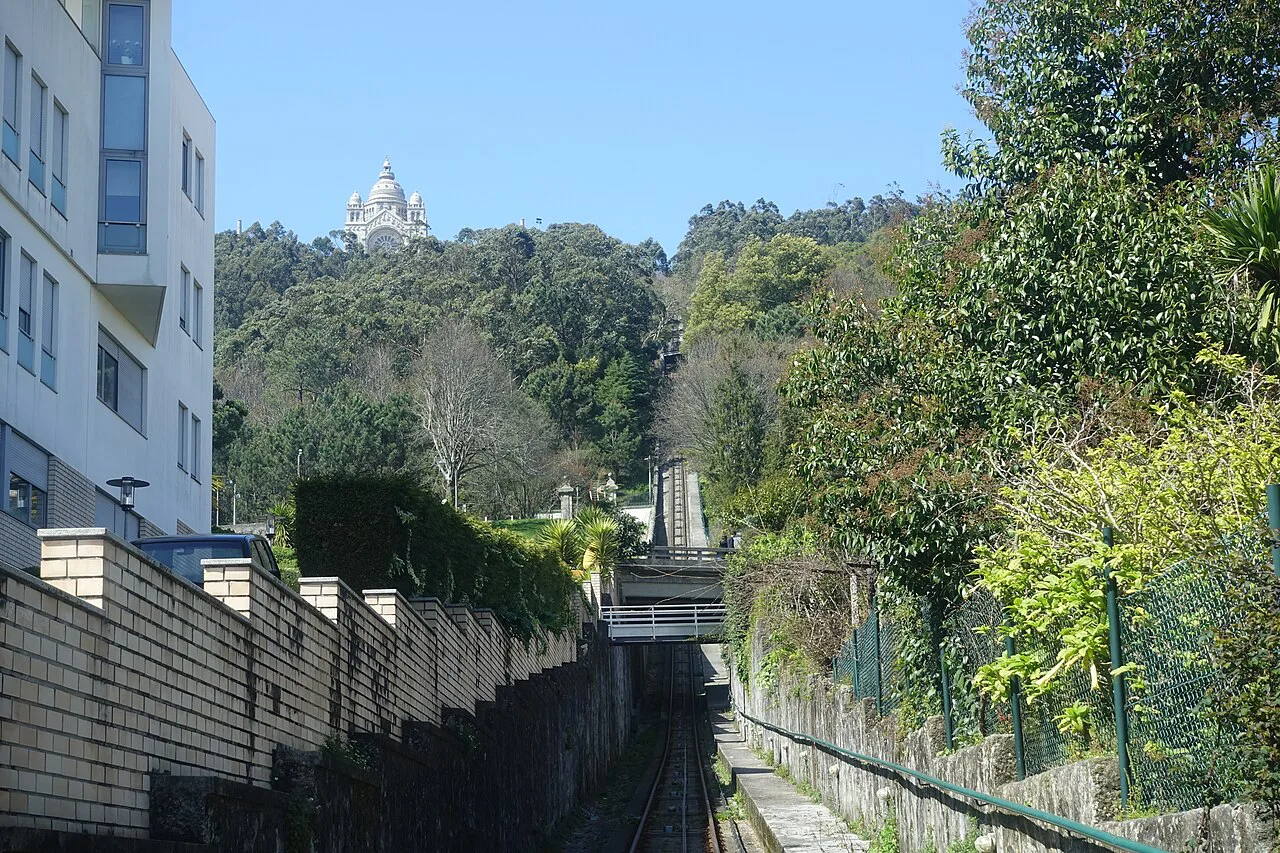
The track runs 650 metres and overcomes a height difference of 160 metres, which is what makes the ascent feel substantial: you are not being hauled up a short bank but travelling a proper hillside route. For a town of Viana's size, it is an unusually grand piece of infrastructure, and it explains why the elevator has stayed in use for a century.

Where to board, at the foot of the Monte
The lower station is on Avenida 25 de Abril in Viana do Castelo, the avenue that runs along the edge of the riverside centre towards the base of the hill. In practice you walk out of the old streets, follow the riverfront east and look for the funicular building rather than hunting for a stop. The address is listed as Avenida 25 de Abril, 4900-496 Viana do Castelo if you need to give it to a taxi driver or pin it on a map.
Because the boarding point sits on the flat, riverside side of town, the funicular pairs easily with a morning in the centre: the Praça da República, the old streets around it and the riverfront are all within an easy walk of the lower station. A sensible half-day is to wander the centre first, then ride up, see the temple and the view, and come back down for lunch.

The ride: 650 metres on a counterweight
The elevator works on a counterweight system: the car going down pulls the other car up, and the two cross exactly halfway along the track. That is worth knowing because it shapes the experience. You are not alone on the hillside, you pass the descending car mid-route, and the trip is effectively timed to one descent, so there is little waiting in the cab once it starts moving.
The installation has three separate power sources, electric, generator and battery, plus four braking systems, which is the kind of redundancy you want on a 160-metre gradient. For passengers this is background detail, but it explains why the funicular runs in weather that would shut down a fairground ride. Sit or stand on the uphill side for the better view as the town drops away.
Capacity and access: 24 passengers per car
Each of the two cars holds 24 passengers, twelve seated and twelve standing, so a group larger than that will split across cars or wait for the next run. Wheelchairs, pushchairs and up to two bicycles can be carried on board, which makes the funicular a realistic option for families and for cyclists heading for the summit rather than a car-only compromise. If you are travelling with a buggy or a bike, aim for a quieter time of day so boarding is not rushed.
Opening hours and tickets
Opening times are not fixed through the year: a listing for the funicular gives Monday closures in January, February, November and December, with a split timetable on the remaining weekdays, so any schedule you find should be treated as indicative. Confirm the current timetable with the operator before you build a day around it.
Ticket prices are not set out here: check the fare at the lower station ticket office before boarding, and ask about return tickets if a single up and a single down bought separately would matter to your budget.
What to see at the top
The reason to ride up is the Templo do Sagrado Coração de Jesus, the hilltop temple of the Sacred Heart that dominates the skyline above Viana do Castelo. Allow time to walk around the outside and take in the building's position before you turn to the view, because the scale only reads properly from a few steps back.
From the summit terrace the town spreads out below, with the Lima estuary opening to the coast beyond it. This is the classic view of Viana do Castelo, the one that makes the town's geography suddenly obvious: the river, the bridge and the Atlantic all line up in a single frame. On a clear day the coast reads for miles, which is why the summit is worth more than the few minutes the ride takes.
How long to allow, and riding versus walking
Budget around an hour to ninety minutes for the whole excursion: the ride is quick, but the temple, the terrace and the view deserve unhurried time. If you are short of time in Viana do Castelo, the funicular is the efficient way to see the summit and still have the afternoon for the centre. If you have a full day, ride up and walk down, which gives you the view from the cab and the hillside on foot.
Walking up is a legitimate alternative if the funicular is closed or the queue is long, and it costs nothing but effort. The honest trade-off is time and legs against the fare: the funicular gets you to the top fresh and quickly, while the walk gives you the hillside at your own pace.
Nearby: the fort and the waterfront
Back at river level, the Castelo de Santiago da Barra guards the waterfront a short walk from the lower station, and it rounds off a summit morning neatly. The fort and the Ribeira streets give you a flat, shaded contrast to the exposed hilltop, and both are close enough to combine without transport. Plan the funicular first, then the fort and the riverfront on foot.
The Ponte Eiffel carries the road and rail across the Lima just upstream of the centre, and it is the other landmark that makes Viana's layout click once you have seen it from above. The Museu do Traje, with its collection of regional costume, suits a slower afternoon if the weather turns. Between the summit, the fort, the bridge and the museum, Viana do Castelo fills a one- to two-day visit comfortably.
Is the funicular worth it?
Yes, provided you treat it as the way up to the Templo do Sagrado Coração de Jesus and the view rather than a ride for its own sake. The counterweighted climb, the crossing cars and the 160-metre rise make the journey memorable, and the summit is the best introduction to Viana do Castelo's setting between the Lima and the sea. Check the day's timetable at the lower station before you go, and keep the walk as your fallback.