Ria Formosa from Faro: Lagoon, Islands and Boat Trips
Plan a half day on the Ria Formosa from Faro: how the lagoon and barrier islands work, boat trips and island ferries, birdlife and the trade-offs.
On this page
Give the Ria Formosa half a day from Faro and choose one way to see it: a boat trip through the channels or a crossing to a barrier island. Trying to combine both in a single morning leaves you rushing the part that makes the lagoon worth visiting, which is the slow change of light and tide across shallow water. This guide covers how the park is laid out, which islands you can reach from Faro, Olhão and Tavira, and the trade-offs between a guided trip, a ferry and a walk on the dunes.
The park is large: a lagoon system of some 18,400 hectares running along 60 kilometres of eastern Algarve coastline between Faro and Vila Real de Santo António.
What the Ria Formosa is and where it starts from Faro
The Ria Formosa is a coastal lagoon where fresh and salt water meet behind a chain of sand islands, and it was declared a Natural Park in 1987. Its barrier islands, including Armona, Culatra and Ilha Deserta, shift slowly with wind and current, so the channels and sandbanks you see on one visit are not identical to the next.
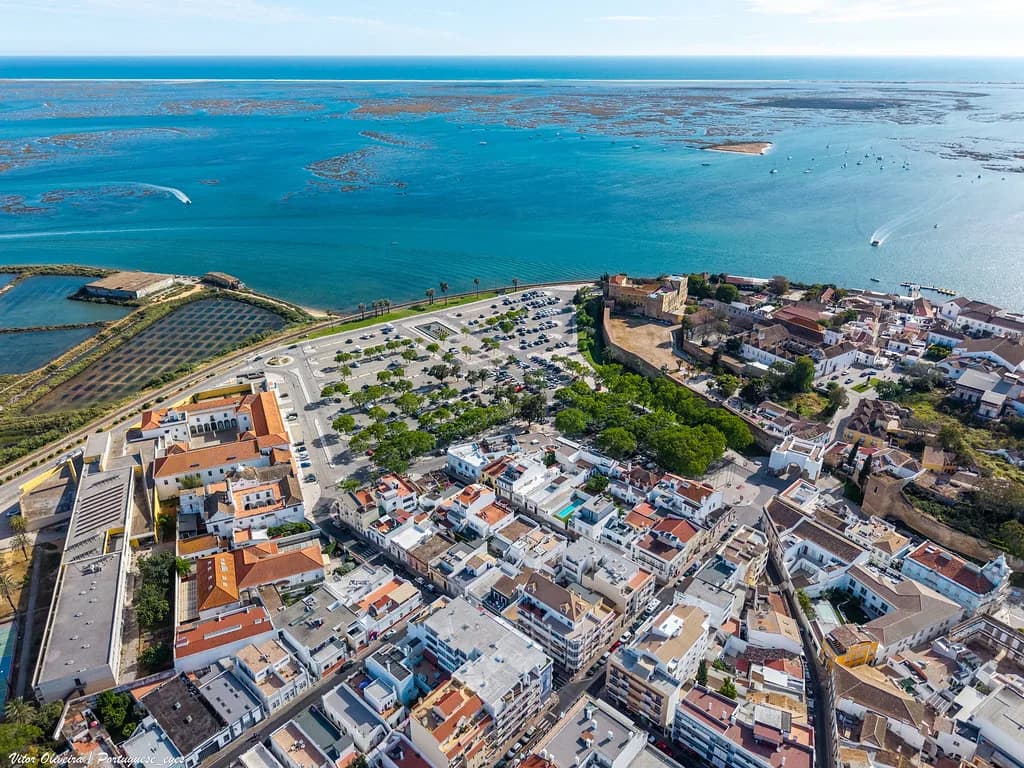
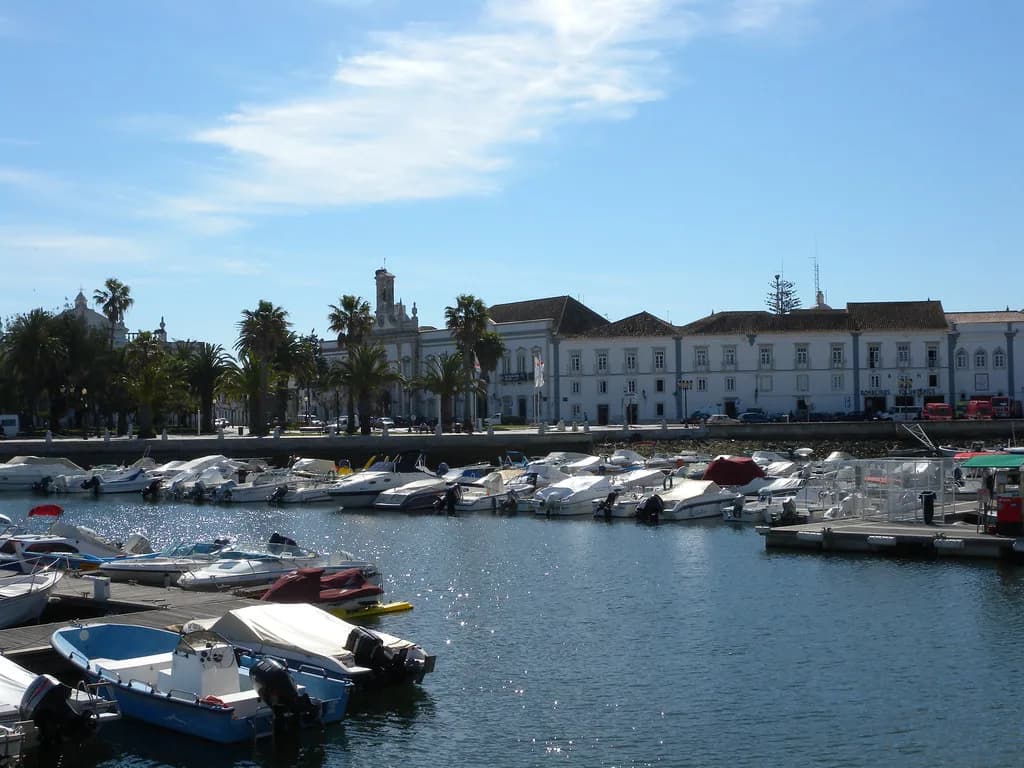
Faro sits at the western end of the park, close enough that the lagoon is part of the city's edge rather than a separate excursion. The old town, with its Cidade Velha walls and cathedral square, backs onto the waterfront, so you can walk from sightseeing straight to the quay. That makes Faro the easiest base for a short lagoon outing.
Salt has shaped this coast for centuries, and the salt pans around the estuary remain part of the landscape as well as a habitat for birds. If you are building a day in the city around the water, our guide to things to do in Faro sets the lagoon alongside the old town, the market and the museums.
How the lagoon is laid out: channels, sandbanks and the barrier islands
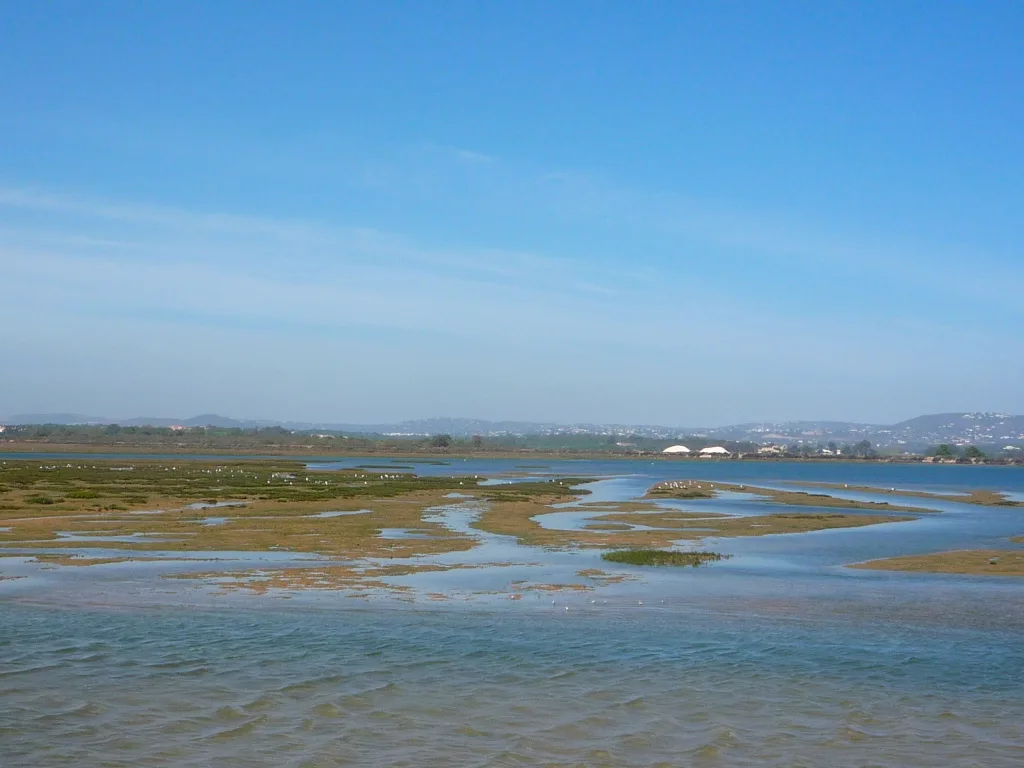
Think of the park as three parallel bands. Nearest the mainland are marshes, salt pans and tidal flats; beyond them runs the open lagoon with its shifting sandbanks and channels; and furthest out lies the line of barrier islands that separate the calm water from the Atlantic.
Because those islands move, navigation follows the water rather than a fixed map, and boat routes thread between banks that appear and disappear with the tide. This is why the view from the water changes so much between visits, and why a trip out is more interesting than a simple crossing.
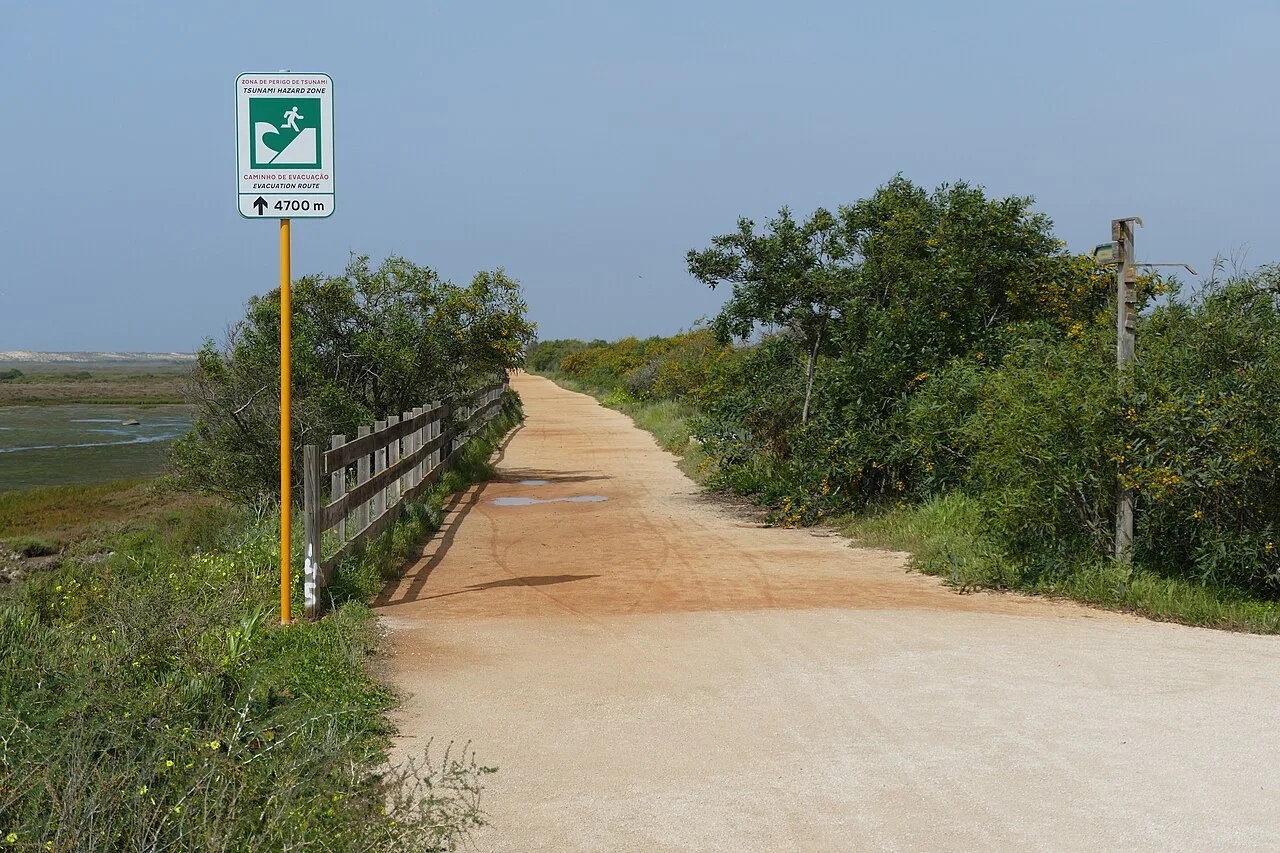
On land, the edges of the park are a mix of pine woodland, scrub and dune, with freshwater pools tucked behind the sand. Walking here gives you the close-up version of the lagoon: reeds, tidal creeks and the smell of salt marsh rather than the wide panorama you get offshore.
Which islands you can reach from Faro, Olhão and Tavira
Trips leave from Faro, Olhão and Tavira, and each gives a different starting point on the lagoon. From Faro you are closest to the western channels and the empty sand of Ilha Deserta and the Farol area; Olhão faces the island chain more directly and is the natural launch point for Culatra and Armona; Tavira sits at the eastern end, nearer the quieter stretches towards Vila Real de Santo António.
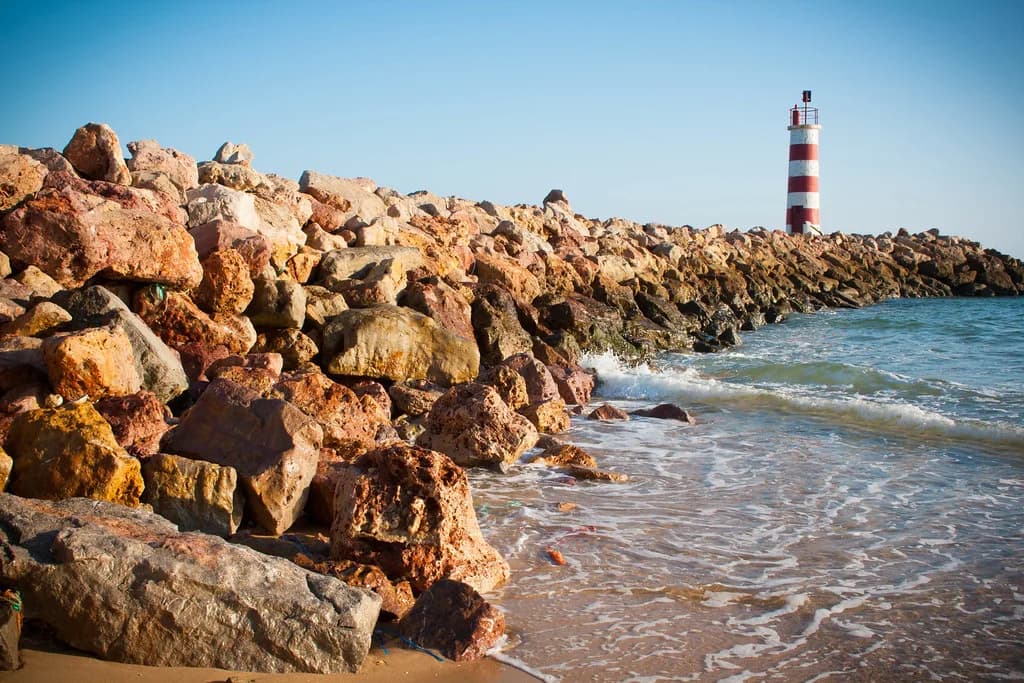
The islands are not interchangeable. Ilha Deserta is the bare, swept one, with little more than sand and a long walk; Culatra holds a working fishing community with its own rhythms; Armona has a village and a beach reached on foot from the landing; Ilha do Farol takes its name from the lighthouse at its tip. Pick according to whether you want solitude, a settlement or a short walk from the boat.
Stops on some boat trips include islets such as Ilha Deserta and Ilha do Farol, where the quiet is broken only by waves and wind. Days out here are about walking, watching and eating a simple lunch, not about facilities, so plan your departure around what you actually want from the island.
Boat trips and ferries: what each kind of trip actually gives you
A guided boat trip is the better first introduction: you cover more of the lagoon, hear about the fishing and salt traditions, and see the channels from a vantage point you cannot reach on foot. Small traditional boats and modern low-impact craft both run from the main towns, passing fishing harbours, reeds and tidal flats along the way.
A ferry or island crossing is a different purchase. You buy transport to a place and then own your time on it, which suits anyone who wants to walk a beach, swim or sit still for an afternoon. The trade-off is that you learn less about the lagoon itself, and if the boat is full you may wait for the next one, so check sailing times with the operator when you buy.
Whichever you choose, treat the trip as the anchor of the day and build the rest around it. Departures from the Faro waterfront tie in neatly with a morning in the old town, and you can read more about routes and options in our Faro boat trip guide.
Birdlife and what you can realistically see in a few hours
The park is a stopover and breeding ground for a wide range of birds, from waders and gulls on the flats to herons, stilts and the purple swamp hen in the wetter corners. Flamingos are part of the picture but they are not stationed for visitors: where they feed depends on water levels and the season, so treat any sighting as a bonus rather than the plan.
Two-storey hides and marked paths give land-based birdwatchers a reasonable chance in a short visit, especially early in the day when the flats are quiet. A boat, by contrast, gets you close to sandbanks where birds rest but passes quickly; binoculars matter more than the vessel.
The park also holds reptiles and amphibians, including a chameleon species that is rare and under pressure. Sightings are a matter of luck and patience on the paths, so choose a route with variety of habitat if wildlife is the reason you came.
Walking the dunes and marshes versus staying on the water
A land-based half day costs nothing beyond getting to the edge of the park and suits anyone travelling on a budget or without a booking. Paths and boardwalks cross pine woods and scrub towards the beach, and the hides along the way reward slow walking rather than distance covered.
The water gives you the geography: you understand how the islands shield the lagoon and why the channels matter. The land gives you the detail: birds at eye level, plants, sand underfoot. If you have only one half day, pick the one that matches your energy, and remember that a boat trip plus a long beach walk in the same morning is usually too much.
If you would rather stay in the city, the old town and waterfront make a satisfying alternative to the lagoon, and a Faro walking tour can fill the same half day at a gentler pace.
How long a half day needs and how to fit it around the rest of your day
Budget roughly half a day, including the time it takes to reach the departure point and the waiting around that comes with boats. That leaves a morning or an afternoon free for the city, which is the sensible split: lagoon first, then the old town and the market, or the reverse if your boat leaves later.
Faro's compact centre makes the sequencing easy. The Cidade Velha, the cathedral square and the marina are all within a short walk of each other, so you can move from the quay to the walls without a bus or a taxi.
If you are also visiting the churches and museums, keep those for the half of the day when you are not on the water. Our guide to the museums in Faro and the Cathedral (Sé) will help you slot them in without wasting a morning.
Practical points: tides, sun and protecting the park
The lagoon runs on tides, and low water exposes the sandbanks that boats thread between. Ask your operator how the tide affects the route when you book, and take the answer into account rather than assuming every departure sees the same landscape.
There is no shade on the islands or the open water, so sun protection and water are practical essentials rather than optional extras. The park is a protected area, so keep to paths, take litter back with you and give nesting birds a wide berth.
If you are combining the lagoon with other sights, our Faro attractions hub gathers the old town, castle and boat trip guides in one place, so you can see how the half day fits the rest of a short break.
Where to eat after a morning on the water
Seafood is the natural end to a lagoon morning, and small taverns near the water serve the local catch. Clams and goose barnacles are named as classic delicacies in the area, and eating them close to where they were landed is part of the experience.
You do not need to book a special meal: a plate of grilled fish and a glass of white in the old town will do. For supermarkets, delicatessens and the market, look at our shopping in Faro guide before you set off.
After lunch, the azulejos on the city's churches and facades make an easy, shady counterpoint to the glare of the lagoon.
Is the Ria Formosa worth half a day of your Faro break?
Yes, if you choose one way to see it. A boat trip gives you the whole shape of the park in a few hours; an island crossing gives you a beach and a slower afternoon. Decide before you leave the city, because trying to do both usually means doing neither well.
Check sailing times and any park access details with the operator or the park's own information point before you go, and let the rest of the day follow from the water.
Explore more Faro guides
Sources
Notes for your next Portuguese break
Optional updates to our town guides.
You might also like

Continue reading
More guides you'll find useful