
Arraiolos: Castle, Tapestries and a Short-Break Guide
Plan a short break in Arraiolos, the Alentejo hill town known for its hand-stitched rugs and its castle. What to see, how the town is laid out and how long it needs.
On this page
Arraiolos is worth a stop for two things: its castle and the hand-stitched rugs that carry the town's name across Portugal. Half a day covers both at a walk; a full day lets you climb to the walls, browse the workshops in daylight and eat a proper Alentejo lunch. This guide covers how the town is laid out, what the tapestries actually are, how long to give it and how to fit it into a wider Alentejo itinerary.
The town sits in the Alentejo Central, in the Évora district, in the Alentejo region. Its shape is simple to grasp: a compact historic centre around the castle, and shops selling rugs in the town's long-standing style. Visitors who plan for the walk up and the wander down get the most from a short stop.
What Arraiolos is and why it's worth a stop
Arraiolos is a small Alentejo town with an unusually tidy visitor offer: one castle, one compact centre and one craft. The craft is the reason most people know the name — Arraiolos is famous for handmade rugs, made in the town for centuries and sold from workshops and shops around the centre. That combination makes it a satisfying half-day stop rather than a place you need to read up on for hours.
The town's own visitor site describes Arraiolos through its history, its tapestries and its rural Alentejo gastronomy, with sections on monuments, museums and walking routes. It is a useful first stop when you want the local framing of what to see, rather than an outside summary. Treat it as a starting point and confirm any specific opening times or tickets before you set out.
The trade-off is honest: Arraiolos is not Évora or Estremoz, and it does not try to be. Its pleasure is a quiet hour around the castle above the town, followed by time in the rug shops. If you want grand palaces and marble, look at Estremoz instead; if you want a small town that does one thing beautifully, Arraiolos earns the detour.
How Arraiolos is laid out: the centre and the rug shops
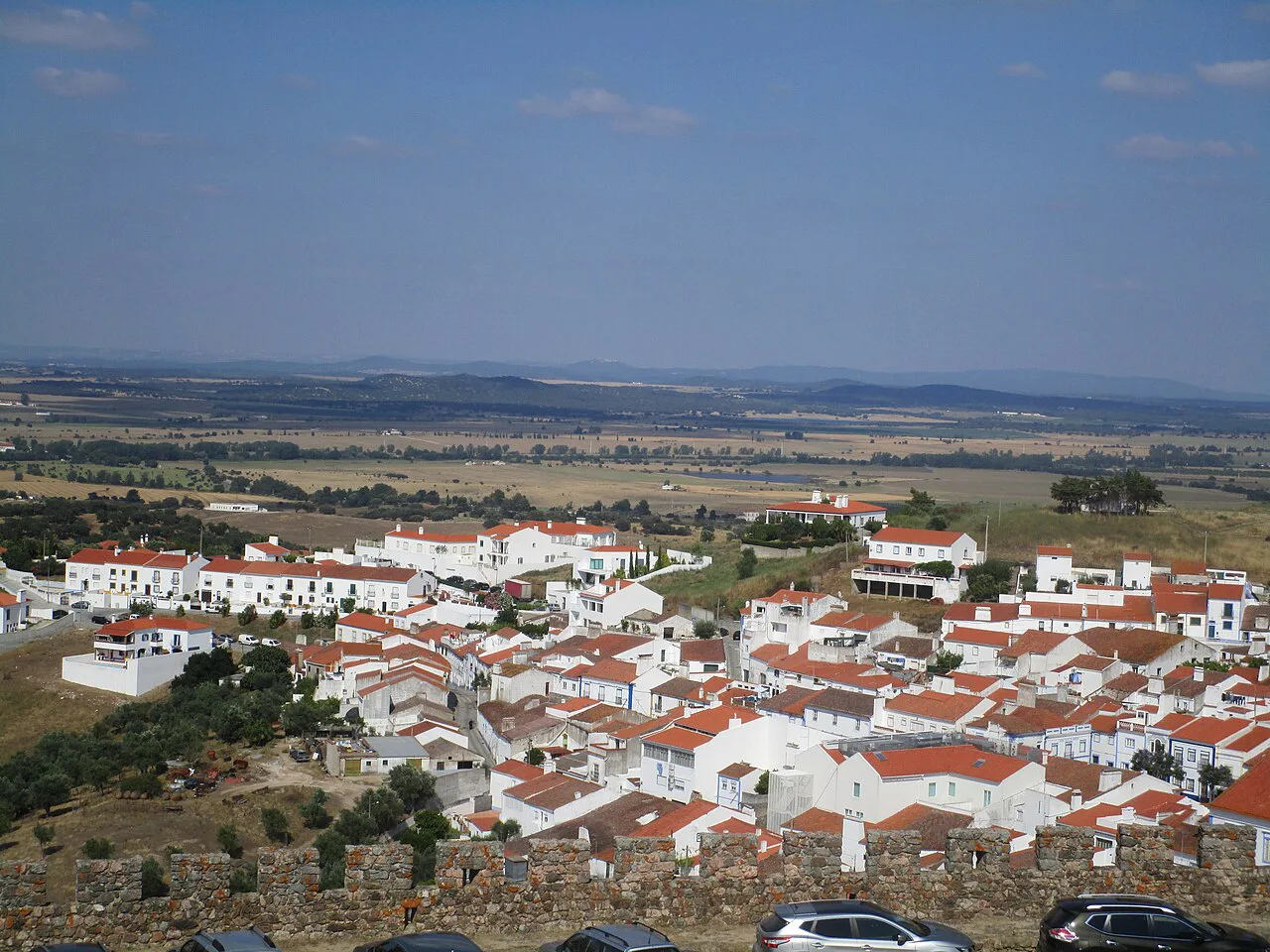
Think of Arraiolos in two layers. The castle stands above the town, and the streets below form a compact historic centre where you will find the main squares and the rug shops. The walk up to the castle is part of the visit; the walk back down brings you into the shop-lined streets.
In practice, start at the centre, walk up to the castle, then return through the shops. This works well because the shops are best browsed in the cooler part of the morning or late afternoon, and the castle walls are where you want to be when the light is good. Keep the centre as your base and the castle as the viewpoint.
The centre is small enough to walk in a loop without a map, but a town map helps if you want to find the church and the smaller squares without doubling back. Pick one up from the visitor information point or use the town's own interactive map before you arrive.
The castle: what you see on the walk up and around the walls
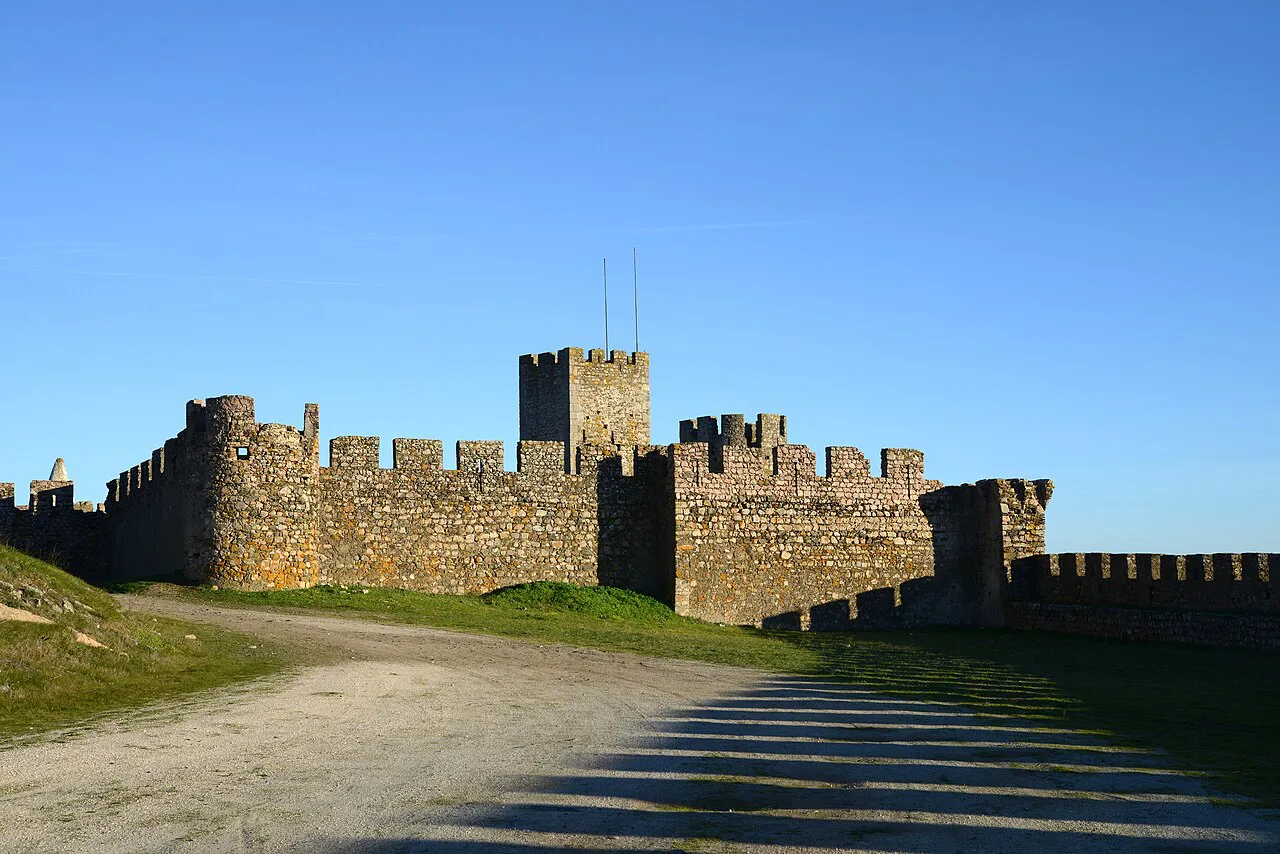
Arraiolos has its own castle, one of the sights the town is known for alongside its tapestries. The walk up takes you through the old streets to the walls, and the reward is the view over the town and the plain. It is a short visit, but a memorable one.
Walking around the walls gives you the clearest sense of the town's shape, with the centre on one side and open country on the other. The castle is a ruin rather than a furnished palace, so plan for a walk and a view rather than an interior tour. Check any current access arrangements when you arrive, since castle sites sometimes close for maintenance.
Combine the castle with the main squares below it. Allow around an hour for the climb, the walls and the walk back down, more if you stop for photographs. The climb is short but steep in places, so wear shoes with grip rather than smooth soles.
Arraiolos tapestries: how the rugs are made and what to look for in the shops
Arraiolos rugs are the craft the town is known for, made here over centuries and sold from workshops and shops around the centre. The technique is old, and it survives in the town because families and workshops have kept it going. A good Arraiolos rug shows clear edges and strong colours, and the town's own visitor site treats the tapestries as an art form with its own history.
When you look at rugs in the shops, pay attention to the workmanship: fine, even handwork across the surface suggests a proper piece, while loose or uneven work usually means a cheaper copy. Ask about the wool and how the colours are produced. The town's own visitor site treats the tapestries as an art form with its own history, which is a good starting point for judging what you see.
You will find rugs in several shops around the centre, from small pieces you can carry home to large room-sized rugs that need planning and shipping. Arraiolos is not the place for a quick souvenir: a good rug is a proper purchase, so allow time to compare and ask how each piece was made. It is worth writing down the shop and the maker so you can follow up later.
The historic centre on foot: squares, streets and the main church
The historic centre is a small cluster of whitewashed streets and squares. It is not a tick-box circuit: the pleasure is walking slowly, looking at the doorways and the tiles, and stopping at a café for coffee. One loop through the centre takes under an hour.
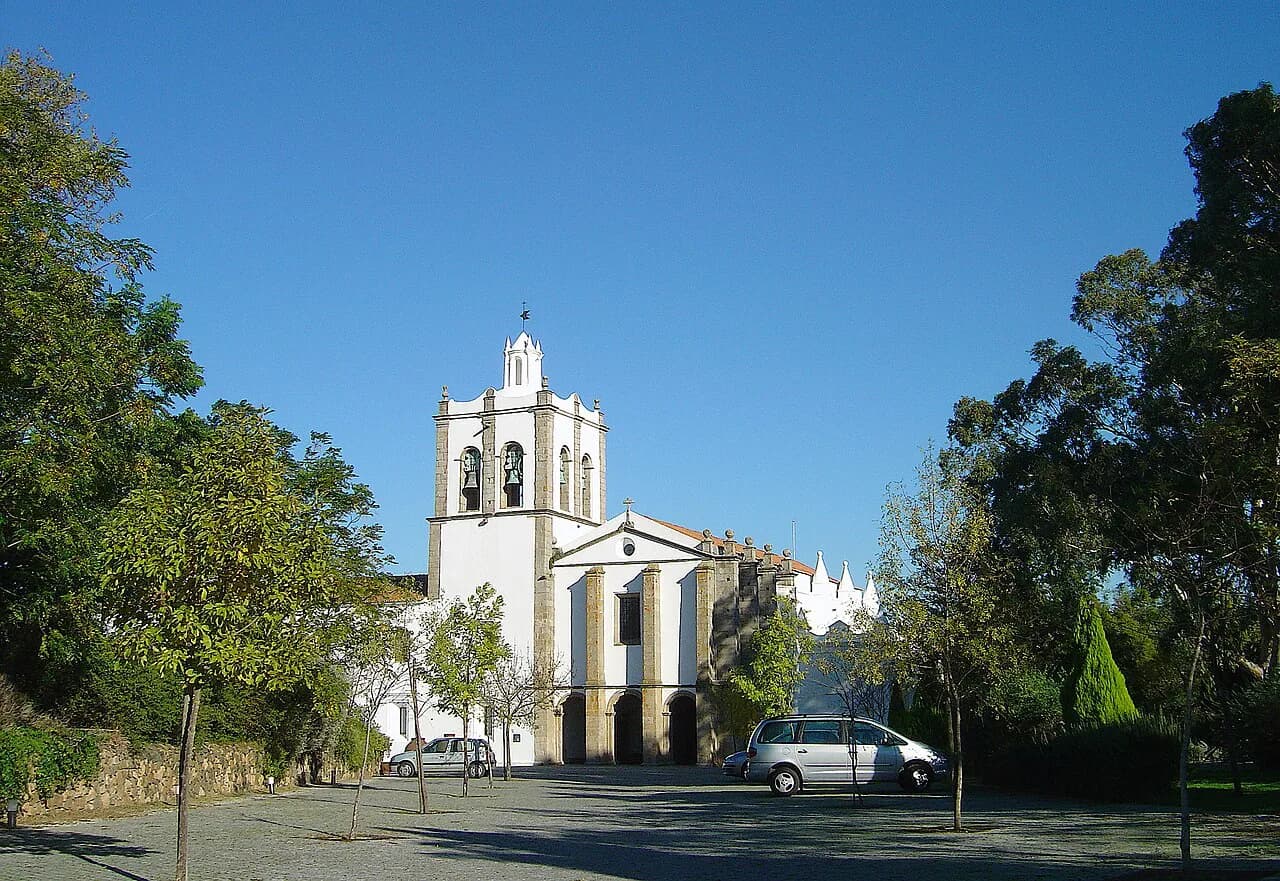
The main church is the natural stopping point on the walk between the shops and the castle. Church hours in Portugal are often limited and can close around midday, so time your visit for the morning if seeing the interior matters to you. If the doors are shut, the exterior and the surrounding square are still worth the detour.
Use the squares to pace the walk. The centre is flat enough for an easy stroll, with the climb to the castle as the only real effort. A morning here, followed by lunch, is a comfortable shape for the day.
Museums and monuments: what's open and what to leave for another visit
The town's visitor site lists museums and monuments as part of what Arraiolos offers, alongside the tapestries and the castle. It does not publish a single table of opening hours for everything, so the sensible approach is to check the town's site or ask at the visitor information point on arrival. Plan the castle and the centre walk first, then fit museums around them.
Portuguese museums and monuments often close on Mondays and some close on public holidays, though this varies by place. Since each site's own published information is the reliable source, confirm the day before you travel rather than assuming. That leaves Tuesday to Sunday as the safer window for a monument-focused visit.
If a museum is closed on the day you visit, the castle and the rug shops fill the time easily. That is the advantage of a small town: nothing depends on a single sight. Save any closed museum for a return trip and use the extra hour for a longer lunch instead.
Where to eat in Arraiolos and what Alentejo dishes to order
The visitor site for Arraiolos has an 'onde comer' section listing where to eat, alongside restaurants, snack bars and cafés in the town. Local food here follows the rural Alentejo pattern described by the town itself: hearty cooking tied to the plain. Look for a tasca or a small restaurant off the main square rather than the first place you see.
Order the Alentejo classics — hearty pork and bread dishes, and a shared plate of local cheese and presunto. The town's own site frames its gastronomy as rural cooking tied to the plain, which is exactly what you should expect. A long lunch is part of the visit, not a break from it.
Restaurant closing days vary, and many small places shut one day a week, so check the day you plan to eat rather than turning up and hoping. The visitor site's where-to-eat list is the first place to look. Book ahead if you are a group, and expect lunch to run late into the afternoon.
How many days Arraiolos needs: half a day, a full day or an overnight
Half a day is enough to see the castle, walk the centre and browse a few rug shops. A full day adds a proper lunch and time to compare tapestries carefully, which is worth it if you are considering a purchase. An overnight makes sense only if you want to see the town in evening light and continue into the wider Alentejo the next morning.
For most short-break travellers, Arraiolos works best as a half-day stop from Évora rather than a base. If you want more time in the Alentejo, the region has grander stops, and Arraiolos is a quiet counterpoint on The Best Towns in the Alentejo map. Plan the town as one piece of a route rather than a destination in itself.
The honest trade-off: if your trip is short and you have not yet seen Évora, give Évora the day and add Arraiolos only if you have a spare morning. If you have already done Évora, Arraiolos makes a satisfying change of pace. Do not stretch it into a weekend unless you plan to use it as a base for the surrounding plain.
Getting to Arraiolos from Évora and fitting it into an Alentejo itinerary
Arraiolos sits north of Évora in the Alentejo Central, close enough to be a natural half-day from the city. The town's visitor site has a how-to-get-here (como chegar) section covering the practical options. Use that for current route information and confirm transport times before you travel, since schedules change.
The easiest shape for an Évora-based short break is a morning in Arraiolos and an afternoon back in the city. If you are driving through the Alentejo, Arraiolos fits neatly between Évora and the towns to the north, including Estremoz and Vila Viçosa. That makes it a good first or last stop on a loop rather than a separate journey.
For an Alentejo route that balances grand sights with quiet ones, pair Arraiolos with the marble towns and with Beja to the south. Each offers something different: palaces and marble in one, a castle and a cathedral in another. Arraiolos earns its place as the craft stop between them.
Practical points: walking, heat and the midday lull
Arraiolos is a walking town. The centre is compact and the only real climb is up to the castle, so comfortable shoes matter more than fitness. The streets are cobbled in places, which is hard on thin soles and rolling luggage, so pack accordingly.
The Alentejo plain gets hot in summer, and the middle of the day is when people retreat indoors. Plan the castle climb for the morning and keep the early afternoon for lunch, shops and shade. That rhythm matches how the town itself moves, and it keeps you out of the worst of the sun.
Shops and museums may keep shorter hours and close around midday, so check opening times on the town's site before you set out. Carry water, wear a hat in summer and keep some cash for small purchases. The town is small, so a little planning goes a long way.
Is Arraiolos worth the detour from Évora?
Yes, if you have half a day to spare and you want something quieter than the marble towns. The circular castle, the small centre and the rug shops make a coherent visit, and the whole thing fits comfortably into a morning. Go for the tapestries first and the castle second, and the town will make sense.
If your trip is short and Évora is still unseen, do Évora first and treat Arraiolos as a bonus. If you are building a wider Alentejo route, add Arraiolos alongside Estremoz and Beja, and check opening times and transport on the town's site the day before. That is enough planning for a town this size.
Explore more Portugal guides
Sources
Notes for your next Portuguese break
Optional updates to our town guides.
You might also like



Continue reading
More guides you'll find useful





