Vila Viçosa: the Braganza Ducal Palace and Marble Town Guide
Plan a short break in Vila Viçosa, home of the Braganza Ducal Palace, a marble-built castle and a museum town centre within easy reach of Évora and Estremoz.
On this page
Vila Viçosa is worth one full day, built around the Paço Ducal, the country seat of the Dukes of Bragança and the palace that fills one side of the town's main square. Give it three to four hours, add the castle and one or two of the small museums nearby, and you have a compact Alentejo stop that pairs easily with Estremoz. This guide covers what to see inside the palace, how the centre is laid out, how long to allow and where the town sits among the best towns in the Alentejo.
What Vila Viçosa is and why the Braganzas' Paço Ducal puts it on the Alentejo map
Vila Viçosa is a small Alentejo town whose identity was fixed by the Bragança dynasty, Portugal's last ruling family. The second Duke of Bragança, Dom Fernando, chose it as his court's official residence in the 15th century, and the palace begun in 1501 became the family's preferred seat. That single building gives the town a weight well beyond its size.
The palace's history is unusually personal for a state monument. Catherine of Bragança, later wife of England's Charles II, was born here in 1638, and King Carlos spent his last night in the building before the journey to Lisbon that ended in his assassination in 1908. Inside the same walls in 1512 the fourth Duke, Jaime, killed his wife Leonor de Guzmán and her page. Treat these as history you will meet on the walls and in the rooms, not as legend.
The town is often described as a museum town, and the label holds: broad boulevards, esplanades shaded by orange and lemon trees, and marble quarried at Monte Claros close by. If you are weighing up where to spend a night in this part of the Alentejo, Vila Viçosa is a half-day or full-day stop rather than a multi-day base, and it slots neatly alongside Estremoz.
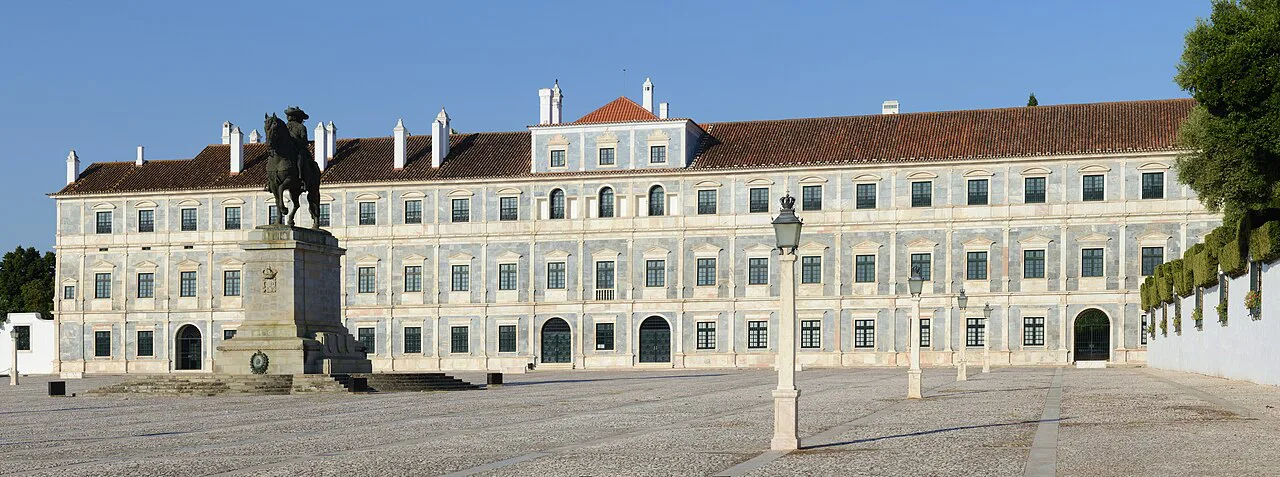
How the town is laid out: Terreiro do Paço, the palace frontage and the walkable centre
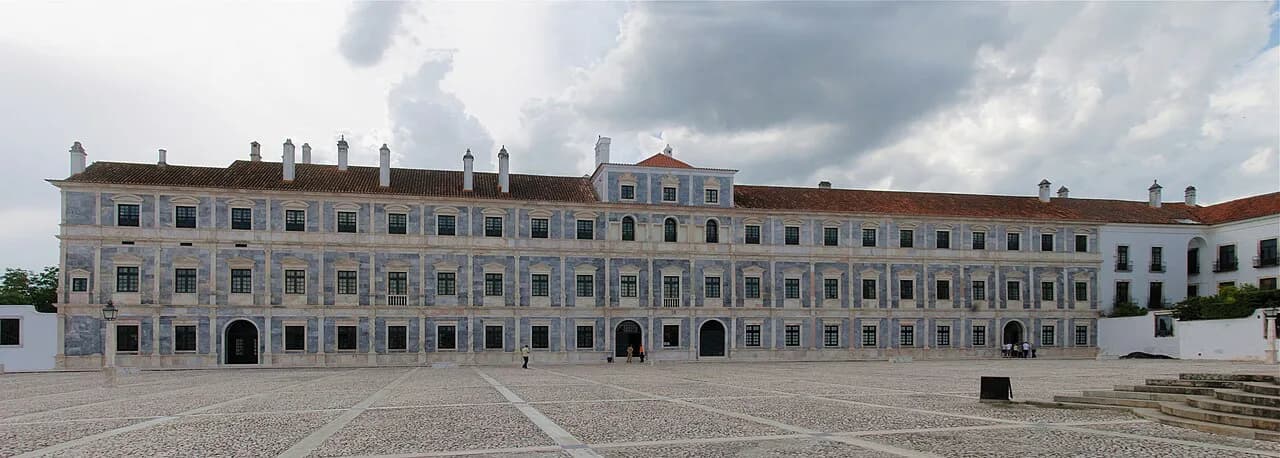
Orientation takes about ten minutes. The palace's cream-coloured façade, built with locally extracted Monte Claros marble, fills one entire side of the Terreiro do Paço, the town's main square, which is set around a bronze equestrian statue of King João IV. Start there, because everything else radiates from it.
The centre is compact and walkable, with the castle and the palace's museums grouped close to the square, so you can plan a circuit on foot and keep the car parked while you work through them.
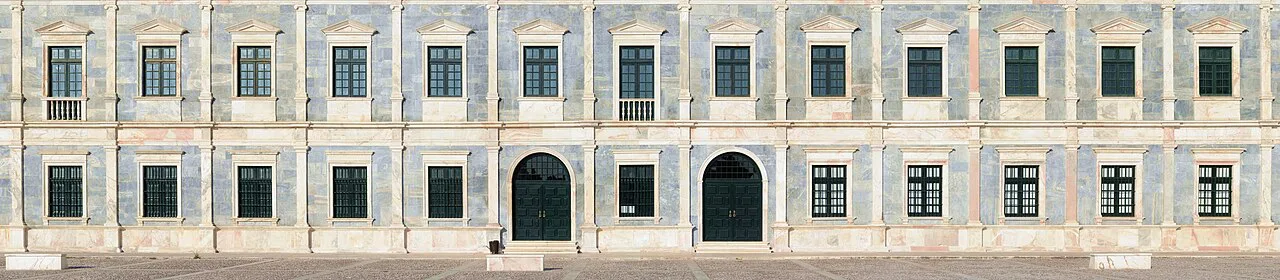
Paço Ducal de Vila Viçosa: what you see inside
The Paço Ducal is a labyrinth of draped, tiled and furnished royal quarters, and it once held more marble, azulejo tiles, tapestries and ironwork than any other noble building in the country. Look for the Aubusson carpets, Gobelin tapestries, Arraiolos rugs and crystal chandeliers, plus 17th-century tiled wall panels and inlaid marble tables. It is decorative overload in the best sense, so pace yourself rather than trying to absorb every room.
Do not rush the main staircase. Its wall paintings depict the 15th-century battle of Ceuta and the subsequent Siege of Azamor, and they are the palace's strongest single set piece for anyone interested in art. On the ground floor the extensive kitchens, hung with copper pans and vintage culinary utensils, give a useful contrast to the state rooms above.
The apartments of Queen Amélia and King Carlos are another highlight; Carlos was himself a talented painter and draughtsman, which adds a layer to the rooms he used. The palace publishes its own opening days, ticket prices and any room closures, so confirm those before you travel and build the rest of the day around the slot you book.
Vila Viçosa Castle and its archaeology collection
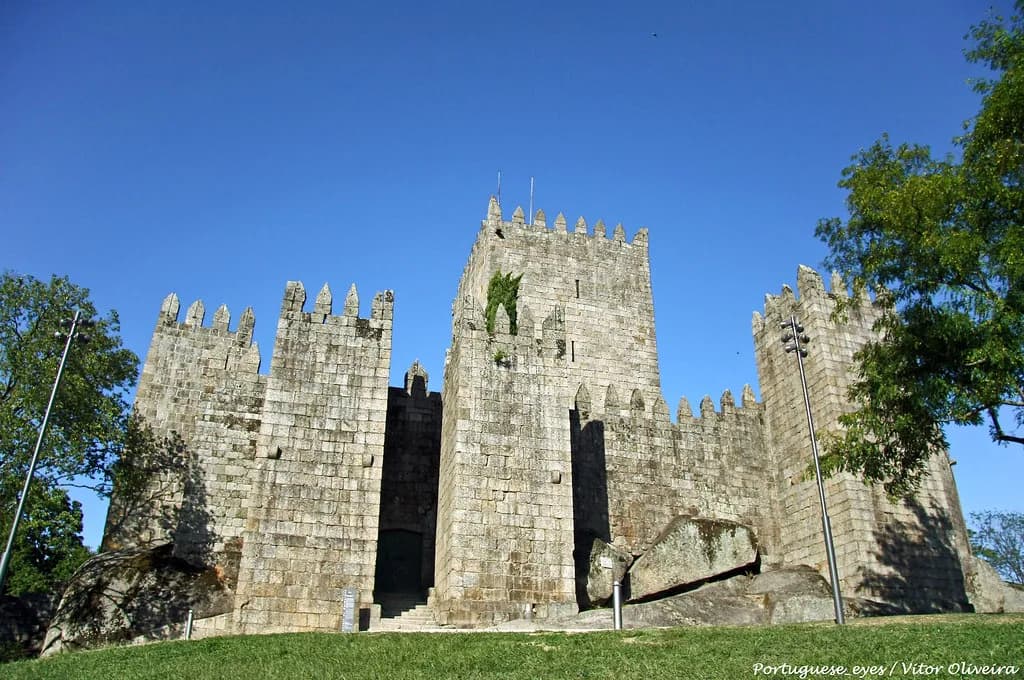
Vila Viçosa Castle is well worth an hour, mainly for the archaeology museum on site. It holds an abundance of Roman artefacts found in the local area and a substantial part of the personal collection of King Luís, which gives the visit more substance than the walls alone. Walk the battlements first, then go down into the collection.
Check the castle's opening days before you commit a day to it, since small municipal museums in the Alentejo often keep shorter hours than the headline palace. Pair the castle with the palace in the morning and leave the afternoon open for the museums below.
The Coach Museum, Marble Museum and Igreja dos Agostinhos
The palace's immediate surroundings hold three more sights worth grouping into one compact circuit. The Coach Museum, which incorporates the Royal Stables, sits close by, the Marble Museum lies on the main road towards Borba, and the Igreja dos Agostinhos is filled with the 17th-century Bragança tombs. All three are short visits that add up to a solid afternoon.
If marble is your reason for coming, the Marble Museum is the one to prioritise, and it explains the stone used across the town. The church is the quieter stop and the most rewarding for anyone interested in the dynasty itself.
The Convento das Chagas de Cristo: the under-visited second stop
The Convent of the Wounds of Christ, the Convento das Chagas de Cristo, was founded in 1514 and holds historic rooms and art collections that most day visitors skip. It makes a good counterweight to the palace: quieter, less restored and with a stronger sense of the town's religious life. Allow around an hour.
Because it sits outside the main palace circuit, it is the sight most likely to be dropped when time runs short. If you have a full day rather than half, keep it in. The convent's own visitor information is the place to confirm access before you walk over.
How many days Vila Viçosa needs
One day is the honest answer. A morning at the palace, lunch, then the castle plus one museum fills a comfortable day, and adding the convent stretches it without padding. Two nights is only worth it if you want a slow base for the surrounding towns.
Split a single day like this: book the palace for the morning when you are freshest, eat in the centre, then choose between the castle and the Coach Museum depending on your interest in archaeology or carriages. The Marble Museum and the Agostinhos church are short enough to slot in at either end. Keep the convent as the flex item.
Getting there and using Vila Viçosa as a base
Vila Viçosa works best as a stop on an Alentejo loop rather than a standalone destination reached from far away. The town sits within easy reach of other interesting places in the region, chief among them the historical town of Estremoz, Borba, the ancient hilltop village of Monsaraz and the Alqueva reservoir, Europe's largest. Driving between them is the practical way to do it.
Évora is the larger city most travellers pair with this corner of the Alentejo, and it makes a natural overnight base if you prefer one hotel for several nights. If you are comparing towns across the region, Estremoz has its own historic centre and rewards a separate stop. Farther afield, Serpa and Beja sit deeper in the Alentejo and suit a longer trip.
Where to eat in a small Alentejo town
Restaurant opening in a town this size follows local rhythms rather than visitor demand, so plan lunch as your main meal and treat dinner as something to confirm on the day. Look for the tascas and pastelarias around the Terreiro do Paço and the main boulevards, where the town's everyday life happens. Expect Alentejo cooking rather than a menu built for tourists.
The town is also the gateway to Borba, long known for its wines, so a glass with lunch is the local move if you are not driving afterwards. Menus and prices change, so read them at the door rather than relying on anything written in advance. If you are continuing to Arraiolos, its tapetes, the famous Arraiolos rugs, are a good reason to add a stop.
Is Vila Viçosa worth the detour?
Yes, if you give it a day and treat the Paço Ducal as the anchor rather than an afterthought. The palace, the castle and the small museums sit within a short walk of each other, which makes Vila Viçosa one of the most efficient stops in the Alentejo. The trade-off is scale: this is a small town, and anyone expecting a full weekend of sights will run out of them.
Book the palace slot first, then build the castle and one museum around it, and keep the convent for the return visit. That is the plan that fits the town.
Frequently Asked Questions
How far is Vila Viçosa from Évora?
Évora is the larger city most visitors pair with this part of the Alentejo, and it makes a natural overnight base. Check current driving distances and routes with a mapping service before you set out.
Can you visit Vila Viçosa as a day trip?
Yes. A morning at the Paço Ducal, lunch in the centre and an afternoon at the castle or one of the small museums makes a full day, and the convent can be added if you have time.
What is the Ducal Palace of Vila Viçosa known for?
It was the country seat of the Dukes of Bragança and holds Gobelin tapestries, azulejo panels, Arraiolos rugs and wall paintings of the battle of Ceuta on its main staircase. Catherine of Bragança was born there in 1638.
Sources
Notes for your next Portuguese break
Optional updates to our town guides.
You might also like
Continue reading
More guides you'll find useful