
Serpa, Portugal: What to See in the Walled Alentejo Town
Plan a short break in Serpa, Portugal: the walled old town, Porta de Beja gate, castle, aqueduct, clock museum and the creamy Serra cheese sold around town.
On this page
Serpa suits a one- to two-day stop: a small walled hilltop town in the south-eastern Alentejo, close to the Spanish border, with a castle, an aqueduct and a cheese that carries its name. Its white houses huddle around an old castle, and the traditional way in is still through the fortified Porta de Beja gate, which leads into the narrow cobbled streets.
This guide covers how the town is laid out, the sights inside the walls, what the Serra-type cheese actually is, and how to decide between a single day and an overnight stay before moving on to Beja or Mértola. It treats the walls, aqueduct and palace as one piece of townscape rather than three separate stops, so you can read the shape of Serpa before you walk it. It sits within the wider picture of the best towns in the Alentejo, where Serpa is one of the quieter picks.
What Serpa is and why it suits a one- to two-day stop
Serpa is a peaceful agricultural hilltop town in the south-eastern corner of the Alentejo, about 30 km from the Spanish border, which makes it a sensible base for exploring the lower eastern side of Portugal and neighbouring parts of south-western Spain.
The town was founded, according to the local account, by the Turduli in 400 BC, was known to the Romans by the same name, was taken by Geraldo Sem-Pavor in 1166, lost again to the Moors and finally regained in 1232. Treat those dates as the town's own story rather than verified record, but they explain why the centre feels layered: medieval walls, a Moorish-origin castle rebuilt in the late 13th century, and churches added over the following centuries.
What it is not is a museum town. It is small, lived-in and agricultural, which is exactly why a day or two is enough: the sights sit close together, the streets are short, and the pleasure is in the walk between them rather than in ticking off a long list.
How Serpa is laid out: the walled centre, the Porta de Beja gate and the cobbled streets
Arrive at the Porta de Beja and the town makes sense immediately: the gate leads through the ramparts into narrow, cobbled streets that climb gently towards the castle. The town is walled and medieval in parts, so the old centre reads as a single enclosed circuit rather than a grid, and it is easy to walk the whole of it in an afternoon.
Use the gate as your mental anchor. Most of what you will want to see — the castle, the convent church, the Clock Museum and the aqueduct — sits within or just against the old walls, so you can leave the car outside and cover the centre on foot without planning a route.
Beyond the walls, the town spreads into ordinary streets that are not aimed at visitors. That is not a problem so much as a hint: plan your time inside the circuit and treat the outskirts as somewhere to buy the cheese rather than as sightseeing.
The castle: Moorish origins, King Dinis's rebuild and the archaeology museum inside the walls
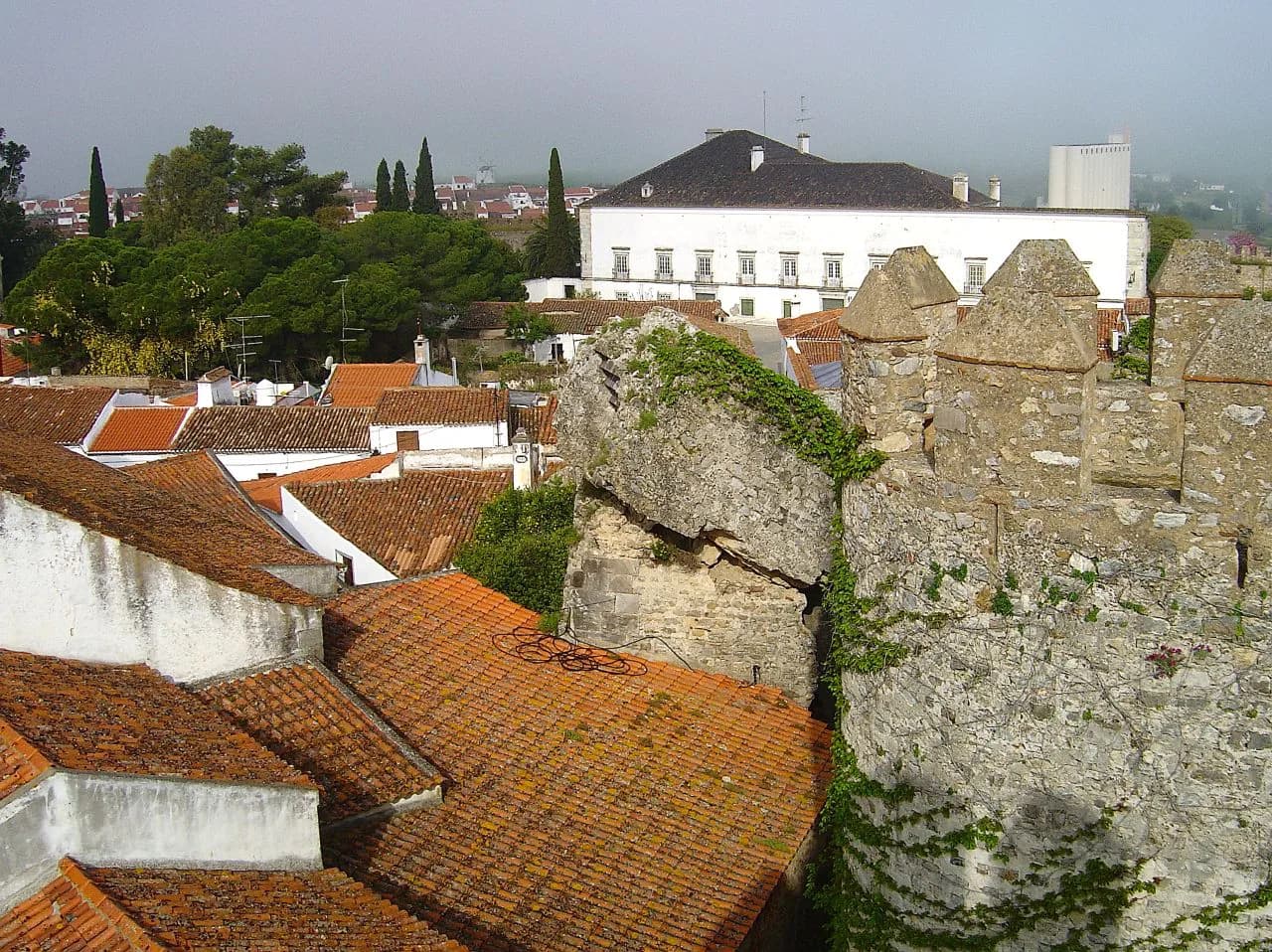
Serpa's castle is of Moorish origin and was rebuilt by King Dinis in the late 13th century, though it was badly damaged during the Spanish invasion in 1707. What you see now is therefore a rebuilt and partly ruined shell rather than an intact medieval fortress, which is worth knowing before you climb up expecting towers and battlements.
Inside the castle walls sits an archaeological museum holding Palaeolithic, Neolithic, Roman and Moorish artefacts, which is the most rewarding way to spend time in the castle precinct. If you only have a day, this and the town walls together give you a clearer picture of the place than the castle masonry alone.
The castle also gives you the town's best viewpoint over white roofs and the plains beyond, so time your visit for a clear hour rather than squeezing it in at the end of the day. The castle is one of several strong reasons to build a short Alentejo itinerary around towns like this rather than a single base; for comparison, Estremoz pairs its own castle with a marble town centre.
The aqueduct and the palace of the Counts of Ficalho built into the town walls
The palace of the Counts of Ficalho is built into the town walls, and it draws its water from a tall, slender aqueduct that in part runs along the top of those walls. That combination is the most distinctive piece of townscape in Serpa: a palace, a wall and a water channel sharing the same structure.
The aqueduct dates from Roman times according to the local account, though how much of the present structure is Roman and how much later rebuilding is not stated. Walk it as part of the wall circuit rather than as a separate monument: the pleasure is in seeing how the town solved its water problem with the line of its defences.
If you have any interest in engineering, this is the sight to prioritise after the castle precinct, and it costs nothing to look at from the street and the walls.
Santo António convent church and its 18th-century azulejo panels
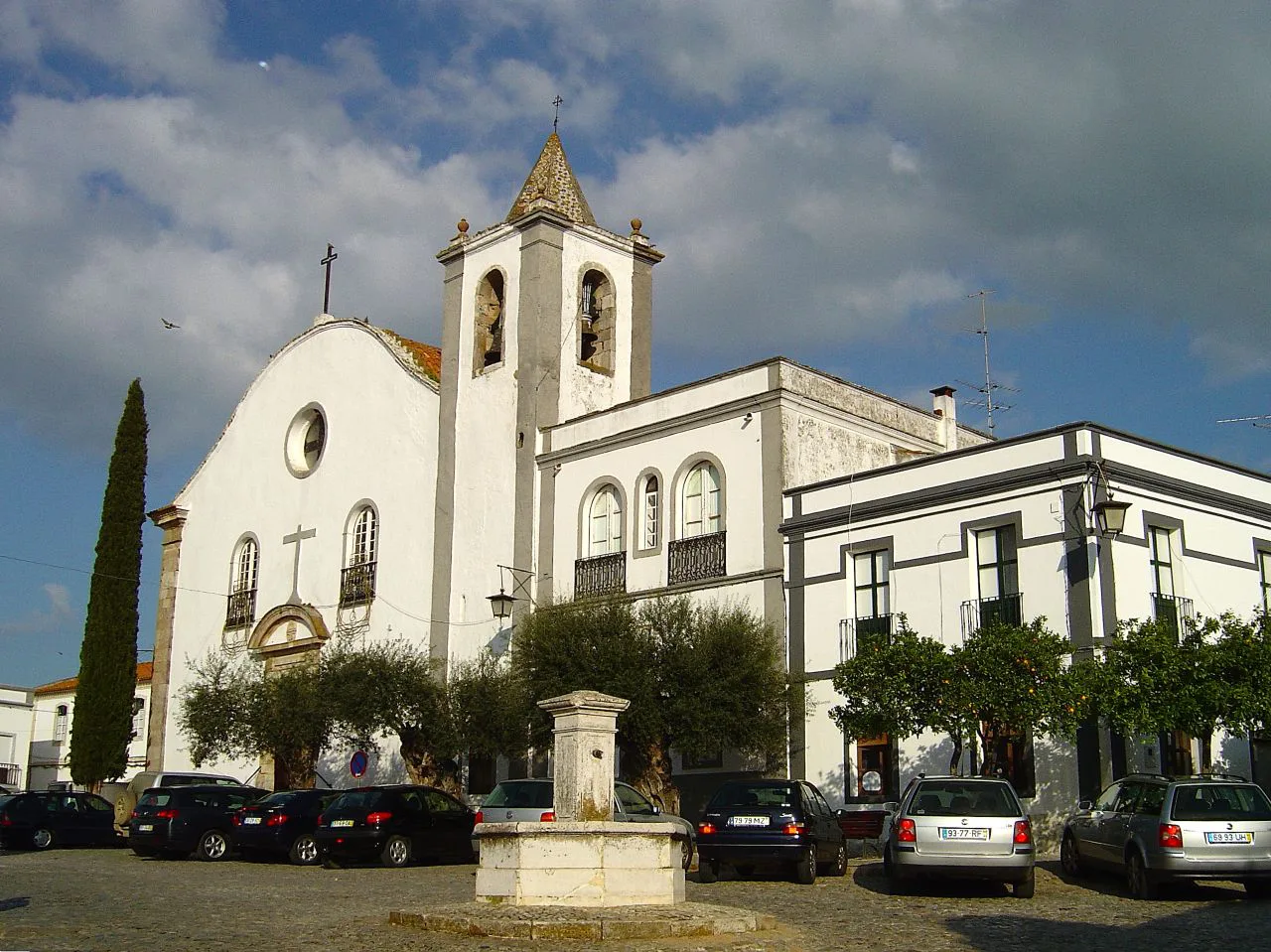
The convent church of Santo António was originally built in 1463 and is worth seeing for its small cloister and flamboyant 18th-century azulejo glazed-tile panels depicting the life of St Francis. The panels are the main draw: if you have already seen Coimbra or Lisbon tilework, these are a quieter, rural version of the same tradition.
It takes minutes to see the cloister and panels once you are inside, so slot it between the castle and the Clock Museum rather than making it a separate trip. Check locally on the day you plan to visit, since the published account gives no opening hours for Serpa's churches.
The Museum do Relógio (Clock Museum) in the Mosteirinho convent
Housed in the former convent of Mosteirinho, a 16th-century Manueline building, the Museum do Relógio (Clock Museum) has around 2,000 timepieces spread across ten rooms. Move the decimal point as you read that figure: this is one of the largest clock collections you will stumble on in a town of this size, and it is the surprise of Serpa.
Set aside more time for it than you expect, not less. The building itself, a Manueline convent, is half the point, and working through ten rooms at any speed takes the better part of an hour.
Serpa's Serra-type ewe's milk cheese: what it is and where it is sold
Serpa's cheese is made with ewe's milk curdled with thistle extract, which gives a lusciously buttery result. It is the town's defining product, sold in small establishments all over town, and buying a piece is the one thing worth doing even if you skip the museums.
If you are in the area in February, the Feira do Queijo do Alentejo draws local cheeses of every shape and smell into one festive market. Treat that as a reason to check dates locally rather than as a fixed date in your diary.
For an everyday lunch, keep an eye out for the traditional pastelaria and tasca as you walk; the town is small enough that you will pass several. Serpa also sits within an open, fertile plain where olive groves and cork country define the landscape around it.
How many days Serpa needs, and pairing it with Beja or Mértola
One day covers the walled centre comfortably: Porta de Beja, the castle and archaeology museum, the aqueduct and walls, Santo António, the Clock Museum and a cheese shop. Two days lets you slow down, add a long lunch and treat Serpa as a base for the surrounding area rather than a quick stop.
Beja, to the west, boasts a magnificent 15th-century convent and an ancient castle, and was once a busy Roman capital under the name Pax Julia. Mértola, to the south, is a pretty whitewashed town famed for its imposing hilltop castle and unique Moorish-style church.
Those two make the natural pairing with Serpa: Beja for a fuller day of monuments, Mértola for an atmospheric half-day. If your wider aim is comparing the region's historic towns, read about Vila Viçosa and its Paço Ducal before deciding which to include.
Getting your bearings on foot: what is close together and what is not
Inside the walls everything is a few minutes apart: the gate, the castle precinct, the convent church and the Clock Museum sit within a compact circuit of cobbled streets. The whole of the centre can be seen in a couple of hours without hurrying.
What is not close is the wider region: Beja, Mértola and the Spanish border all lie beyond the town and need a car or a bus to reach, so plan those as separate outings rather than assuming you can walk between them.
Alqueva Lake, Europe's largest reservoir, lies less than 50 km due north and can be a wider stop for boating or kayaking rather than a walking destination.
Practical trade-offs: what to skip if you only have a day
With one day, prioritise the gate and walls, the castle and its archaeology museum, and the cheese shops, then add the Clock Museum if the weather turns or your interest in timepieces is genuine. Leave out the aqueduct and the wider region: you will pass the walls and water channel anyway as you walk, and the surrounding towns deserve their own day.
Skip a second church or a second museum rather than rushing: Serpa is not a tick-list town, and most of its pleasure comes from the slow circuit through white streets between the gate and the castle.
If your one day falls on a Monday, check opening before you set out; many Portuguese monuments and museums elsewhere in the Alentejo close on that day, so it is worth confirming locally rather than assuming Serpa runs to the same pattern.
The Alentejo plains around Serpa: olive groves and Alqueva Lake as a wider stop
The land around Serpa is rustic and picturesque, with olive groves that many consider date from the time of the Moors and a long stretch of open plain between the town and the lake. That is why many choose to drive, since it lets you take in the landscape on the way to somewhere else.
Alqueva Lake covers around 250 square kilometres and irrigates Portugal's most arid region, which had suffered from persistent droughts. It is a first-class watersports destination, but it is not a reason to come to Serpa unless you are already making a wider tour of the lower Alentejo.
Pair Serpa with Mértola and the Alentejo Central's whitewashed towns to see how differently the region builds: same materials, very different histories.
Serpa in a day, or Serpa as a base?
Choose Serpa as a base if you want a quiet, walled town within easy reach of Beja, Mértola and the Spanish border, and plan for two days to allow a long lunch and a run out to the lake. Choose it as a single day if the castle precinct, the aqueduct and the Clock Museum are the whole of your ambition.
Either way, walk in through the Porta de Beja, buy the thistle-curdled cheese, and treat the walls, the aqueduct and the palace as one continuous piece of townscape rather than a checklist.
Explore more Portugal guides
Frequently Asked Questions
Is Serpa worth visiting?
Yes, if you want a small, walled Alentejo town with a castle, an aqueduct running along the walls, a surprising clock museum and a distinctive ewe's-milk cheese. It is best as a one- or two-day stop, not a destination in itself.
Where can I see the Counts of Ficalho palace and the aqueduct?
Both sit on Serpa's town walls. The palace is built into the walls, and the tall aqueduct that supplies it partly runs along the top of them, so the easiest way to see both is to walk the wall circuit.
Sources
Notes for your next Portuguese break
Optional updates to our town guides.
You might also like



Continue reading
More guides you'll find useful





