Faro vs Tavira: Which Algarve Base Suits a Short Break?
Faro and Tavira compared as Algarve bases for a short break: old towns, sights, atmosphere, transport and which one suits your one to four day trip.
On this page
Choose Faro if you want the easiest base without a car and a working city around your short break; choose Tavira if you want a smaller, slower river town where the sights sit close together. Faro gives you a walled old town, a cathedral and the Ria Formosa lagoon on the doorstep, while Tavira trades that convenience for a quieter old quarter split by the Gilão. This comparison sets out how each town is laid out, what you can actually see, and how many days each one deserves.
Which should you pick? A direct answer on Faro vs Tavira
Pick Faro for a first short break if you are arriving by plane or train and want to walk everywhere, because the old town, marina and waterfront sit within a compact centre. Pick Tavira if your priority is a gentler pace, an old town with a castle and churches, and a riverfront that stays calm outside high summer. Neither is a beach resort, and both work as bases for exploring the eastern Algarve rather than as destinations in themselves.
The trade-off is scale. Faro is a provincial capital with the bustle and services that implies, including the airport on its edge and a railway station on the town side. Tavira is smaller and more self-contained, which makes it restful but also means fewer of the city conveniences you get in Faro. If you plan to move around the coast by train, Faro is the natural hub.
How the two are laid out: a walled centre versus a river town
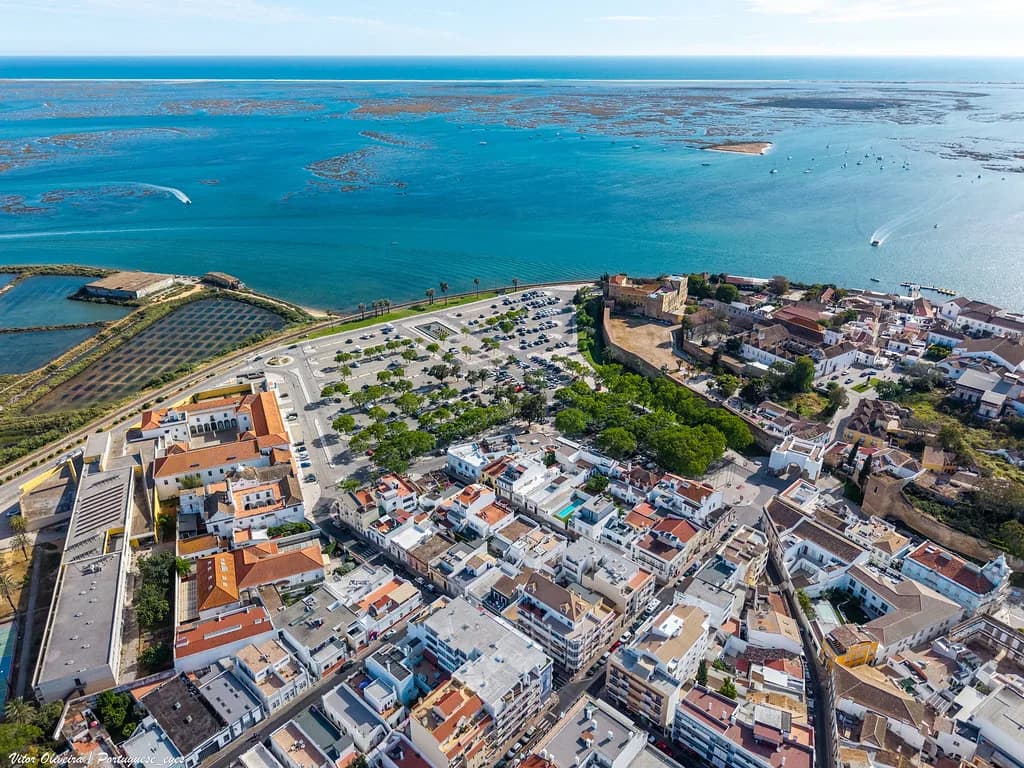
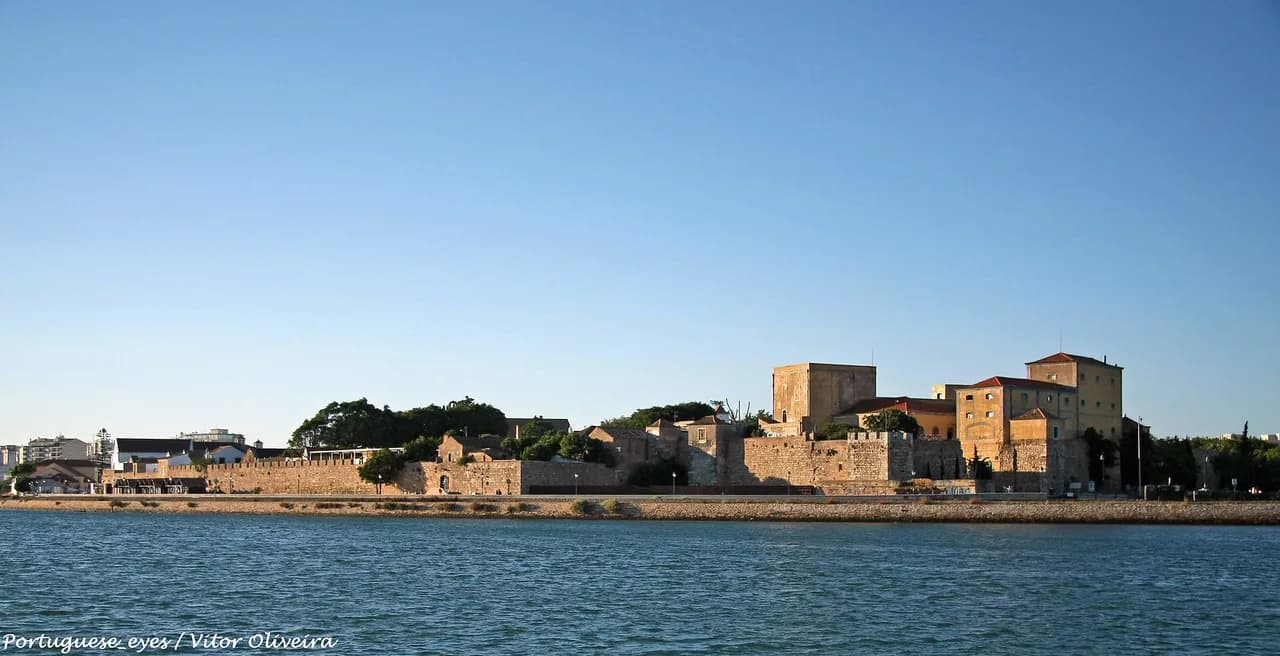
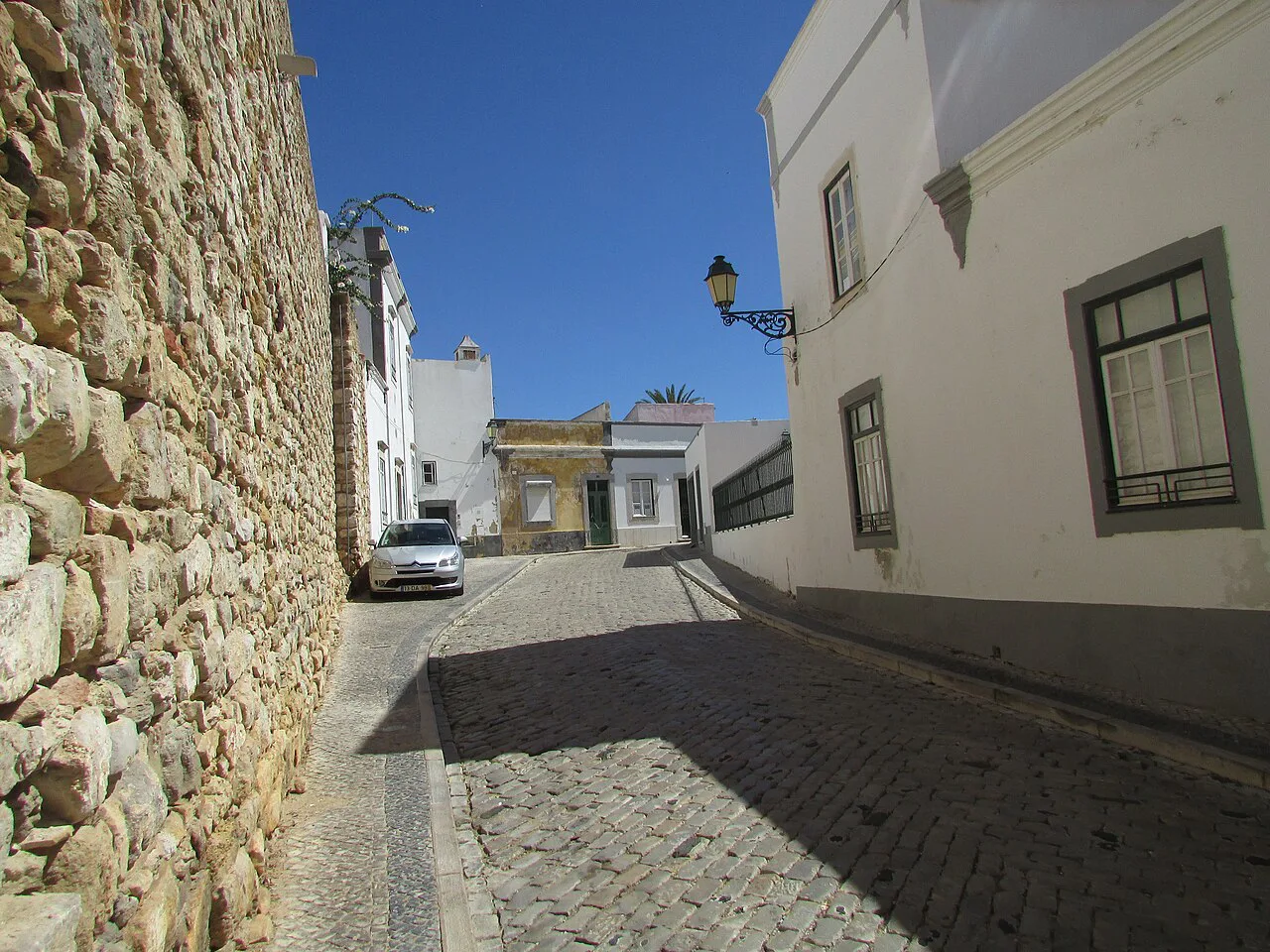
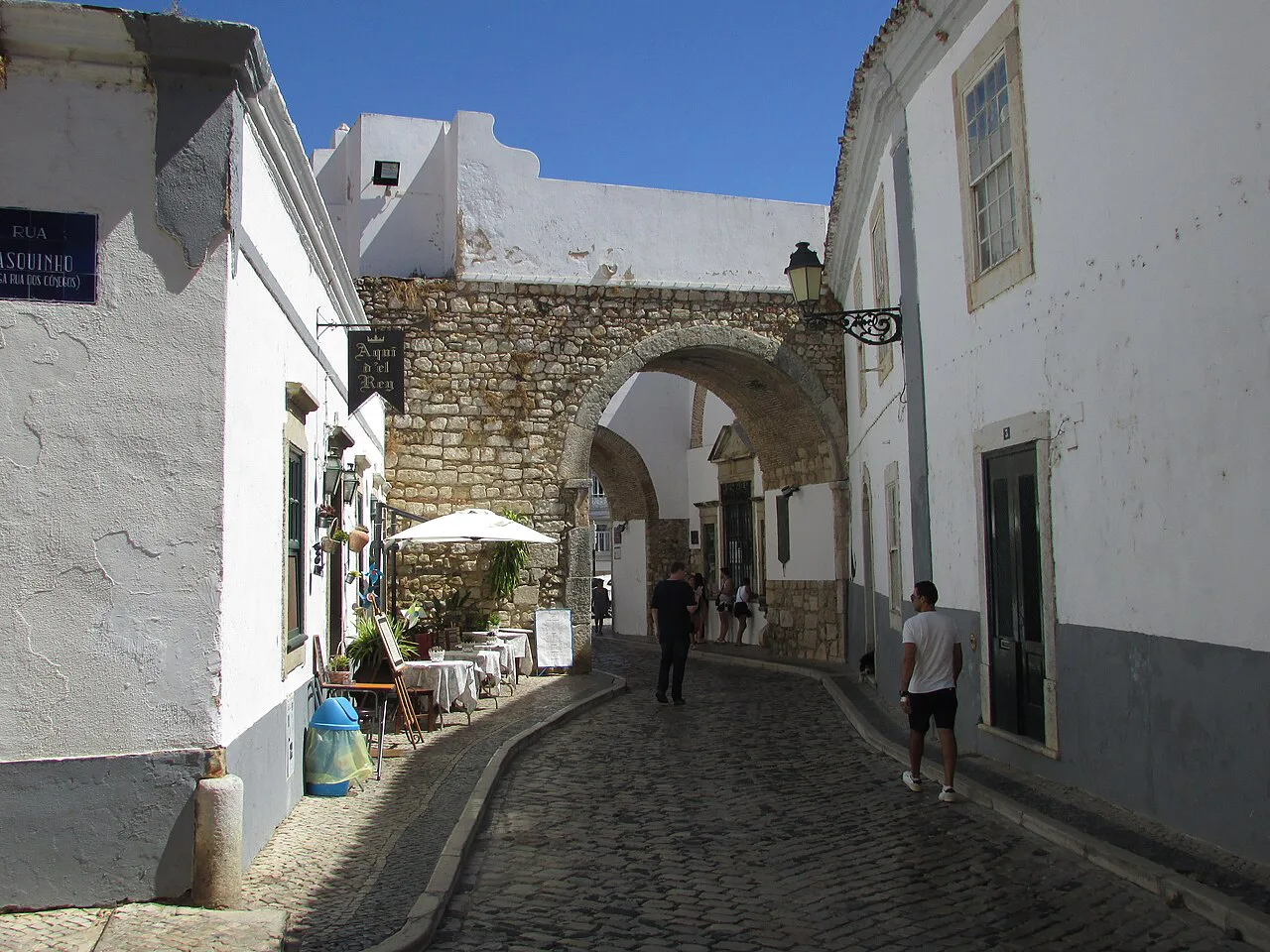
Faro's historic core is the Cidade Velha, a walled quarter you enter through the Arco da Vila and walk in a few minutes, with the Sé and its square at the centre and the marina and Ria Formosa beyond the walls. Everything a short-break visitor needs is on foot, which is why Faro suits a one or two night stop without a car.
Tavira is arranged along the Gilão, the river that divides the old town, with the seven-arch Roman bridge linking the two banks. The medieval castle and the main churches are in the old town, and the riverside promenades below are lined with pavement cafés and restaurants. That compact layout means most of Tavira's sights are a short walk from each other, though you cross the river more often than you would in Faro.
What there is to see in Faro in a day
Faro's core sights fit comfortably into a day: the Cidade Velha with the Sé de Faro, the marina and the waterfront facing the Ria Formosa. The old town is small enough that you can wander it in an afternoon, stopping for coffee in the squares and walking the walls rather than treating it as a checklist.
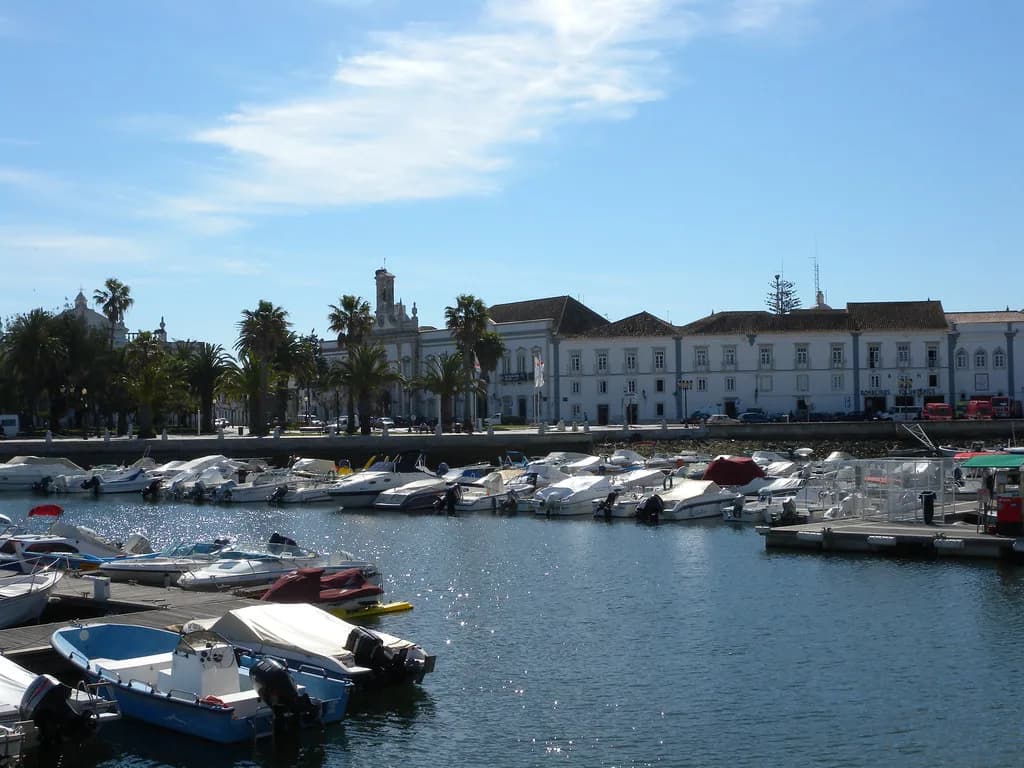
Beyond the walls, the harbour area is where boats leave for the lagoon islands and where you get the open view across the water. If you are weighing whether Faro fills a short break, the answer is yes for a day or two of old-town walking and lagoon time, but it is not a town that needs three full days of sightseeing. The Faro Itinerary explains how to pace it.
What there is to see in Tavira: castle, churches and the Roman bridge
Tavira's strongest single sight is the medieval castle, which sits above the old town near the river. Its churches are the other draw: the Igreja de Santa Maria do Castelo and the Igreja da Misericórdia are among the most elaborate, and the town counts 21 churches in all, as a Guardian feature on Tavira notes. The same feature reports that both of these stand on sites of former mosques from the Moorish period and that the town has an archaeological dig with Phoenician relics from the eighth century BC.
The seven-arch Roman bridge over the Gilão is the natural place to end an afternoon, with the old town's church towers and terracotta roofs behind you, and at dusk it draws a crowd of locals and off-season travellers. In the evening, the riverside promenades on both banks fill with people, which makes the bridge the obvious vantage point before dinner.
Atmosphere and scale: provincial capital versus river town
Faro feels like a place where people work and live, with a university, a busy centre and a mix of Portuguese daily life and visitor services. That makes it less quaint than the postcard Algarve but more useful as a base: you get proper shops, a year-round population and an evening scene that is not purely seasonal.
Tavira is slower and more obviously pretty, with its river, bridge and jumble of church towers, which is exactly why it appeals if you want to unwind rather than tick off sights. The nearby fishing village of Santa Luzia is known as the 'octopus capital of Portugal', and seafood from this coast is a large part of Tavira's appeal.
Ria Formosa both ways: lagoon trips from Tavira and the Faro waterfront
The Ria Formosa lagoon runs along this stretch of coast, and both towns give you access to it, which is easy to forget when comparing them. From Tavira you can take a boat out into the lagoon and reach the barrier islands and their beaches, with spots like Terra Estreita at the quieter end; from Faro, the waterfront and marina are where lagoon trips begin, and the islands lie just across the water.
Tavira also has the Ilha de Tavira and Praia do Barril among its island beaches, reached by ferry or by a short tourist train across the dunes, and the lagoon around it is good birding country. Choosing between the two on this point comes down to time: from Faro the lagoon is a waterfront stroll and a short boat hop, while Tavira's islands ask for more of a half day.
Getting there and around: which base is easier without a car
Faro wins this one clearly: the airport sits on the edge of the city and the railway station puts you on the line that runs along the Algarve coast, so you can arrive and walk into the centre without a car. The trade-off is that you still need a train, bus or boat to reach the beaches and the lagoon islands.
Tavira is reachable by train on the same coastal line, but it sits further east and is a longer ride from Faro Airport, so it suits a break where you are happy to settle in one place rather than commute. If you are coming from Lisbon, you change or continue along the Algarve line to reach Tavira. Neither town needs a car for its own centre, though a car helps for country excursions inland.
Where Faro wins and where Tavira wins, in plain trade-offs
Faro wins on convenience, transport, year-round life and lagoon access from the town waterfront. Tavira wins on atmosphere, a compact and pretty old town, and a castle-and-churches core that feels more like a small historic town than a provincial capital. If you have one day and no car, Faro is the low-risk choice; if you have two or three days and want to slow down, Tavira rewards the extra time.
Neither is a beach base in the way that some Algarve resorts are, and if you want long days on the sand, Faro's islands are a short hop from the marina while Tavira's island beaches are a boat or tourist train away. The main honest caveat is that both towns are better as bases for the eastern Algarve than as a complete holiday in themselves.
How many days each place needs, and how to split a longer break
Faro needs one full day for the Cidade Velha, the Sé and the waterfront, and a second day if you want a lagoon trip or a slower pace; it does not justify three days of sightseeing. A Faro city break of two nights is the sensible default, with the option of adding a day trip along the coast.
Tavira needs two days for the castle, the churches and the bridge, and a third if you want a boat into the lagoon and time on one of the islands. On a three or four day break you can split the stay: base yourself in Faro first for the transport and the old town, then move east to Tavira for the slower half. That combination uses the coastal train rather than a car.
Who should choose Faro and who should choose Tavira
Choose Faro if you are arriving by plane or train, want to walk out of your accommodation into an old town and a waterfront, and prefer a working city to a holiday-town atmosphere. It is also the better base if you plan to move along the Algarve coast by train or want the convenience of a short transfer from the airport.
Choose Tavira if you want a quieter base with a castle, churches and a river, are happy to settle in one town for two or three days, and do not mind a longer transfer from Faro. If you are torn, weigh the cost question for Faro and browse the attractions guides before booking, then decide on the basis of how much time you have.
Which base should you book?
Book Faro if your break is short, you are arriving without a car, and you want the old town, the Sé and the lagoon within a walk of each other. Book Tavira if you have two or three days and value a slower river town with a castle and churches over transport convenience. On a longer break, split the stay between the two, using the coastal railway to move east.
Explore more Faro guides
Frequently Asked Questions
Can I visit both Faro and Tavira on a short break?
Yes, if you have three or four days. Both sit on the coastal railway, so you can base yourself in Faro first and then move east to Tavira without a car. Give Faro one or two nights and Tavira two, and you cover both old towns at an unhurried pace.
Sources
Notes for your next Portuguese break
Optional updates to our town guides.
You might also like

Continue reading
More guides you'll find useful