A Faro City Break: Two Days in the Algarve Capital
Plan a Faro city break with a two-day route through the Cidade Velha, Arco da Vila and Ria Formosa, plus museum opening days.
On this page
Two days is the right length for a Faro city break. You get one morning and afternoon inside the walled old town, one day out on the Ria Formosa, and enough slack to eat properly without racing through the Algarve capital as if it were a resort. This plan covers the Cidade Velha, the Arco da Vila, the Ria Formosa and Estoi, then sets out opening days and tickets so you do not lose a morning to a closed door.
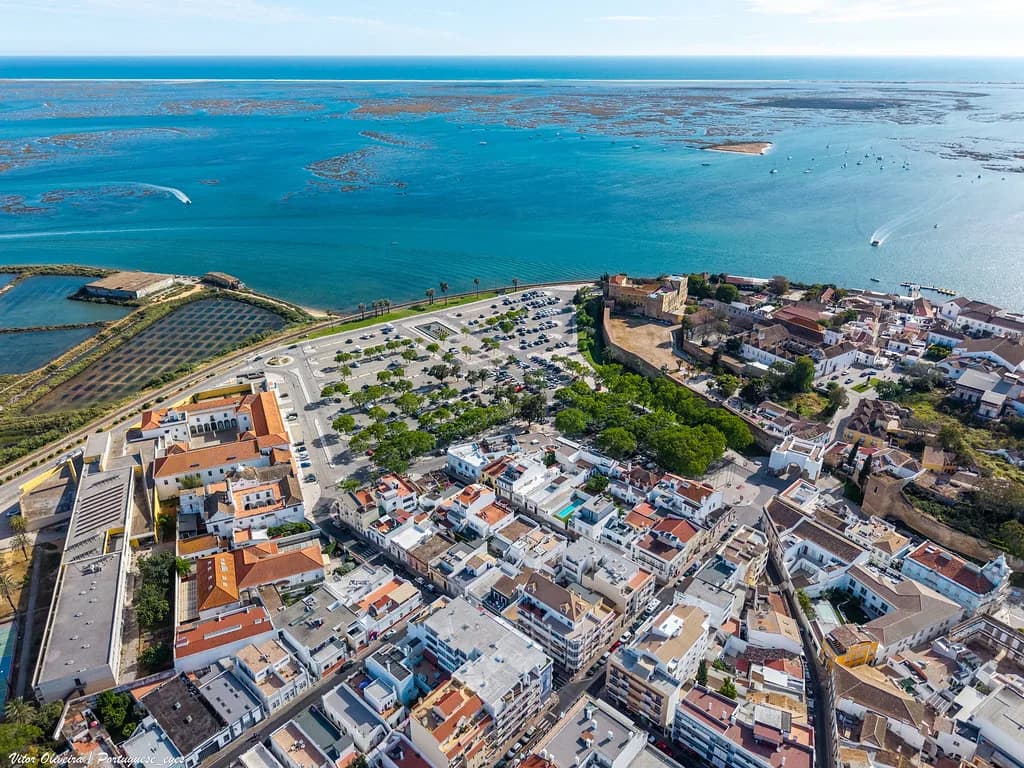
Faro is a working provincial city rather than a purpose-built holiday strip. The old town is compact enough to cross on foot, the cathedral tower gives you the orientation you need, and the lagoon begins at the edge of town. The honest trade-off is the beach: Praia de Faro sits beyond the centre, so a sand day costs you more time than a walk through the gate and along the walls.
How many days Faro needs
Two days covers Faro's core without hurry. Give the first day to the Cidade Velha and the second to the Ria Formosa, and you will have seen the old town's main sights and the lagoon that defines the city's setting. If you are still deciding between one, two and three nights, how many days in Faro sets out what each length of stay actually fits in.
A third day changes the shape of the trip. Spend it either on Praia de Faro or on a half-day in Estoi, the inland village around ten kilometres north of Faro, where the Palácio de Estoi, a restored 19th-century palace now run as a hotel, sits alongside the Ruínas Romanas de Milreu and its mosaics. Do not try to do the lagoon boat trip, the beach and Estoi in the same two days.
If your time is tighter than this plan, drop a day rather than compressing it. A single day fits the old town comfortably and one day in Faro gives you the walking route that does it, so treat the full two-day version here as the version that also reaches the islands.
Day 1 morning: the Arco da Vila, Largo da Sé and the Sé tower
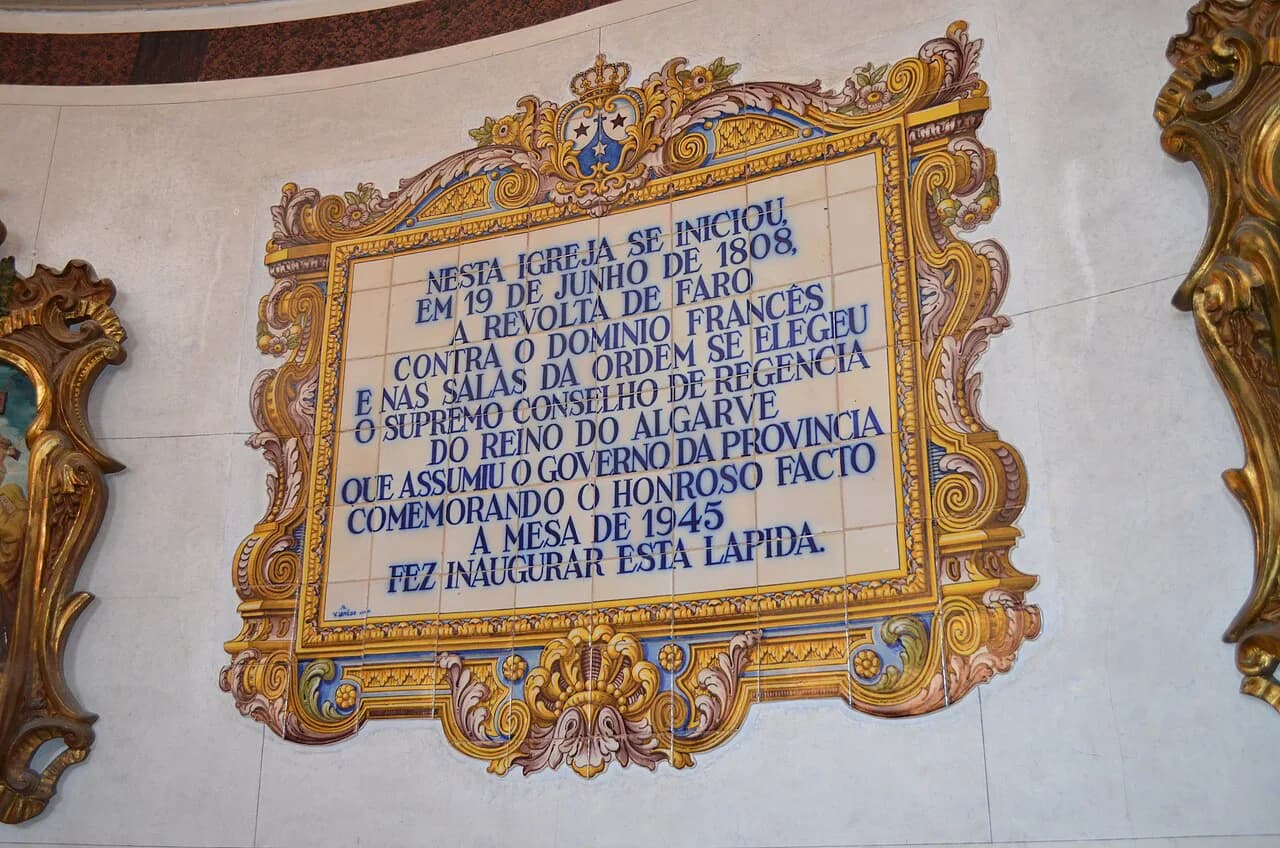
Start at the Arco da Vila, the monumental gateway on Rua do Município that serves as the entrance to the old town. It is a National Monument, commissioned by Bishop D. Francisco Gomes do Avelar and designed by the Genoese architect Francisco Xavier Fabri, and it was inaugurated in 1812 as one of the Algarve's best examples of neoclassical architecture. A niche in the arch holds an image of São Tomás de Aquino, and the Porta Árabe stands close by.
Most short-break plans walk straight through the arch without stopping. Don't glance up: since 1 December 2015 the gateway has housed the Centro Interpretativo do Arco da Vila, a cultural space that traces the city from its origins through the 1755 earthquake to the present. It gives you the context for everything you will see inside the walls, and it sits right on your route into the old town rather than off it.
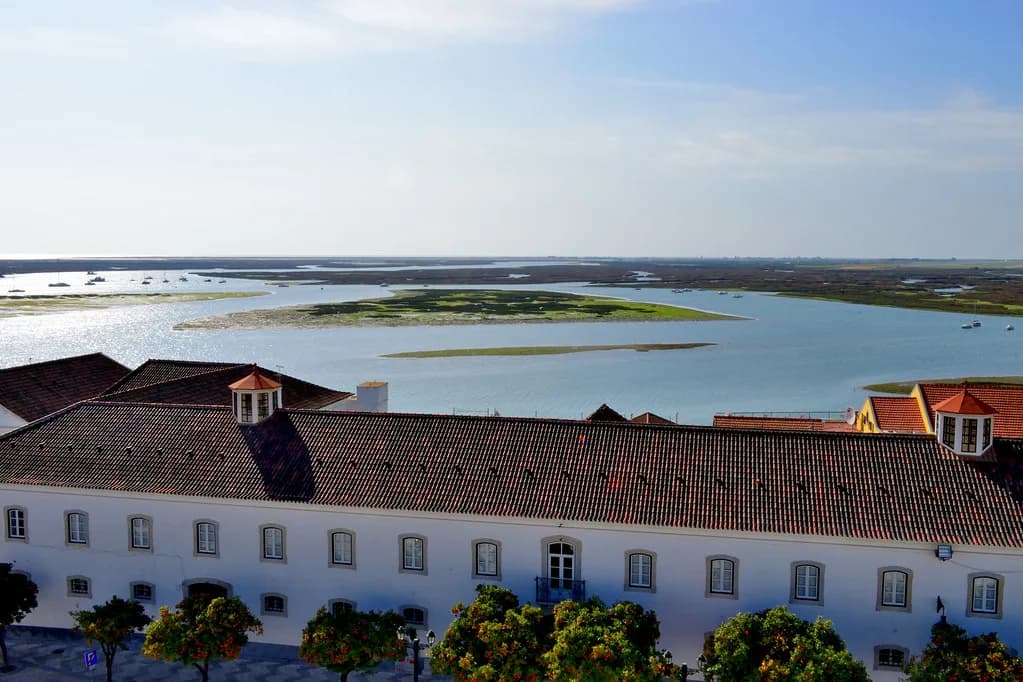
Beyond the arch, the Largo da Sé is the physical and spiritual centre of historic Faro, ringed by historic buildings and shaded by orange trees. The Sé Cathedral, first built in 1251, survived the 1755 earthquake and holds 17th- and 18th-century tiles, gilded altarpieces and an organ decorated with Chinese motifs. Climb the tower for the panorama over the old town and out towards the lagoon; that view is what makes the climb worthwhile rather than the interior alone.
Day 1 afternoon: walls, the Capela dos Ossos and the former convent
After lunch, walk the Cidade Velha walls and the old gate before it gets too warm. The fortifications enclose a maze of cobbled streets and squares with two thousand years of Roman, Moorish and Christian history layered into them, and the Arco do Repouso is the other old gate worth finding. The whole circuit is short; treat it as a slow loop with stops rather than a route to march.
Then head out to the Igreja do Carmo for the Capela dos Ossos, the bone chapel whose walls are built from the remains of more than a thousand skeletons. It is macabre, it is small, and it is the one sight in Faro that consistently surprises people who came expecting only churches and tiles. Pair it with the church itself and you have a compact, memorable hour away from the waterfront.
If museums are your priority, the Museu Municipal de Faro occupies a 16th-century former convent and displays 17th-century oil paintings, 16th-century stone carvings, Roman finds and a well-preserved Roman mosaic. The building does much of the work: cloisters, a courtyard, and a second-level view over the whole ensemble. Rua de Santo António, the pedestrian shopping street, is the natural link between the old town and this part of the day.
Where to eat and what to order
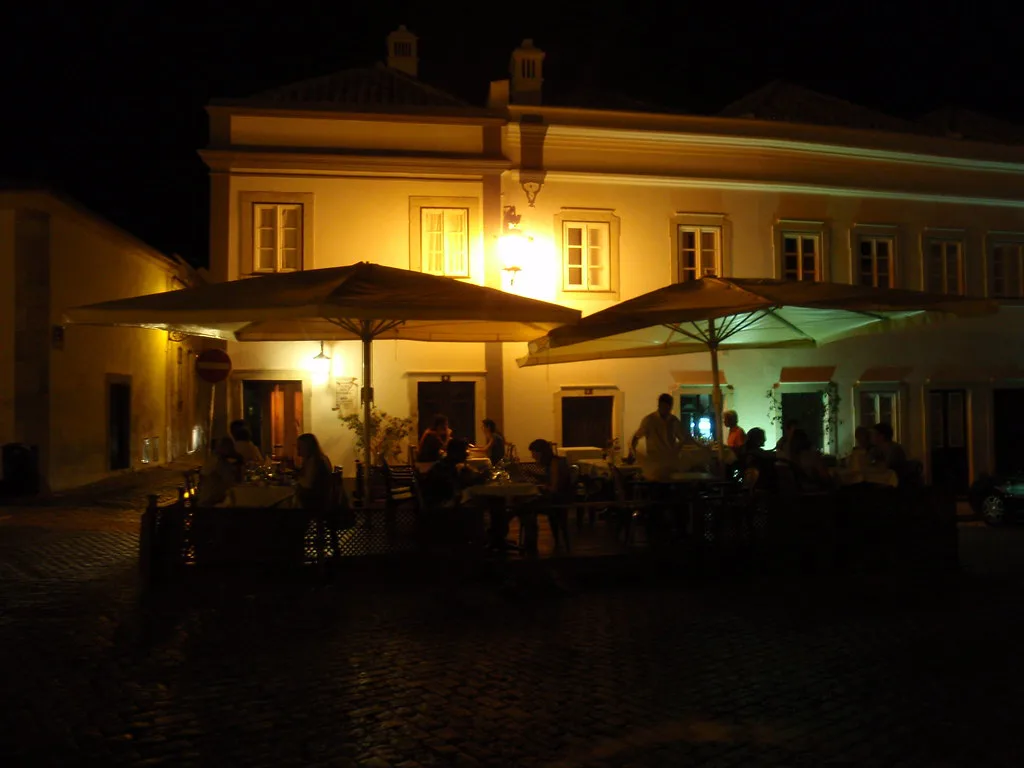
Faro's restaurants serve a working Portuguese city rather than a tourist strip, and the local cooking is seafood-led: cataplana, grilled fish, bacalhau and a pastel de nata with coffee in a pastelaria. Look for a tasca rather than a waterfront menu board. The market is the other end of the day's eating: pick up fruit, cheese and bread there and eat lunch outside, then sit down to a proper seafood dinner when the heat has gone.
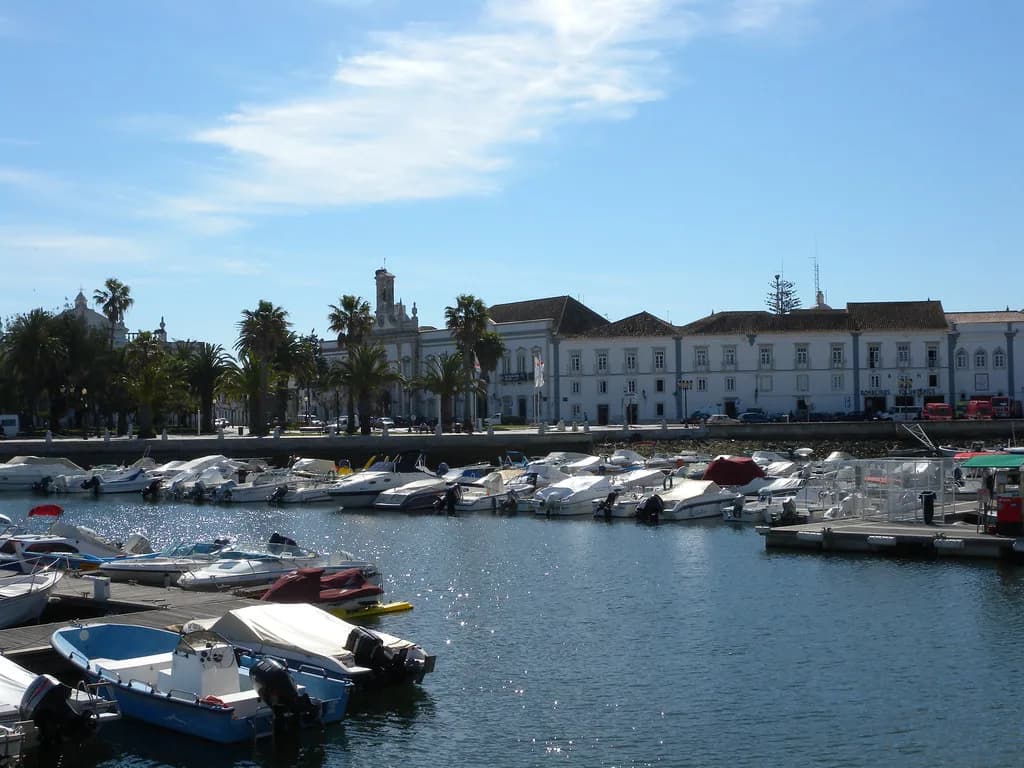
The eating geography follows the walking geography. The streets around Rua de Santo António and the centre have the widest choice for lunch, and the Jardim Manuel Bivar by the marina is where you finish the evening as the light goes. Restaurant opening days in Faro vary by business, so check the door or phone ahead if a particular tasca matters to you.
Day 2: the Ria Formosa by boat
The Parque Natural da Ria Formosa is the reason Faro's city break feels different from any other Algarve stop. The protected lagoon system sits immediately offshore, and the standard way to see it is a guided boat tour that visits Ilha Deserta, the empty barrier island, and Ilha da Culatra, a working fishing community with a very different atmosphere. Book one tour that covers both rather than two separate trips; the contrast between the two islands is the point.
If you would rather move under your own power, kayak and paddleboard hire lets you work the calm waterways at your own pace, and water taxis run to the barrier islands if you want to pick one and stay there. Whichever you choose, this is a full day: the lagoon rewards going slowly rather than ticking off islands. Boat operators, departure points and timetables change with the season, so confirm your trip locally when you arrive.
Day 2 alternative: Praia de Faro or a half day at Estoi
If the weather is hot and the water is the priority, swap the lagoon for Praia de Faro, a broad sandy beach that runs for about five kilometres. It sits away from the centre, so the beach costs you more of the day than the old town does; that is the trade you make for sand and surf. Do not try to combine the beach with a Ria Formosa boat trip on the same day.
The other good use of the second day is Estoi, ten kilometres north of Faro. The Palácio de Estoi, a beautifully restored 19th-century palace now operating as a luxury hotel, is the draw, and the Ruínas Romanas de Milreu nearby has well-preserved mosaics and the remains of a second-century villa. Half a day is enough for both, which leaves you the evening back in Faro. Public transport serves Estoi, but confirm the current service before you rely on it.
Opening days and ticket prices
The Museu Regional do Algarve is open Tuesday to Friday from 10:00 to 18:00 and Saturday from 10:00 to 16:30, and it closes on Sunday and Monday. Adult tickets cost €2.50, entry for ages 13 to 26 and for teachers, students and pensioners is €2, children aged 3 to 12 pay €1, and under-threes go free. A family ticket for two adults and two children is €7.00, and a combined ticket covering both the regional and municipal museums costs €5.00.
Take the €5.00 combined ticket rather than paying twice. The regional museum holds around 1,400 pieces collected by the painter Carlos Porfírio, covering fishing and farming tools, domestic crafts, costume and the Algarve's folklore, and it was founded in 1962 as the Museu Etnográfico Regional de Faro. It is the ethnographic counterpart to the municipal museum's art and archaeology, and pairing them gives you both halves of the city's story in one purchase.
One quirk matters for a short break. The museum opens on public holidays but can close on specific days by decision of the municipal executive, so a holiday visit is not guaranteed to find the doors open. The museum's own page is the place to confirm before you build a morning around it. The Arco da Vila's interpretive centre is inside the gateway, so treat that as your fallback if a museum plan falls through.
What closes when: planning around Sunday and Monday
Sunday and Monday are the days that break a two-day plan, because the Museu Regional do Algarve closes on both. Put the museums on a Tuesday-to-Saturday day and keep Sunday or Monday for the Ria Formosa, the walls and the churches, which do not depend on the same timetable. If your break runs from Friday to Sunday, do the museum on Friday or Saturday and leave the boat for Sunday.
Do not assume the same pattern applies to the cathedral, the Igreja do Carmo, the Capela dos Ossos or the Palácio de Estoi. Their opening arrangements are not published alongside the municipal museums' and can differ, so confirm the ones you care about locally rather than planning a day around a guess. That single check is the difference between a smooth two days and a wasted morning.
What to skip on a short break
Skip the resort-style beach day if you only have two days. Faro's beaches are away from the centre, so a full sand day consumes the same slot as the Ria Formosa without giving you the lagoon, which is the thing Faro does better than the competition. The Forum Algarve shopping centre is a rainy-afternoon fallback, not a sight, and long day trips to other Algarve towns eat into a two-day break that is already tight.
That does not make Faro a poor choice against the bigger resorts; it makes it a different one. If you are weighing it against Albufeira or wondering whether the city justifies the trip at all, is Faro worth visiting sets out what Faro does well and who it suits. The answer for most short-break travellers is that the old town and lagoon together carry two days comfortably.
Where to base yourself inside the city
Base yourself within walking distance of the Cidade Velha and the marina. From there the Arco da Vila, Largo da Sé, the walls and the Jardim Manuel Bivar are all on foot, and the boat departure points for the Ria Formosa are close enough that you are not losing an hour to transfers. Two nights in that core is enough for this plan; you will spend your time on the city rather than on getting to it.
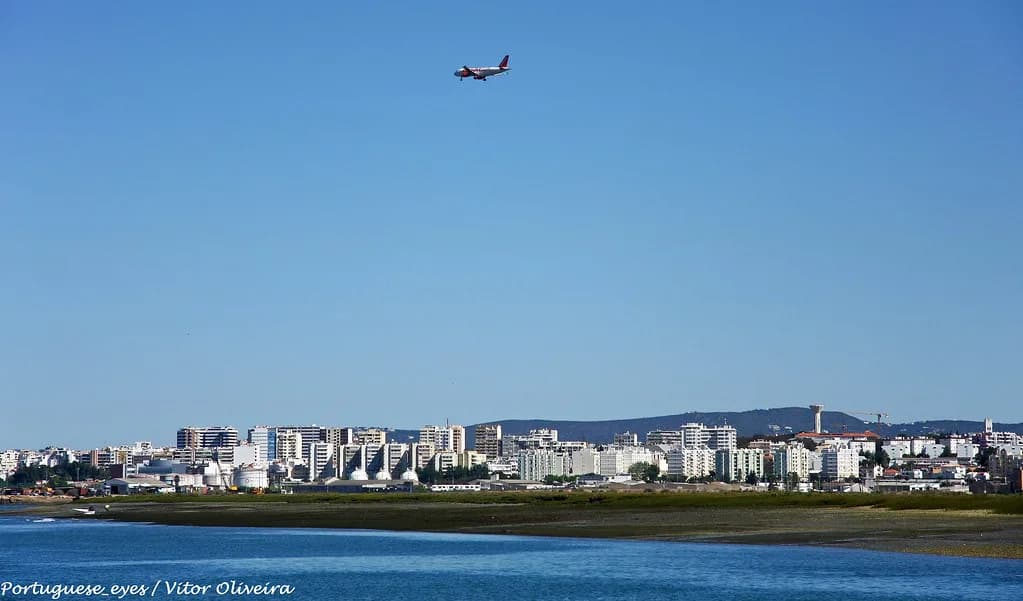
The one thing to accept about a central base is aircraft noise, since the airport is close to the city and planes pass overhead. It is a minor annoyance rather than a reason to move out, and it keeps the transfer short at either end of the break. If you are arriving by train instead, the Lisbon to Faro train runs direct and takes around three and a half hours, which makes the city a realistic short-break add-on to a Portuguese trip.
Which second day to book: lagoon or Estoi
Choose the Ria Formosa for your second day unless you have already spent time on the Algarve coast. The lagoon is what makes Faro more than a smaller version of the resort towns, and the contrast between Ilha Deserta and Ilha da Culatra gives the day its structure. Take Estoi instead if you prefer palaces and Roman mosaics to water, and keep Praia de Faro for a third day or a warm afternoon.
Whatever you choose, run the plan in this order: Cidade Velha first, museums on a weekday, the water last. That sequence keeps you clear of the Sunday and Monday museum closures and leaves the most weather-dependent day free to move. For the full walking route through the old town, the Faro itinerary links this two-day plan to the individual sights.
Explore more Faro guides
Frequently Asked Questions
Is Faro nice for a city break?
Yes. Faro gives you a compact walled old town, a cathedral tower with a view over it, a lagoon on the doorstep and a working Portuguese city rather than a resort strip. Two days is enough for the old town and the Ria Formosa, and a third adds Estoi or the beach.
Which is nicer, Faro or Albufeira?
They serve different trips. Faro is the Algarve capital, with a medieval Cidade Velha, a working centre and the Ria Formosa beside it, while Albufeira is built around its beaches. Choose Faro if you want a city break with history and a lagoon; choose Albufeira if the beach is the main event.
Is 3 days in Faro too much?
Not if you use the third day well. Two days covers the old town and the lagoon; a third is best spent either on Praia de Faro or on a half-day in Estoi for the Palácio de Estoi and the Milreu Roman ruins. Three days of the old town alone would be too many.
Can you walk from Faro Airport to the city centre?
The airport sits close to the city, so the transfer is short; planes also pass overhead above the centre. For a short break, arrange the onward hop with whichever transport suits you rather than planning a long walk with luggage, and check the details locally when you arrive.
Sources
Notes for your next Portuguese break
Optional updates to our town guides.
You might also like
Continue reading
More guides you'll find useful