
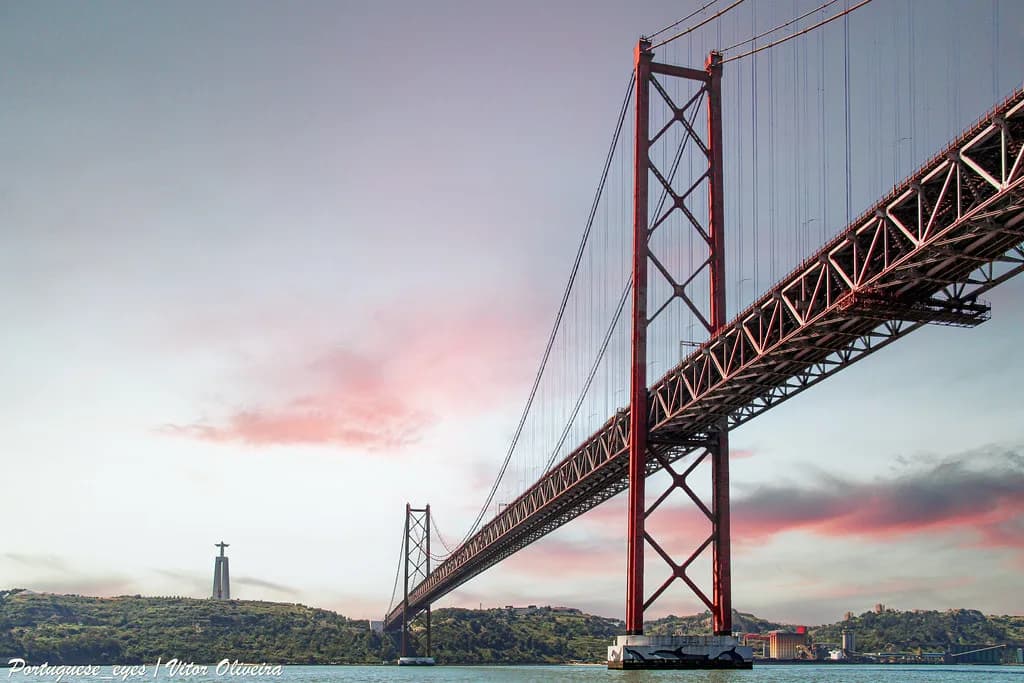
Trains in Portugal: CP Services, Tickets and Routes Explained
A practical guide to Portugal's trains, from Alfa Pendular and Intercidades to slow regional lines, with how CP booking, seats and validation work.
On this page
Portugal has a national rail network run by Comboios de Portugal (CP), and for a short town break the train is often the least fiddly way between cities. CP splits its services into five categories, and picking the right one matters more than picking the fastest-looking departure, because the slower Regional and Inter Regional trains are the ones that reach smaller places. Our Portugal Travel Tips for a One to Four Day Town Break sets out how a rail-friendly short break fits together.
This guide explains what each service type does, which towns each one serves, how booking and seat reservations work, and the validation rule that applies to suburban Urbano trains. It also covers how to build a one-to-four-day break around the network, and where the train fits against flying from the UK.
What the Portuguese rail network covers
CP operates five categories of train. Alfa Pendular is the high-speed express network; Intercidades connects the main towns and cities; Inter Regional runs medium-fast services on secondary lines linking smaller cities and rural towns to the main routes; Regional trains stop at every station on local lines; and Urbano covers the suburban services around Lisbon and Porto.
The general pattern is that the longer the distance, the newer and more comfortable the train, though there are exceptions. First-class seats on the fast services are inexpensive by British standards, and passengers sit in their assigned seat, so the reservation on your ticket is not a suggestion.
For planning a town break, the distinction that matters is reach rather than speed. The Alfa Pendular and Intercidades get you between the big hubs quickly, while the Inter Regional and Regional services are what put places like Tomar and Elvas within range at all. If your shortlist includes smaller towns, check which category serves them before you fix your base.
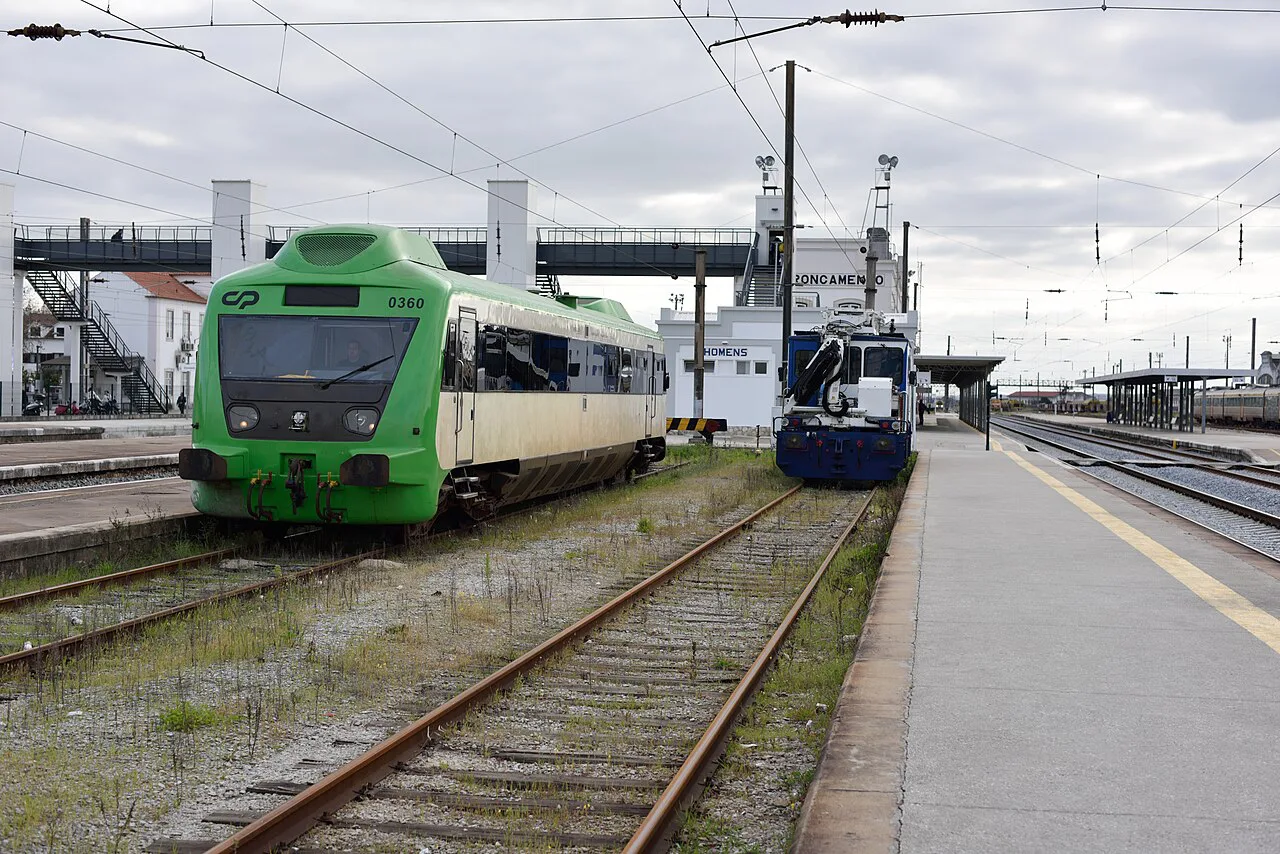
Alfa Pendular: the high-speed spine from Braga to Faro
The Alfa Pendular runs from Braga in the north through Porto and the university city of Coimbra down to Lisbon, then south through the Alentejo without stopping to Albufeira and Faro in the Algarve. Onboard there is air conditioning, Wi-Fi, generous luggage racks and a buffet car.
Is there a train in Portugal? Yes. Comboios de Portugal runs a national network with five service types: Alfa Pendular high-speed expresses, Intercidades between main cities, Inter Regional and Regional trains on slower secondary and local lines, and Urbano suburban services around Lisbon and Porto.
Is it cheaper to fly or take a train? For travel within Portugal, the train avoids airport transfers and lets you book the fast services in advance, though the slower Regional and Inter Regional lines make longer journeys slow. For getting to Portugal from the UK, flying is the practical choice for a one-to-four-day break; the overland route via Paris, Barcelona and Madrid takes several days.
Do I need to validate my train ticket in Portugal? Only on Urbano suburban services, where tickets are bought on the day and must be validated at the yellow reader before boarding. Alfa Pendular, Intercidades, Inter Regional and Regional tickets work differently and are booked in advance.
Because it skips the Alentejo entirely, the Alfa is the wrong tool if you want Évora or the interior. Use it for the long north-south hop between Porto, Coimbra and Lisbon, where it is a far nicer experience than flying the same route, and switch to a slower category for anything off that spine.
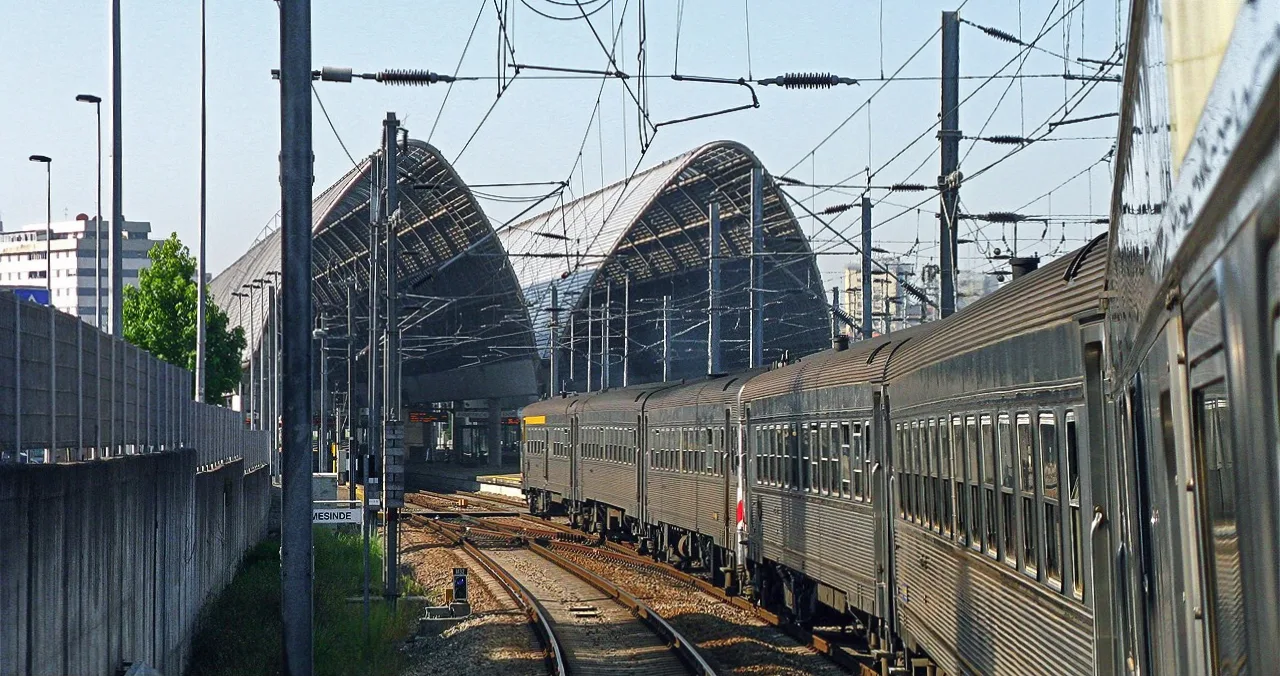
Intercidades and Inter Regional: reaching Coimbra and Évora
Intercidades trains connect the country's main towns and make more stops than the Alfa, which is exactly what makes them useful for historic cities like Coimbra and Évora. The carriages may be older, but first class still has reserved seating and the same facilities as the faster service.
Inter Regional trains run on second-order lines, linking smaller regional cities and rural towns to the Alfa and Intercidades network. They are single class with no seat reservations, but the services tend to be quiet, so finding a seat is rarely a problem. The rolling stock varies by route and is often older multiple units.
This is the category that opens up the more rewarding short breaks. The classic Inter Regional run is the Linha do Douro, closer to a heritage line than a modern passenger service, with 1960s diesel-electric locomotives and matching vintage carriages; it is also one of Europe's most scenic railway journeys. Regional services, which stop everywhere at a sedate pace, are what put the forts at Elvas and the Templar town of Tomar on a rail itinerary.
Regional and Urbano trains: slow local lines and suburban services
Regional trains connect the smaller towns, stop at every station and run at a fairly relaxed pace, so they are a slow way to get around. They can be busy in and around the cities but quiet once you are into open country. For a one-to-four-day break that is often the point, because the slow line is how you reach the towns the express services skip.
Urbano trains are the commuter services linking Lisbon and Porto with their suburbs. They are usually single class, use modern air-conditioned electric units, and tickets can only be bought on the day of travel, though passes are available. From Lisbon the Urbano is a good option for Belém, the beaches at Cascais and the palace town of Sintra, which makes it useful for a half-day out from a city base rather than a way of travelling between regions.
Buying tickets: what you can book in advance
Alfa Pendular, Intercidades, Inter Regional and Regional tickets can be arranged in advance, so the long legs of a short break can be locked in before you fly. Urbano tickets cannot: they are bought on the day of travel, with passes as the exception. Plan around that split rather than assuming every CP journey works the same way.
Buy through CP directly rather than a resale site, and travel with a paper copy of your ticket, which conductors can scan faster than a phone screen. Carry small bags if you can, since the luggage racks are generous but lighter luggage makes moving through busy carriages far easier.
Seat reservations and first versus second class
Reserved seating applies to the faster categories: Alfa Pendular and Intercidades carry assigned seats, and first class on both comes with reserved seating plus the same onboard facilities. Inter Regional and Regional services are single class with no reservations.
First class is cheap enough on the fast services that it is worth taking for a long leg, particularly if you are travelling as a group and want to sit together. On the slower lines there is no class choice to make, so the decision is really about which service reaches your destination. If you are weighing the rail fare against a budget flight, our guide to whether Portugal is expensive breaks down what a short break really costs in euros.
Validating your ticket before boarding Urbano trains
On Urbano services you must validate your ticket before boarding. After buying from a machine, hold the ticket to one of the yellow readers and wait for the green light; an unvalidated ticket will not open the automated gate at your destination. It is an unusual system, but the rule is real and the consequence is a blocked exit.
Reconfirming times and checking for engineering works
Reconfirm your train times 24 hours before travelling on the CP website and watch for engineering works and replacement buses, which are particularly common at weekends. Each service has a unique train number printed on your ticket, and matching that number is the reliable way to find your platform when the departure boards show only the final destination.
If you are coming from the UK, the train is only one option. Direct flights serve Portugal from several British airports, and the overland route via Paris, Barcelona and Madrid involves at least one overnight stop, so it suits a longer trip rather than a three-day break.
Which Portuguese towns suit a short break by train
Coimbra and Évora are the easiest wins: both sit on Intercidades routes, so you can arrive from Lisbon or Porto without changing onto a slow line. Tomar and Elvas need Regional or Inter Regional connections, which makes them better as a base for two or three nights than a rushed day out.
The Linha do Douro is the exception worth building a trip around: a scenic vintage-diesel run that rewards a slower pace rather than a hurried return. If you would rather keep your options open between rail and road for the rural stretches, compare the two before committing.
How this fits a UK short break
For a one-to-four-day trip, fly into Lisbon or Porto and use the train for the intercity leg. The Alfa Pendular or an Intercidades gets you to Coimbra or Évora without a car, and the Urbano covers suburban days out from either city. Book the long legs in advance, buy Urbano tickets on the day, and keep the itinerary to two bases at most.
If you are pricing up the trip, factor in the train fares, a couple of sit-down meals, and any tipping in Portugal, which follows its own local conventions rather than the UK pattern.
Which CP service should you book first?
Start with the map of categories rather than the timetable. If your shortlist is Coimbra or Évora, book an Alfa Pendular or Intercidades leg in advance and you are done. If it is Tomar, Elvas or the Douro, accept that a Regional or Inter Regional connection is part of the trip and give it a night rather than a day.
Check times on the CP site the day before you travel, validate any Urbano ticket before boarding, and keep your train number to hand at the station.
Frequently Asked Questions
Is there a train in Portugal?
Yes. Comboios de Portugal runs a national network with five service types: Alfa Pendular high-speed expresses, Intercidades between main cities, Inter Regional and Regional trains on slower secondary and local lines, and Urbano suburban services around Lisbon and Porto.
Is it cheaper to fly or take a train?
For travel within Portugal, the train avoids airport transfers and lets you book the fast services in advance, though the slower Regional and Inter Regional lines make longer journeys slow. For getting to Portugal from the UK, flying is the practical choice for a one-to-four-day break; the overland route via Paris, Barcelona and Madrid takes several days.
Do I need to validate my train ticket in Portugal?
Only on Urbano suburban services, where tickets are bought on the day and must be validated at the yellow reader before boarding. Alfa Pendular, Intercidades, Inter Regional and Regional tickets work differently and are booked in advance.
Sources
Notes for your next Portuguese break
Optional updates to our town guides.
You might also like



Continue reading
More guides you'll find useful




