
Monchique: A Hill Town Guide for a Short Algarve Break
Plan a short break in Monchique, the Algarve hill town: its streets, square, parish church and viewpoints, plus Fóia, Picota and how long you need.
On this page
Monchique needs half a day for the town itself and a full day if you add one of the two peaks above it. The hill town sits inland on the western side of the Algarve, in the Serra de Monchique, the range that rises behind the coast and gives you a cooler, quieter counterpoint to the resort strip. This guide covers the square, the main climbing street, the parish church and the in-town viewpoint, then the two summits and the ruined monastery on their hills, so you can judge a morning against a whole day.
Everything in the town centre is on foot, but almost nothing is flat: the streets climb, and stairways cut between them. The two peaks and the convent ruin sit outside town and realistically need a car, or a long walk, so the shape of your day depends on whether you have wheels.
Where Monchique sits and how it fits a short break
Monchique is the inland anchor of the western Algarve, a town in the Serra de Monchique rather than on the coast. That position is the point: you come up from the beaches and resorts into forested hills, with the sea visible in the distance from the higher ground.
For a one-to-four-day Algarve break, treat Monchique as a contrasting day rather than a base, and keep it in view when you weigh up the best towns in the Algarve for a short trip. Pair it with a coastal town and you get two different Algarves in one break: whitewashed streets and viewpoints up here, harbour and market life down below.
Pick your day with the drive in mind. Fóia is about 7.5 km from Monchique by road, and the mountain roads are slow and winding, so build in more time than the distance suggests.
How the town is laid out: the square and the climb
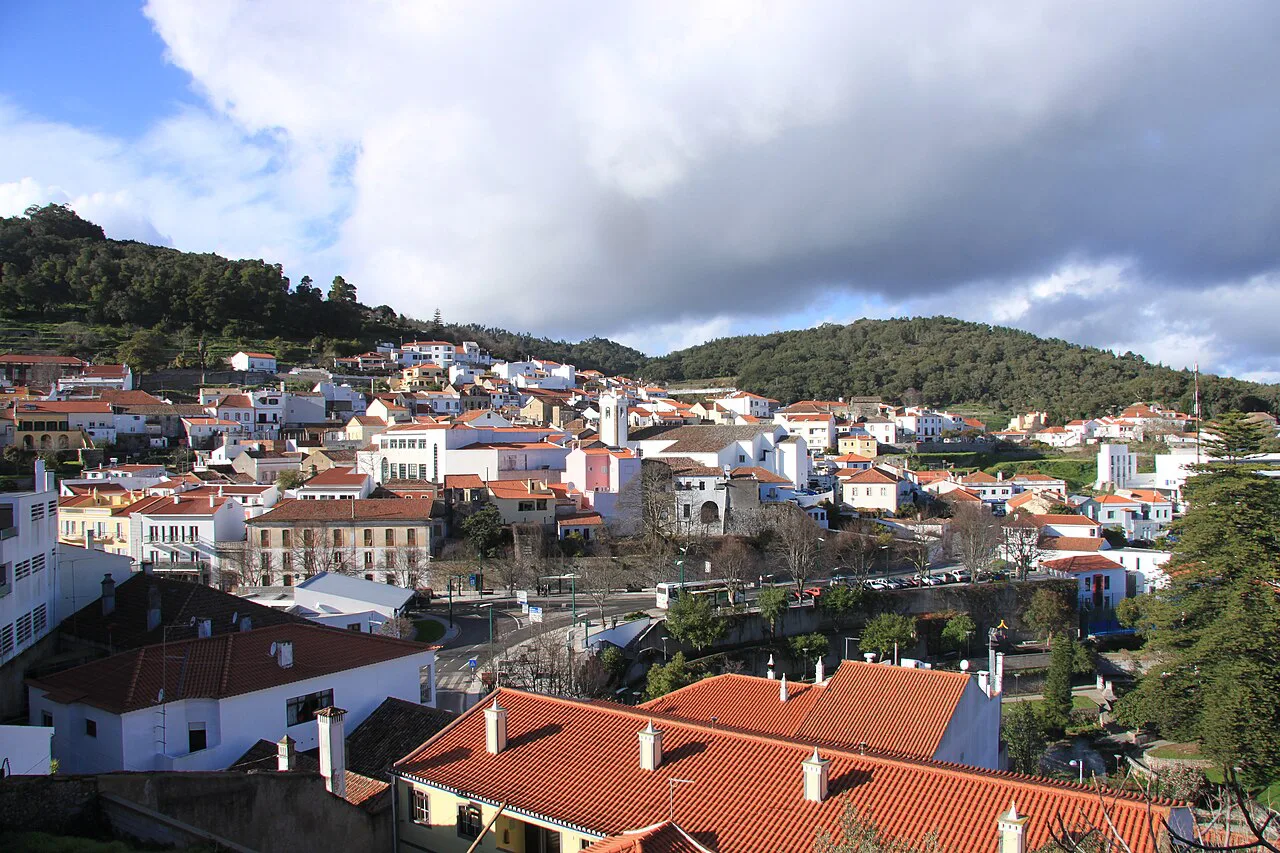
Start at Largo de Monchique, the square at the heart of town and the natural place to begin exploring. Cafés and restaurants line it, and the fountain gives you a fixed point to navigate back to. One name to know is Velochique, a cycling café on the square that is a firm favourite with regular visitors.
From the square, Rua do Porto Fundo runs steeply uphill, lined with small local shops and cafés and colourful buildings on both sides. It is the spine of a town-centre wander: walk up, take side lanes, and come back down by a different stairway.
Expect to get turned around. The hillside layout means little streets, flights of steps and corners that Don't line up, and phone mapping is unreliable in the lanes. Treat that as part of the visit rather than a problem to solve: the reward is a different tiled facade or tasca around each bend.
Igreja Paroquial de Monchique: the parish church
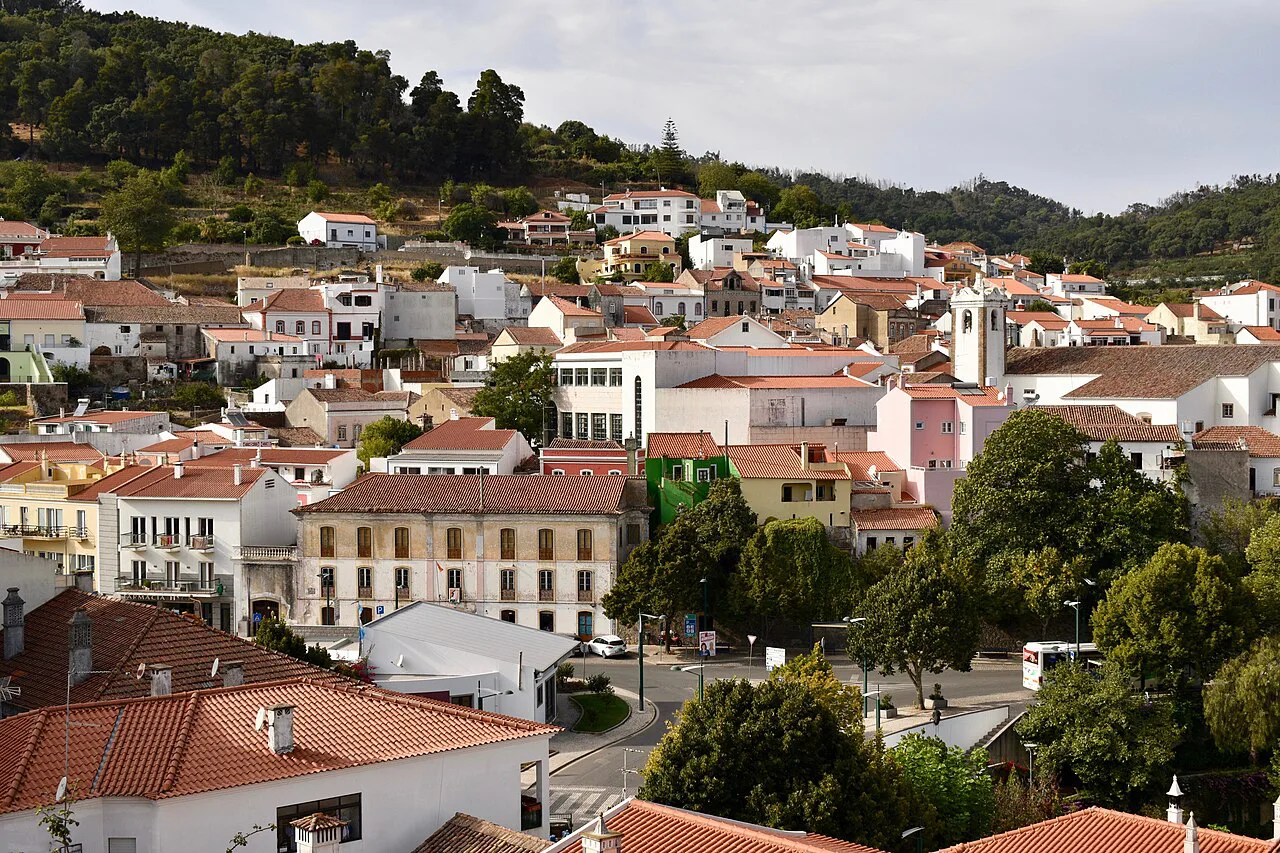
Off Rua do Porto Fundo, in a side street, stands the Igreja Paroquial de Monchique, the town's main church. It is a typical Algarve parish church: a white facade topped by a tower, modest from the street.
The interior is not heavily decorated, but the altarpiece is finely detailed and there is a distinctive chapel worth a few minutes. Whether you get inside depends on the door being open; no fixed visiting hours are published, so time your look around a service rather than planning the day around it.
There is no ticket and no queue here, which is part of the appeal of a town like this. Fold it into the climb up Rua do Porto Fundo rather than making it a separate stop.
Steep lanes, stairways and the in-town viewpoint
Above the main street, the town becomes a maze of lanes and stairs. Wander without a route for twenty minutes or so; the gradient does the work of a short walk and you will keep finding small details: azulejo panels, potted plants, half-hidden terraces.
The Miradouro de Monchique is the payoff, a viewpoint within the town giving a wide panorama over the green hills and valleys. From it you can pick out the town below, the ruined monastery on its hill, and the two peaks, Fóia and Picota, that frame Monchique on either side.
Use the miradouro as your orientation point: once you have seen the convent and the two summits from here, you know what you are looking at for the rest of the day, and whether you want to go up either of them.
Fóia at 902 m: the Algarve's highest point
Fóia is the highest point in the Algarve at 902 m, with a panorama that takes in the whole region. The easy way up is the N266 by car or bicycle, about a 7.5 km drive from Monchique.
On foot, the route from town follows the white-and-red waymarks of the Via Algarviana and then the signs for the Trilho da Fóia. The return trip on foot runs to roughly 12 km, which is a half-day in itself on this terrain.
The trade-off is simple: drive and you get the view in an hour, walk and you earn it but surrender the rest of the day. On a short break, drive up, spend twenty minutes at the top, and keep the afternoon for the town.
Picota at 774 m: the quieter summit
Picota is the peak on the other side of Monchique, lower at 774 m but still commanding. The summit is also reachable by car, but the access road is noticeably narrower, so watch for oncoming traffic and take it slowly.
At the top there is a viewing station and a panorama over the surrounding hills, with the sea shimmering in the distance on a clear day. It is less of a set-piece than Fóia and the better choice if you want quiet rather than the marquee view.
You can also climb Picota on foot via a trail, but for a short break the car is the practical choice. Choose one peak, not both, unless you have a full day and no other plans: the views overlap and the driving adds up.
Convento de Nossa Senhora do Desterro: the ruined monastery
The Convento de Nossa Senhora do Desterro is the most striking structure in Monchique: a ruined 17th-century monastery standing on a hill among cork trees, with a view back over the town and the green hills.
It is private property and not open to visit in any ticketed sense, so Don't plan a museum-style stop. The owners often show people around and explain the site's history in Portuguese, which is the only way you will see much of it.
The monastery was wrecked in the 1755 earthquake and has seen little done to it since, which is exactly why it is worth the detour: old Portuguese tiles still sit in corners of the ruins. Go with the expectation of a short, informal look rather than a visitor attraction.
How many days Monchique needs
Half a day covers the town: Largo de Monchique, up Rua do Porto Fundo, the parish church, a wander through the steep lanes and the Miradouro de Monchique. That is a comfortable morning or afternoon, and it works without a car if you are based nearby.
A full day adds one peak and the convent. Drive up Fóia or Picota in the morning, take in the panorama, and come back through town for the square, the church and the in-town viewpoint in the afternoon, with the convent ruin as an opportunistic stop if someone is there to receive you.
The honest trade-off is that Monchique rewards atmosphere rather than a checklist of sights. If you want a ticketed, structured day, other Algarve towns such as Loulé: What to See in the Algarve's Market Town offer more fixed points; come here for the lanes, the air and the long views.
Half a day or a full one in Monchique?
Yes, if you want one day of hills, whitewashed lanes and long views between the coast and the rest of your Algarve break. No, if you need a full schedule of ticketed sights; Monchique is a wandering town with two drive-up mountains beside it.
Plan on half a day in town and a full day if you add Fóia or Picota. Bring a car for the peaks, wear shoes that cope with stairs, and expect the parish church to be a short look rather than a set visit.
Confirm the parish church's access and any current arrangements at the convent before you build a day around either, since neither runs on published visitor hours.
Explore more Portugal guides
Frequently Asked Questions
Are there hot springs in Monchique?
The spa village of Caldas de Monchique sits below the town and is named for its waters. It is a separate place rather than something inside Monchique itself, so check locally before counting on a bathing stop.
Does it snow in Monchique?
Snow is not a feature of the Algarve climate, even on Fóia at 902 m. The peaks are worth visiting for the views and the cooler air, not for winter conditions.
What are the major towns in the Algarve?
Faro is the regional capital and the airport hub, with Lagos, Portimão, Albufeira and Tavira among the larger coastal towns. Inland, Silves and Loulé are the historic towns, and Monchique is the main hill town of the western Serra.
Is Monchique worth visiting on an Algarve short break?
Yes for half a day, or a full day if you add Fóia or Picota. It gives you the inland Algarve that the coast cannot: cork trees, steep lanes, a parish church and viewpoints over the hills, all within an easy drive of the western beaches.
Sources
Notes for your next Portuguese break
Optional updates to our town guides.
You might also like



Continue reading
More guides you'll find useful





