Olhão: A Short-Break Guide to Portugal's Fishing Town
Plan a short break in Olhão with its market halls, cubist houses and Ria Formosa ferries, plus how the town is laid out and how many days it needs.
On this page
Olhão needs one full day, or two if you want a boat trip among the Ria Formosa islands as well as the town. It is a working fishing port a short drive east of Faro airport, known for its market halls, its white cubist houses and its position on the edge of a lagoon rather than open sea. This guide lays out the waterfront, the old quarter and the fish market in walking order, then covers how many days to give it and what to eat. It assumes a short break of one to four days and treats Olhão as the town itself, not a jumping-off point for elsewhere.
Olhão in a nutshell: a working fishing port on the lagoon
The town's character comes from two things: fishing and the lagoon behind it. Portugal Travel Guide describes Olhão as a pretty fishing port that looks more like a North African village than a typical Algarve resort, with the sea replaced by the Ria Formosa wetland. That comparison is the honest starting point — there are no cliffs or big sandy town beaches here, and the water in front of you is a tidal lagoon. Arrive expecting a modest, lived-in town and it delivers; arrive expecting a resort and it will not.
First-time visitors often miss the geography. A traveller's account of a Sunday in Olhão makes the point plainly: the town sits on a lagoon, and the actual beach is on an island reached by boat. That single fact shapes the itinerary, because the waterfront and market quarter are what you do on foot, and the islands are what you add with a second day. Keep the two separate rather than trying to do both in one afternoon.
How Olhão is laid out: waterfront, old quarter and market halls
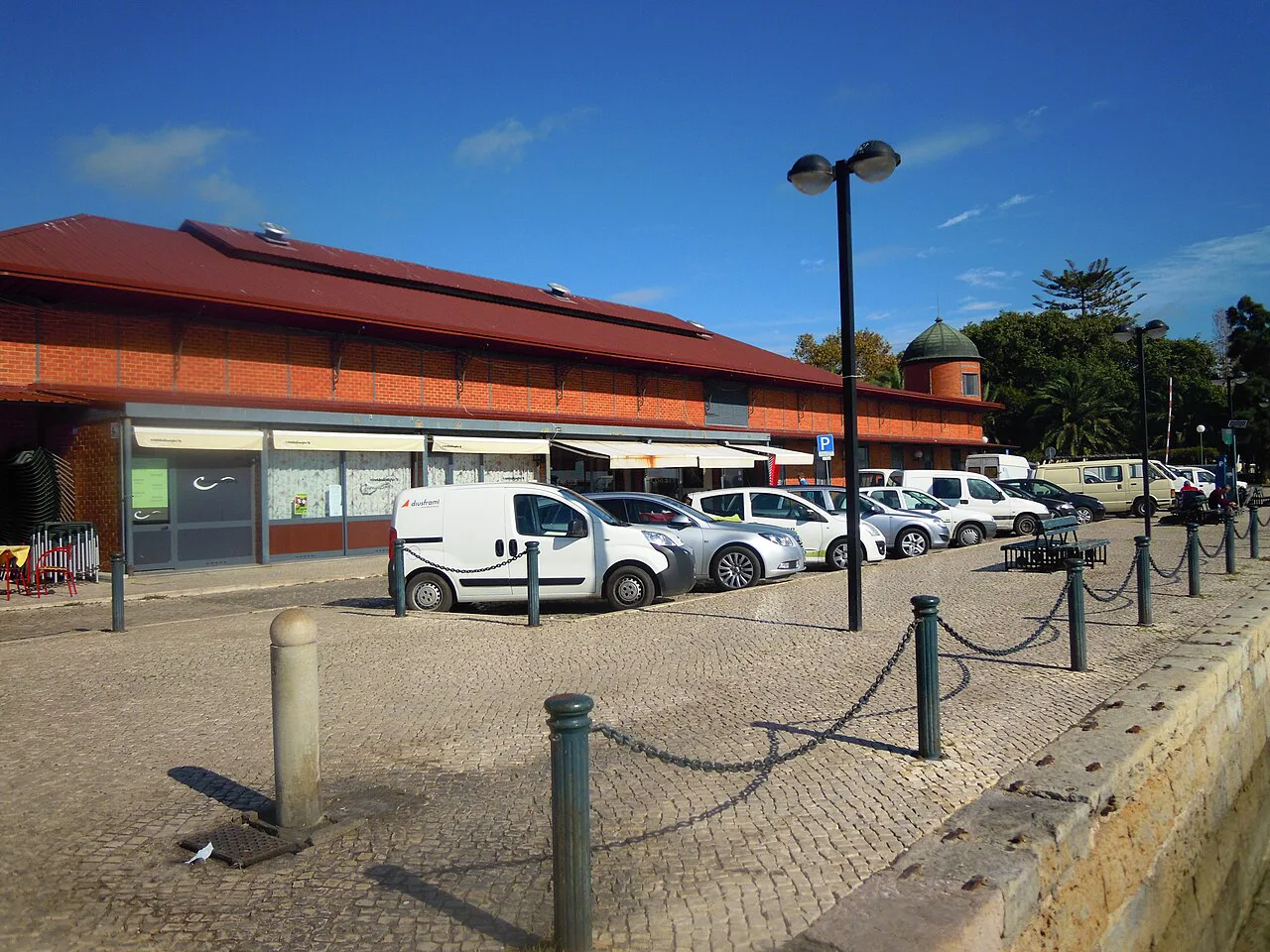
Olhão is compact and flat, and its useful parts stack up from the water. The promenade runs along the front, the market halls sit just behind it, and the old fishing quarter fills the streets inland from there. If you want to weigh Olhão against the bigger Algarve names, the best towns in the Algarve comparison sets it beside towns with cliffs, castles and larger old cores. Within Olhão itself, the centre is small enough that the market, the ferry landing and the restaurants form one walkable triangle, so you can move between them without planning transport.
The waterfront carries the restaurants, the ferry departure point and the market buildings, so it is where most short breaks naturally start. Behind it, the old fishing quarter has narrower streets and the town's distinctive white houses, with their flat roofs and small towers, packed close together. The streets to the west and north are ordinary residential Olhão rather than sights, so the practical rule is to concentrate your walking between the market hall and the old quarter and treat the rest of town as background.
The market halls: why they anchor a morning
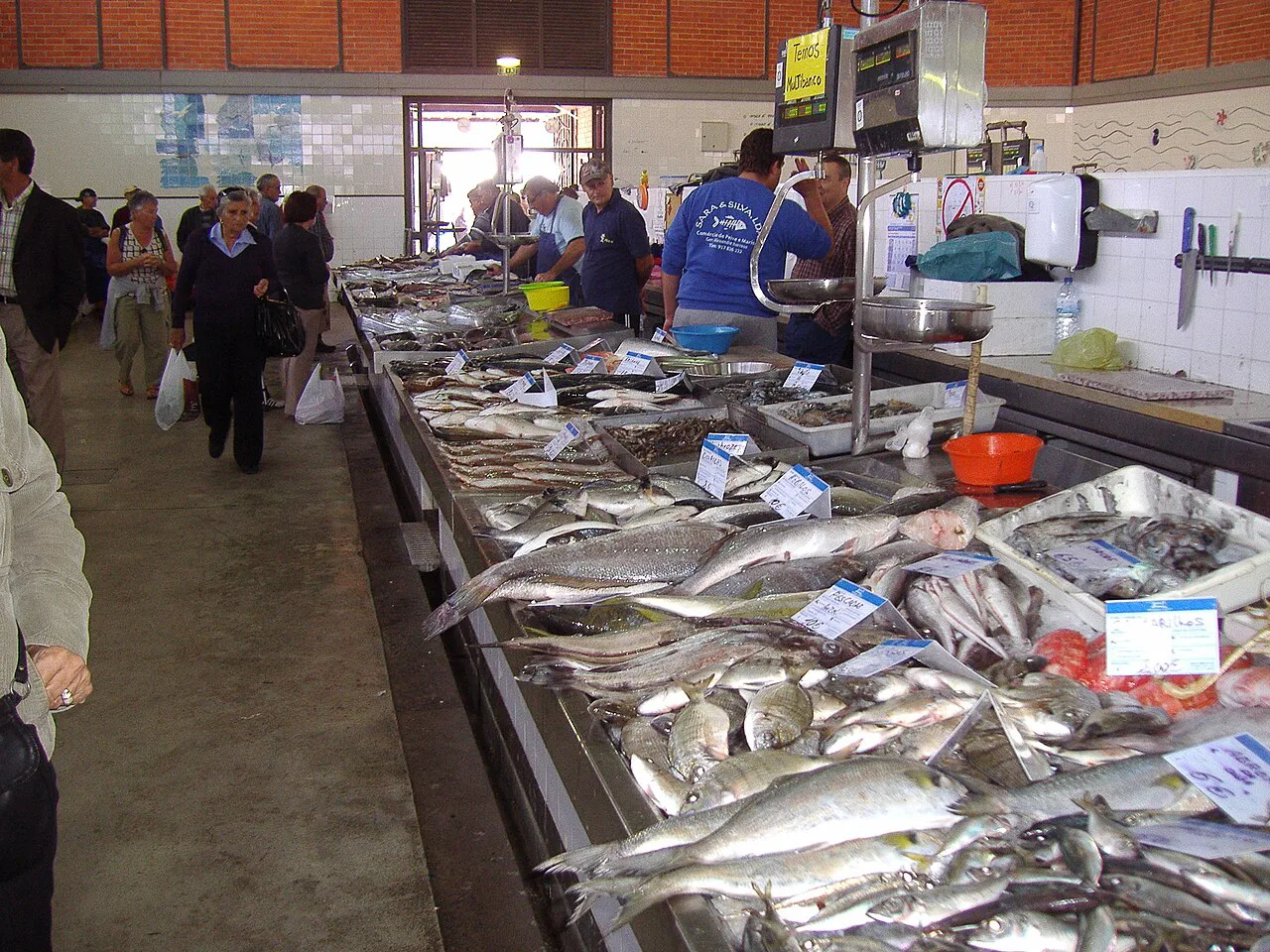
Start at the market halls behind the waterfront. The fish market is the town's working heart — a traveller's account of lunch on the promenade notes a fishing port and a market among the few sights in town — and the produce hall alongside it sells fruit, vegetables and the everyday stock of an Algarve kitchen. Go in the morning, when the fish is freshest and the halls are at their busiest, and treat the visit as a look at how the town earns its living rather than a shopping trip. It is not a covered market on the scale of a city hall; half an hour is generally enough.
The halls are also the best reason to be in Olhão early on a Sunday, when the town otherwise goes quiet. A Sunday visitor found the place almost empty apart from the promenade restaurants, so the market morning is where the life is. Opening days and hours change with the season and with the fishing, so check the timing closest to your visit rather than assuming the halls are open every morning.
The cubist houses and azulejo façades of the old quarter
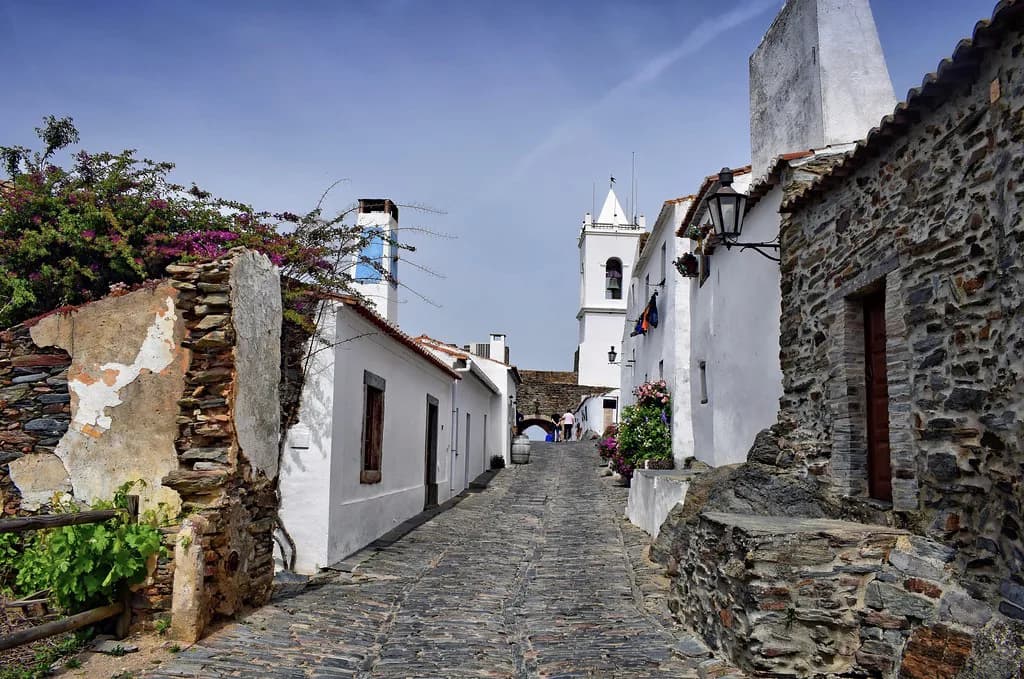
The old fishing quarter is Olhão's real sight, and it costs nothing to walk. The houses are small, white and boxy, with flat roofs and rooftop terraces — a style usually described as cubist — and some fronts carry panels of azulejos, the glazed tiles that recur across Portugal. The best approach is unstructured: pick a lane running inland from the market and wander, looking up at the roof terraces and down at the tiled doorways. An hour covers a generous loop.
If you have already seen the Algarve's castle towns, Olhão's quarter reads differently. Loulé, inland from Faro, pairs its market hall with an old town and a castle; Loule is the natural pairing with Olhão if you want one market town and one fishing town in the same short break. The contrast is useful — Olhão has no castle, no walls and no cathedral to tick off, and that is precisely why its streets feel unlike the rest of the region.
The Ria Formosa: the lagoon and the boats through it
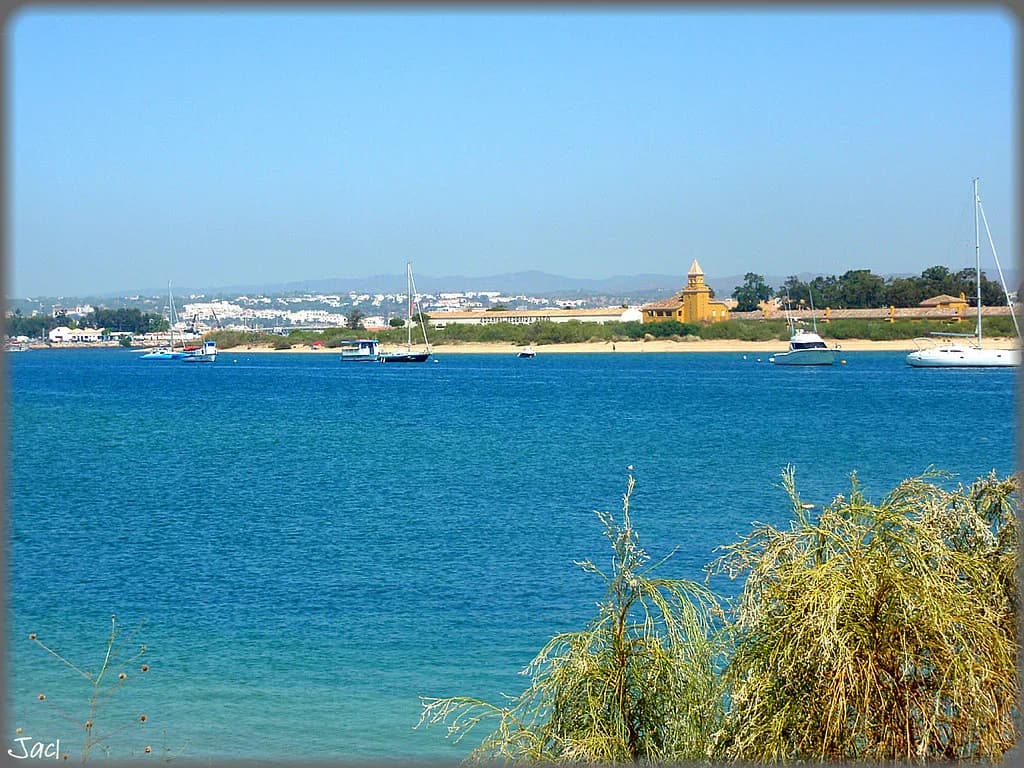
The Ria Formosa is the reason Olhão's geography matters. It is a protected network of saltwater lagoons and sandbank islands that shelters the coast, and Olhão gives onto it directly — the old salt pans on its edge are one of the recognised landmarks around town. The lagoon is tidal and shallow, so the scenery changes through the day, and the low islands on the horizon are the barrier that keeps the town's water calm. Walking the shoreline in either direction gives you the wetland without needing a boat; the EcoVia do litoral, a maintained gravel cycle path, runs along the coastal wetlands.
Boats to the barrier islands leave from the Olhão waterfront, and the crossing is the main reason to build a second day into the trip. Use the boat for the lagoon itself as much as for the island at the end — the channels between the sandbanks are the attraction. Timetables, fares and which islands are served vary, so confirm the crossing and return time at the landing before you commit your afternoon. If boats and lagoons are what you came for, nearby Cacela Velha sits at the eastern end of the same protected Ria Formosa system and makes a quieter alternative base.
How many days Olhão needs: one day, or two with the islands
One day is enough for the town. A morning at the market halls, a loop through the old quarter and a waterfront lunch fill a comfortable day, with time left for the lagoon shoreline in the late afternoon. Two days is the better choice if you want a boat out to the islands, since a half-day crossing and a slow lunch afterwards leaves no room for the town itself. Three or more days makes sense only if you are using Olhão as a base for the wider eastern Algarve.
The honest trade-off is that Olhão is quiet. Sunday visitors found the town so still that the restaurants along the promenade were the main activity, and the port and market were the few sights on offer. If you want a full programme of monuments and museums, give Olhão a single day and spend the rest of the break elsewhere; if you want an unhurried town with a lagoon, two days is generous.
A walkable half-day route through the centre
Build the walk around the market morning. Begin at the market halls behind the waterfront, then head inland into the old quarter while it is still cool, following lanes rather than a fixed sight list and looking for the white cubist houses and azulejo fronts. Come back to the promenade for the fish market's tail end and a coffee, then walk the shoreline towards the salt pans for the lagoon views. That loop is short enough to repeat at a different time of day if you like the light.
The route works because everything is on the flat and close together, with no need for buses or taxis. Keep the afternoons free — that is when the heat builds and when a leisurely lunch makes more sense than another church or museum. If you are comparing the Algarve's big-hitters, spend a day each on the best towns in the Algarve shortlist and judge Olhão against them rather than trying to see everything from one base.
Where to eat: grilled fish and the promenade restaurants
Eat fish, and eat it simply. The promenade restaurants line up along the waterfront, and the fish is typically grilled and served with chips and salad rather than in a sauce — one traveller's lunch of grilled meagre came exactly that way, with cheese and olives to start. Order what is on the fish board rather than from a fixed menu, and ask what is local that day. Cataplana, the covered copper-pot stew, belongs to the Algarve more broadly and is worth ordering if you see it.
Expect the promenade to be the busiest part of town, with queues forming after the early sitting fills. That is a good sign for freshness but a bad sign for a late arrival, so eat earlier than you might at home. Prices depend on the fish of the day and the restaurant, and the town's own listings and the boards outside are the place to confirm them — nothing here fixes a figure you can rely on.
Beyond the promenade, the market halls give you the ingredients rather than the meal: fruit, cheese and cured fish for a picnic on the shoreline. For a change of scene, Portimão is a larger Algarve town with its own waterfront eating and makes a useful comparison for anyone weighing a short break in the west against the east. Ferragudo, across the Rio Arade, is the quieter alternative for a harbourside lunch.
Olhão as a base for the eastern Algarve
Olhão sits within easy reach of Faro and of the eastern Algarve's quieter towns, which makes it a sensible base if you want a fishing port rather than a resort. Faro is the region's transport hub and airport town, so it works as a comparison rather than a destination in its own right for this trip. The town's compact centre means you can do your day on foot and keep the car for the wider region.
Two nearby options broaden the short break. Loulé, inland, gives you a market town with an old quarter and castle to set against Olhão's fishing streets. Inland again, Monchique climbs into the Serra de Monchique for a completely different landscape of wooded hills. For the western Algarve's contrast, Lagos old town offers walls and a livelier centre. None of these needs more than a mention here — pick one and give it its own day rather than cramming.
One day or two: how to commit
Book the town day first and the boat second. One unhurried day — market halls in the morning, the old quarter at midday, the shoreline in the late afternoon — gives you Olhão's character without the pressure of a timetable. Add the second day only if the lagoon and the islands appeal, and confirm the crossing at the waterfront landing before you build the rest of the day around it. Leave the third day, if you have one, for Loulé or the eastern Algarve rather than stretching Olhão itself.
Explore more Portugal guides
Sources
Notes for your next Portuguese break
Optional updates to our town guides.
You might also like
Continue reading
More guides you'll find useful