
Alte, Algarve: the Whitewashed Hill Village and Its Springs
Alte is a whitewashed village in the Algarve hills, known for its springs, church and old water mill. Here is how to plan a short visit on foot.
On this page
Alte needs half a day, not an overnight stay. The whitewashed village sits in the Caldeirão hills about 25km north of the Algarve coast, reached off the N124 north of Albufeira, so it works as a break from beach days rather than a coastal base. This guide covers the historic centre on foot, the church and old water mill, the two springs below the village and the Queda do Vigário waterfall.
Where Alte sits in the Algarve hills
Alte lies in the middle of the Caldeirão mountain range, north of Albufeira on the N124 and roughly 25km from the coast. Silves and São Bartolomeu de Messines are to the west, Salir and Loulé to the east, with Albufeira and Boliqueime to the south, so the village slots neatly between the coast and the inland hills.
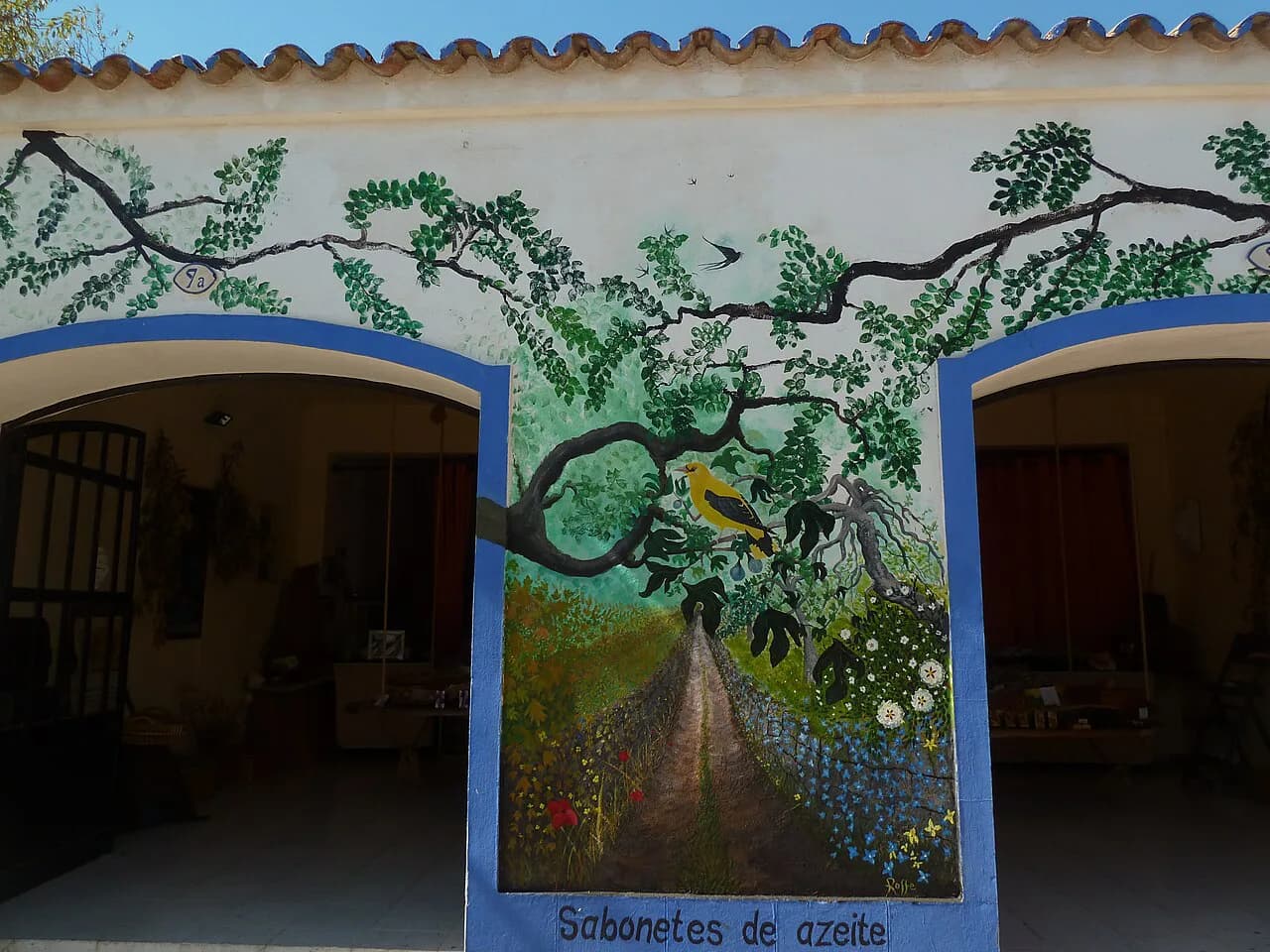
The village dates from Roman times and has an Arab past, which shows in the filigree chimneys on the houses. It reads as one of the most typical villages in the Algarve, with whitewashed facades edged in coloured borders and lanes that have kept their original look. That quietness is the point: there is no coastal bustle here.
How much time Alte needs
Give Alte half a day on foot through the historic centre, then add time if you walk down to the springs and on to the waterfall. The centre itself is compact and the pace is slow, so the half-day is spent looking at facades, chimneys and the church rather than covering distance. The descent to the springs is the part that stretches the visit, because you walk down and back up.
The village centre is the natural first stop, with its streets, church and old mill within easy reach of each other. The springs and the waterfall sit below and south of the village, so leave them for the second half of your walk. Treat the downhill stretch as the reward and the climb back as the honest cost.
The historic centre on foot
The historic centre is a compact loop of whitewashed houses with windows and facades edged in colourful borders, plus ornate chimneys above the rooflines. Walk slowly and look up: the ornate chimneys are the detail that marks Alte out from other Algarve villages. The lanes are quiet, so the pleasure is in the looking rather than in ticking off sights, and the same slow-look approach rewards other historic villages of Portugal.
The village church sits at the centre, with a chapel holding hand-painted pieces dating from the 16th century. An old water mill from the 13th century stands nearby. Neither carries published opening hours or a ticket price, so treat the interiors as a bonus and ask locally on the day whether they are open.
Fonte Pequena and Fonte Grande: the two springs
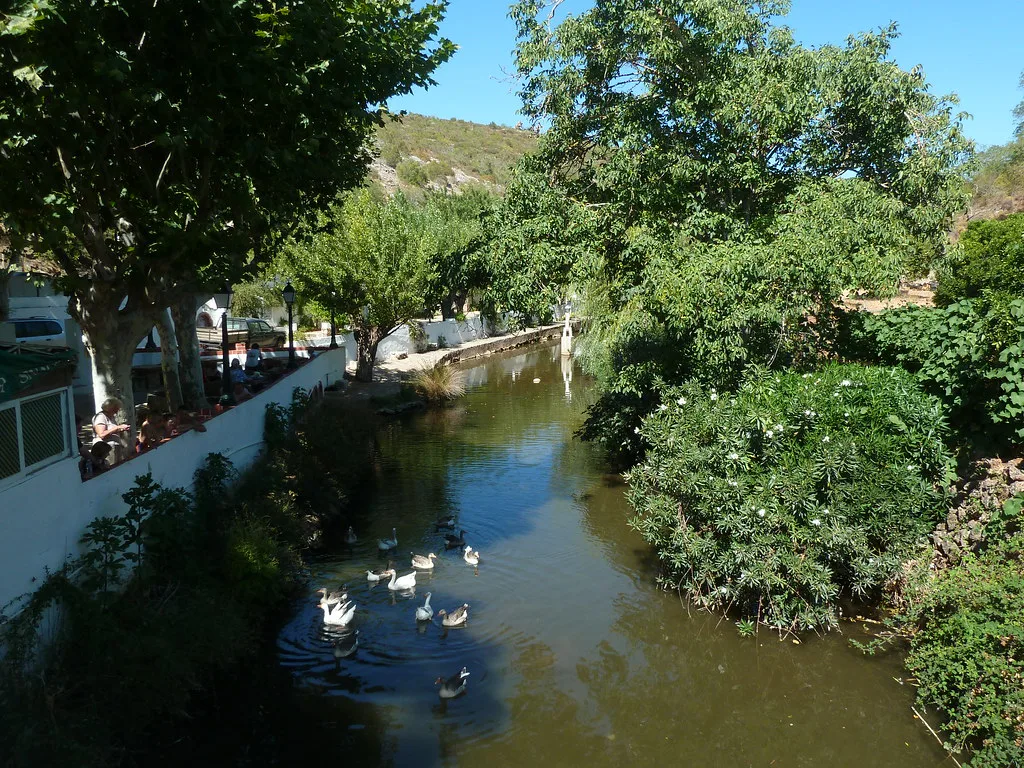
The village's focal point is the pair of springs below it, the Fonte Pequena and the Fonte Grande, the small spring and the big spring. Village women once gathered here to fill pitchers and wash laundry, which is why the walk down carries more weight than a simple photo stop. Today the springs are a picnic and rest spot rather than a working laundry, and they make an easy inland pause on an Algarve itinerary.
Allow time to sit at the springs rather than turning straight back. The setting invites a picnic and a restful hour, and the return climb to the village is easier when you have paced yourself. Bring water and something to eat if you want to make the most of the spot, since the village cafés are back up the hill.
Queda do Vigário waterfall
The waterfall on the Alte stream, just south of the village, is where the water falls roughly 16 metres into an oval pond. Improvement works have made the surrounding area a more pleasant place to linger, and the landscape is the reason to add it to the walk. The stream and the fall are natural features, so the flow depends on the season and recent rain.
Link the waterfall to the springs in one loop rather than treating them as separate outings. Both sit below the village, and the walk between them keeps you in the stream valley instead of climbing back to the centre twice. Neither site charges an entry fee in the village's own description, so plan on a free walk and save your spending for lunch.
Eating in Alte: pastries or a sit-down lunch
Pastelaria Água Mel is the café to head for, with views from the back, fresh orange juice and a wide choice of pastries and cakes. Order a tosta mista or a tosta de queijo if you want something more substantial: both come on Portuguese bread and arrive warm. It suits a mid-morning stop before the walk down to the springs.
For a sit-down meal, A Cataplana at Hotel Alte offers quiet surroundings, views and friendly service, while A Ponte serves fresh fish, generous main courses and local desserts. Prices and serving days are not published for either, so check the boards or ask when you arrive. Book the sit-down lunch for after the springs rather than before, when the climb back is still ahead of you.
Honey, cheese, pottery and medronho
Alte's shops sell the region's typical produce: honey, cheese and pottery, plus aguardente de medronho, the strong brandy made from the strawberry tree fruit that is typical of the Algarve. These are the things worth carrying home, and they are the reason to browse the centre rather than pass through. Buy from the shops in the village rather than from a coastal souvenir stand, and the wider Portuguese food and drink guide helps you know what else to look for.
The village still keeps its typical look while running on tourism, and the craft and produce shops mark the importance of local goods to its economy. That balance means the shopping is part of the village walk, not a separate excursion. Set a budget in euros before you go into the shops, since no price list is posted in the village information.
Getting there and moving between inland towns
Alte sits off the N124, north of Albufeira and about 25km from the coast, which makes a car the straightforward way to reach it. The village's position between Silves, Loulé and Albufeira means you can pair it with another inland stop in the same day. Public transport timetables are not published in the village information, so check times before relying on a bus.
Loulé, to the east, has a market hall and old town that make a natural second stop on an inland day, and Loulé: Market Hall, Old Town and Castle Guide sets out the walk between them. Pairing the two keeps you in the hills rather than shuttling back to the coast between visits.
Who Alte suits and who it doesn't
Alte suits travellers who want a quiet hill-village day with white houses, springs and a waterfall, and who are happy to walk downhill and back up. It does not suit anyone wanting a coastal base, evening restaurants on the doorstep or a beach within walking distance. The 25km distance to the coast is the deciding factor: come for the day and return to the coast for the evening.
If your short break is built around beaches, Alte is a half-day detour rather than the centre of the trip; the wider choice of coastal and inland towns is set out in The Best Towns in the Algarve for a Short Break. Treat Alte as the inland counterpoint to a beach-based stay.
A half-day Alte itinerary
Start with coffee and a pastry at Água Mel, then walk the historic centre to see the painted facades and chimneys. Visit the church and the old water mill if they are open, then take the path down to the Fonte Pequena and Fonte Grande for a picnic. Finish at the Queda do Vigário before climbing back for a late lunch at A Cataplana or A Ponte.
Keep the order flexible around the weather, since the springs and waterfall are outdoor stops. If rain has been heavy, the stream at Queda do Vigário is the more dramatic sight; in a dry spell, the springs are the surer bet for a comfortable pause. Either way, the day stays within a few kilometres on foot.
Should Alte be your inland half-day?
Yes, if you want a quiet whitewashed village with springs, a waterfall and local produce within a half-day walk, and you have a car to reach it off the N124. No, if you need a beach base or a full day of sights: the village is small and its pleasure is in the slow look rather than the checklist.
Explore more Portugal guides
Sources
Notes for your next Portuguese break
Optional updates to our town guides.
You might also like



Continue reading
More guides you'll find useful




